
A WAR FORETOLD – AN IRANIAN PERSPECTIVE

In recent weeks I have despaired. Such anguish can feel, can seem self-centred and indulgent, less than genuine. As such I hardly share it publicly. Meanwhile, neighbours and friends are getting on with their lives, seemingly unaware of the evil enveloping the world. Or perhaps they are burning inside with anger and, like me, are too embarrassed to speak up. knowing they will not be thanked for disturbing the peace.

Earlier I was intending, at the very least, to post a couple of articles about the Israeli declaration of war on Iran, when I received this powerful and personal message from my dear friend, Siya Vash, who I was privileged to meet In Queensland, Australia almost a decade ago. We were together for only a few days but our friendship has deepened despite the oceans that separate us.

Siya Vash begins:

A War Foretold: The Manufactured Crisis Behind the Iran–Israel–US Conflict

The current war between Iran and the Israel–US alliance did not erupt suddenly. It is the result of decades of manipulation, ideological obsession, and calculated imperial ambition. It is a war seeded in lies, watered with treachery, and now blooming into a catastrophe many of us feared, because we have lived it before.

Memory of Fire: The Iran–Iraq War Never Ended

I was a teenager when the Iran–Iraq War began. Like many Iranians, we were told it would be over quickly. A border skirmish, a short-lived aggression. But it dragged on for eight horrific years, a conflict that devoured hundreds of thousands of lives and left deep, still-bleeding scars across our land.

I still remember the sirens. The sound of missiles and bombs landing. The fear etched into the faces of my friends, some of whom are still alive, barely. They are dying a slow, painful death caused by chemical weapons dropped by Saddam Hussein, weapons supplied to him by Western countries who watched from a distance, hands stained but silent. American AWACS radar planes even helped Saddam locate Iranian troop gatherings which he then bombed with poison.

This memory is why I now look at this war, this unfolding confrontation with Israel and the West with the same dread. The same lie is being told again. The same script, only updated for the digital age. And once again, it is the Iranian people who will suffer.

Netanyahu’s Eternal Alarm: The Cry of the Wolf

Since the early 1990s, Israeli Prime Minister Benjamin Netanyahu has warned the world again and again that Iran is “just months away” from acquiring a nuclear bomb. He has sounded this alarm so often, in so many forums from the Knesset to the UN, from U.S. Congress to global media that it has become the central pillar of Israel’s foreign policy narrative.

Yet these claims have been repeatedly contradicted by intelligence agencies, including Israel’s own Mossad and the CIA. They acknowledge Iran’s enrichment activity but have found no evidence of an active weapons program.

Still, Netanyahu’s warnings like a wolf crying for the camera have served their purpose: stirring panic, securing Western support, and justifying pre-emptive aggression. The Zionist lobby in the U.S. and Europe has amplified this message, pushing American and European leaders toward confrontation. It worked in Iraq. It’s working again this time, with Iran in the crosshairs.

The JCPOA: A Deal That Could Have Prevented War

In 2015, the world had a choice. The Joint Comprehensive Plan of Action (JCPOA), signed between Iran and the P5+1 nations, offered a diplomatic solution: Iran would strictly limit its nuclear program, subject to the most rigorous inspections in the world, in exchange for sanctions relief.

Iran upheld its end of the deal. The IAEA confirmed it. But in 2018, Donald Trump under pressure from Netanyahu, Saudi Arabia, and hawkish advisors unilaterally withdrew. Europe condemned the move but eventually aligned itself with the U.S. position in silence, revealing a tragic hypocrisy.

Now, the very nations that once praised the JCPOA insist that Iran has no right to enrich uranium at all not even for peaceful, civilian purposes. The goalposts have moved. The truth has been buried.

The Nuclear Hypocrisy of Israel

While Iran is demonised for enrichment under international supervision, Israel, a nuclear-armed state, remains outside the Non-Proliferation Treaty (NPT). It has never admitted to its arsenal, but global consensus acknowledges that Israel possesses dozens, if not hundreds, of nuclear warheads.

Even worse, Israel has now been found guilty of genocide by the International Court of Justice and yet continues to enjoy Western backing, arms shipments, and diplomatic immunity. The historical trauma of Jewish suffering is weaponised again and again, not for healing, but for justifying new cycles of occupation, dispossession, and war.

Who else but Israel could commit war crimes while claiming perpetual victimhood?

Greater Israel and the Real Strategic Goal

The Iranian nuclear issue is a cover. The real objective is regional dominance. From assassinating scientists to bombing Damascus and Beirut, Israel’s long-term project is the dismantling of all resistance to its supremacy a vision loosely framed in the doctrine of “Greater Israel.”

Iran, Syria, and Hezbollah stand in its way. The path to their neutralization is paved with pretexts and nuclear hysteria has been the most effective one.

Empire in Decline, Searching for War

The United States, meanwhile, is a crumbling empire seeking relevance. After two decades of failed wars, the focus has shifted toward China. But Iran with its strategic location, energy reserves, and ties to Russia and China has become a critical pawn in Washington’s renewed Cold War.

Destroying Iran’s sovereignty isn’t just about Israel. It’s about control over the future of Asia. It’s about preventing the emergence of a new, multipolar order where America is no longer the center of the universe.

The West’s Two-Faced Game

Let us not forget: it was the West that helped bring Khomeini to power. They saw the Shah growing independent raising oil prices, strengthening the military and decided he was no longer controllable. Better to have a theocracy suspicious of both East and West than a nationalist king with ambition.

And now, some of the same Western elites who orchestrated that regime change are floating the idea of restoring Reza Pahlavi, the Shah’s son, as a new monarch. The circle of manipulation never ends. Freedom has never been the goal, only influence.

The Future: Remembering the Past, Resisting the Present

We have seen this story before. We have lived it. We remember what chemical war feels like. We know what it means to bury children whose only crime was being born on the wrong side of a border drawn by empires.

This new war was foretold. But it is not inevitable.

Iran may be battered, but it is not broken. The Iranian people despite their suffering under both foreign pressure and domestic repression are not passive pawns. They are resilient, resourceful, and rooted in a deep civilizational memory of resistance.

The West must reckon with its hypocrisy. And the world must finally ask: how many more lies, how many more dead, how many more wars before we say enough?

History will remember. Not just who launched the first missile but who wrote the script.


Complementary to Siya Vash’s calm yet intense explanation of how he is seeing matters unfold, I offer in addition these alternative and differing critiques of the present nightmare.

Israel’s attack on Iran: The violent new world being born is going to horrify you – Jonathan Cook

This is a key moment in the Pentagon’s 20-year plan for “global full-spectrum dominance”: a unipolar world in which the US is unconstrained by military rivals or the imposition of international law. A world in which a tiny, unaccountable elite, enriched by wars, dictate terms to the rest of us.

If all this sounds like a sociopath’s approach to foreign relations, that is because it is. Years of impunity for Israel and the US have brought us to this point. Both feel entitled to destroy what remains of an international order that does not let them get precisely what they want.

The current birth pangs will grow. If you believe in human rights, in limits on the power of government, in the use of diplomacy before military aggression, in the freedoms you grew up with, the new world being born is going to horrify you.

The Function of Stupidity in History – Jeff Noonan

Consider the profound moral stupidity of Israeli Defence Minister Israel Katz’s pronouncement that Khameini is a “modern day Hitler” that “can no longer be allowed to exist” and that the missile strike on the hospital in southern Israel was a war crimes. One simply cannot believe the moral blindness of a man who belongs to a government whose armed forces have destroyed every hospital in Gaza, almost every house, shoots people begging for food that Israel has made artifically scarce and killed tens of thousands of people. All necessary, of course! If Khameini is Hitler for partially damaging one hospital what is Netanyahu for ordering the destruction of the whole life-infrastructure of Gaza?

A war criminal?

The War Against Iran: 30 Years in the Making – Piers Robinson

Whatever happens, Western publics should be under no illusion as to how this situation has come to be. The conflicts are the direct consequence of our governments and their associated military industrial complexes pursuing policies of war and, to do so, engaging in covert actions and major deceptions, which include the 9/11 false flag as well as the utilisation of brutal extremist groups in countries such as Syia. The death toll from these conflicts runs well into the millions while the misery is incalculable.

Propaganda, deception and lies, all in the name of war, are becoming firmly established as the parting legacy of the Western empire.

The American Game: Playing and Being Played on the Road to Nuclear War – Edward Curtin

“To hell with the truth! As the history of the world proves, the truth has no bearing on anything. It’s irrelevant and immaterial, as the lawyers say. The lie of a pipe dream is what gives life to the whole misbegotten mad lot of us, drunk or sober.”                        Eugene O’Neill, The Iceman Cometh

The U.S.A. is a warfare state; it’s as simple as that. Without waging wars, the U.S. economy, as presently constituted, would collapse. It is an economy based on fantasy and fake money with a national debt over 36 trillion dollars that will never be repaid. That’s another illusion. But I am speaking of pipe dreams, am I not?

And whether they choose to be aware of it or not, the vast majority of Americans support this killing machine by their indifference and ignorance of its ramifications throughout the society and more importantly, its effects in death and destruction on the rest of the world. But that’s how it goes as their focus is on the masked faces that face each other on the electoral stage of the masquerade ball every four years. Liars all.

But they all speak the double-speak that creates pipe-dreams on the road to nuclear war.

Will we ever stop believing them before it is too late?


If, by chance, you read any of the above, not for a moment, do I expect you to embrace uncritically these viewpoints. I do hope for a provisional and questioning response, the very basis of give and take, a critical dialogue. I do hope for a response that refuses the cowardly, immoral and unethical ambivalence and ambiguity of the liberal and professional mouthpiece, that is the Guardian newspaper. And, for my sins, I do skim its pages everyday, hoping for a moment when it speaks plainly at last, when it condemns without caveat the genocide in Gaza and now the attack on Iran.
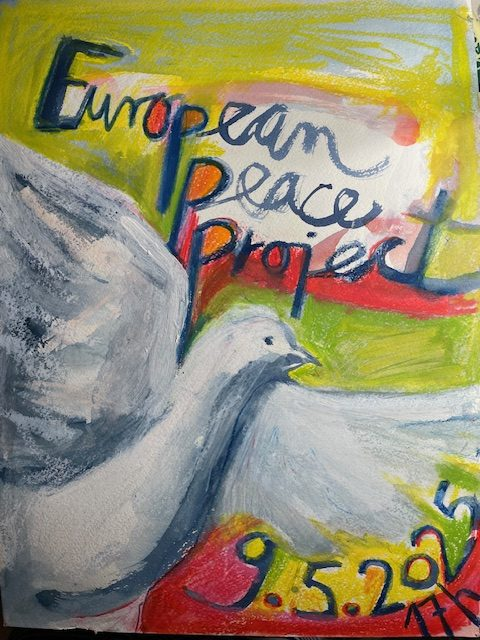
European Peace Project – 05/09/2025@5pm

“On May 9 at 5 pm – it’s time to set an example
for the peaceful future of Europe!”

The Manifesto – European Peace Project

Today, on May 9, 2025 – exactly 80 years after the end of the Second World War, which cost the lives of 60 million people, including 27 million Soviet citizens – we, the citizens of Europe, raise our voices! We are ashamed of our governments and the EU, which have not learned the lessons of the 20th century. The EU, once conceived as a peace project, has been perverted and has thus betrayed the essence of Europe! We, the citizens of Europe, are therefore taking our destiny and our history into our own hands today, on May 9. We declare the EU a failure. We start with citizen diplomacy and refuse the planned war against Russia! We recognize the co-responsibility of the “West”, the European governments and the EU in this conflict.

We, the citizens of Europe, together with the European Peace Project, oppose the shameless hypocrisy and lies that are being spread today – on Europe Day – at official ceremonies and on public broadcasters.

We are reaching out to the citizens of Ukraine and Russia. You are part of the European family and we are convinced that together we can organize peaceful coexistence on our continent.

We have the images of the military cemeteries before our eyes – from Volgograd to Riga to Lorraine. We see the fresh graves left behind by this senseless war in Ukraine and Russia. While most EU governments and those responsible for the war are rushing and suppressing what war means for the population, we have learned the lesson of the last century: Europe means “Never again war!”

We remember the European reconstruction achievements of the last century and the promises made in 1989 after the peaceful revolution. We call for a European-Russian Youth Exchange, modelled alike the French-German Youth Office of 1963, which ended the “hereditary enmity” between Germany and France. We demand an end to sanctions and the reconstruction of the Nord Stream II pipeline. We refuse to waste our tax money on armaments and militarization at the expense of social standards and infrastructure. Within the framework of an OSCE peace conference, we call for the creation of a European security architecture with and not against Russia, as laid down in the 1990 Charter of Paris. We call for a neutral Europe, emancipated from the USA, which takes on a mediating role in a multipolar world. Our Europe is post-colonial and post-imperial.

We, the citizens of Europe, hereby declare this war to be over! We will not take part in the war games. We will not turn our men and sons into soldiers, our daughters into nurses in military hospitals and our countries into battlefields.

We offer to immediately send a delegation of European citizens to Kiev and Moscow to start a dialog. We will no longer stand by and watch our future and that of our children being sacrificed on the altar of power politics.

Long live Europe, long live peace, long live freedom

GO TO https://europeanpeaceproject.eu/en/ to support and donate.

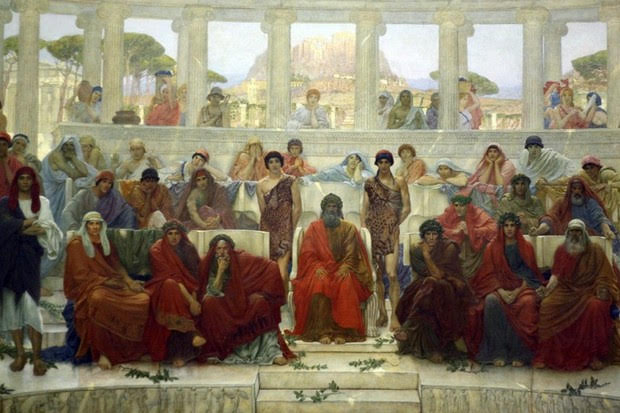
A world without politicians – reimagining ‘Athenian’ democracy in the 21st century

I thought news of this coming event here on Crete might make you chuckle a little. And, if you are anywhere in the vicinity of the wonderful RAKI BAR Χασομερι, it would be smashing to see you!

Friday 15 February, 11:00 Xasomeri, Vamos
Morning Talk

A world without politicians – reimagining ‘Athenian’ democracy in the 21st century –Tony Taylor

Politicians are held in little regard, seen as corrupt, self-seeking and out of touch. Yet their place in the order of things is rarely questioned. However, as crisis consumes contemporary society, parliamentary democracy itself is exposed as a spectacle of deceit. Disillusioned with both politicians and the ballot box the demos retreat into passivity or flirt with fascism. Tony Taylor will propose its time to rid ourselves of these parasites and escape from the illusions of representative democracy.  He will suggest that direct democracy as the authentic expression of ‘the power of the people’ is within our grasp, provided we recognise that politics and democracy, forever open to question, are our collective business and nobody else’s. Without such a revolutionary shift in our consciousness an Armageddon of humanity’s making lies on the horizon.

Οι πολιτικοί κρατιούνται ελάχιστα, θεωρούνται ως διεφθαρμένοι, εγωκεντρικοί και από άγγιγμα. Ωστόσο, η θέση τους στη σειρά των πραγμάτων σπανίως αμφισβητείται. Ωστόσο, καθώς η κρίση καταναλώνει τη σύγχρονη κοινωνία, η ίδια η κοινοβουλευτική δημοκρατία εκτίθεται ως θέαμα δόλου. Απογοητευμένοι με τους πολιτικούς και την εκλογική κουβέρτα, οι άνθρωποι υποχωρούν σε παθητικότητα ή φλερτάρουν με φασισμό. Ο Αντώνιος Τέιλορ θα προτείνει το χρόνο του για να απαλλαγούμε από αυτά τα παράσιτα και να ξεφύγουμε από τις αυταπάτες της αντιπροσωπευτικής δημοκρατίας. Θα υποδείξει ότι η άμεση δημοκρατία ως αυθεντική έκφραση της «εξουσίας του λαού» είναι μέσα μας, υπό την προϋπόθεση ότι αναγνωρίζουμε ότι η πολιτική και η δημοκρατία, ανοιχτά για πάντα ερωτηματικά, είναι η συλλογική μας δραστηριότητα και κανείς άλλος. Χωρίς μια τέτοια επαναστατική μετατόπιση στη συνείδησή μας, μια καταστροφή της ανθρωπότητας βρίσκεται στον ορίζοντα.

Apologies to my Greek friends for imperfections in the translation.

Outcomes, Outcomes, Outcomes – a last word for now

Back in September 2013 Marilyn Taylor and I wrote up an interview we’d recorded on the subject of youth work and outcomes. At the time I used it as the basis for a number of contributions to a range of events, notably the Youth Affairs Network Queensland annual conference in Australia, where participants seemed to warm to its argument. Since then in written form, it has languished on the In Defence of Youth Work site within the Background Reading page. However, the proximity of the recent Plymouth ‘Impact’ conference gives me an excuse to dust off the cobwebs and share the piece afresh. I don’t think it is past its sell-by date, but I might not be seeing the outputs for the inputs.

TTappeal OYC
Begging the audience to agree with me in Vilnius, Lithuania. Malcolm Ball and Pauline Grace looking far from convinced

It begins:

THREATENING YOUTH WORK: THE ILLUSION OF OUTCOMES

Tony Taylor, the Coordinator of the In Defence of Youth Work Campaign, is interviewed by Marilyn Taylor,  a youth worker for some years herself before lecturing in Social Psychology.

Obviously, I’m conscious that your hostility to the discourse of outcomes goes back a long way and is at the core of the Campaign’s founding Open Letter. Like it or not, though, the National Youth Agency [NYA] and the Local Government Association [LGA] have just this year produced further advice on justifying youth work utilising the Young Foundation’s [YF] framework of outcomes for young people.[1] Don’t the advocates of outcomes-based practice remain very much in the driving seat.

Too true and in danger of driving youth work over a precipice of their own making. Stifling in its repetition the mantra of outcomes threatens to drown out alternative voices. It is the taken for granted common-sense of our time.  Those who peddle its propaganda, argue that we need to show that youth work works, that we must define and measure what it is we do. They claim that there is no other option. They cannot allow that their utilitarian project might be undermined by a profound contradiction. Not everything that is vital to being human can be mathematically measured and compared, not least, as we shall see, the very make-up of our personalities ‘who we are’ and ‘who we might become’. Nevertheless, Bernard Davies was moved – following a piece of research he did a few years ago – to ponder whether there is a youth work manager left who might envisage a  practice with young people not harnessed to prescribed outcomes.[2] It seems we cannot contemplate an encounter with young people that is not scripted in advance.

It concludes:

  • A very recent and stimulating piece by Dana Fusco from New York, who spoke at a July IDYW seminar in London, explores the clash between the hierarchy’s desire for certainty and the shifting dynamic of practice across the professions.[24] She notes that social workers are calling for a ‘stance of creative ambiguity’, which is comfortable with nuance and uncertainty. Speaking of being a teacher she quotes Van Manen, whose description highlights the commonality of those I wish to describe as ‘democratic educators’. Such practitioners need “moral intuitiveness, self-critical openness, thoughtful maturity, a tactful sensitivity towards the child’s subjectivity,an interpretive intelligence, a pedagogical understanding of the child’s needs, improvisational resoluteness in dealing with young people, a passion for knowing and learning the mysteries of the world, the moral fibre to stand up for something, a certain understanding of the world, active hope in the face of prevailing crises and, not the least, humour and vitality.”

There are a few things I’d like to explore there, but it is an uplifting if daunting portrayal of what we should aspire to. A last word on outcomes?

I won’t prolong the agony except to say that the outcomes-led attempt to dissect and categorise our engagement with young people poses an enormous problem. We cannot deliver on its terms. Of course, we can continue to deceive ourselves and others. In reality youth work impacts on young people’s lives in a profusion of ways, to greater and lesser degrees. We can provide a range of evidence related to this potential impact. We cannot provide proof.  Our task is to argue afresh that many conclusions and decisions in the making of a democratic society will be provisional, the best we can make at any given time. In a crucial sense that makes them all the more important as nothing is ever decided for good.

Speaking of good in a different way I am conscious of coming across as describing a Manichean battle between Good and Evil, between those of us committed to democratic education and those committed to social engineering. In practice, there will be many in the Outcomes camp, who believe genuinely that they are ensuring the survival of youth work by turning it into a commodity, which people want to purchase. In doing so they believe they are retaining its values and skills. What seems to be woefully absent is a willingness to enter into critical dialogue about whether this claim stands up to scrutiny.

As Malcolm Ball put it at an IDYW seminar in October 2012, “ the youth work process I pursue hopes to enable young people to become the people they wish to be in circumstances not of their own choosing. It is not about a process of ideological modification guaranteeing outcomes congruent with the present society.”

The ideological clash, which cannot be avoided, is between an open or closed view of the future, between a belief that another world is possible and a conclusion that history has run its course.

The Outcomes agenda makes a pact with the latter, accepting the thesis that this is as good as it gets. It is the servant of a politics without vision or imagination, a politics without hope. For those of us, who continue to believe that humanity is capable of a much better shot at creating a just and equal society the means must reflect our hopes and dreams. Hence we cherish a prefigurative youth work practice founded on dialogue, doubt and democracy, even if we have often fallen short of this ambition.[25]

As we stated in our Open Letter the neoliberal ideology informing the Outcomes project “wishes to confine to the scrapbook of history the idea that Youth Work is volatile and voluntary, creative and collective – an association and conversation without guarantees.” We need to continue to think, improvise and organise against this threat and its illusions.

The full piece is to be found at Threatening Youth Work: The Illusion of Outcomes

————————————————————————————————————————————–

For a complementary analysis see also Jon Ord’s Aristotle’s Phronesis and Youth Work: Beyond Instrumentality, which appeared in Youth & Policy, 112 [2014].

Abstract

This paper attempts to address some of the fundamental problems which underlie current attempts to bring youth work to account. Firstly it is argued that the accountability agenda with its emphasis upon outcomes and outputs misunderstands the process by which they emerge. Rather than youth work being portrayed as a linear process, it will be proposed that there is an indirect ‘incidental’ relationship between what youth workers do and the outcomes that emerge out of a process of engagement; such that simplistic accountability measures are inadequate. Secondly, it is argued that given the essentially ‘moral’ nature of youth work interventions and the resulting outcomes, ie. whether their decisions and actions enable young people to live ‘good’ lives. We need to develop a methodology for youth work evaluation which reflects this. It will be suggested that much can be gained from an application of Aristotle’s concept of Phronesis, not least because of the importance placed on ‘context’.

——————————————————————————————————————————-


As time goes by, why another blog?

If you happen upon this new blog, Chatting Critically, and you’ve come across my thoughts as Coordinator of the In Defence of Youth Work web site, you might well wonder what I’m up to? Why do I need another outlet for my ramblings?

Three immediate reasons spring to mind.

  1. In my role as coordinator of In Defence of Youth Work [IDYW] through the eight years of its existence I’ve sometimes felt trapped between two stools. On the one hand I’ve worried that my perspective has carried too much weight as I comment on the undulations of the youth work landscape ; that I don’t reflect sufficiently [how could I?] the diverse opinions of those supportive of IDYW’s overarching commitment to a young person-centred, process-led practice. On the other I’ve also censured my more outlandish and dissident reflections, concerned that their appearance might damage IDYW’s image. All a bit tortuous, I know.
  2. In addition I’ve increasingly wanted to comment on the wider political scene, especially as the neo-liberal consensus fractures and alternatives, albeit fragile, emerge. Obvious possibilities for a rant are to be found within the turmoil besetting the Labour Party. Am I a Corbynista? More than a few good friends have pinned their colours to this particular red flag. And, am I alone in being deeply irritated at the almost Soviet style propaganda flooding the news channels, in which the parade of Olympian ‘heroes’ serves to mask the day-to-day experience of a deeply divided society? And it’s the fortieth anniversary of the Grunwicks strike, which I’d like to celebrate with a memory or two.
  3. For quite a long time I’ve fancied bringing together in one place bits and pieces from the past, which still seem to resonate. Indeed the title of the blog, Chatting Critically, harks back to my crucial involvement in the Critically Chatting Collective, whose existence through the eighties and nineties was a huge source of strength. Steve Waterhouse, to whom this blog is dedicated, was a challenging, anarchic voice in our debates and activity. As things unfold I hope to post some of our relevant writings from that period on this blog.
SteveDawn
Steve and Dawn fighting the good fight

Hence I’m hoping to use this blog as a medium for my opinionated musings on youth and community work, to which I’ll offer links on the IDYW web site plus my occasional rants on the meaning of life and why neo-liberalism, to borrow a phrase from my fellow Leyther*, Paul Mason, ‘doesn’t give a shit’.

As time goes by here’s hoping you might find stuff of some interest contained within and if you respond, I’ll be well chuffed.

*A Leyther hails from the town of Leigh, Lancashire in the North-West of England