Musings on the politics of youth work, community work and society at large – dedicated to the memory of Steve Waterhouse, Malcolm Ball and Sue Atkins, great youth workers, comrades and human beings
Our next CC meeting will take place on Wednesday, September 6th at – Γάιδαρος ΚοινΣΕπ in Vamos – from 10.30 a.m. to noon.
Steve Brimley will lead a discussion on the hot topic of ‘climate change’. To help us prepare for what will be a challenging conversation Steve has sent these links, which he will be drawing upon in his opening contribution. Much appreciated.
Following last month’s excellent discussion on the consequences and contradictions of Artificial Intelligence led passionately by Brenda, it was decided that our next meeting would focus on the issue of whether censorship of what we think and do is on the rise. Boldly Jane Roberts took up the challenge of providing us with material upon which to ponder. And what a great job she has done. Find below her challenging notes and questions. A note of frustration I’ve downloaded images and links to enhance Jane’s notes and failed. Perhaps I’m paranoid!
Notes on Censorship
Censorship by Foreign Governments We’re all familiar with the idea that governments which censor free speech are usually undemocratic and often dictatorships. Many governments, e.g. China and Russia, have a reputation for shutting down anyone who disagrees with them, sometimes violently through imprisonment or death. There probably won’t be much of a debate if we stick to this type of censorship.
Censorship by UK and Western Governments There are examples of less drastic government censorship too. Democratic governments certainly are not immune to censorship. For example, the 1960’s witnessed the Oz trials in the UK and Australia. Here is Wikipedia’s summary of those trials: Oz was an independently published, alternative/underground magazine associated with the international counterculture of the 1960s. While it was first published in Sydney in 1963, a parallel version of Oz was published in London from 1967. The Australian magazine was published until 1969 and the British version until 1973. The central editor, throughout the magazine’s life in both countries, was Richard Neville. Co- editors of the Sydney version were Richard Walsh and Martin Sharp. Co-editors of the London version were Jim Anderson and, later, Felix Dennis, and then Roger Hutchinson. [1] In both Australia and the UK, the creators of Oz were prosecuted on charges of obscenity. A 1963 charge was dealt with expeditiously when, upon the advice of a solicitor, the three editors pleaded guilty. In two later trials, one in Australia in 1964 and the other in the UK in 1971, the magazine’s editors were acquitted on appeal, after initially being found guilty and sentenced to harsh jail terms. At the time that the Oz trials took place, many people might well have agreed that Oz was obscene and should be banned. Others might simply have thought it unsuitable for younger readers. (I was a teenager – and just wanted to get hold of a copy!)
USA – “Are you now or have you ever been, a member of a communist party?”
This was a question devised by McCarthy’s committee in the USA back in the late 1940s. US fear of communism was very high after the second world war. The question was asked of various suspected communists, including many in the Hollywood film industry. Thousands lost their jobs and a few hundred went to prison for refusing to answer. American libraries were told to burn books about communism – although they were allowed to retain books which decried communism! The US famously asked every visitor to the country this question back in the 80s when I went to stay there for a business trip of a few weeks. Needless to say, we were all briefed that the right answer was “No”. The US government regard this as a matter of national security – not as an invasion of privacy, despite the lack of subtlety in the approach which must mean they prevent very few threats through asking it. Communists and members of totalitarian political parties are still banned from entry to the US, so for example, members of the Chinese Communist Party cannot enter the US.
Citizen’s Censorship – Activists But censorship is not always carried out by the government. We’re all of an age to remember Mary Whitehouse. A middle-aged art teacher, a Christian evangelist and social activist who tirelessly campaigned against most of the emerging “permissive society” and became a huge enemy of the BBC, because she wanted to censor their output in order to put a halt to “moral decline” in an age where society changed very rapidly. Here the arguments become a bit more nuanced. Whilst she was in direct conflict with advocates of the sexual revolution and gay rights groups and also at odds with most of the aspirations of the feminist movement she did argue for censorship of pornography. In this respect, she was on the same page as feminist campaigners. Both wanted pornography banned.
Today’s Equal Rights Movements Fast forward to a 21st century Western world and society is moving towards embracing diversity. We have the Black Lives Matter movement which is very active in the US and strong in the UK too. We have the LGBTQ+ movement. There are others – but these are very vocal movements with many activists so it’s interesting to consider their impact on censorship. And we have an increased awareness that what we say can cause hurt to individuals. So “we” don’t use either of the “N” words when we refer to black people now – although I’ve heard black people themselves use both quite freely. The Eskimos of my childhood are now Inuits. And at the moment it’s OK to refer to someone as “Queer” – although 40 years ago this was seen as a pejorative term and erased. So there is also constant change in society as to which terms are seen as pejorative.
“Triggering” This is a term defined on one internet page as: (especially of something read, seen, or heard) causing someone emotional distress, typically as a result of arousing feelings or memories associated with a traumatic experience. e.g. “this book could be very triggering for victims of sexual assault” So when writing we are advised to insert “trigger warnings” – or sometimes we’re simply compelled to censor what we say. More on this later.
VOTE 1: Censorship by private industry and by society It was an article in The Economist, sent to me by a friend, apologies for the quality of the photograph, that prompted me to suggest this debate. Bagehot talks about publisher Puffin’s recent censorship of Roald Dahl’s books, which caused such a storm of debate that Puffin have had to backtrack and publish two editions of each book. As a result of this controversy there is now both a redacted edition which for example replaces references to “fatness”, “oompah-lumpahs” and “ugliness”, and then there is the original edition, still containing all these potentially triggering or offensive terms.
This is not the first time publishers have censored novels. Enid Blyton’s golliwogs are gone. And it happens to books for adults too – Agatha Christie’s “Ten Little Niggers” is now “Ten Little Indians”. Secondly, Bagehot goes on to make a convincing argument firstly that publishers effectively censor new works, that might incur society’s disapproval by simply not publishing them. Secondly that we censor are censored by each other / society all the time. There are things we daren’t say because we don’t want to be ostracised, thought badly of or “cancelled” by society. He argues that this form of censorship is highly prevalent and very effective, also citing a historian who argued that such peer pressure had a larger influence on political conformity in creating the Soviet Empire in Europe than state coercion. (and this was long before the internet and its “echo chamber” effect on social views)
What do you think? A. Should Roald Dahl have censored his own work if he was writing the books today? B. Should Puffin have censored Roald Dahl’s books? C. Should Puffin have eventually compromised and published two editions? D. Should the books simply be banned?
VOTE 2: Edward Colston Statue in Bristol Edward Colston (2 November 1636 – 11 October 1721) was an English merchant, slave trader, philanthropist, and Member of Parliament. He gave the city many philanthropic gifts for the community, including “Colston Hall” – a major venue used for arts and culture. However, he was also a senior leader in a company that traded slaves – responsible for 84,000 slaves being transported. This is where the money came from. There were calls to remove Edward Colston’s statue from central Bristol. In June 2020 Black Lives Matter protesters were protesting at the death of African American George Floyd, who was suffocated by a US policeman. They tore down the statue and threw it into the harbour waters. Four young white people, known as the Colston Four were charged with criminal damage. They admitted to helping crowds to pull down the statue, but the judge directed the jury to consider whether a conviction would be a “proportionate interference with the defendants’ right to freedom of expression, thought and conscience”. This resulted in a “not guilty” verdict. The statue – which for many is a symbol of Britain’s colonial legacy – is now displayed at the M Shed museum, alongside placards from the protest and a timeline of events. The figure is lying down on its back, on a specially crafted wooden structure and still bears the red paint thrown at it during the protests. According to museum authorities, the new, temporary display is intended to “start a conversation about the statue’s future.” The M Shed website reads: “This is an opportunity to have your say about how we move forward together.”
Following this, last year Colston Hall it was renamed “Bristol Beacon” because: “Our former name, Colston Hall, acted as a memorial to the slave trader Edward Colston, and meant that not everyone felt welcome or that they belong in their city’s music venue.”
Many other statues in Britain and the US are undergoing similar debates.
What do you think? A. Are the statues part of our heritage, so should be left where they are, celebrating the good side of the people they depict, perhaps with a revised description explaining where the money came from? B. Or should they be defaced and redisplayed, as a reminder of what we now see as past sins? C. Or should they simply be removed and destroyed altogether?
VOTE 3: Is J K Rowling posting transphobic hate speech? Harry Potter series author J.K. Rowling came under fire in early June 2020 for controversial tweets she posted about the transgender community. Her stance has caused fans and stars Daniel Radcliffe, Emma Watson, Rupert Grint, and Eddie Redmayne to speak out against the author. What did J.K. Rowling say, exactly?: She retweeted an op-ed piece that discussed “people who menstruate,” apparently taking issue with the fact that the story did not use the word women. “‘People who menstruate.’ I’m sure there used to be a word for those people. Someone help me out. Wumben? Wimpund? Woomud?” she wrote. She went onto clarify herself, but dug a deeper hole: “If sex isn’t real, there’s no same-sex attraction. If sex isn’t real, the lived reality of women globally is erased. I know and love trans people, but erasing the concept of sex removes the ability of many to meaningfully discuss their lives. It isn’t hate to speak the truth,” she tweeted. “The idea that women like me, who’ve been empathetic to trans people for decades, feeling kinship because they’re vulnerable in the same way as women—i.e., to male violence—‘hate’ trans people because they think sex is real and has lived consequences—is a nonsense.” She continued, “I respect every trans person’s right to live any way that feels authentic and comfortable to them. I’d march with you if you were discriminated against on the basis of being trans. At the same time, my life has been shaped by being female. I do not believe it’s hateful to say so.” There followed a very strong backlash against her – she has been cancelled by many but has continued to stick to her beliefs and to speak out She went onto to step into the debate about the use of hormone therapy to initiate sex changes in young people, saying: “The long-term health risks of cross-sex hormones have been now been tracked over a lengthy period,” she tweeted. “These side-effects are often minimised or denied by trans activists…. None of that may trouble you or disturb your belief in your own righteousness. But if so, I can’t pretend I care much about your bad opinion of me.” She has also posted tweets saying that trans women should not be allowed in women’s public toilets, because this is unsafe for other women. The controversy continues and she has now been labelled a TERF (Trans Exclusionary Radical Feminist) by the trans community. See https://en.wikipedia.org/wiki/TERF Link to more detail on JK Rowling story: https://www.glamour.com/story/a-complete-breakdown- of-the-jk-rowling-transgender-comments-controversy and https://www.jkrowling.com/opinions/j-k- rowling-writes-about-her-reasons-for-speaking-out-on-sex-and-gender-issues/
What do you think: A. Should JK Rowling continue to speak her mind, despite the enormously triggering consequences? B. Is she transphobic or a TERF? C. If not, should more of her friends and colleagues support her instead of decrying her? D. Should Trans women be permitted to use women’s public toilets?
VOTE 4: Free speech at University – is there a crisis of self-censorship? The material used at Universities has in general been reviewed and trigger warnings incorporated to warn of any upcoming “isms”. This has affected much of classic literature e.g. Shakespeare’s Merchant of Venice and Scott Fitzgerald’s Great Gatsby. See https://www.britannica.com/story/trigger-warnings-on-campus There is however some concern that trigger warnings may themselves be triggering, see https://theconversation.com/proceed-with-caution-the-trouble-with-trigger-warnings-192598 However students have always been vocal activists, and being young they’re especially sure that they’re right too – so a hot debate has raged about what should and should not be said or taught on campus. What kind of speech should be allowed? A recent US survey found that 2/3rds think shouting down is OK and nearly a quarter think violence is justified when the “wrong” speech occurred – so there is considerable pressure on Universities NOT to say some things. See https://reports.collegepulse.com/college-free-speech-rankings-2021 A UK Civitas Report carried out an analysis of over three years of campus censorship (2017-2020), examining the policies and actions of all 137 registered UK universities to provide a detailed understanding of the state of free speech across UK academia. Key Findings were:- MOST FRIENDLY: 19 of the universities (14%) have allowed some restrictions to free speech in its actions and regular policies but not at the level which might warrant external intervention. MODERATELY RESTRICTIVE: 70 of the universities (51%) are not performing as well as they should and the Office for Students (OfS) should tell the university how it could improve. MOST RESTRICTIVE: 48 of the universities (35%) – including the three highest ranked UK universities – are performing badly on free speech and the government should take some action to resolve the issues by a change of policy and legislation. See https://www.civitas.org.uk/content/files/Academic-Freedom-in-Our-Universities.pdf This led to an Act of Parliament in the UK to compel Universities to support Free Speech: See https://en.wikipedia.org/wiki/Higher_Education_(Freedom_of_Speech)_Act_2023
What do you think? A. Is “shouting down” ever acceptable? B. Should the UK have resorted to a specific Act of Parliament? C. Will it make a difference that they have?
VOTE 5 – if we get time we could also talk about: Censorship by internet businesses Society and government are now demanding that publishers censor the content that appears. Some would say that traditional publishers like Puffin may have taken that to an extreme – rewriting Roald Dahls’ books. But we are outraged when Facebook and the other big internet platforms fail to censor what we believe should be censored. Even for “hate speech”, which most of us would like to see censored it’s not an easy task for them to be judge and jury on what speech is too extreme. Bullying, fascism, sexism, sexual harassment, homophobia and fake news all happen in life and on internet platforms. As a result of this, there are frequent calls for the big internet platforms to be much tougher censors. What do you think? A. Should we be actively calling for this censorship? B. Should the large private companies involved be the ones to provide it?
Our next CC meeting will take place on Wednesday, August 2nd at – Γάιδαρος ΚοινΣΕπin Vamos – from 10.30 a.m to noon.
My latest shoveling into the IDYW archives for pieces, I think, remain of interest and pertinence.
Back in June 2009, Jean Spence, a leading voice in youth and community circles through her endeavours as a lecturer at Durham University, through her valuable research – see ‘Youth Work: Voices of Practice, available as a pdf – and her pionering contribution to the emergence of ‘Youth & Policy’ in the 1980s, gave this contribution to a Leeds ‘In Defence of Youth Work’ seminar. Within it she engaged particularly with a certain anti-intellectualism within our work, which seems to persist , even unto the present, despite our status as a graduate profession. Her thoughts are not past their sell-by date.
Jean on her retirement from the Y&P Editorial Board in 2016
I’m glad to be able to make an active contribution to the series of meetings organised in Defence of Youth Work.
The last meeting that I attended was in Newcastle a couple of weeks ago, where I think more than 90 people turned up. Meetings being picked up in other parts of the country suggest that the Open Letter has touched a nerve amongst those of us who have some commitment to youth work.
Clearly if we feel the need to defend youth work, we must be also feeling that it is somehow under attack. The nervousness, not to say antagonism of some of the managers of local authority services to the North East event highlighted the fact that organising to defend youth work cannot be undertaken naively – it cannot be assumed simply that defending youth work is a straightforward matter of supporting good workers who are working for the good of young people and not being appreciated. Life is more complicated than that. At the very least, if we are discussing attack and defence, we are inevitably engaging in conflict – and there is some need to understand who will be on what side in the conflict, and for what reason.
I don’t want to complicate things too much, but I do want to draw upon some of the issues which were raised for me through my participation in the Newcastle event. Later, and partly in recognition that this event is also to celebrate 20 years of Community and Youth Work education in Leeds, and Marion Charlton’s 30-plus years contribution to the education and training of community and youth workers, if I have time, I want to draw a little from a celebration event that I attended in the same week as defending youth work. This was a 30-year celebration of a voluntary youth project where I worked between 1979 and 1985 as a detached/neighbourhood youth worker with a remit to focus on work with girls and young women. These two personal experiences raised all sorts of questions for me and I want to offer some of these questions to you for debate in the hope that there are some universal concerns in them about youth work.
Firstly, to go back to Newcastle. That event was attended by academics, managers and practitioners from a wide range of projects, practices and working approaches. During its course, we addressed the question of what it was we wanted to defend which involved considering the focus of youth work. Among the various propositions, I heard an academic suggest that the focus should be upon civil society and democracy. This was countered by detached youth workers who wanted to focus upon the process of listening to young people and the following discussion in a small group became oppositional. The language used by the two parties was operating in two different planes. In response to an effort to create a conversation wherein the two sides might find common ground for conversation, I suggested the possibility of listening ‘in context’. Implicitly, listening in context is connected with questions of civil society and democracy because it is a listening which understands the circumstances not only of being young, but of being situated in sets of social relations which are inherently unequal. Listening effectively and actively requires some knowledge on the part of the worker. They might need to know something of youth subcultures, but under this, they might need to know something about class and poverty, about racism and sexism, about the realities of global displacement, about structural relations of power in which some voices are silenced and in which listening must be an active process of encouraging speaking, not just the speaking of individuals, though that is important, but the speaking which enables groups to find collective voices and thus to combine and act on their situation. Just as the ‘In Defence of Youth Work’ meetings are attempting to do for youth work as a profession silenced in a set of power relations. There is a direct connection therefore between questions of power, voice, listening and speaking, and issues of politics, democracy and civil society.
Now I know I must own up to being some sort of an academic – even if the academy has a highly ambiguous and grudging relationship with my area of knowledge relating to community and youth work – and therefore I might be perceived as someone who does not understand the realities of practice. However, I was shocked at the response to my efforts at finding common grounds for discussion. Firstly, the meaning of ‘context’ was misunderstood: it was assumed that I was referring to ‘place’ and therefore the protagonists felt it necessary to inform the group that not all young people congregated where they lived. Secondly, perhaps in pursuit of the point, the detached workers insisted that youth workers needed to know NOTHING. Apparently, all youth workers need to do is learn the skills of listening to young people. I hope I am not misrepresenting the case or offering a caricature here, but I was left with the distinct impression that the position that was being taken, that what we were being asked to defend, was a process of youth work as listening, in which the youth workers act as sponges, absorbing what young people say to them. I have yet to discover what youth workers are then to do with such listening. Of course, not all youth workers were taking this position, but it did force me not only to repeat to myself the question, ‘What exactly are we trying to defend?’ but it also make me ask, ‘Do I want to defend this? Am I on the same side as those detached workers?’
Here the ongoing and perennial tension between academics and practitioners, between theory and practice starts to raise its ugly head. This tension is not a new one. In some of the historical work which I have done the question emerges time and again as part of the struggle for professionalization. I digress for a moment, but it is interesting to see how the earliest youth workers in the late nineteenth century, who were integrated within the broad set of activities known as social work, which included community work, welfare rights work, campaigning and various other types of social intervention, and which even sometimes laid claim to the concept of socialism as a term to describe their interventions, it is interesting to see how for the pioneers of this work, there was no split between theory and practice. Indeed, practising social, community and youth workers were also pioneers of the new discipline of social science and it was only when social science began to be accepted within the academy that the split began to happen.
Anyway, to put that to one side, for a moment and return to the reality of the present tensions, in the plenary session, one of the organisers felt it necessary to say something about the fact that this was a grass roots organisation of workers and to underline the point, to say that they wouldn’t be using long academic words and jargon in their approach. No doubt this was said to encourage those who might be intimidated by academic pretensions, and later it was suggested to me that this was in response to the academic use of the word ‘hegemony’. Nevertheless, it came across as pandering to an assumed anti-intellectualism amongst youth workers which to my mind is part of the reason why the profession has been so weak and is now in so need of defending. Can anyone tell me why youth workers should not understand the meaning of hegemony? And if they don’t understand it, why they shouldn’t seek to understand it?
This question is particularly important given that one of the points most frequently reiterated in the feedback from the group discussions was that youth work needs to promote what it does more effectively, that youth work voices need to be heard in appropriate places, and that youth workers should make more effective use of the media in order that they should receive credit and status for their achievements. This is fine, but I do wonder if this is all. Indeed I wonder why we think that youth work is so unknown. There are some grounds for believing that on a day to day basis those who are not involved in youth work don’t really appreciate the complexity of the work, and sometimes confuse it with other social services. There are also some grounds for thinking that related professionals in health, social work, and teaching are sometimes, though not always, vague about youth work, but I am not sure that this can be said to be true of politicians and policy makers. There is now a distinct body of research which demonstrates what youth work does and what it achieves, some of which itself has been commissioned by government and there is a whole programme of policy which relates to youth work practice. The inclusion or omission of youth work from policy directives seems to me to be self conscious. And here we might do well to remember that some politicians don’t actually like some aspects of youth work which many youth workers consider central to their practice identity. To paraphrase an extract from Bernard Davies and Bryan Merton in an article about to be published in Y&P:
One Children’s Minister (Margaret Hodge) generated the headline ‘Youth clubs can be bad for you’ (Hodge, 2005; Ward, 2005); and another (Beverley Hughes) asserted that youth work must be ‘primarily about activities rather than informal education’, with ‘self-development’, though welcome, not seen as an essential goal (Barrett, 2005).
There are not a few MPs who themselves have been youth and/or community workers and often I hear youth workers speaking on the radio in response to some issue that has arisen about young people. So how does this square up with the idea that the work isn’t known? I would like to suggest that the tension between theory and practice in youth work has to be considered in order to understand why youth work is either misunderstood or dismissed. It is no good promoting it. What we have to do is demonstrate in practice that it is a profession with distinct characteristics and that includes, with intellectual credibility, with a historical tradition, with a discourse of its own, and with a desire to engage critically with lively, open and informed debate and action relating to young people and to the type of work we think is central to the profession. This debate is not about promotion. It is about professional, intellectual and political engagement in the areas that are relevant to our work. Ultimately it returns to questions of democracy and civil society.
And this brings me back to the fact that the academic in my Newcastle group has a particular interest in community development raising an enormous question about the distance between the language of community work and that of youth work. As Jeffs and Smith argued years ago, the thrust of policy since the Thatcher period has been towards an increasing individualisation of youth work. Incrementally, youth work has been moved away from working with groups, away from working with political issues, away from working with local cultures and questions of community identity, away from working with the large social issues of poverty, class and social inequalities. As I tried to argue in ‘Youth Work: Voices of Practice’, what is central to the self understanding of the youth worker, has become marginal in the contemporary conditions of practice. And those things which should be secondary, have been made primary. So instead of working with potential, we are required to work with problems. Instead of working educationally, we are required to offer support. Instead of seeking partnership with colleagues on the basis of issues arising from our engagement with young people, we are required to be integrated from an organisational perspective. And most importantly, instead of being able to use the privilege of professional status to build confidence, and trust, and to make professional decisions about risk and about sharing with others, we are required to act as technicians delivering policy directives and feeding information into highly dubious systems. Insofar as we are increasingly driven towards children’s services and social work, so we are incrementally driven away from community and community work issues. The consequence is an absence of political engagement. Do we think that work with young people is not political? Do we think that we can work with young asylum seekers without dealing with the disgrace of policy in these matters, without dealing with global issues, without thinking about racism and sexism, without considering community identities for instance?
So if we are keen to defend youth work, what do we want to defend? It really is the simple question but it is meaningless without considering what we need to build and what we need to attack and destroy. We can have no chance of answering these questions without engaging in critical and informed debate. So the second question must be:
How can we hope to engage in critical and informed debate if some of us continue to denigrate theory, if we do not acknowledge the value of intellectual understanding and the importance of continuous learning in what we do. So how do we challenge this tension between theory and practice? What can we do about it?
And linked to the need to develop a disciplinary discourse for professional youth work, is the question of where we would like our field of knowledge to reside. How do we think about the core of our practice? Is it within the disciplinary domain of social work, or education or politics or community work? Or is it worth thinking of it as different from all of these and if so, can we build a unique body of theory around its core practices drawing from the related disciplines and professions without being sucked into them as second-class actors?
And having asked these questions, I want to turn to the questions which emerged from my 30 years of Southwick Neighbourhood Youth Project anniversary experience. Firstly in this regard, I would like to say that there are some advantages to growing older and one is the privilege of being able to attend more of such events and through them to gain a view of the longer-term impact of youth work practice, education and training. It is easy at gloomy moments to think that we have little impact but a reunion or an anniversary celebration can really inject some optimism about the importance of youth work. I first had a sense of this when I went to the launch of Celia Rose’s book on the Clapton Jewish Youth Club. There was a gathering of people who had been members of the club from as long as 50 years ago. Some had even travelled from the USA to meet old friends at the Jewish Museum in Finchley where the event was held, and it was seriously moving to hear people’s testimony to the positive impact which the club had had on their lives. I once interviewed a man who was a member of a Sunderland boys’ club during the 1930s which was a hard time in Sunderland as everywhere. This man had returned to Sunderland on his retirement, having been an engineer and an FE teacher in Lewisham. I asked him what membership of the club had done for him, and he told me that it had made him believe that he could be somebody in a world where that message was coming from nowhere else. He retrieved and showed me the reference which the Warden of the club had written for him to help him in his search for jobs, and he firmly believed that any success which he had in life, had been a consequence of attachment to the club.
Southwick Neighbourhood Youth Project, known as SNYP, emerged from the Inner City partnerships of the mid 1970s. It started as a small youth club in a Neighbourhood Action Project (SNAP) and was successful in gaining Urban Aid funding for 3 years in 1979. I was appointed with one other full-time worker as a neighbourhood and detached worker in early 1979 and was very pleased to be given the brief to work focus my attention on work with girls. The project was situated in an area of Sunderland which had had a long history as a village, only joining with the town in 1923. It had retained a strong village mentality and community identity. Many of the people who lived there had done so for generations and they tended not to travel far. There was no way any outsider could work with the young people of that area without addressing the question of community, without being accepted by the community and without understanding something of the local culture and family relations. The industrial development and growth of Southwick had been built upon shipbuilding and mining. As a consequence, the local culture was strongly masculine in a very old-fashioned sense. Men and boys ruled OK and there was a general acceptance of this truth. The area was also almost completely white and most of its inhabitants were unselfconsciously racist. So as youth workers we had to work very self-consciously to know and understand local social relations, and this meant local history and culture as well as active relationships between people, and at the same time, in order to mobilise the principles of equality and justice which we brought as core values to our work, we had to work critically and developmentally with the sexism, racism and homophobia which were part of the everyday relations of that community.
By the time I left Southwick in 1985, these issues were becoming more acute and pressing as the industrial base which underpinned social relations and local culture and community disintegrated and the youth job market collapsed. Problems associated with displaced working class masculinity, including violence and crime increased, and racism became more active as a poor area became even poorer and as the young people became increasingly hopeless about their future. Although the language we used was not the same as today, the workers in SNYP understood their youth work with reference to both the context of the local community and with reference to a broader set of values about the type of social relationships we wanted to encourage. We were in no doubt that our work was political, that it was allied to community work, that it was educational and that it was concerned with groups, social change and social conflict as much as, if not more than with individual support and social cohesion.
So what did I find at the 30 year celebration and reunion. Firstly, I found lots of aging young people. And some of their parents. Those who I had worked with when they were in their teens, were now in their mid to late forties. One whole family had turned out, the parents telling us that they had just celebrated their golden wedding. Secondly, I found how poverty had taken its toll with tales of accidental deaths, suicides, alcoholism and serious ill health amongst some. In those tales, it was strikingly obvious how services failed to meet the needs of people in poor communities. I also heard tales of rags to riches and great escapes. However, what was most touching were the repeated tales of how SNYP had broadened the lives of so many of the young people who associated with it.
One woman talked with some passion about how we had shown her different types of food and how we had taken her to Kent, and shown her things she could never have seen otherwise when she had never previously been out of Sunderland. Actually, we took her to Belgium, but what was important was Kent. It was like the other end of the world to her.
Most significant for me, a woman who was a lesbian who just wanted to tell us how important it was to her that we showed her how to ‘get out’ and how she had been trapped and would never have found the way out had it not been for the youth project. Never in all that time did we ask her to address her sexuality, or refer to her sexuality, or make an issue out of it, even though we knew about it. But of course we were addressing it by providing a physical space for her to participate in a project in which she knew that prejudices were challenged, where justice was central and where there were opportunities for moving beyond what was given.
And I was left wondering at the end of that night, in the end, is this all that I want to defend in youth work? The right to work with people in a way which accepts and understands who they are and why, which addresses inequality and injustice and which offers opportunities for them to broaden their lives? I think it probably is. And ultimately, this is the right of a professional worker, based upon responsibility, knowledge and skill, to interpret the context in which they need to work with young people and strive with them for a justice in a wider world than that into which they were born. This means defending a whole understanding of the meaning of professionalism which is clearly at odds with the technical definitions of professionalism to which we are currently being asked to subscribe. And this leads me to my last three questions for informing your discussion.
The first is about the extent of our claims for the value of our engagement with young people. What do we really offer? Is it certificates, information, advice on applying for jobs, information about sexual health and healthy eating ? Or is it the space in which to experience difference, to consider alternatives and to learn about things which might not otherwise enter the frame of lives limited by poverty, silence and injustice?
The second is about organisations. Is it an organisation like SNYP that I want to defend, or is it simply a way of working that is expressed in some organisations? Is there a dange that in defending youth work, we simply try to hang on to our own organisations?
The third concerns the meaning of professionalism. How can we be professional youth workers if the space to take risks, to criticise, challenge and develop alongside young people is closed? What do we want to defend, and what do we want to open up? Do we think that the promise of professional status which is supposed to accompany the degree level qualification in 2010 means that we will achieve the type of professionalism that we need?
My final word today is my own view. Do not think that youth work can defend its practices in isolation or that it is the only profession under threat. One of the central threats to all the people professions, is the incremental removal of opportunity for self defined collective organisation, conversation and informal space in everyday practice. To quote a favourite academic of mine – Stuart Hall: Speaking at a seminar in Durham in 2001, and referring to the policy initiatives of New Labour, he said ‘This is the most deeply penetrative government we have ever had’ and to add to this insights from Jeffs and Smith, it is also one of the most deeply authoritarian administrations we have ever experienced. Government has colonised professional practice from the centre down. And if we do not think that our practice is and our action is political in this context, then our practice is not worth defending and our action will be pointless.
If I have to pull out three key questions from this, they are as follows:
Is all our practice worth defending and what should we defend?
Is there a need to address the tension between theory and practice, between the academic and the practitioner as an aspect of our defence? And if so, how do we do it?
What can youth work legitimately claim about its achievements, and how do we know or evidence these achievements and use them to support our defence of youth work?
Our next CC meeting will take place on Wednesday, June 28th at a new venue – Γάιδαρος ΚοινΣΕπin Vamos – from 10.30 a.m to noon.
Brenda Foulds will be leading a discussion on the rise of Artificial Intelligence and its implications.
As of May 31st Brenda writes:
Three years ago I produced a handout for a discussion on Artificial Intelligence (AI) as Promise and Threat. Within these three years, things have moved on fast.
Page One is that handout.
1 Areas in which AI could be a Good Thing 1.1 Education and research 1.2 Medicine 1.3 Military 1.4 Transport 1.5 Daily Life 1.6 Entertainment
2 Threats posed by AI 2.1 Hackers and viruses 2.2 Loss of privacy 2.3 Stock market flash crashes 2.4 Money rules 2.5 Political interference 2.6 Rubbish in = rubbish out 2.7 Humankind becoming redundant
3 Questions for discussion posed in 2020 Q1 What will happen to society, politics and daily life when algorithms know us better than we know ourselves? Q2 Our mentality is not that of AI. Which is more valuable? Q3 How might AI affect employment and thereby politics? Q4 What will happen to us when nanotechnology and regenerative medicine turn 80 into the new 50? Q5 If AI is to be regulated, who should regulate it?
Page Two Right now, May 2023, in a letter posted on the Future Life Institute’s site, names including Elon Musk and Steve Wozniak have called for an immediate halt to the training of AI systems more powerful than GPT-4, a chatbot, and a 6-month pause in future developments whilst stock is taken of where we are heading. GPT-4 is a chatbot that can have conversations with humans. It is “the latest milestone in OpenAI’s effort in scaling up deep learning. GPT-4 is a large multimodal model (accepting image and text inputs, emitting text outputs) that, while less capable than humans in many real-world scenarios, exhibits human-level performance on various professional and academic benchmarks.” (OpenAI website).
Radio 4 is all over this at present, and there are so many programmes addressing AI. If you can listen to some and take a look at this handout beforehand I think we can have a great and timely discussion of this topic.
* * * * * * * * * * * * * I recommend reading “Homo Deus” by Noah Yuval Harari. It’s erudite, big but very readable and a chilling view of our possible futures! On a fiction level, “The Circle” by Dave Eggar (now also a film). Hannah Fry’s “How to be Human in the Age of the Machine” is currently available as a podcast on BBC Sounds, 75 minutes listening. https://www.bbc.co.uk/sounds/brand/m001mdn2 https://www.bbc.co.uk/sounds/play/w172z06yccyz8f3 Newsday: A warning on AI from US big tech, And if you can still get them on BBC iPlayer, the Black Mirror series has a series of brilliant dramas set in very possible AI situations, in the near future! Light, but thought-provoking!
So, what questions would you all suggest for discussion in 2023?
Page Three Artificial Intelligence – Some examples
Some pros: Education and Research. AI can teach an individual better than a human. It learns how we like to learn and what we need to learn: it adapts its curriculum and teaching style accordingly. All the world’s data can be collected, delivered and crunched in seconds at appropriate places. Consider space exploration and undersea probes and rovers. Medicine. Depression, epilepsy and Parkinson’s are now routinely controlled by neural implants which read us and react autonomously. Brain implants also conquer deafness, blindness, paralysis and control exoskeletons and remote mechanical devices. Microchips can read our vital signs and administer drugs. Pacemakers can respond by the moment. Robotic limbs, connected to nerves. Fitbits monitor our systems and nudge us into health. AI “doctors” can already diagnose us earlier and with fewer misdiagnoses, and chatbot therapy is now available. Military. Drones keep watch and collect data. -They remotely and precisely deliver weapons, particularly nano-weapons which can be up to 1,000x as strong as conventional ones. “Attention helmets” increase a user’s focus and reduce “collateral damage”. Satellites offer total surveillance for counter-terrorism. -Neural implants will increase control of military personnel. (Remote-controlled cockroaches are already here!) Search and rescue animals. -De-mining devices. Transport. Driverless cars are happening. Smart highways and interconnected satnavs rationalise traffic, whilst AI-controlled car sharing, delivery by drones, under-our-feet “fulfillment warehouses” and working online can reduce it. Ships cruise and planes fly mostly on autopilot, as do space missions. Daily Life. Predictive text. Personalised advertising. -Hive home-control and security. -Self-restocking fridges. Smart harnesses for dogs for the blind. -Apps of every sort. Big data in e.g. supermarkets and hospitals helps them be ahead of our needs. You can have a 24/7 friend in a chatbot – though it may prove to be somewhat of an echo chamber. Entertainment. Shared interactive video games. Virtual reality. Virtual tours. Online concerts. Zoom! Spotify, Netflix, Alexa etc. Agriculture. Intelligent machines quarter fields analysing the soil and dosing it with seeds/fertiliser/moisture autonomously. Robots harvest crops, sensing ripeness.
Some cons: Hackers and Viruses. Implants, nanobots and apps, with our permission, control our brains, pic lines, impulses, moods, and our share portfolios. Deciding for us e.g. on the next drug dose (and administering it), what to eat, which job to take, whom to date, when and how to exercise – and we are open to hackers or viruses. Troll factories control political propaganda – and who knows now what is deep fake and what is real? Loss of privacy. Our e-books are reading us as we read them, our computers using us (as data bytes) as we use them. They know more about us than we do – what we like, prefer, worry about, if we are gay, who we will vote for. AI can identify and target floating voters and will know how to persuade them… Police state monitoring is a worry, and led to reluctance to take up “track and trace” for covid. Cyber 9/11 is just around the corner. Flash crashes on stock markets are probably induced by algorithms. In the meantime – we are subject to internet outages when everything stops, and to AI’s mistakes. Money rules The richest few with the best AI (even just able to afford the most up-to-date Alexa/Siri/Cortana) will always have the upper hand and will be unlikely ever to lose it. Rubbish in – rubbish out AI is not always so intelligent. Biases will be perpetuated. Redundancy of humankind?
Many thanks to Brenda for thiis stimulating background
Our next CC meeting will take place on Wednesday, May 24th at a new venue – Γάιδαρος ΚοινΣΕπin Vamos – from 10.30 a.m to noon.
At the meeting, Pete Morton will be leading off a debate on “Immigration; build a wall or a door?”
As promised he has provided links to three articles about immigration that might help stimulate discussion on 24/5 and also provide some data to underpin such discussion.
Pete comments, “there are countless other possible articles. In choosing these I have tried to avoid extreme views at either end of the spectrum. See what you think”.
The first is a piece from the Pew Research Centre entitled “Key facts about recent trends in global migration” and is a data driven article. Pew Research describes itself in these terms “We are a nonpartisan fact tank that informs the public about the issues, attitudes and trends shaping the world. We conduct public opinion polling, demographic research, content analysis and other data-driven social science research. We do not take policy positions.”
The second item is a piece entitled “Multiculturalism is madness” which makes the case for greater controls on immigration and the defence of what the writer sees as the essential culture of the U.K. The source is a website called “Merion West” which was founded in 2016. It claims to bring a new and independent voice to the current media environment which it sees as too partisan and polarising. It claims that it is “nonpartisan and publishes critical commentary and in-depth interviews from across the political spectrum.”
The third is a piece from the director of immigration studies at the Cato Institute which describes itself as a public policy research organisation that creates a presence for and promotes libertarian ideas in policy debates. It says that its “mission is to originate, disseminate, and advance solutions based on the principles of individual liberty, limited government, free markets, and peace.”
Thanks again to Pete and Brenda for the material, I hope to see you there for the discussion. If possible let me know if you are intending to come at tonymtaylor@gmail.com
On a number of occasions, both during and post the pandemic, faced with overwhelming professional compliance and collusion, I have expressed my despair and dismay. As best I can see and I have scoured the mainstream and alternative media for dissident voices, almost to a person, the education profession has collaborated with utterly unnecessary draconian restrictions on children’s and young people’s lives. I remain perplexed that teachers, play and youth workers, together with lecturers claiming as a result of their training to be politically informed and critically reflective could acquiesce with scarcely a murmur to a shoddily evidenced, glaringly opportunist and organised global intervention that mocked the very notion of sovereign democratic states. To add to my perplexion education professionals, amongst others, are prone to waxing lyrical about the importance of ethics, of codes come to that, yet they remained silent, nay colluded with the unethical campaign of fear concocted by SAGE’s unholy team of behavioural psychologists.
Perhaps most upsetting is that we now observe a profession in denial. Contradictorily, given the less than unusual coronavirus was marketed as an existential threat to humanity, it’s almost as if nothing much happened really. Apparently, there’s no need for any of that reflective malarkey, better the well-worn brush under the carpet. Thinking only of my old back garden in Youth Work, I suspect I will wait in vain for the appearance of any self-critical piece, ‘What Did We Do In The COVID War?’ from the likes of the National Youth Agency, the Centre for Youth Impact, the Training Agencies or the trade unions.
Without a hint of embarrassment, it’s business as usual after the unusual. There’s an unsaid caveat though. If anything unusual, as decided by our betters, does come up, we will again do as we are told and keep our mouths shut – for the common good, I’m sure. For what it’s worth I think, this would be tragic. These are not normal times. More emergencies await us. More than ever we need to talk openly to one another without the fear of being wrong, trashed or smeared.
I take comfort and inspiration from the following.
The price of speaking out
The author of this article is Mike Fairclough, a headteacher who blew the whistle on what he felt were serious safeguarding concerns about the impact of Covid interventions on children. Though whistleblowers are in principle protected by the law, he has been repeatedly smeared and victimised for voicing his concerns. Here he tells his story.
There is a great deal of discussion in the media about free speech and censorship. What are we allowed to talk about and who has the authority to silence us? Particularly in the wake of the pandemic — a period which saw increased anxiety about the consequences of expressing our opinions or even asking questions about the government’s response to Covid — but also around issues such as sex education in schools and identity politics, the closing down of debate has created a damaging culture of self-censorship. Worryingly, this has influenced many adults to put their own self-preservation ahead of the needs of children.
As the headteacher of a UK junior school, and a parent of four children, I saw it as my moral duty to speak out about my concerns regarding the catastrophic harms that the pandemic policy was doing to my pupils — from school closures and remote learning, masks, cancellations of children’s sports and lives, and then of course the drive to vaccinate children against Covid.
My approach has always been to weigh the benefits of these interventions against the known risks and safeguarding flags. As regards the Covid vaccines, my assessment was simply that we shouldn’t apply a medical intervention to children unless there is a clear benefit and a proven safety record — a view which until 2020 would have been seen not only as a reasonable position, consistent with medical ethics, but a position against which to argue would have been considered extreme. It was clear early on that for healthy children there was minimal risk from the virus and therefore no, or only very minimal, clinical benefit from the vaccine; and critically there was, and is still, no long-term safety data.
So it was my honestly held view as a parent and headteacher that the roll-out to children constituted a potentially serious safeguarding issue, and that I was legally as well as morally obliged to voice my concerns about this. People who work in education are obliged to attend annual safeguarding training which informs us that we must report all safeguarding concerns. Indeed, attempting to prevent unnecessary harm to children is a legal requirement within my profession. The professional who turns a blind eye to abuse is held equally accountable, even if not directly enacting the harm themselves. Silence is never an option.
However, my experience of becoming a whistleblower on these safeguarding issues — lockdowns and masks as much as vaccines — is one of relentless attacks and smears both online and in the press, frequently being mis-labelled as an “anti-vaxxer”, and enduring multiple attempts to silence me.
My employer has supported three investigations into my conduct, following whistleblowing complaints relating to views I had expressed about child safeguarding. Indeed, the most recent unfounded allegation involved the complainants reporting me to the Department for Education’s Counter Extremism team as well as to Ofsted. Results of an FOI request reveal that I have also been monitored by the UK Counter Disinformation Unit.
Although I have been cleared of any wrong-doing on all occasions, following independent investigations, these attacks have inevitably taken their toll on me. My nineteen-year career as a headteacher has been overwhelmingly successful up until this point. My employer, Ofsted and the DfE have always supported my educational innovations and celebrated the achievements of the school prior to this time. However, I am now perceived as an extremist and a troublemaker, despite being cleared of the radical allegations against me. I have also been told by former colleagues that I deserve to be punished and should never have spoken out. It appears that any criticism of the government in relation to its pandemic response and its effects on children is seen as a form of blasphemy by devout followers of the orthodox Covid consensus.
Some of those colleagues believe I was wrong to even question the vaccine roll-out to children because, they tell me, children needed to be vaccinated in order to protect vulnerable adults. I go to sleep thinking about the situation, I dream about it and then wake up in the morning worrying about it again. As a result, my health has suffered in ways which I have never before experienced. I have lost weight, have a constant knot in the pit of my stomach and feel agitated and low much of the time. My personal relationships have also suffered and it feels like every aspect of my life has taken a hit. All because I did my job by blowing the whistle about my safeguarding concerns for the children in my care. This is something which I should be protected for doing, not attacked for, provided I have acted in good faith. I don’t regret speaking out but I won’t pretend that it has been an easy ride.
Along the way, I have received support from many people, including fellow headteachers and others within my profession, albeit almost always in private messages and secretive whispers. These people have thanked me for voicing my opinions but said that they have been too fearful to speak out themselves. Sometimes they have pointed to the attacks which I have faced as the reason for their silence. I have been grateful for their encouragement but I feel it’s now important for everyone to find their voice. If we see a safeguarding concern regarding children’s health and wellbeing we have a moral obligation to report it. I will emphasise again, it is also a legal duty within the education profession to do this.
In the shadow of this pandemic I believe we all now need to empower ourselves, and each other, to speak up and speak out, rather than simply leaving it to others to fight our corner. Nowhere is this need more urgent than in the context of safeguarding for children.
As a career educator, I have a strongly held philosophical belief in the importance of critical thinking and in freedom of speech. I challenge orthodoxies when I encounter them and then publicly share my thoughts, always careful to maintain respect for other people’s differing views and trying always to remain open to changing my existing opinions.
I don’t suggest this is a new idea: educators and thinkers have adopted this approach to life for millennia, with philosophers such as Socrates using this method of thinking and communicating since the time of ancient Greece. And yet, though we like to think that we live in an advanced and progressive liberal democracy, we now find that challenging orthodoxies has become one of the greatest taboos. Critical thinking is frequently assigned to the realms of the conspiracy theorist and pointing out the obvious can become a punishable offence with sanctions delivered both by zealous authorities and by our fellow citizens.
There is an increasing number of people who now say that they opposed many of the government’s pandemic responses but didn’t make their views public at the time. Individuals who had recognised the potential harms caused by lockdowns, masks or the vaccine mandates but stayed silent. The minority who did speak openly about their concerns were often attacked, which no doubt will have played a part in others’ self-censorship. But, if more people had publicly voiced their concerns, I’m sure we could have collectively prevented at least some of the unnecessary harms unleashed on us, and on our children.
This is why it is so important that we create a cultural landscape within which different opinions can be freely expressed. And I believe that we each have a significant role to play in bringing this about. Speaking our truth about controversial or sensitive subjects and ending this culture of self-censorship and fear. If we don’t do this, we risk repeating the mistakes of the past few years. Watching in silence at harms taking place around us instead of standing up and speaking our truth. Critical thinking and free speech are not dangerous. They are what free and democratic societies are built upon. Fight for them and they — and we — will flourish. Leave it to others and we risk losing our hard-won civic freedoms forever: a future for our children which none of us want to see.
As I read this afresh I’m moved to wonder how I might have responded if I had been transported to be, if not a Chief Youth Officer, some brand of Senior Manager within the remains of Services for Young People. Would I have had the bottle to stand my ground and report to politicians and bureaucrats my principled and informed opposition to the closure of playgrounds and youth centres, to express my concern that the imposition of masks and social distancing had no solid empirical basis and would undermine the very foundations of relational education? I like to think so but it’s easy to be brave from a distance. Certainly, it seems likely that when word got out about such a stance, whatever my track record, I would have become persona non grata overnight. Quite how this immediate, damning and long-lasting judgement of my worth squares with the person-centred, process-led and forgiving youth and community work tradition of yesteryear [?] is for another time.
More or less every month I’ll dig into the archives for pieces that might be of interest or pertinence. I’ve settled on doing so chronologically from the emergence of IDYW in 2009. The following post dates from June 2009. Sadly the links don’t work. There may be a possibility of unearthing the report, ‘Squaring the Circle’.
FROM THE ARCHIVES JUNE 2009 -Youth Work Values Under Threat
Youth work’s values under threat is the title of a new piece in Children and Young People Now focused on Squaring the Circle , the ‘modest’ inquiry into the state of youth work practice led by Brian Merton and Bernard Davies.
The report says: “This inquiry has strengthened our view that these dilemmas are being rendered more acute as the state’s interventions become increasingly prescriptive, intrusive and insistent.” It also fears the distinctive style of youth work is being threatened by the use of accredited outcomes.
Davies said: “Anyone who has their ear to the ground picks up lots of anecdotes about what is happening in youth work. There is a lot of anxiety and anger that the core principles of youth work are under pressure and under threat by some policies, including Aiming High and Youth Matters.
“It is important to get beyond the anecdotes and establish more clearly what is going on,” he added.
The close timing of the appearance of our In Defence campaign and the DMU Inquiry is perhaps fortuitous. But as both Thomas Hardy and Karl Marx agreed, twists of fate or plain accidents play an important part in history. Indeed Janika is pursuing a further article for CPYN, exploring this resurgence of questioning about what’s going on within the arena of Youth Work. This can only be good for the opening of critical debate.
As part of the research, Janika posed the following questions:
I would like to ask you about some of the concerns/ questions that have been raised in both the inquiry and the letter. I would be most grateful if you would answer the following questions for me.
1) Do you think that current policy frameworks are tipping the balance of youth work from open access to targeted provision? If so do you think this is something that is compromising the nature of voluntary engagement and why?
2) Is the relationship between youth worker and young person and the notion of confidentiality being threatened by the requirement to pass information to others and what impact is this having on the nature of youth work?
3) Is the process and intent of youth work being compromised by the pursuit of targets and accredited outcomes? Is it making youth work too prescriptive and why?
As is my failing my reply was less than straightforward, but went as follows:
Before answering your questions directly a few words on principles and ideologies. In arguing for the Defence of Youth Work the Open Letter is at pains to define a form of youth work that is democratic and emancipatory. The core principles of such a liberatory practice are set out in points 1-6 in the fourth paragraph. However, there are other competing forms of youth work, notably an approach to young people that is hierarchical and conformist. Indeed there has been a long-running tension between the two, hence the classic essay title, ‘Is Youth Work an agency of social change or social control?’ In the three decades after the Second World War the model of social change was increasingly favoured at least at the level of policy and rhetoric, caught in the sentiments of the Albemarle Report [1959] and in its last gasps the Milson-Fairbairn Report [1974]. Youth Work desired to be involved in the creation of critical citizens concerned with the common good. Of course, how far this commitment was carried out in practice is a matter of continuing debate. However, with all its warts, this optimistic view of young people’s individual and collective potential has been eroded gradually and insidiously since the late 1970s. It has been replaced by the hierarchical and conformist in its neo-liberal guise, determined to thrust the values of the market into every nook and cranny of our existence. Dominated by a managerial outlook, obsessed with the technical and behavioural, it seeks to mould young people into being individualistic, compliant and never-satiated workers and consumers. This is the ideology behind the social policy proposals of the New Labour era. However this way of viewing the world is in crisis, hence the beginnings of debate across all corners of society – in our case within Youth Work.
As to your specific questions:
1. Voluntary engagement is thoroughly compromised by New Labour’s emphasis on the compulsory targeting of ‘problematic and demonised’ youth. An authentic voluntary encounter is uncertain on both sides of what might come out of the relationship. This does not mean that the democratic youth worker should be not be prepared for all sorts of tangents. Being able to improvise on the spot requires great skill and preparation. But the managerial demand that the youth worker goes out with a predetermined agenda is utterly at odds with the uncertainty of voluntary contact. As for the issue of open access and targeted provision, I don’t want to dodge the reality that the form of youth work I advocate has sometimes prioritised work with particular groups e.g young women, and black youth. However this ‘targeting’ has been premised on the negotiated identification of needs and rights by young people discriminated against within the system. It would be dishonest, given scarce resources, to deny that this commitment has sat uneasily besides a desire to be ‘open’ and inclusive. This said a democratic youth work rejects the present hierarchical view that those targeted are somehow deficient, dysfunctional and anti-social. To borrow from Jeffs and Smith, a democratic youth work works with young people, whereas hierarchical youth work works on them.
2. The delicate issue of confidentiality is abused by the managerial imperative to collect and circulate information. There is growing anxiety generally about the growth of a surveillance society. In this context, to my mind, a principle of democratic youth work is that you don’t grass on a young person, who has trusted you enough to chat about the mess they’re in. This commitment should only be set aside in exceptional circumstances. The push to integrate services uniformly undermines the distinctive character of differing agencies and undermines worker autonomy. I have been in situations, where working closely with a teacher, or social worker about a particular young person’s situation has been enormously helpful. I have been in situations where to do so would have been disastrous. A profound problem with social policy is that it fails to recognise the intimate and complex picture of professional relationships on the ground. To put it crudely I’m not going to share information about a young person with someone I don’t trust personally or politically!
3. Obviously I think a target-led and outcome-driven model of youth work undermines a creative and improvisatory, democratic youth work. This is rendered all the more so when these prescriptions for practice are imposed from above with no democratic debate between politicians and the workforce doing the job. As for accreditation, there’s always been a section of the work that gave certificates and badges, symbolised by D.of E. It was/is a choice for some young people. But this is very different from the pursuit of accredited outcomes becoming the driving force of practice. And this emphasis again profoundly changes the direction of the work. It does so because [and its advocates stress this point] it makes Youth Work the servant of the Market and the Employer. Now Youth Work with its inferiority complex has dabbled in the past with ‘preparing young people for work’. I remember school-leaver courses in the mid-70s, but until the last decade, we have tried to fend off becoming social and life skills instructors in obedience and conformity. It is a measure of New Labour’s success in transforming Youth Work that we are now forced to make the case afresh for youth workers as social educators striving through a critical dialogue to educate both themselves and young people in the struggle for democracy and equality. It is a measure of New Labour’s failure to fashion a more just society that we are able to raise the purpose and the principles of Youth Work anew.
As always your critical thoughts are welcomed.
Postscript
Thanks to Diane Law for tracing this link to the ‘Squaring the Circle’ report. It’s the first article in this issue of Y&P
STOP PRESS – NOTE THE CHANGE OF DATE TO WEDNESDAY, APRIL 26th
I must apologise for my dull sloth. I intended to post a report on the first Chatting Critically meeting, which took place in Gavalohori on Tuesday, March 25th. A combination of being under the weather and making a trip back to Wigan has meant putting off the task. However, this evening’s jangling Easter Week church bells have woken me up.
Back then, on a bright, cold morning I made my way tentatively down the steep slope, my head swimming from a still mysterious allergy, concerned to be first in the kafenio. Indeed I was, being greeted warmly by young Giorgos, who has in recent months transformed the classic men’s retreat into a much more open meeting place. And to be fair, the blokes don’t seem to mind, taking it all in their collective stride. I was thrown briefly when Giorgos nipped next door for a haircut, confident fifteen minutes would do the trick. He was right, returning just in time to take the orders for coffees and juice being placed by the arriving would-be Chatters.
Following brief introductions by the ten of us present [3 men and 7 women] we threw ourselves into a wide-ranging discussion, which began with the question of what constitutes Truth, going on to explore amongst other things what information and disinformation continue to influence our understandings of the COVID pandemic and the spectre of Climate Change. To everyone’s credit, the challenging exchange of opinions was cordial and respectful. There was a consensus that our next gathering should be more focused in its content and intent.
Thus it was agreed that we should meet again on Wednesday, April 26th in the H Ελπίδα kafeneio, Gavalohori at the same time of 10.30 a.m, aiming to finish by noon. We were grateful to Phil Harrison for agreeing to lead off our next debate, which will explore the state of the Creative Arts in the third decade of the twenty-first century with particular regard, given Phil’s career, to the music scene.
All are welcome but it would be helpful if you could let me know if you are intending to be present – tonymtaylor@gmail.com. Last-minute arrivals will still be greeted with open arms!
Other topics suggested for future meetings include:
Given most of us are migrants, how do we understand the ongoing issue of immigration, refugees and government responses?
Where is the drive to a cashless society taking us?
What on earth is the Great Reset?
Are we living in an increasingly intolerant and divisive culture, which threatens the very basis of Freedom of speech?
Tomorrow. all being well. there’ll be a belated report from the first Cretan Chatting Critically meeting held in Gavalohori in March, together with notice of the next meeting to take place on Tuesday, April 25 in the same venue, H Ελπίδα.
Given our first discussion touched both on Freedom and Hope, here’s a song from HK (& Les Saltimbanks), Toi et moi, ma liberté – with translation.
You and me, my freedom This is where it all begins Time may well stop For a new dance You and me, my freedom
Tonight the city is asleep Humans have their minds elsewhere Do you know that for you my friend I will sing for hours
I will open the windows wide To contemplate the joys of the sky And I will see you appear Like a flash, a spark
This is where it all begins
Time may well stop For a new dance You and me, my freedom
This is where it all begins Time may well stop For a new dance You and me, my freedom
Last the walls and the facades And the speeches of circumstance A few imprudent people escape Freeing themselves from proprieties
And here they are joining us Like in a big popular ball Do you feel our sorrows slipping away Tomorrow will be more beautiful than yesterday
This is where it all begins Time may well stop For a new dance You and me, my freedom
This is where it all begins Time may well stop For a new dance You and me, my freedom
Friends, trees are in bloom And here we are again Like brothers, like sisters And the soldiers are disarmed
We dance barefoot on the Earth We pitch on the roof of the world
HK et Les Saltimbanks is a French popular music group from the Lille metropolis.
HK, son of an immigrant and Roubaisien, develops ideas of nomadic utopias and tells the stories of the homeless, Tuaregs and revolutionaries in the first album entitled‘‘Citoyen du monde’. They are known for their committed texts dealing with social struggles…
This is another historical piece lifted from the In Defence of Youth Work [IDYW] archives that may be of some passing interest.
This post contains an exchange between myself and Ravi Chandirimani, then the editor of CYPN. It dates from May 2009. He advised those involved in IDYW to embrace pragmatism. Being pragmatic has certainly done him no harm. He sits today on the Mark Allen Board of Directors. Fair enough. Does the success of his individual pragmatism expose the naive preciousness of the collective, that was the IDYW? Or, ironically, given the failure of IDYW to organise a successful resistance to the behavioural capture of youth work, what has been the price of the victory of Ravi’s pragmatic advice?
The links in the following paragraph do not work. Evidently, CYPN and its owners, the market-leading brand, Mark Allen Holdings don’t do history.
The debate about youth work values and core principles continues on the pages of Children and Young People Now In the article ‘Are government policies chipping away at youth work values?’ Janaki Mahadevan collects together the views of ‘a panel of experts’. Now being dubbed an expert does my head in, but we’ll leave this contemporary obsession with experts to another day. Whilst in a related Opinion piece ‘Youth Work must avoid isolationism’ Ravi Chandiramani advises us ‘to be pragmatic, not precious’.
Ravi Chandirimani
His argument unfolds as follows:
Youth work must avoid isolationism
De Montfort University’s inquiry on the impact of government policies on youth work has added to the sense of unease expressed in Tony Taylor’s open letter, In Defence of Youth Work, that its core principles are under threat.
This week we ask a number of experts to evaluate these concerns.
The anxieties themselves derive partly from the fact that the more eye-catching, headline-grabbing – and crucially, properly funded – initiatives that involve youth workers target certain groups of young people deemed to be “troubled”, “vulnerable”, “at risk” or whatever administrative label is the flavour of the month. Our feature this week on non-negotiable support offers one such example of these initiatives. Such targeted youth support defies youth work’s cherished value that the relationship between a young person and youth worker is voluntary. It may not be youth work in its purest form, granted, but targeted support calls on a number of youth work skills to build relationships with young people.
The anxieties are fuelled also by requirements for youth work nowadays to demonstrate accredited outcomes and the feeling that these are dictating practice. However, as London Youth’s Nick Wilkie states, it is entirely reasonable to assess youth work’s impact on young lives, particularly since cuts in public spending are forcing all children’s and youth services to prove their benefit.
What we have at the moment is a bit of a stand-off between policymakers and some sections of the youth work community. From the government, amid initiative after initiative targeting the country’s problematic youth, what is missing is a clear articulation of support for youth work in its purest sense: as voluntary, informal, providing young people with someone to talk to, somewhere to socialise, and activities that boost young people’s confidence.
That said, youth workers have to accept reality. Other professions in the children’s sector – teachers and social workers among them – have had to adapt beyond their core skills base to ensure the young get the services and support they need. At a time when youth workers are being given the opportunity to play a more central role through the youth professional status, some risk becoming isolationist, and marginalising themselves from the Every Child Matters agenda, which has plenty to commend it. They should defend their turf, by all means, but now is a good time to be pragmatic, not precious.
I have responded in the following vein:
Ravi
This is a curious piece. In order to make your case you are forced to create a Strawperson: a precious youth worker refusing to face reality, devoid of pragmatic intuition, marching off into splendid isolation. Now the DMU Inquiry is not the work of such a fictional character. Bernard Davies and Brian Merton have laboured seriously for decades in both a pragmatic and principled way in support of process-led, young person-centred voluntary youth work practice. If there is a stand-off between policymakers and the likes of Bernard and Brian, it is a situation of the policymakers’ making. It is down to the bureaucracy’s failure to enter into an authentic dialogue with the folk who understand and do the job. Of course, I accept that I might be identified as an out-of-touch maverick. However, the contradiction is that the Open Letter is not at all a personal statement. It is an effort to distil the mood and thinking of a diversity of practitioners with whom I have been closely involved in recent years. Within the missive, we use the idea of ‘democratic and emancipatory’ youth work to describe the form of youth work we favour and wish to defend. Myself, unlike some of my closest friends, I have no desire to claim that what is going on under New Labour is not Youth Work. My problem is that it is a form of Youth Work that is imposed, prescriptive and normative, which doesn’t mean that the people doing it are evil and nasty. It does mean that those, going along with its agenda, have accepted that the purpose of Youth Work is control and conformity.
And it is the question of purpose which is at the heart of the resurgent debate about Youth Work. It has little to do with your confusing reference to skills. If teachers and social workers have ‘adapted beyond their core skills base’, it is not so that they can become better at working with their students and clients, but rather that they become better at form-filling and the like. What has been altered is the focus of education and social work: away from educating a child for life towards a narrow vocationalism, away from social welfare to social punishment. Increasingly within these professions, people are protesting that enough is enough. And so it is within Youth Work. Our desire is to contest the meaning imposed on our engagement with young people.
I will outstay my welcome if I respond properly to the mythical idea that the quantitative amassing of accredited outcomes gives some ground-breaking insight into the impact of youth work on young people or that it provides some ‘robust’ defence against public spending cuts. So let me close on the question of pragmatism, which has never been in short supply within Youth Work. In my own case, you don’t hold down jobs in senior management in Youth Work for 20 years without sadly having to be pragmatic. But it’s one thing being pragmatic as a necessity in specific circumstances, it is quite another to make of pragmatism a virtue, or even a philosophy. For pragmatism suffers at heart from a lack of vision and imagination.
Ravi, I think your advice is wide of the historical mark. With politicians and policymakers on the run, spewing in their breathlessness chunks of rhetoric about democracy, the devolution of power and the crisis of the body politic, our arguments about the need for an open, democratic and pluralist youth work will not isolate or marginalise us. More and more folk are saying similar things about their particular turf in all parts of the State and civil society. Now is a precious time, not to be wasted, to be principled and imaginative, not passively pragmatic.
Tony
As ever your criticisms and comments are welcomed. Are we in danger of being isolated?




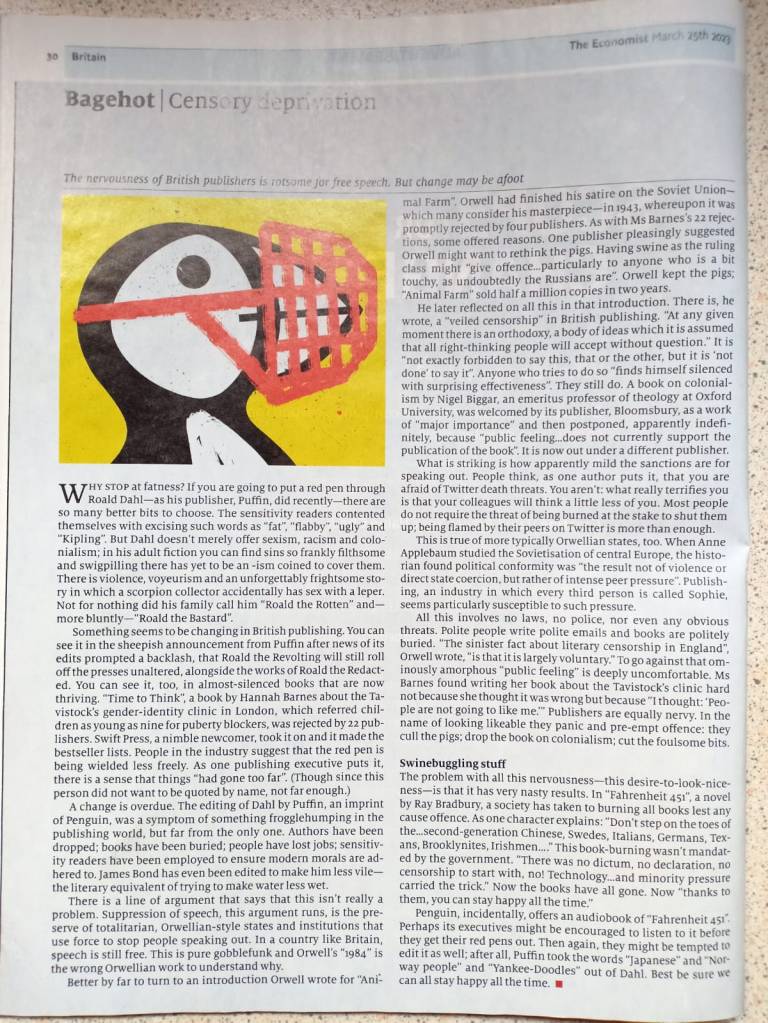






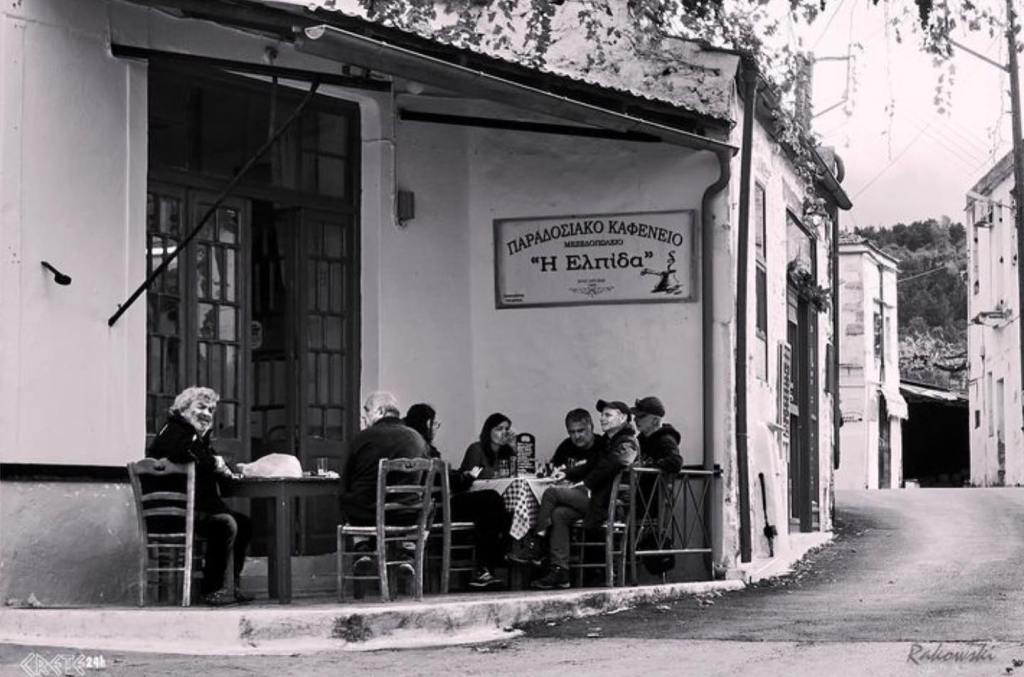


 CHATTING CRITICALLY