Musings on the politics of youth work, community work and society at large – dedicated to the memory of Steve Waterhouse, Malcolm Ball and Sue Atkins, great youth workers, comrades and human beings
I was then I wasn’t going to say anything about the heart-breaking events unfolding in the continuing tragedy, that is the brutal occupation by Israel of Palestine and most immediately Gaza. Simply to venture such an understanding is at odds with the version dominating our screaming screens, mobile or fixed. My empathy with the Palestinian cause, which goes back to the 1970s and refers to my critical allegiance to the secular Palestine Liberation Organisation [PLO] is to be dismissed, forgotten or ridiculed. To my shame, I was in danger of remaining silent.
Then, only a few hours ago the Home Secretary, Suella Braverman tells senior police officers that waving a Palestinian flag or singing a chant advocating freedom for Arabs in the region may be a criminal offence. In a letter to chief constables in England and Wales, she opines:
“It is not just explicit pro-Hamas symbols and chants that are cause for concern. I would encourage police to consider whether chants such as: ‘From the river to the sea, Palestine will be free’ should be understood as an expression of a violent desire to see Israel erased from the world, and whether its use in certain contexts may amount to a racially aggravated section 5 public order offence.”
In this Manichean simplistic obscenity, whereby it is demanded that we agree without a murmur what and who is Good or Evil, how long before even Facebook comments or even ‘likes’ not toeing the line are deemed heinous? Or even this innocuous questioning of the mainstream narrative is seen as unacceptable?
Whilst in accord with Marx himself I am no longer a Marxist I learned much from my days under the ideology’s influence. I remain indebted enormously to the insistence that all events must be grounded,, need to be understood in both their specific and historically intertwined circumstances. This profound, even obvious observation engages with the past and present, with contradiction and complexity, with the dilemma of defining the ethical and the moral, with what is right or wrong. It precludes shallow, immediate and opportunistic readings of what’s going on. It demands, following Aristotle, ‘phronesis’, the thoughtful interrogation of what is happening and what we might do for the best.
For now, if you have the time or inclination, I offer the following links to articles of a dissenting character, although themselves, perchance, too hasty and superficial, which I hope you will read in full.
The current outpouring of sympathy for Israel should make anyone with half a heart retch.
Not because it is not awful that Israeli civilians are dying and suffering in such large numbers. But because Palestinian civilians in Gaza have faced repeated rampages from Israel decade after decade, producing far more suffering, but have never elicited a fraction of the concern currently being expressed by western politicians or publics.
The West’s hypocrisy over Palestinian fighters killing and wounding hundreds of Israelis and holding dozens more hostage in communities surrounding and inside besieged Gaza is stark indeed.
This is the first time Palestinians, caged in the coastal enclave, have managed to inflict a significant strike against Israel vaguely comparable to the savagery Palestinians in Gaza have faced repeatedly since they were entombed in a cage in 2007, when Israel began its blockade by land, sea and air.
Western media are calling the jailbreak and attack by Palestinians from Gaza “unprecedented” – and the most dismal intelligence failing by Israel since it was caught off-guard during the Yom Kippur War exactly 50 years ago.
Israeli Prime Minister Benjamin Netanyahu has accused Hamas, which nominally runs the open-air prison of Gaza, of starting “a cruel and evil war”. But the truth is that the Palestinians have “started” nothing. They have managed, after so much struggle, to find a way to hurt their tormentor.
Inevitably for the Palestinians, as Netanyahu also observed, “the price will be heavy” – especially for Hamas is Israel’s creation. Israel will inflict on the prisoners the severest punishment for their impudence.
Many people don’t know this but Hamas is largely a creation of the Jewish state. For years, Israel encouraged Gaza’s Islamists as a counterweight to the secular nationalists of the Palestine Liberation Organization and its dominant faction, Yasser Arafat’s Fatah, helping to turn a bunch of fringe Palestinian Islamists in the late 1970s into one of the world’s most notorious militant groups, which has killed far more Israeli civilians than any secular Palestinian militant group.
Brig. Gen. Yitzhak Segev, who was the Israeli military governor in Gaza in the early 1980s, later told the New York Times Jerusalem bureau chief that he was giving money to the Muslim Brotherhood, the precursor of Hamas, on the instruction of the Israeli authorities. The funding was intended to tilt power away from both Communist and Palestinian nationalist movements in Gaza, and especially from Arafat (who himself referred to Hamas as “a creature of Israel”), which Israel considered more threatening than the fundamentalists. “The Israeli government gave me a budget”, the retired brigadier general confessed, “and the military government gives to the mosques”.
“Hamas, to my great regret, is Israel’s creation”, Avner Cohen, a former Israeli religious affairs official who worked in Gaza for more than two decades, told the Wall Street Journal in 2009. Back in the mid-1980s, Cohen even wrote an official report to his superiors warning them not to play divide-and-rule in the Occupied Territories, by backing Palestinian Islamists against Palestinian secularists. “I… suggest focusing our efforts on finding ways to break up this monster before this reality jumps in our face”, he wrote. They didn’t listen to him. What we’re witnessing is a classic case of blowback.
Israeli Bombing of Gaza, “I have ordered a “Complete Siege”… “We are fighting human animals”, Israeli Defence Minister SaysI – Global Research
Israel‘s defence minister described Palestinians as “human animals” and vowed to “act accordingly,” as fighter jets unleashed a massive bombing campaign on the Gaza Strip.
Yoav Gallant announced a “complete siege” of the Gaza Strip, an area of about 365 square km, and home to 2.3 million Palestinians, which has been under an Israeli-led blockade since 2007.
“I have ordered a complete siege on the Gaza Strip. There will be no electricity, no food, no fuel, everything is closed,” Gallant said.
“We are fighting human animals and we are acting accordingly,” he added.
The Israeli air force has dropped 2,000 munitions and more than 1,000 tonnes of bombs on Gaza in the last 20 hours, the army said on Monday morning, having shelled 20 high-rise residential buildings, mosques, hospitals, banks and other civilian infrastructure.
What Is the Gaza Strip?
Gaza was part of historic Palestine prior to the creation of the state of Israel in 1948.
Some 750,000 Palestinians were expelled from historic Palestine in what is known as Al-Nakba, or “The Catastrophe”.
More than 60 percent of Palestinians in Gaza are refugees, following the expulsion of families from other parts of Palestine in 1948.
Bordered by Israel and Egypt on the Mediterranean coast, the Gaza Strip is one of the most densely populated areas in the world.
Gaza was captured by Egypt during the 1948 Arab-Israeli War and was under Egyptian control until the 1967 Arab-Israeli War, when the territory was seized and occupied along with the West Bank and East Jerusalem.
In 2005, Israel purportedly pulled out of Gaza and relocated around 8,000 Jewish settlers and Israeli soldiers living in 21 settlements around Gaza to the occupied West Bank.
But in 2007, following the Hamas movement’s election victory in Gaza, Israel responded by imposing an air, land and sea blockade of the Gaza Strip.
According to international law, the blockade amounts to an occupation of the strip.
Since 2008, Israel has launched four invasions of Gaza, in 2008, 2012, 2014 and 2021, which resulted in the deaths of thouands of Palestinians, mostly civilians and many children.
The campaigns resulted in the destruction of homes and offices, damage to pipelines and sewage treatment infrastructure, impacting drinking water and spiking waterborne diseases.
In the last major operation in 2021, at least 260 Palestinians were killed in Gaza while 13 people were killed in Israel.
Open-air Prison Israel’s blockade systematically denies Palestinians access to services, hospitals, banks and other vital infrastructure, leaving the population to exist in fraught living conditions.
The blockade has also resulted in a perennial shortage of clean water, electricity, and medical supplies in what is often dubbed the world’s largest open-air prison.
Roughly 97 percent of Gaza’s drinking water is contaminated, and residents are forced to live with constant power outages due to a power grid that has been heavily damaged in repeated Israeli attacks.
Meanwhile, close to 60 percent of Palestinians live in poverty, and youth unemployment sits at 63 percent.
According to UNRWA, the UN agency that cares for Palestinian refugees, years of conflict and blockade have left 80 percent of Gaza’s population dependent on international assistance.
At our last CC meeting on September 6th, we agreed to continue the discussion on Climate Change at our next get-together on October 4th. Participants were encouraged to provide further links and comments as a stimulus to our individual and collective thinking.
Brenda got the ball rolling by drawing our attention to the video circulated by Marie-Martine of an interview with sceptic, Steve Koonin.
Brenda ventured the Steve Koonin link Marie-Martine sent us is eye-opening, and I feel it would be really good if everyone listened to that before coming on 6th October. Real fuel for a debate! A “man in the know” expressing his opinions on whether climate change is even really a thing…
This prompted a welcome and critical response from Jane Roberts.
Regarding Steven Koonin. A modern-day Freeman Dyson but arguably more extreme. Both are physicists who have chosen to criticise climate scientists. They’re not climate scientists.
Some flaws in the video: Complains about models being insufficient as did FD. But in its place he suggests the simplistic approach of taking the 1.3 increase of the last century and therefore assuming we can do the same this century and just “adapt”. How many centuries can we continue like that? Where is the tipping point – or is he sure there is not one, if so he remains silent on this.
Says it’s not his place as a scientist to discuss moral and political issues – then holds up unfairness on the third world as being a part of his argument.
Spent a lot of the discussion around anecdotal evidence. For example the argument that “there have always been extreme weather events” is made purely qualitatively- he makes no attempt to be quantitative.
Likewise his suggestion that deaths from extreme heat can be discounted because deaths from cold are greater. That may be true, but here is some quantitative data on deaths from heat, published this morning https://www.bbc.com/news/uk-66890135
Positioning a 1.5 degree temperature rise as “under 1%” must be deliberately disingenuous. He is referring to under 1% of a temperature scale which falls to absolute zero (ie – 273 degrees C). But the range of temperatures at which life can survive is much smaller that 300 degrees, so this is a transparent distortion of the % and potential impact of a 1.5 degree rise.
Arguments about the cost of action seem out of place for him as a scientist too – yes it is huge – but those arguments are not for scientists either. But perhaps he has little to say as a scientist, because he is not a climate scientist?
The interview is odd as the interviewer never challenges him. He appears to be conducting the interview purely to give Steven Koonin a platform.
My overall thought is that we simply cannot risk inaction. It’s true that climate science is a relatively young science. It is not as developed as physics – and he may find that deeply unsatisfactory as did Freeman Dyson. Having acknowledged that however either he’s right or the climate scientists are right. We have no real way of telling. Surely we owe it to future generations to act – in case the climate scientistsare right?
All the best
Paula has suggested this controversial alternative perspective.
The claims made in this hard-hitting, uncomfortable yet extraordinary crowdfunded documentary by Dr Steven Greer shows how the industrial-military complex together with human nature have conspired to keep us all in the carbon age for our electricity and transport far beyond when the invention of ‘free’ energy became known. It explores the lost century and the science we have made secret for so long and asks how we can reclaim a lost century before it is too late.
Do not watch before bedtime as it is depressing and exciting in equal measure!
I’d be interested to hear if you think this is real or just another conspiracy theory.
Taking Action Through Process and Debate
The recent and concerning collapse of the once revered scientific process in large parts of the climate change and the medical community is detailed in a highly critical ‘open review’ paper from the Global Warming Policy Foundation (GWPF). Someday, charge the authors, there will need to be an inquiry into how so many scientific bodies abandoned core principles of scientific integrity, took strong positions on unsettled science, took people’s word for things uncritically, and silenced those who tried to continue the scientific endeavour.
Find the report here – a draft out in the public sphere for debate but ignored by the mainstream media.
At present the UK has a Climate Change Committee (CCC) responsible to the Government for advice on both mitigating and adapting to future climate change. Again, this body has no ‘red team’ to challenge their many reports. One thing a ‘red team’ would have done is to insist on looking at the whole trajectory of the route to net-zero and try to estimate the financial, material, human resources, ecological and societal costs involved.Just to expand the electricity system (extra generation, transmission and distribution) to cope with the extra demands of electrified ground transport and both industrial and domestic heat is estimated at £1.4 trillion, with 40,000 professional engineers devoted to this project alone for 30 years from now until 2050 (https://www.thegwpf.org/content/uploads/2022/03/Kelly-Net-Zero-Progress-Report.pdf . There may be an error of as much as 50% in these estimates, but certainly not a factor of 10. The electrification of heat and transport is only one part of the net zero target. In spite of a decade of advice, this firm grip on the scale of the problems of getting to a net-zero economy by 2050 is not to be seen spelt out in any of the CCC advice. Indeed the competences of the committee members do not extend to these extra considerations.
A key issue with red teams is to keep them from being ‘stacked’ by biased individuals, including political favourites or corporate shills. However, it is often very rapidly apparent from online discussion of research that there are some highly experienced and competent scientists who are dissenting – with logical criticisms of the ‘mainstream’. Indeed, these scientists can often be identified conveniently by the ferocity of online bullying and ad hominem attacks on their capacity and integrity by some of the enforcers of alleged ‘consensus’. In the early days of Covid some powerful dissenting voices emerged on social media such as Twitter (now X), who despite being vilified and censored have proved correct.
And a provocative excerpt from a disagreement between Rusere Shoniwa and Jonathan Cook
Cook falsely claims that I and other sceptics demand “that we wait and see how things unfold”. He then articulates a common but highly ignorant and dangerous notion of managing risk in which he posits that “even if you imagine there is some room for doubt, you should still be pushing hard for things to be done to minimise climate change and related ecological catastrophes if only on the precautionary principle”. [emphasis added]. So let’s deal with this.
First, the “wait-and-see” accusation is both false and irrelevant because it is intended to obfuscate the point I wanted to stress – it would be incredibly foolish to incur huge costs to avoid a crisis without sufficient scientific evidence for the existence of the crisis. The precautionary principle does not come without a price tag, and this is what Cook is trying to sweep away. You simply do not incur costs to avoid a crisis until you have compared those costs with the cost of the risk you are seeking to avoid. The methods for doing that are scientific, and they involve probability assessments of both sides of the equation. The sweeping application of the precautionary principle is the product of an asinine, bloated, bureaucracy-infested professional managerial class whose primary purpose is to justify its existence by manufacturing and then exaggerating risks to manage.
The costs involved in averting a ‘climate crisis’ are colossal. They involve choking the economies of the entire world. Depriving all economies, but especially poorer economies, of cheap energy and fertilisers that enhance crop productivity raises the very real prospect of killing millions of people already below the poverty line. How can any sane person be content with that horrific prospect, especially when the risk being avoided – the climate crisis – is not based on a ‘settled’ scientific proposition? I would never advocate for that position even if the ‘climate crisis’ were ‘settled science’, partly because ‘settled science’ is an oxymoron, but mainly because it can never be acceptable to kill one group of people in the expectation that you might save another group, now or in the future. That’s the alibi that has been used by every evil tyrant since the dawn of time, and it appears to be the stock-in-trade of ‘progressives’.
Another provocative argument to be found in this article, The Left is losing the climate class war Punishing the workers won’t save the planet BY MATT HUBER
Why do these climate policy technocrats repeatedly shoot themselves in the foot? Because, at the heart of their thinking, there is a deeper moralism that won’t let political reality get in the way of their historic mission. Ultimately, such approaches might be dubbed “techno-behaviouralism” — insisting that the main challenge of climate change is to reform the immoral carbon practices of dispersed consumers throughout the upper, middle and working classes. Rather than tackling the problem of who owns and controls fossil-fuel-based production (a relative minority of society), carbon behaviouralism aims its sights on the “irresponsible” choices of millions of consumers of all classes. It hopes to use policy tools to get them to drive less (or drive more efficient cars), insulate their homes, eat less meat, fly less. One notorious study in 2017 even went as far as to advise individuals to not have children.
The first phase of this policy outlook was to use the disciplining force of the market — particularly the price mechanism — to “nudge” consumers toward low-carbon choices. But now the severity of the climate crisis is forcing these technocrats to ratchet up their strategy to outright coercion: banning fossil-fuel boilers, gas stoves, internal combustion engines, or forcing farmers to rapidly implement costly practices. Rather than winning them over to an attractive political project, the masses must be reformed into more virtuous low-carbon practices. And even when the climate technocrats focus on society’s rampant class inequality, they only morally reprimand the lifestyles of the rich — their private jets, for example. They hardly ever consider how the rich make rather than spend their money: organising investment and for-profit production with likely far greater effects on the climate.
Also, see this long but moving piece in the Guardian
We may be getting better at talking about the mental health crisis, but few connect it to climate breakdown. Scientific studies show that young people are more likely to suffer from climate anxiety and a Lancet study of 10,000 young people living in 10 countries found that 56% believe humanity is doomed. “Most people who are polled think that mental health issues are something to do with either a chemical imbalance in the brain, some sort of neurological glitch, or genetic. That model is completely outdated,” says Hertzog Young. “There are so many demonstrable links between social, ideological, ecological and material realities outside the brain that have a far greater impact on mental health. Climate change is throwing so much pain, trauma, stress, angst and cultural toxicity at us. It can breed distrust, apathy and nihilism and it can also breed deep fear. Even for people who are experiencing the climate crisis at a distance, through the lens of the media, there’s a medically recognised causal pathway to depression, anxiety and PTSD.”
Looking ahead Steve and Brenda suggested possible topics for future discussion
There seemed to be a feeling it might be hard to come up with more topics for discussion. I thought these might be helpful. Do social media cause harm? Freedom of speech: Is it under threat? If so, how can it be saved? Democracy Does it exist? Is it under threat? If so, how can it be saved? How tolerant should the West be of other cultures, especially when there is a conflict with western ideals such as women’s liberation?
In the future, could we discuss the topic of reparations? And was self-censorship covered in the session on literary censorship which I had to miss? Is Euthanasia too old a chestnut to crack? What about, at least, care of the elderly? What would people think of having a train line from E to W Crete? Is recycling being conducted properly? One could go on and on.
Our next CC meeting is at Brenda’s on Wednesday, October 4th, starting at 10.30 a.m. I’ll send the details out again to the group via email with a map.
Yesterday in my home area back in Lancashire the Diggers Festival continued to celebrate the life of Gerard Winstanley and the history of the True Levellers or the Diggers as the group became known. The following is taken from the Diggers Festival website
Gerrard Winstanley & The Diggers In 1630, a 21-year-old textile trader moved to London. He did well at first, but as a result of the abuse of power by both the King and Parliament and then the outbreak of the English Civil War which started twelve years later, he saw his business ruined and in 1643 he became bankrupt.
His father-in-law helped him move to Cobham in Surrey, where he initially worked as a cowherd.
However, by the time of the defeat of the Royalist side and King Charles’s execution in early 1649, he and a group of others in a similar situation had got together to represent the voice of the common people, and especially that of the propertyless poor.
The man’s name was GERRARD WINSTANLEY.
He soon became the key spokesperson of the group which the people living at the time referred to as ‘THE DIGGERS’, but who were also known as the ‘True Levellers’ as distinct from another group led by John Lilburne, Richard Overton and William Walwyn known as ‘The Levellers’ who while seeking equality before the law, and an extension of the right to vote for most men, did not support the abolition of private property and common ownership of the land.
The Diggers ‘nickname’ came from their belief that the land should be available to every person to dig and sow, so that everyone, rich or poor, could live, grow and eat by the sweat of their own brows, as according to them “The earth was made to be a common treasury for all.”
THE DIGGERS also advocated absolute human equality including equality between men and women which in the 1600s was a very radical idea indeed.
WHAT DID THE DIGGERS DO?
Instead of simply voicing their opinion through the books and other papers GERRARD WINSTANLEY wrote, he and THE DIGGERS, who consisted of mainly poor families that had no land of their own (as the land was only owned by the rich) decided to take direct action by taking over common land that belonged to no one, and which was not in use, and started to farm it, to allow everyone who worked the land to eat.
At first, this went well, but unsurprisingly the ideas of THE DIGGERS were considered extremely dangerous by those with a vested interest in the preservation of privilege, property and power.
As more of these communities appeared rich landowners and the corrupt government sent soldiers (see drawing from the time depicting this below) to beat them, destroy their homes and crops and drive them off the land they were occupying.
SO WHY HAVE A DIGGERS FESTIVAL IN WIGAN?
Well, the simple answer to that is that GERRARD WINSTANLEY was born and raised in Wigan. It is also, from the earlier action of Wigan Clay and Coal ‘Diggers’ who established their right to dig up local common land for clay and coal, it is suggested by some Winstanley scholars, that he drew his inspiration for his own actions in 1649.
As well as being able to find out more about the life, ideas, and actions of this great Wiganer, we want to celebrate him and THE DIGGERS’ movement with a festival of live music, poetry, film, great beer, and most of all a re-born sense of community spirit amongst ordinary people everywhere.
A FINAL NOTE
Historically GERRARD WINSTANLEY and THE DIGGERS movement was, and is, one of the most important parts of the English ‘Revolution’ of 1649.
This is recognized globally with GERRARD WINSTANLEY amongst those listed on a monument dedicated to ‘The great Socialist thinkers’ in Moscow, Russia.
We think Wigan should be proud to be the home of such an important historical figure, especially as he was the voice for many ordinary people then.
“For freedom is the man that will turn the world upside down, no wonder he hath enemies”
Political debate as well as good music and real ale
I am not sure if this is ignorant and unfair but the key people behind this important, locally-rooted initiative might well be described as coming from the Bennite, later Corbynite social-democratic wing of the workers’ movement and the Labour Party in cooperation with more anarchic and dissident elements. I wonder aloud to what extent these oppositional voices, inspired by the Diggers’ struggle against Authority, are discussing the political consequences of the Left’s capitulation and indeed incorporation into the State’s fearmongering authoritarianism of recent times? Or as seems to be the case, are even activists in a state of COVID denial?
It’s good to see the desire to host a cash-only festival, not only to escape bank charges but to resist the ultimate control of our existence the banks and the ruling class desire.
I’ve pasted this acknowledgement of Susan Atkins’ inspirational dedication to a challenging young person-centred, process-led youth work from across on the old IDYW website. It might be of interest to some.
I am not sure Sue will thank me for noting that, committed as ever in her ninth decade, she continues to defend. to borrow a phrase, ‘youth work that is volatile and voluntary, creative and collective – an association and conversation without guarantees’. She remains an inspiration and it’s a pleasure to draw your attention to her latest Youth Association South Yorkshire [YASY] Annual Report.
Youth Association South Yorkshire Annual Report 2023
Locally, nationally and globally our world seems to be entering another period of transition. We have weathered so many changes over the years as an organisation. There were the rich years when we were able to support organisations across the city with training in Youth Work Practice, together with supporting young people and their workers with programmes in Arts, Health Education & Accreditation of their chosen activities; when we linked up with Regional, National organisations and their infrastructure. The more recent times of diminished resources have seen changes in national policy bringing in ‘austerity’, the cost-of-living crisis and local government’s reduced ability to support development to meet the ever-growing needs of young people, especially those who have missed out on their education.
Once we were able to respond positively and creatively to issues raised by the young people we encountered; to support them and reflect their voices and experiences at Regional and National levels. Young people themselves were active and engaged in their communities and with each other across our city. Thus we have an enormous bank of goodwill and living networks among many of those young people, now adults with their own families, but the resources to carry on that work are no longer available.
Our story now is one of a much more restricted ability to meet and respond as once again the ground shifts, and yet again YASY adjusts, adapts, and looks for ways of continuing to develop our services to support young people and those who work with them. Sheffield Council have made a commitment to restoring open youth clubs across the city, and we were successful in winning their contract to deliver Youth Work Training across the statutory & voluntary sectors.
People tell me that Youth Work, has changed, that young people have changed since my day. Hello, I’m still here! Of course, things change, food has changed the way we eat, where we eat has changed AND the bottom line is we still need to eat, still need food. We also know now that the quality of that food is significant for the way we develop and lead healthy and productive lives. So yes, we live in an ever-changing world, yet there are basics, like food we always need.
For the last 150 years, some form of Youth Work has taken place. On reflection, this has always been about creating spaces for young people, maybe originally to convey certain aspects of lifestyle and ‘build character’. Yet, for me, Youth Work has always sought to enable & facilitate young people within that space to test, explore and flourish, to discover their hopes & dreams and find their focus and direction.
You may notice we have changed our address; we have downsized. In that process, we have packed up boxes of the accumulated story of Youth Work both in Sheffield and beyond, including over eighty years’ worth of our organisation’s Annual Reports. Of those, I have introduced at least twenty. Looking back over those reports, and the hundreds of other documents, in the photographs and personal stories we have assembled that are packed in boxes in our new home, a really vivid picture emerges. It demonstrates the state of Youth Work in our City, and maybe more significantly reveals the current issues faced by young people and our ability, or lack of ability, to respond to these.
We are planning to work with others on bringing these archives alive, they tell a story of social history, of young people who made it in Sheffield, of social & political change; there are lessons to be learned that could stand us in good stead as we face the uncertainty of the ever-shifting global landscape that is the future.
As for now, I am pleased and somewhat relieved to be introducing this Report on behalf of the Youth Association South Yorkshire, affectionately known as YASY. In the words of that anthem of the 80s, ‘We WILL Survive’! We look forward to continuing to play our part in the regeneration of Youth Work in communities that is happening right now across the statutory & voluntary sectors here in the City of Sheffield.
Our next CC meeting will take place on Wednesday, September 6th at – Γάιδαρος ΚοινΣΕπ in Vamos – from 10.30 a.m. to noon.
Steve Brimley will lead a discussion on the hot topic of ‘climate change’. To help us prepare for what will be a challenging conversation Steve has sent these links, which he will be drawing upon in his opening contribution. Much appreciated.
My latest shoveling into the IDYW archives for pieces, I think, remain of interest and pertinence.
Back in June 2009, Jean Spence, a leading voice in youth and community circles through her endeavours as a lecturer at Durham University, through her valuable research – see ‘Youth Work: Voices of Practice, available as a pdf – and her pionering contribution to the emergence of ‘Youth & Policy’ in the 1980s, gave this contribution to a Leeds ‘In Defence of Youth Work’ seminar. Within it she engaged particularly with a certain anti-intellectualism within our work, which seems to persist , even unto the present, despite our status as a graduate profession. Her thoughts are not past their sell-by date.
Jean on her retirement from the Y&P Editorial Board in 2016
I’m glad to be able to make an active contribution to the series of meetings organised in Defence of Youth Work.
The last meeting that I attended was in Newcastle a couple of weeks ago, where I think more than 90 people turned up. Meetings being picked up in other parts of the country suggest that the Open Letter has touched a nerve amongst those of us who have some commitment to youth work.
Clearly if we feel the need to defend youth work, we must be also feeling that it is somehow under attack. The nervousness, not to say antagonism of some of the managers of local authority services to the North East event highlighted the fact that organising to defend youth work cannot be undertaken naively – it cannot be assumed simply that defending youth work is a straightforward matter of supporting good workers who are working for the good of young people and not being appreciated. Life is more complicated than that. At the very least, if we are discussing attack and defence, we are inevitably engaging in conflict – and there is some need to understand who will be on what side in the conflict, and for what reason.
I don’t want to complicate things too much, but I do want to draw upon some of the issues which were raised for me through my participation in the Newcastle event. Later, and partly in recognition that this event is also to celebrate 20 years of Community and Youth Work education in Leeds, and Marion Charlton’s 30-plus years contribution to the education and training of community and youth workers, if I have time, I want to draw a little from a celebration event that I attended in the same week as defending youth work. This was a 30-year celebration of a voluntary youth project where I worked between 1979 and 1985 as a detached/neighbourhood youth worker with a remit to focus on work with girls and young women. These two personal experiences raised all sorts of questions for me and I want to offer some of these questions to you for debate in the hope that there are some universal concerns in them about youth work.
Firstly, to go back to Newcastle. That event was attended by academics, managers and practitioners from a wide range of projects, practices and working approaches. During its course, we addressed the question of what it was we wanted to defend which involved considering the focus of youth work. Among the various propositions, I heard an academic suggest that the focus should be upon civil society and democracy. This was countered by detached youth workers who wanted to focus upon the process of listening to young people and the following discussion in a small group became oppositional. The language used by the two parties was operating in two different planes. In response to an effort to create a conversation wherein the two sides might find common ground for conversation, I suggested the possibility of listening ‘in context’. Implicitly, listening in context is connected with questions of civil society and democracy because it is a listening which understands the circumstances not only of being young, but of being situated in sets of social relations which are inherently unequal. Listening effectively and actively requires some knowledge on the part of the worker. They might need to know something of youth subcultures, but under this, they might need to know something about class and poverty, about racism and sexism, about the realities of global displacement, about structural relations of power in which some voices are silenced and in which listening must be an active process of encouraging speaking, not just the speaking of individuals, though that is important, but the speaking which enables groups to find collective voices and thus to combine and act on their situation. Just as the ‘In Defence of Youth Work’ meetings are attempting to do for youth work as a profession silenced in a set of power relations. There is a direct connection therefore between questions of power, voice, listening and speaking, and issues of politics, democracy and civil society.
Now I know I must own up to being some sort of an academic – even if the academy has a highly ambiguous and grudging relationship with my area of knowledge relating to community and youth work – and therefore I might be perceived as someone who does not understand the realities of practice. However, I was shocked at the response to my efforts at finding common grounds for discussion. Firstly, the meaning of ‘context’ was misunderstood: it was assumed that I was referring to ‘place’ and therefore the protagonists felt it necessary to inform the group that not all young people congregated where they lived. Secondly, perhaps in pursuit of the point, the detached workers insisted that youth workers needed to know NOTHING. Apparently, all youth workers need to do is learn the skills of listening to young people. I hope I am not misrepresenting the case or offering a caricature here, but I was left with the distinct impression that the position that was being taken, that what we were being asked to defend, was a process of youth work as listening, in which the youth workers act as sponges, absorbing what young people say to them. I have yet to discover what youth workers are then to do with such listening. Of course, not all youth workers were taking this position, but it did force me not only to repeat to myself the question, ‘What exactly are we trying to defend?’ but it also make me ask, ‘Do I want to defend this? Am I on the same side as those detached workers?’
Here the ongoing and perennial tension between academics and practitioners, between theory and practice starts to raise its ugly head. This tension is not a new one. In some of the historical work which I have done the question emerges time and again as part of the struggle for professionalization. I digress for a moment, but it is interesting to see how the earliest youth workers in the late nineteenth century, who were integrated within the broad set of activities known as social work, which included community work, welfare rights work, campaigning and various other types of social intervention, and which even sometimes laid claim to the concept of socialism as a term to describe their interventions, it is interesting to see how for the pioneers of this work, there was no split between theory and practice. Indeed, practising social, community and youth workers were also pioneers of the new discipline of social science and it was only when social science began to be accepted within the academy that the split began to happen.
Anyway, to put that to one side, for a moment and return to the reality of the present tensions, in the plenary session, one of the organisers felt it necessary to say something about the fact that this was a grass roots organisation of workers and to underline the point, to say that they wouldn’t be using long academic words and jargon in their approach. No doubt this was said to encourage those who might be intimidated by academic pretensions, and later it was suggested to me that this was in response to the academic use of the word ‘hegemony’. Nevertheless, it came across as pandering to an assumed anti-intellectualism amongst youth workers which to my mind is part of the reason why the profession has been so weak and is now in so need of defending. Can anyone tell me why youth workers should not understand the meaning of hegemony? And if they don’t understand it, why they shouldn’t seek to understand it?
This question is particularly important given that one of the points most frequently reiterated in the feedback from the group discussions was that youth work needs to promote what it does more effectively, that youth work voices need to be heard in appropriate places, and that youth workers should make more effective use of the media in order that they should receive credit and status for their achievements. This is fine, but I do wonder if this is all. Indeed I wonder why we think that youth work is so unknown. There are some grounds for believing that on a day to day basis those who are not involved in youth work don’t really appreciate the complexity of the work, and sometimes confuse it with other social services. There are also some grounds for thinking that related professionals in health, social work, and teaching are sometimes, though not always, vague about youth work, but I am not sure that this can be said to be true of politicians and policy makers. There is now a distinct body of research which demonstrates what youth work does and what it achieves, some of which itself has been commissioned by government and there is a whole programme of policy which relates to youth work practice. The inclusion or omission of youth work from policy directives seems to me to be self conscious. And here we might do well to remember that some politicians don’t actually like some aspects of youth work which many youth workers consider central to their practice identity. To paraphrase an extract from Bernard Davies and Bryan Merton in an article about to be published in Y&P:
One Children’s Minister (Margaret Hodge) generated the headline ‘Youth clubs can be bad for you’ (Hodge, 2005; Ward, 2005); and another (Beverley Hughes) asserted that youth work must be ‘primarily about activities rather than informal education’, with ‘self-development’, though welcome, not seen as an essential goal (Barrett, 2005).
There are not a few MPs who themselves have been youth and/or community workers and often I hear youth workers speaking on the radio in response to some issue that has arisen about young people. So how does this square up with the idea that the work isn’t known? I would like to suggest that the tension between theory and practice in youth work has to be considered in order to understand why youth work is either misunderstood or dismissed. It is no good promoting it. What we have to do is demonstrate in practice that it is a profession with distinct characteristics and that includes, with intellectual credibility, with a historical tradition, with a discourse of its own, and with a desire to engage critically with lively, open and informed debate and action relating to young people and to the type of work we think is central to the profession. This debate is not about promotion. It is about professional, intellectual and political engagement in the areas that are relevant to our work. Ultimately it returns to questions of democracy and civil society.
And this brings me back to the fact that the academic in my Newcastle group has a particular interest in community development raising an enormous question about the distance between the language of community work and that of youth work. As Jeffs and Smith argued years ago, the thrust of policy since the Thatcher period has been towards an increasing individualisation of youth work. Incrementally, youth work has been moved away from working with groups, away from working with political issues, away from working with local cultures and questions of community identity, away from working with the large social issues of poverty, class and social inequalities. As I tried to argue in ‘Youth Work: Voices of Practice’, what is central to the self understanding of the youth worker, has become marginal in the contemporary conditions of practice. And those things which should be secondary, have been made primary. So instead of working with potential, we are required to work with problems. Instead of working educationally, we are required to offer support. Instead of seeking partnership with colleagues on the basis of issues arising from our engagement with young people, we are required to be integrated from an organisational perspective. And most importantly, instead of being able to use the privilege of professional status to build confidence, and trust, and to make professional decisions about risk and about sharing with others, we are required to act as technicians delivering policy directives and feeding information into highly dubious systems. Insofar as we are increasingly driven towards children’s services and social work, so we are incrementally driven away from community and community work issues. The consequence is an absence of political engagement. Do we think that work with young people is not political? Do we think that we can work with young asylum seekers without dealing with the disgrace of policy in these matters, without dealing with global issues, without thinking about racism and sexism, without considering community identities for instance?
So if we are keen to defend youth work, what do we want to defend? It really is the simple question but it is meaningless without considering what we need to build and what we need to attack and destroy. We can have no chance of answering these questions without engaging in critical and informed debate. So the second question must be:
How can we hope to engage in critical and informed debate if some of us continue to denigrate theory, if we do not acknowledge the value of intellectual understanding and the importance of continuous learning in what we do. So how do we challenge this tension between theory and practice? What can we do about it?
And linked to the need to develop a disciplinary discourse for professional youth work, is the question of where we would like our field of knowledge to reside. How do we think about the core of our practice? Is it within the disciplinary domain of social work, or education or politics or community work? Or is it worth thinking of it as different from all of these and if so, can we build a unique body of theory around its core practices drawing from the related disciplines and professions without being sucked into them as second-class actors?
And having asked these questions, I want to turn to the questions which emerged from my 30 years of Southwick Neighbourhood Youth Project anniversary experience. Firstly in this regard, I would like to say that there are some advantages to growing older and one is the privilege of being able to attend more of such events and through them to gain a view of the longer-term impact of youth work practice, education and training. It is easy at gloomy moments to think that we have little impact but a reunion or an anniversary celebration can really inject some optimism about the importance of youth work. I first had a sense of this when I went to the launch of Celia Rose’s book on the Clapton Jewish Youth Club. There was a gathering of people who had been members of the club from as long as 50 years ago. Some had even travelled from the USA to meet old friends at the Jewish Museum in Finchley where the event was held, and it was seriously moving to hear people’s testimony to the positive impact which the club had had on their lives. I once interviewed a man who was a member of a Sunderland boys’ club during the 1930s which was a hard time in Sunderland as everywhere. This man had returned to Sunderland on his retirement, having been an engineer and an FE teacher in Lewisham. I asked him what membership of the club had done for him, and he told me that it had made him believe that he could be somebody in a world where that message was coming from nowhere else. He retrieved and showed me the reference which the Warden of the club had written for him to help him in his search for jobs, and he firmly believed that any success which he had in life, had been a consequence of attachment to the club.
Southwick Neighbourhood Youth Project, known as SNYP, emerged from the Inner City partnerships of the mid 1970s. It started as a small youth club in a Neighbourhood Action Project (SNAP) and was successful in gaining Urban Aid funding for 3 years in 1979. I was appointed with one other full-time worker as a neighbourhood and detached worker in early 1979 and was very pleased to be given the brief to work focus my attention on work with girls. The project was situated in an area of Sunderland which had had a long history as a village, only joining with the town in 1923. It had retained a strong village mentality and community identity. Many of the people who lived there had done so for generations and they tended not to travel far. There was no way any outsider could work with the young people of that area without addressing the question of community, without being accepted by the community and without understanding something of the local culture and family relations. The industrial development and growth of Southwick had been built upon shipbuilding and mining. As a consequence, the local culture was strongly masculine in a very old-fashioned sense. Men and boys ruled OK and there was a general acceptance of this truth. The area was also almost completely white and most of its inhabitants were unselfconsciously racist. So as youth workers we had to work very self-consciously to know and understand local social relations, and this meant local history and culture as well as active relationships between people, and at the same time, in order to mobilise the principles of equality and justice which we brought as core values to our work, we had to work critically and developmentally with the sexism, racism and homophobia which were part of the everyday relations of that community.
By the time I left Southwick in 1985, these issues were becoming more acute and pressing as the industrial base which underpinned social relations and local culture and community disintegrated and the youth job market collapsed. Problems associated with displaced working class masculinity, including violence and crime increased, and racism became more active as a poor area became even poorer and as the young people became increasingly hopeless about their future. Although the language we used was not the same as today, the workers in SNYP understood their youth work with reference to both the context of the local community and with reference to a broader set of values about the type of social relationships we wanted to encourage. We were in no doubt that our work was political, that it was allied to community work, that it was educational and that it was concerned with groups, social change and social conflict as much as, if not more than with individual support and social cohesion.
So what did I find at the 30 year celebration and reunion. Firstly, I found lots of aging young people. And some of their parents. Those who I had worked with when they were in their teens, were now in their mid to late forties. One whole family had turned out, the parents telling us that they had just celebrated their golden wedding. Secondly, I found how poverty had taken its toll with tales of accidental deaths, suicides, alcoholism and serious ill health amongst some. In those tales, it was strikingly obvious how services failed to meet the needs of people in poor communities. I also heard tales of rags to riches and great escapes. However, what was most touching were the repeated tales of how SNYP had broadened the lives of so many of the young people who associated with it.
One woman talked with some passion about how we had shown her different types of food and how we had taken her to Kent, and shown her things she could never have seen otherwise when she had never previously been out of Sunderland. Actually, we took her to Belgium, but what was important was Kent. It was like the other end of the world to her.
Most significant for me, a woman who was a lesbian who just wanted to tell us how important it was to her that we showed her how to ‘get out’ and how she had been trapped and would never have found the way out had it not been for the youth project. Never in all that time did we ask her to address her sexuality, or refer to her sexuality, or make an issue out of it, even though we knew about it. But of course we were addressing it by providing a physical space for her to participate in a project in which she knew that prejudices were challenged, where justice was central and where there were opportunities for moving beyond what was given.
And I was left wondering at the end of that night, in the end, is this all that I want to defend in youth work? The right to work with people in a way which accepts and understands who they are and why, which addresses inequality and injustice and which offers opportunities for them to broaden their lives? I think it probably is. And ultimately, this is the right of a professional worker, based upon responsibility, knowledge and skill, to interpret the context in which they need to work with young people and strive with them for a justice in a wider world than that into which they were born. This means defending a whole understanding of the meaning of professionalism which is clearly at odds with the technical definitions of professionalism to which we are currently being asked to subscribe. And this leads me to my last three questions for informing your discussion.
The first is about the extent of our claims for the value of our engagement with young people. What do we really offer? Is it certificates, information, advice on applying for jobs, information about sexual health and healthy eating ? Or is it the space in which to experience difference, to consider alternatives and to learn about things which might not otherwise enter the frame of lives limited by poverty, silence and injustice?
The second is about organisations. Is it an organisation like SNYP that I want to defend, or is it simply a way of working that is expressed in some organisations? Is there a dange that in defending youth work, we simply try to hang on to our own organisations?
The third concerns the meaning of professionalism. How can we be professional youth workers if the space to take risks, to criticise, challenge and develop alongside young people is closed? What do we want to defend, and what do we want to open up? Do we think that the promise of professional status which is supposed to accompany the degree level qualification in 2010 means that we will achieve the type of professionalism that we need?
My final word today is my own view. Do not think that youth work can defend its practices in isolation or that it is the only profession under threat. One of the central threats to all the people professions, is the incremental removal of opportunity for self defined collective organisation, conversation and informal space in everyday practice. To quote a favourite academic of mine – Stuart Hall: Speaking at a seminar in Durham in 2001, and referring to the policy initiatives of New Labour, he said ‘This is the most deeply penetrative government we have ever had’ and to add to this insights from Jeffs and Smith, it is also one of the most deeply authoritarian administrations we have ever experienced. Government has colonised professional practice from the centre down. And if we do not think that our practice is and our action is political in this context, then our practice is not worth defending and our action will be pointless.
If I have to pull out three key questions from this, they are as follows:
Is all our practice worth defending and what should we defend?
Is there a need to address the tension between theory and practice, between the academic and the practitioner as an aspect of our defence? And if so, how do we do it?
What can youth work legitimately claim about its achievements, and how do we know or evidence these achievements and use them to support our defence of youth work?
On a number of occasions, both during and post the pandemic, faced with overwhelming professional compliance and collusion, I have expressed my despair and dismay. As best I can see and I have scoured the mainstream and alternative media for dissident voices, almost to a person, the education profession has collaborated with utterly unnecessary draconian restrictions on children’s and young people’s lives. I remain perplexed that teachers, play and youth workers, together with lecturers claiming as a result of their training to be politically informed and critically reflective could acquiesce with scarcely a murmur to a shoddily evidenced, glaringly opportunist and organised global intervention that mocked the very notion of sovereign democratic states. To add to my perplexion education professionals, amongst others, are prone to waxing lyrical about the importance of ethics, of codes come to that, yet they remained silent, nay colluded with the unethical campaign of fear concocted by SAGE’s unholy team of behavioural psychologists.
Perhaps most upsetting is that we now observe a profession in denial. Contradictorily, given the less than unusual coronavirus was marketed as an existential threat to humanity, it’s almost as if nothing much happened really. Apparently, there’s no need for any of that reflective malarkey, better the well-worn brush under the carpet. Thinking only of my old back garden in Youth Work, I suspect I will wait in vain for the appearance of any self-critical piece, ‘What Did We Do In The COVID War?’ from the likes of the National Youth Agency, the Centre for Youth Impact, the Training Agencies or the trade unions.
Without a hint of embarrassment, it’s business as usual after the unusual. There’s an unsaid caveat though. If anything unusual, as decided by our betters, does come up, we will again do as we are told and keep our mouths shut – for the common good, I’m sure. For what it’s worth I think, this would be tragic. These are not normal times. More emergencies await us. More than ever we need to talk openly to one another without the fear of being wrong, trashed or smeared.
I take comfort and inspiration from the following.
The price of speaking out
The author of this article is Mike Fairclough, a headteacher who blew the whistle on what he felt were serious safeguarding concerns about the impact of Covid interventions on children. Though whistleblowers are in principle protected by the law, he has been repeatedly smeared and victimised for voicing his concerns. Here he tells his story.
There is a great deal of discussion in the media about free speech and censorship. What are we allowed to talk about and who has the authority to silence us? Particularly in the wake of the pandemic — a period which saw increased anxiety about the consequences of expressing our opinions or even asking questions about the government’s response to Covid — but also around issues such as sex education in schools and identity politics, the closing down of debate has created a damaging culture of self-censorship. Worryingly, this has influenced many adults to put their own self-preservation ahead of the needs of children.
As the headteacher of a UK junior school, and a parent of four children, I saw it as my moral duty to speak out about my concerns regarding the catastrophic harms that the pandemic policy was doing to my pupils — from school closures and remote learning, masks, cancellations of children’s sports and lives, and then of course the drive to vaccinate children against Covid.
My approach has always been to weigh the benefits of these interventions against the known risks and safeguarding flags. As regards the Covid vaccines, my assessment was simply that we shouldn’t apply a medical intervention to children unless there is a clear benefit and a proven safety record — a view which until 2020 would have been seen not only as a reasonable position, consistent with medical ethics, but a position against which to argue would have been considered extreme. It was clear early on that for healthy children there was minimal risk from the virus and therefore no, or only very minimal, clinical benefit from the vaccine; and critically there was, and is still, no long-term safety data.
So it was my honestly held view as a parent and headteacher that the roll-out to children constituted a potentially serious safeguarding issue, and that I was legally as well as morally obliged to voice my concerns about this. People who work in education are obliged to attend annual safeguarding training which informs us that we must report all safeguarding concerns. Indeed, attempting to prevent unnecessary harm to children is a legal requirement within my profession. The professional who turns a blind eye to abuse is held equally accountable, even if not directly enacting the harm themselves. Silence is never an option.
However, my experience of becoming a whistleblower on these safeguarding issues — lockdowns and masks as much as vaccines — is one of relentless attacks and smears both online and in the press, frequently being mis-labelled as an “anti-vaxxer”, and enduring multiple attempts to silence me.
My employer has supported three investigations into my conduct, following whistleblowing complaints relating to views I had expressed about child safeguarding. Indeed, the most recent unfounded allegation involved the complainants reporting me to the Department for Education’s Counter Extremism team as well as to Ofsted. Results of an FOI request reveal that I have also been monitored by the UK Counter Disinformation Unit.
Although I have been cleared of any wrong-doing on all occasions, following independent investigations, these attacks have inevitably taken their toll on me. My nineteen-year career as a headteacher has been overwhelmingly successful up until this point. My employer, Ofsted and the DfE have always supported my educational innovations and celebrated the achievements of the school prior to this time. However, I am now perceived as an extremist and a troublemaker, despite being cleared of the radical allegations against me. I have also been told by former colleagues that I deserve to be punished and should never have spoken out. It appears that any criticism of the government in relation to its pandemic response and its effects on children is seen as a form of blasphemy by devout followers of the orthodox Covid consensus.
Some of those colleagues believe I was wrong to even question the vaccine roll-out to children because, they tell me, children needed to be vaccinated in order to protect vulnerable adults. I go to sleep thinking about the situation, I dream about it and then wake up in the morning worrying about it again. As a result, my health has suffered in ways which I have never before experienced. I have lost weight, have a constant knot in the pit of my stomach and feel agitated and low much of the time. My personal relationships have also suffered and it feels like every aspect of my life has taken a hit. All because I did my job by blowing the whistle about my safeguarding concerns for the children in my care. This is something which I should be protected for doing, not attacked for, provided I have acted in good faith. I don’t regret speaking out but I won’t pretend that it has been an easy ride.
Along the way, I have received support from many people, including fellow headteachers and others within my profession, albeit almost always in private messages and secretive whispers. These people have thanked me for voicing my opinions but said that they have been too fearful to speak out themselves. Sometimes they have pointed to the attacks which I have faced as the reason for their silence. I have been grateful for their encouragement but I feel it’s now important for everyone to find their voice. If we see a safeguarding concern regarding children’s health and wellbeing we have a moral obligation to report it. I will emphasise again, it is also a legal duty within the education profession to do this.
In the shadow of this pandemic I believe we all now need to empower ourselves, and each other, to speak up and speak out, rather than simply leaving it to others to fight our corner. Nowhere is this need more urgent than in the context of safeguarding for children.
As a career educator, I have a strongly held philosophical belief in the importance of critical thinking and in freedom of speech. I challenge orthodoxies when I encounter them and then publicly share my thoughts, always careful to maintain respect for other people’s differing views and trying always to remain open to changing my existing opinions.
I don’t suggest this is a new idea: educators and thinkers have adopted this approach to life for millennia, with philosophers such as Socrates using this method of thinking and communicating since the time of ancient Greece. And yet, though we like to think that we live in an advanced and progressive liberal democracy, we now find that challenging orthodoxies has become one of the greatest taboos. Critical thinking is frequently assigned to the realms of the conspiracy theorist and pointing out the obvious can become a punishable offence with sanctions delivered both by zealous authorities and by our fellow citizens.
There is an increasing number of people who now say that they opposed many of the government’s pandemic responses but didn’t make their views public at the time. Individuals who had recognised the potential harms caused by lockdowns, masks or the vaccine mandates but stayed silent. The minority who did speak openly about their concerns were often attacked, which no doubt will have played a part in others’ self-censorship. But, if more people had publicly voiced their concerns, I’m sure we could have collectively prevented at least some of the unnecessary harms unleashed on us, and on our children.
This is why it is so important that we create a cultural landscape within which different opinions can be freely expressed. And I believe that we each have a significant role to play in bringing this about. Speaking our truth about controversial or sensitive subjects and ending this culture of self-censorship and fear. If we don’t do this, we risk repeating the mistakes of the past few years. Watching in silence at harms taking place around us instead of standing up and speaking our truth. Critical thinking and free speech are not dangerous. They are what free and democratic societies are built upon. Fight for them and they — and we — will flourish. Leave it to others and we risk losing our hard-won civic freedoms forever: a future for our children which none of us want to see.
As I read this afresh I’m moved to wonder how I might have responded if I had been transported to be, if not a Chief Youth Officer, some brand of Senior Manager within the remains of Services for Young People. Would I have had the bottle to stand my ground and report to politicians and bureaucrats my principled and informed opposition to the closure of playgrounds and youth centres, to express my concern that the imposition of masks and social distancing had no solid empirical basis and would undermine the very foundations of relational education? I like to think so but it’s easy to be brave from a distance. Certainly, it seems likely that when word got out about such a stance, whatever my track record, I would have become persona non grata overnight. Quite how this immediate, damning and long-lasting judgement of my worth squares with the person-centred, process-led and forgiving youth and community work tradition of yesteryear [?] is for another time.
Tomorrow. all being well. there’ll be a belated report from the first Cretan Chatting Critically meeting held in Gavalohori in March, together with notice of the next meeting to take place on Tuesday, April 25 in the same venue, H Ελπίδα.
Given our first discussion touched both on Freedom and Hope, here’s a song from HK (& Les Saltimbanks), Toi et moi, ma liberté – with translation.
You and me, my freedom This is where it all begins Time may well stop For a new dance You and me, my freedom
Tonight the city is asleep Humans have their minds elsewhere Do you know that for you my friend I will sing for hours
I will open the windows wide To contemplate the joys of the sky And I will see you appear Like a flash, a spark
This is where it all begins
Time may well stop For a new dance You and me, my freedom
This is where it all begins Time may well stop For a new dance You and me, my freedom
Last the walls and the facades And the speeches of circumstance A few imprudent people escape Freeing themselves from proprieties
And here they are joining us Like in a big popular ball Do you feel our sorrows slipping away Tomorrow will be more beautiful than yesterday
This is where it all begins Time may well stop For a new dance You and me, my freedom
This is where it all begins Time may well stop For a new dance You and me, my freedom
Friends, trees are in bloom And here we are again Like brothers, like sisters And the soldiers are disarmed
We dance barefoot on the Earth We pitch on the roof of the world
HK et Les Saltimbanks is a French popular music group from the Lille metropolis.
HK, son of an immigrant and Roubaisien, develops ideas of nomadic utopias and tells the stories of the homeless, Tuaregs and revolutionaries in the first album entitled‘‘Citoyen du monde’. They are known for their committed texts dealing with social struggles…
This is another historical piece lifted from the In Defence of Youth Work [IDYW] archives that may be of some passing interest.
This post contains an exchange between myself and Ravi Chandirimani, then the editor of CYPN. It dates from May 2009. He advised those involved in IDYW to embrace pragmatism. Being pragmatic has certainly done him no harm. He sits today on the Mark Allen Board of Directors. Fair enough. Does the success of his individual pragmatism expose the naive preciousness of the collective, that was the IDYW? Or, ironically, given the failure of IDYW to organise a successful resistance to the behavioural capture of youth work, what has been the price of the victory of Ravi’s pragmatic advice?
The links in the following paragraph do not work. Evidently, CYPN and its owners, the market-leading brand, Mark Allen Holdings don’t do history.
The debate about youth work values and core principles continues on the pages of Children and Young People Now In the article ‘Are government policies chipping away at youth work values?’ Janaki Mahadevan collects together the views of ‘a panel of experts’. Now being dubbed an expert does my head in, but we’ll leave this contemporary obsession with experts to another day. Whilst in a related Opinion piece ‘Youth Work must avoid isolationism’ Ravi Chandiramani advises us ‘to be pragmatic, not precious’.
Ravi Chandirimani
His argument unfolds as follows:
Youth work must avoid isolationism
De Montfort University’s inquiry on the impact of government policies on youth work has added to the sense of unease expressed in Tony Taylor’s open letter, In Defence of Youth Work, that its core principles are under threat.
This week we ask a number of experts to evaluate these concerns.
The anxieties themselves derive partly from the fact that the more eye-catching, headline-grabbing – and crucially, properly funded – initiatives that involve youth workers target certain groups of young people deemed to be “troubled”, “vulnerable”, “at risk” or whatever administrative label is the flavour of the month. Our feature this week on non-negotiable support offers one such example of these initiatives. Such targeted youth support defies youth work’s cherished value that the relationship between a young person and youth worker is voluntary. It may not be youth work in its purest form, granted, but targeted support calls on a number of youth work skills to build relationships with young people.
The anxieties are fuelled also by requirements for youth work nowadays to demonstrate accredited outcomes and the feeling that these are dictating practice. However, as London Youth’s Nick Wilkie states, it is entirely reasonable to assess youth work’s impact on young lives, particularly since cuts in public spending are forcing all children’s and youth services to prove their benefit.
What we have at the moment is a bit of a stand-off between policymakers and some sections of the youth work community. From the government, amid initiative after initiative targeting the country’s problematic youth, what is missing is a clear articulation of support for youth work in its purest sense: as voluntary, informal, providing young people with someone to talk to, somewhere to socialise, and activities that boost young people’s confidence.
That said, youth workers have to accept reality. Other professions in the children’s sector – teachers and social workers among them – have had to adapt beyond their core skills base to ensure the young get the services and support they need. At a time when youth workers are being given the opportunity to play a more central role through the youth professional status, some risk becoming isolationist, and marginalising themselves from the Every Child Matters agenda, which has plenty to commend it. They should defend their turf, by all means, but now is a good time to be pragmatic, not precious.
I have responded in the following vein:
Ravi
This is a curious piece. In order to make your case you are forced to create a Strawperson: a precious youth worker refusing to face reality, devoid of pragmatic intuition, marching off into splendid isolation. Now the DMU Inquiry is not the work of such a fictional character. Bernard Davies and Brian Merton have laboured seriously for decades in both a pragmatic and principled way in support of process-led, young person-centred voluntary youth work practice. If there is a stand-off between policymakers and the likes of Bernard and Brian, it is a situation of the policymakers’ making. It is down to the bureaucracy’s failure to enter into an authentic dialogue with the folk who understand and do the job. Of course, I accept that I might be identified as an out-of-touch maverick. However, the contradiction is that the Open Letter is not at all a personal statement. It is an effort to distil the mood and thinking of a diversity of practitioners with whom I have been closely involved in recent years. Within the missive, we use the idea of ‘democratic and emancipatory’ youth work to describe the form of youth work we favour and wish to defend. Myself, unlike some of my closest friends, I have no desire to claim that what is going on under New Labour is not Youth Work. My problem is that it is a form of Youth Work that is imposed, prescriptive and normative, which doesn’t mean that the people doing it are evil and nasty. It does mean that those, going along with its agenda, have accepted that the purpose of Youth Work is control and conformity.
And it is the question of purpose which is at the heart of the resurgent debate about Youth Work. It has little to do with your confusing reference to skills. If teachers and social workers have ‘adapted beyond their core skills base’, it is not so that they can become better at working with their students and clients, but rather that they become better at form-filling and the like. What has been altered is the focus of education and social work: away from educating a child for life towards a narrow vocationalism, away from social welfare to social punishment. Increasingly within these professions, people are protesting that enough is enough. And so it is within Youth Work. Our desire is to contest the meaning imposed on our engagement with young people.
I will outstay my welcome if I respond properly to the mythical idea that the quantitative amassing of accredited outcomes gives some ground-breaking insight into the impact of youth work on young people or that it provides some ‘robust’ defence against public spending cuts. So let me close on the question of pragmatism, which has never been in short supply within Youth Work. In my own case, you don’t hold down jobs in senior management in Youth Work for 20 years without sadly having to be pragmatic. But it’s one thing being pragmatic as a necessity in specific circumstances, it is quite another to make of pragmatism a virtue, or even a philosophy. For pragmatism suffers at heart from a lack of vision and imagination.
Ravi, I think your advice is wide of the historical mark. With politicians and policymakers on the run, spewing in their breathlessness chunks of rhetoric about democracy, the devolution of power and the crisis of the body politic, our arguments about the need for an open, democratic and pluralist youth work will not isolate or marginalise us. More and more folk are saying similar things about their particular turf in all parts of the State and civil society. Now is a precious time, not to be wasted, to be principled and imaginative, not passively pragmatic.
Tony
As ever your criticisms and comments are welcomed. Are we in danger of being isolated?
On a number of occasions, I’ve talked about using this blog as a vehicle for other people’s writing. And there is a great deal of thoughtful, challenging material out there. It feels like a useful idea, even if my audience is sparse. Inevitably, given my disposition, most will be political in intent. However, for starters, here’s a beautiful, unsettling and contradictory quote from the enigmatic Albert Camus.
In the meantime, I’ve set off writing up my notes from the talk on Authoritarianism. It’s become clear that the notes constitute only a beginning. Even as I scribble more questions and even answers come to light. These need to be scrutinised and incorporated. Who knows when and where it will end?
Every time a man (or I myself) gives way to vanity, every time he thinks and lives in order to show off, this is a betrayal. Every time, it has always been the great misfortune of wanting to show off which has lessened me in the presence of truth. We do not need to reveal ourselves to others, but only to those we love, for then we are no longer revealing ourselves in order to seem but in order to give. There is much more strength in a man who reveals himself only when it is necessary. I have suffered from being alone, but because I have been able to keep my secret I have overcome the suffering of loneliness. To go right to the end implies knowing how to keep one’s secret. And, today, there is no greater joy than to live alone and unknown. My deepest joy is to write. To accept the world and to accept pleasure—but only when I am stripped bare of everything. I should not be worthy to love the bare and empty beaches if I could not remain naked in the presence of myself…” ~Albert Camus (Book: Notebooks 1935-1942)


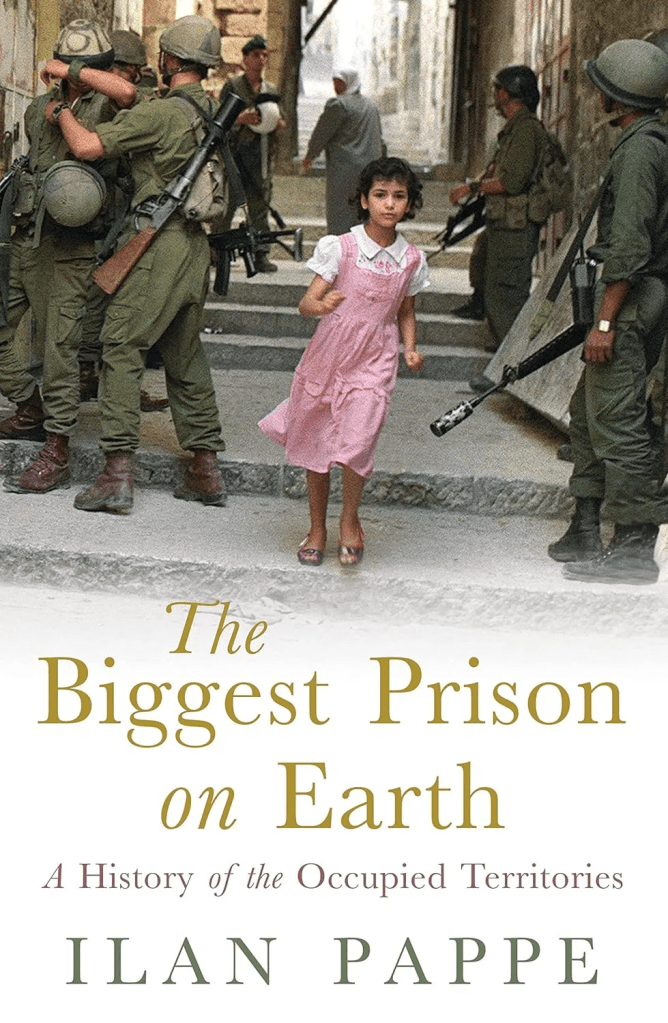











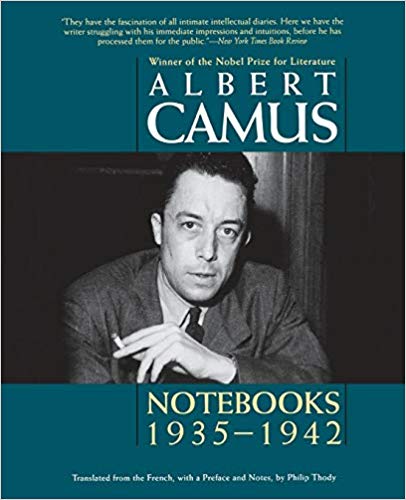
 CHATTING CRITICALLY