
When Fear Becomes Strategy: Anti-semitism, Aliyah, and the Calculus of Zionism

Siyavash Doostkhah, an Iranian refugee himself, sends this thoughtful and provocative piece from Australia, which seeks both to engage with contradiction and to peer beneath the surface of things.
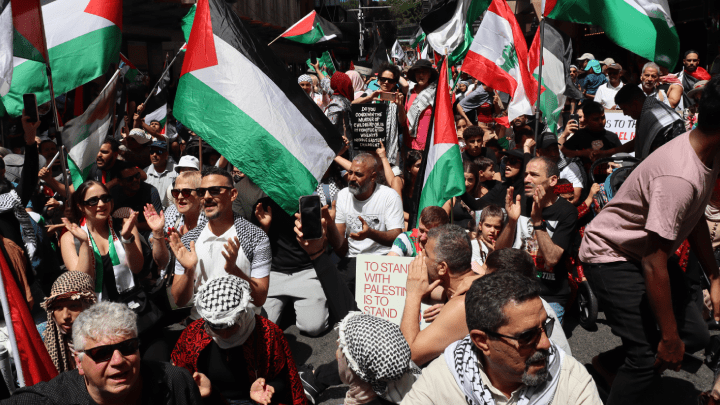
Pro-Palestine demo, Sydney, 2025. Thanks to sydneycriminallawyers.com.au

In recent months, Australia has witnessed an unprecedented rise in both impassioned pro-Palestinian activism and deeply troubling anti-Semitic incidents. Tens of thousands have marched through the streets of Sydney, Melbourne, and Brisbane, voicing legitimate grief and fury over the ongoing humanitarian catastrophe in Gaza. At the same time, Jewish schools have been defaced, community centres targeted, and Jewish Australians report growing fear and isolation.

This dual reality, empathy for Palestinians and anxiety within Jewish communities, demands careful and principled reflection. But equally important is this: Why is the Israeli government, self-proclaimed protector of the Jewish people, not doing more to counter this rising tide of antisemitism?

The silence, or, at best, tepid response, from Netanyahu’s administration isn’t just puzzling. It may be strategic.

There is a long, uncomfortable history in which fear has been used not only as a political tool but as an engine of migration. The Israeli state’s Zionist foundations have always relied, in part, on Aliyah, the migration of Jews to Israel, as both a demographic imperative and a spiritual calling. Throughout the 20th century, waves of migration were often triggered or accelerated by persecution: from Nazi Germany and post-war Europe to crises in Arab countries, Ethiopia, and the former Soviet Union. Often under the banner of rescue, but always with a demographic calculus in mind. Fear has long been a midwife to the Zionist project. In this vision, a swelling Jewish population is not merely a response to antisemitism, it is a geopolitical lever.

In the current moment, with the concept of Eretz Yisrael HaShlema “Greater Israel” driving Israeli policy and settlement expansion, we must ask: is fear again being used to accelerate Aliyah? Could the Israeli state be tolerating, or even quietly capitalising on, a global climate of antisemitism to encourage Jews to migrate “home”?

The Aliyah narrative has become more than a cultural call; it is a lever of statecraft. If Jews in Paris, New York, or Sydney no longer feel safe, Israel presents itself as refuge. But if Israel actively stokes the conflict that fuels that fear, through disproportionate violence, provocative incursions, and refusal to engage in diplomatic solutions, then we must ask: Is it still acting in the interest of Jewish safety, or in the interest of a nationalistic expansion project?

For progressive Australians, particularly those committed to Palestinian justice, the challenge is delicate. Solidarity must not slide into complicity. There is a fine but vital line between opposing the Israeli occupation and inadvertently legitimising oppressive actors such as Hamas or the Islamic Republic of Iran, both of whom exploit Palestinian suffering while offering no vision of human rights or freedom. Hamas’s violent tactics and Iran’s authoritarian repression cannot be sanitised simply because they oppose Israel.

Just yesterday, a protestor in Sydney was seen holding a poster of Ayatollah Khamenei, the brutal dictator of Iran, at the pro-Palestinian rally across the Harbour Bridge. That image, with thousands of Australians in the background, will no doubt be used by the Iranian regime and its supporters to manufacture legitimacy. This is how protests are hijacked.

I first encountered this tactic in the 80’s, when I was a refugee in India. On a crowded train platform, I witnessed a man tossing handfuls of coins into the air. Predictably, a crowd quickly gathered. Then, suddenly, placards bearing the image of Rajavi, the leader of the MEK organisation, were raised in the crowd, and someone began photographing the scene. These photos would later be used to suggest mass support for the MEK among Iranian dissidents in exile, an illusion created with a bag of coins and a camera.

We cannot afford to be naive. In Australia, outrage at Israeli state violence must not drift into antisemitism, overt or coded. When Jewish businesses are attacked in Melbourne, when graffiti defiles synagogues in Sydney, or when Jewish Australians feel compelled to hide symbols of their identity, it does not weaken the occupation, it strengthens it. It reinforces the Israeli narrative that the diaspora is unsafe and that Aliyah is the only answer.

There is an old strategy at play: If Jews feel unwelcome elsewhere, the Zionist project gains strength. If Palestinians are framed as irredeemable threats, then Israeli expansionism proceeds unchecked. The answer, for those of us who reject both antisemitism and colonialism, is to break this cycle, not feed it.

We must hold the Israeli government to account, yes, but we must also call out those who hijack solidarity for their own bigotry. We must demand justice for Palestinians, but not by echoing the authoritarian rhetoric of Hamas or Tehran. And we must ensure Jewish Australians are not collateral damage in a geopolitical game they did not consent to play.

True solidarity is principled. It condemns ethnic cleansing and occupation without resorting to hate. It recognises that antisemitism, even when disguised as anti-Zionism, serves no liberation. And it sees clearly how fear, if left unchecked, can become a weapon in the hands of those who seek to redraw borders, not build bridges.

If we are to help build a future where both Palestinians and Israelis can live with dignity and peace, then progressive Australia must sharpen its lens, and its conscience.


With their permission I attach the dialogue between Siyavash and Rasheed, which unfolded on Facebook following the appearance of Siyavash’s original. I do so because such a healthy exchange of opinion is all too rare in the intolerant and suffocating atmosphere dominant today.

Rasheed Abu Hamda responds to Siyavash:

In Brisbane where the protests took place in the last two years there were many jewish voices who spoke against the Israeli occupation of Palestine. And no one made them feel unwelcome otherwise they would’ve stopped attending the protests.

Anecdotally, at least in Brisbane I don’t think that antisemitism is disguising as anti-Zionism.

There was a shop in Paddington that was named and shamed because they were very open about supporting Israeli practices in occupied Palestine. This was an example where an Australian Jewish were overtly in support of Israeli terrorism. I haven’t heard of a single account in Brisbane where Australian Jewish were targeted because of their faith. Targeted because they sided with the apartheid state? Yes, especially the ones who went to Israel to serve in the IDF. My other take on the article is Iranian regime and HAMAS painted with a similar brush is not tactful. HAMAS was a direct produce of 50 years of occupation. It’s like a foster kid who was removed from a violent home and continued to move from family to another. A foster kid that was failed by the system – the international community that let Israel go on and on ( for decades) in their barabric attacks on Palestinians. And when the foster kid grown up and have more power to cause damage to the system, what do we do? We incarcerate the kid. Without taking responsibility (as international community) to acknowledge the systematic failure. The latter continue as we speak 77 years and counting. Addressing the symptoms is less effective than addressing the root cause of this chronic problem.

Siyavash replies:

 Hey Rasheed, I really appreciate you taking the time to reflect and share your thoughts, there’s clearly deep care in your words and I totally respect that. I just want to clarify a few things, not defensively, but to continue the dialogue with honesty.

Firstly, I never said Jewish people were being targeted at the protests themselves. In fact, I fully acknowledge and celebrate the many Jewish voices who stand in solidarity with Palestinians, those voices are powerful and necessary. But outside of those protest spaces, there have been disturbing incidents across Australia with many families reporting feeling unsafe just for being visibly or knowingly Jewish.

As someone who’s been part of anti-Zionist activism in Brisbane since the early days, when it was just a small handful of us, I’ve observed a real shift in recent years. There’s been a creeping conflation of “Israeli” and “Jew,” even in educated circles. I get where it’s coming from, people are angry, traumatised, and rightly horrified by what’s happening to Palestinians. But I think it’s dangerous when that anger is redirected, intentionally or not, at Jewish people more broadly.

You mentioned that Hamas is a result of decades of occupation. I hear that analogy, and yes, the international community absolutely bears responsibility for abandoning Palestinians. But I still think it’s important to be honest about how Hamas came to power. Its rise wasn’t entirely organic. Israel once saw Hamas as a counterweight to the PLO, helping it grow in the 80s to weaken secular Palestinian nationalism.

That’s what I was getting at when I grouped Hamas and the Iranian regime together, not because they’re the same, but because both have been propped up in various ways by external powers (including the West and Israel) when it suited their strategic interests. And now they serve as convenient “boogeymen” to justify continued military aggression and repression.

I also worry when I see some on the Western left romanticising these authoritarian groups simply because they oppose Israel. I’ve lived through this myself, as a refugee from Iran, I watched the left in my country get crushed by the very theocracy they once helped empower. The Iranian left thought they could ally with religious fundamentalists to bring down the Shah, and they were the first ones the regime turned on after the revolution.

It’s a tough, messy landscape. But I think we owe it to ourselves, and to the Palestinian people, to stay sharp, to question all forms of power, and to be wary of letting righteous anger cloud our ethics. We can (and must) be anti-occupation, anti-colonial, and still protect Jewish communities from harm and fear. The two things are not mutually exclusive.

Let’s keep talking.

Over to Rasheed

Thank you Siyavash for sharing your thoughts – I do appreciate you and your thoughts. The Jewish people participating in protests was just an example to demonstrate that tolerance exist providing they are not pro-zionism – sorry I should have clarified that in the first place, a room for improvement. And to hear there are Jewish families who are not pro Zionism are being harassed, it doesn’t sets well with me. As this is what Palestinians are been subjected to and this is what we are protesting against. Except what Palestinians are enduring is more than harassment. As a Palestinian who lived as a refugee for most of my life and lost family members and farming lands to the occupation forces, the question remain in front of mind is do we focus our efforts to expose and hopfully remove the Apartheid system – the main cause of disease, get distracted with addressing the by products of the occupation, or address both while lives are lost on a daily bases in Gaza, West Bank and more Palestinians inside Israel are further marginalised? I personally belive that we need to stop the fire first and stop the one who caused it in the first place prior to get the house back in shape. I’d love to hear your views in that regards especially the ones that are different from what I just shared. After all, I don’t know what I don’t know and multiple perspectives helps us to see the picture better. P.S. I do admire Jewish people who can see right through the fake face of Zionism considering the fears and traumas of many generations while living in Europe. It takes a huge amount of courage to do so.

All of which prompts Siyavash to respond:

Thank you for your heartfelt and grounded message. If I were to sum up my response in a spirit you might relate to, given your deep love for dance, I’d offer the quote often attributed to Emma Goldman: “If I can’t dance, I don’t want to be part of your revolution.”

It speaks to the kind of liberation we both long for, one where joy, dignity, and humanity are not sacrificed in the process of resistance.

You asked an important question about whether we should focus our energy on the system of apartheid or deal with its toxic by-products too. I think the two are deeply linked. From my experience in Iran, I saw firsthand what happens when we think the “enemy of my enemy could be our friend.” We threw our lot in with religious fundamentalists just because they opposed the Shah. That miscalculation cost us deeply. We didn’t realise that by fighting one form of oppression, we were handing power to something even more repressive. That enemy of our enemy quickly became our jailer.

In Persian we say: “از چاله به چاه افتادن” — “to fall from a pothole into a well.” And another saying: “اول چاه را بکن بعد مناره را بدزد” — “Dig the well before you steal the minaret.”

They’re old phrases, but they feel painfully relevant now.

I worry deeply that the incredible sacrifice and resistance of the Palestinian people might one day be co-opted or hijacked by forces that do not represent their dreams for freedom and dignity. I say this not from afar, but from the lessons carved into the Iranian soul over the last 45 years. I look at what Hamas has become, and who benefits from its existence, and I sincerely hope that the secular and nationalist movements can once again take the reins and chart a course for true liberation, free of both occupation and authoritarianism.

Your personal story touches me. Losing land, family, and a sense of home is a grief I cannot claim to fully understand, but I see its depth and weight in your words. Your clarity and refusal to let that grief turn into hate or tunnel vision is powerful. That’s the kind of strength that builds bridges, not just in politics, but between hearts.

I truly hope that in our lifetimes, we’ll sit together in a café in a free Gaza, maybe even during a Waziz reunion concert, and look back on these conversations with gratitude, for having spoken honestly, and for having listened with open hearts.

Much love and respect

And Rasheed closes the conversation:

Thank you Siyavash for your kind and sweet response. I must say your writing style beyond being objective is charming and engaging. How did you do that?

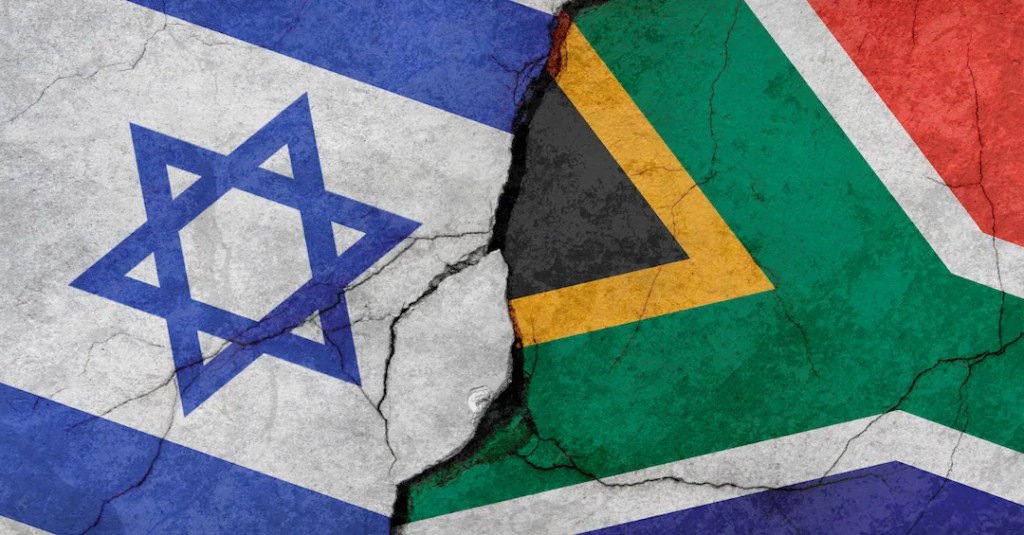
A WAR FORETOLD – AN IRANIAN PERSPECTIVE

In recent weeks I have despaired. Such anguish can feel, can seem self-centred and indulgent, less than genuine. As such I hardly share it publicly. Meanwhile, neighbours and friends are getting on with their lives, seemingly unaware of the evil enveloping the world. Or perhaps they are burning inside with anger and, like me, are too embarrassed to speak up. knowing they will not be thanked for disturbing the peace.

Earlier I was intending, at the very least, to post a couple of articles about the Israeli declaration of war on Iran, when I received this powerful and personal message from my dear friend, Siya Vash, who I was privileged to meet In Queensland, Australia almost a decade ago. We were together for only a few days but our friendship has deepened despite the oceans that separate us.

Siya Vash begins:

A War Foretold: The Manufactured Crisis Behind the Iran–Israel–US Conflict

The current war between Iran and the Israel–US alliance did not erupt suddenly. It is the result of decades of manipulation, ideological obsession, and calculated imperial ambition. It is a war seeded in lies, watered with treachery, and now blooming into a catastrophe many of us feared, because we have lived it before.

Memory of Fire: The Iran–Iraq War Never Ended

I was a teenager when the Iran–Iraq War began. Like many Iranians, we were told it would be over quickly. A border skirmish, a short-lived aggression. But it dragged on for eight horrific years, a conflict that devoured hundreds of thousands of lives and left deep, still-bleeding scars across our land.

I still remember the sirens. The sound of missiles and bombs landing. The fear etched into the faces of my friends, some of whom are still alive, barely. They are dying a slow, painful death caused by chemical weapons dropped by Saddam Hussein, weapons supplied to him by Western countries who watched from a distance, hands stained but silent. American AWACS radar planes even helped Saddam locate Iranian troop gatherings which he then bombed with poison.

This memory is why I now look at this war, this unfolding confrontation with Israel and the West with the same dread. The same lie is being told again. The same script, only updated for the digital age. And once again, it is the Iranian people who will suffer.

Netanyahu’s Eternal Alarm: The Cry of the Wolf

Since the early 1990s, Israeli Prime Minister Benjamin Netanyahu has warned the world again and again that Iran is “just months away” from acquiring a nuclear bomb. He has sounded this alarm so often, in so many forums from the Knesset to the UN, from U.S. Congress to global media that it has become the central pillar of Israel’s foreign policy narrative.

Yet these claims have been repeatedly contradicted by intelligence agencies, including Israel’s own Mossad and the CIA. They acknowledge Iran’s enrichment activity but have found no evidence of an active weapons program.

Still, Netanyahu’s warnings like a wolf crying for the camera have served their purpose: stirring panic, securing Western support, and justifying pre-emptive aggression. The Zionist lobby in the U.S. and Europe has amplified this message, pushing American and European leaders toward confrontation. It worked in Iraq. It’s working again this time, with Iran in the crosshairs.

The JCPOA: A Deal That Could Have Prevented War

In 2015, the world had a choice. The Joint Comprehensive Plan of Action (JCPOA), signed between Iran and the P5+1 nations, offered a diplomatic solution: Iran would strictly limit its nuclear program, subject to the most rigorous inspections in the world, in exchange for sanctions relief.

Iran upheld its end of the deal. The IAEA confirmed it. But in 2018, Donald Trump under pressure from Netanyahu, Saudi Arabia, and hawkish advisors unilaterally withdrew. Europe condemned the move but eventually aligned itself with the U.S. position in silence, revealing a tragic hypocrisy.

Now, the very nations that once praised the JCPOA insist that Iran has no right to enrich uranium at all not even for peaceful, civilian purposes. The goalposts have moved. The truth has been buried.

The Nuclear Hypocrisy of Israel

While Iran is demonised for enrichment under international supervision, Israel, a nuclear-armed state, remains outside the Non-Proliferation Treaty (NPT). It has never admitted to its arsenal, but global consensus acknowledges that Israel possesses dozens, if not hundreds, of nuclear warheads.

Even worse, Israel has now been found guilty of genocide by the International Court of Justice and yet continues to enjoy Western backing, arms shipments, and diplomatic immunity. The historical trauma of Jewish suffering is weaponised again and again, not for healing, but for justifying new cycles of occupation, dispossession, and war.

Who else but Israel could commit war crimes while claiming perpetual victimhood?

Greater Israel and the Real Strategic Goal

The Iranian nuclear issue is a cover. The real objective is regional dominance. From assassinating scientists to bombing Damascus and Beirut, Israel’s long-term project is the dismantling of all resistance to its supremacy a vision loosely framed in the doctrine of “Greater Israel.”

Iran, Syria, and Hezbollah stand in its way. The path to their neutralization is paved with pretexts and nuclear hysteria has been the most effective one.

Empire in Decline, Searching for War

The United States, meanwhile, is a crumbling empire seeking relevance. After two decades of failed wars, the focus has shifted toward China. But Iran with its strategic location, energy reserves, and ties to Russia and China has become a critical pawn in Washington’s renewed Cold War.

Destroying Iran’s sovereignty isn’t just about Israel. It’s about control over the future of Asia. It’s about preventing the emergence of a new, multipolar order where America is no longer the center of the universe.

The West’s Two-Faced Game

Let us not forget: it was the West that helped bring Khomeini to power. They saw the Shah growing independent raising oil prices, strengthening the military and decided he was no longer controllable. Better to have a theocracy suspicious of both East and West than a nationalist king with ambition.

And now, some of the same Western elites who orchestrated that regime change are floating the idea of restoring Reza Pahlavi, the Shah’s son, as a new monarch. The circle of manipulation never ends. Freedom has never been the goal, only influence.

The Future: Remembering the Past, Resisting the Present

We have seen this story before. We have lived it. We remember what chemical war feels like. We know what it means to bury children whose only crime was being born on the wrong side of a border drawn by empires.

This new war was foretold. But it is not inevitable.

Iran may be battered, but it is not broken. The Iranian people despite their suffering under both foreign pressure and domestic repression are not passive pawns. They are resilient, resourceful, and rooted in a deep civilizational memory of resistance.

The West must reckon with its hypocrisy. And the world must finally ask: how many more lies, how many more dead, how many more wars before we say enough?

History will remember. Not just who launched the first missile but who wrote the script.


Complementary to Siya Vash’s calm yet intense explanation of how he is seeing matters unfold, I offer in addition these alternative and differing critiques of the present nightmare.

Israel’s attack on Iran: The violent new world being born is going to horrify you – Jonathan Cook

This is a key moment in the Pentagon’s 20-year plan for “global full-spectrum dominance”: a unipolar world in which the US is unconstrained by military rivals or the imposition of international law. A world in which a tiny, unaccountable elite, enriched by wars, dictate terms to the rest of us.

If all this sounds like a sociopath’s approach to foreign relations, that is because it is. Years of impunity for Israel and the US have brought us to this point. Both feel entitled to destroy what remains of an international order that does not let them get precisely what they want.

The current birth pangs will grow. If you believe in human rights, in limits on the power of government, in the use of diplomacy before military aggression, in the freedoms you grew up with, the new world being born is going to horrify you.

The Function of Stupidity in History – Jeff Noonan

Consider the profound moral stupidity of Israeli Defence Minister Israel Katz’s pronouncement that Khameini is a “modern day Hitler” that “can no longer be allowed to exist” and that the missile strike on the hospital in southern Israel was a war crimes. One simply cannot believe the moral blindness of a man who belongs to a government whose armed forces have destroyed every hospital in Gaza, almost every house, shoots people begging for food that Israel has made artifically scarce and killed tens of thousands of people. All necessary, of course! If Khameini is Hitler for partially damaging one hospital what is Netanyahu for ordering the destruction of the whole life-infrastructure of Gaza?

A war criminal?

The War Against Iran: 30 Years in the Making – Piers Robinson

Whatever happens, Western publics should be under no illusion as to how this situation has come to be. The conflicts are the direct consequence of our governments and their associated military industrial complexes pursuing policies of war and, to do so, engaging in covert actions and major deceptions, which include the 9/11 false flag as well as the utilisation of brutal extremist groups in countries such as Syia. The death toll from these conflicts runs well into the millions while the misery is incalculable.

Propaganda, deception and lies, all in the name of war, are becoming firmly established as the parting legacy of the Western empire.

The American Game: Playing and Being Played on the Road to Nuclear War – Edward Curtin

“To hell with the truth! As the history of the world proves, the truth has no bearing on anything. It’s irrelevant and immaterial, as the lawyers say. The lie of a pipe dream is what gives life to the whole misbegotten mad lot of us, drunk or sober.”                        Eugene O’Neill, The Iceman Cometh

The U.S.A. is a warfare state; it’s as simple as that. Without waging wars, the U.S. economy, as presently constituted, would collapse. It is an economy based on fantasy and fake money with a national debt over 36 trillion dollars that will never be repaid. That’s another illusion. But I am speaking of pipe dreams, am I not?

And whether they choose to be aware of it or not, the vast majority of Americans support this killing machine by their indifference and ignorance of its ramifications throughout the society and more importantly, its effects in death and destruction on the rest of the world. But that’s how it goes as their focus is on the masked faces that face each other on the electoral stage of the masquerade ball every four years. Liars all.

But they all speak the double-speak that creates pipe-dreams on the road to nuclear war.

Will we ever stop believing them before it is too late?


If, by chance, you read any of the above, not for a moment, do I expect you to embrace uncritically these viewpoints. I do hope for a provisional and questioning response, the very basis of give and take, a critical dialogue. I do hope for a response that refuses the cowardly, immoral and unethical ambivalence and ambiguity of the liberal and professional mouthpiece, that is the Guardian newspaper. And, for my sins, I do skim its pages everyday, hoping for a moment when it speaks plainly at last, when it condemns without caveat the genocide in Gaza and now the attack on Iran.

A New Year begins in Gaza: the crisis and the carnage continue

A month ago, with some trepidation, it was agreed that our next Chatting Critically meeting would focus on the Israel/Palestine situation. It will take place on Wednesday, January 10th in the ‘Elpida’ kafeneio, Gavalohori, starting at 10.30 a.m.

As the coordinator of the group, I wanted to put together something of an introduction to help the discussion along. However, I’ve found this increasingly difficult as the tragedy unfolds. I’m conscious too that my allegiance to the Palestinian cause goes back to the mid-1970s. I’m hardly impartial.

Thus I’m doing no more than posing a few questions to think about before we get together, supplemented by links to a range of articles, the first of which is by the great independent journalist, John Pilger, who sadly died on New Year’s Eve.

  1. To what extent have we a grasp of the historical background to the conflict? The state of Israel was only founded in 1947 based on expelling thousands of Palestinians from their homeland. How was this justified and who were the players on the world stage, ensuring that this seizure of land happened?
  2. Israel’s establishment as an explicitly Jewish state is a primary point of contention, with many of the state’s critics arguing that this by nature casts non-Jews as second-class citizens with fewer rights. The 1950 Law of Return, for example, grants all Jews, as well as their children, grandchildren, and spouses, the right to move to Israel and automatically gain citizenship. Non-Jews do not have these rights. Palestinians and their descendants have no legal right to return to the lands their families held before being displaced in 1948 or 1967. Deep-rooted structural and social discrimination confirms the second-class status of Arabs within Israel, leading to the charge that Israel is an apartheid state? Is this claim legitimate?
  3. Does the appalling persecution of Jews across the centuries – for a diversity of reasons, not least in the early 20th century because they were seen as socialists. even communists and the obscenity of the Holocaust, the Final Solution – mean that Israel is exempt from moral or political criticism of its actions today – acknowledged war crimes or indeed perceived genocide?
  4. It is generally acknowledged at an international level, even if this is empty of any real meaning that the Palestinian Territories are prison camps. Given the length and intensity of the incarceration, why the surprise and shock when some of the prisoners plan and execute a violent escape. Isn’t such a brutal ‘slave revolt’, as Norman Finkelstein puts it, an inevitable consequence of Israel’s inhuman policies. And is the appropriate answer of the prison guards, the execution of the inmates left therein?
  5. And, finally, on a personal note, how can we allow the closing down of debate by the mere accusation of anti-semitism or ‘Jew-hating’? Amongst my greatest inspirations and influences are to be found composers, Mahler, Mendelsohn and Schoenberg, artists, Menuhin and Bernstein, intellectuals, Freud and Chomsky, revolutionaries, Marx, Trotsky and Rosa Luxemburg. All were Jewish. In embracing and criticising their artistic, social and political contributions I recognised but didn’t obsess about their Jewishness. In much the same way I don’t think much about Christianity when listening to Haydn or Bruckner. I’m an atheist but I neither hate Jews nor Christians. I simply disagree.

There are many more questions, for sure.


In directing you to interesting and challenging links I cannot but begin with the late John Pilger’s very last article, written in early November, entitled. ‘We are Spartacus’

“Secretive power loathes journalists who do their job, push back screens, peer behind façades, lift rocks. Opprobrium from on high is their badge of honour.”

He opens::

Spartacus was a 1960 Hollywood film based on a book written secretly by the blacklisted novelist Howard Fast, and adapted by the screenplay writer Dalton Trumbo, one of the “Hollywood 10” who were banned for their “un-American” politics. It is a parable of resistance and heroism that speaks unreservedly to our own times. 

Both writers were Communists and victims of Senator Joseph McCarthy, chairman of the Government Operations Committee and its Permanent Subcommittee on Investigations of the US Senate, which, during the Cold War, destroyed the careers and often the lives of those principled and courageous enough to stand up to a homegrown fascism in America.

“This is a sharp time, now, a precise time…”, wrote Arthur Miller in The Crucible, “We live no longer in the dusky afternoon when evil mixed itself with good and befuddled the world”.

There is one “precise” provocateur now; it is clear to see for those who want to see it and foretell its actions. It is a gang of states led by the United States whose stated objective is “full spectrum dominance”. Russia is still the hated one, Red China the feared one.

From Washington and London, the virulence has no limit. Israel, the colonial anachronism and unleashed attack dog, is armed to the teeth and granted historical impunity so that “we” the West ensure the blood and tears never dry in Palestine.

British MPs who dare call for a ceasefire in Gaza are banished, the iron door of two-party politics closed to them by a Labour leader who would withhold water and food from the children.

In expressing his undying admiration for the endeavours of David McBride and Julian Assange in exposing the crimes committed under the banner of the ‘Global War on Terror’, he closes:

Their bravery has allowed many of us, who might despair, to understand the real meaning of a resistance we all share if we want to prevent the conquest of us, our conscience, our self respect, if we prefer freedom and decency to compliance and collusion. In this, we are all Spartacus.

Spartacus was the rebellious leader of Rome’s slaves in 71-73 B.C. There is a thrilling moment in the Kirk Douglas movie Spartacus when the Romans call on Spartacus’s men to identify their leader and so be pardoned. Instead hundreds of his comrades stand and raise their fists in solidarity and shout, “I am Spartacus!”. The rebellion is under way.

Julian and David are Spartacus. The Palestinians are Spartacus. People who fill the streets with flags and principle and solidarity are Spartacus. We are all Spartacus if we want to be.


The Middle East War and the hostile environment

Nira Yuval-Davis is a diasporic Israeli Jew, Professor Emeritus, Honorary Director of the Research Centre on Migration, Refugees and Belonging (CMRB) at the University of East London. She reflects on the complexities of its start and end points, beginning:

One of the most contested issues regarding telling the story of the current war in the Middle East is about when to start it. Each narrative always has a clear starting point – if not necessarily an end point – but what is the starting point for this war? Is it the terrible massacre that Hamas fighters carried out among soldiers and civilians, Jews and non-Jews, in the South of Israel on 7 October? – the highest number of people killed in one day in the hundred years of conflict since the beginning of the Zionist settlement in Palestine – at least until that day. That’s probably where most Israelis would like to start the story.

Should I start with the ongoing massive systematic bombing, destruction, displacement and killing of thousands of Palestinians in Gaza, including thousands of children, a new Palestinian Nakba? That’s where many international protesters focus their protests.

Or I could start the narrative by telling the history of the Zionist settler colonial project, before and after 1948 and the establishment of the Israeli state. A large proportion of the Palestinian population in the Gaza strip today are 1948 refugees, and most of the settlements attacked on 7 October sit on lands where previous generations of today’s Gazans used to live, before the first Nakba.

Or maybe I should start my narrative by telling how Israeli intelligence – just like the US with the Taliban – was a cultivator of Hamas in its infancy, as part of a divide and rule policy aimed at weakening the power of the PLO; and how, until 7 October, it facilitated the rule of Hamas in Gaza by enabling the transfer of money to Hamas from Qatar via Israeli banks, so it could distribute money to people in this huge open-air prison, to maintain its control and keep the population just about surviving.

Another starting point could be the convenience of the Hamas attack and the following war for Iran and its allies, as it has put in jeopardy the anti-Iran, anti-Palestinian, so called ‘normalisation’ agreement that was soon to be signed between Israel and Saudi Arabia. In many ways, this is not just a war between Israel and Gaza, but a regional war, in which various pro-Iranian groups, from Yemen to Syria and Lebanon, are taking part in an anti-American as well as anti-Israeli war, although at the moment, at least, in a contained way.

Related to that, one could start by describing the war as a result of miscalculated wishful thinking. Hamas was hoping that Hezbollah, Iran and other forces in the Arab world would join the war in a much more total way; and Israel has been hoping that Egypt and/or the PLO would take responsibility for governing the population in Gaza instead of Hamas, and, better still, would allow them to be displaced to the Sinai desert. But these organisations and governments have learned their lessons from previous history and are not co-operating.

The timing of the war has also been convenient for Netanyahu and the Israeli government. In one day it stopped the six-month long major protest movement which was demanding the ending of the judicial coup in Israel and the resignation of Netanyahu: the leader of the opposition has joined the government and war cabinet, and all the huge protest and pro-democracy posters which were plastered all over public buildings and public spaces have been replaced with others, even larger, which say – No Left, No Right, together we’ll all win the war.

She ends:

Many of us have been taking part in protest activities against the war in Gaza and its growing human and humanitarian costs, while knowing that the issues cannot be resolved solely by an end to that war. There is a need for the end of the occupation and the de-Zionisation of Palestine/Israel into a state with equal individual and collective rights for all its residents. This seems more than ever a faraway dream, but giving up on striving for it, not keeping alive this alternative narrative, would only be much worse.


https://resourcecentre.savethechildren.net/document/injustice-palestinian-childrens-experience-of-the-israeli-military-detention-system/


ON ZIONIST FEELINGS

RANDA ABDEL-FATTAH  explores the central and sensitive question of how the hurt experienced by People in and out of Israel, particularly those wedded to Zionism, is used to deflect us from the reality of genocide.

She ends:

My responsibility is to commit myself to the liberation of Palestine. I am confident that my fight against Zionism as a form of racism aligns with my unequivocal rejection and condemnation of antisemitism. I recognize the lethal and genocidal history of European antisemitism that produced the Holocaust and the destruction of European Jewry. I reject that because of European antisemitic racism, Palestinians must pay the price. I reject essentializing language, stereotypes, or theories that claim that there are particular traits or characteristics unique to “Jewish people” as a homogenous collective, or “being a Jew.” I defend the right of Jewish people to openly practice Judaism and freely express their religious and cultural identity. I defend the right of Jewish people to practice their faith even though I unequivocally reject and condemn Zionism as a political ideology. I do not accept that such a right can be enjoyed at the expense of Palestinian life, freedom, and self-determination.

No amount of intimidation or emotional blackmail will cower Palestinians into silence, into shrinking our voices, adjusting our language, compromising our demands and claims, or repressing our feelings. When the feelings and fragility of Zionists are used as a rhetorical shield to deflect from engaging with the moral and material reality of genocide, Palestinians are left to ask: how many of us must be killed, maimed and injured, forced from our traditional land and beloved homes, be tortured and have our schools, universities, and livelihoods destroyed, for those in power – those who have the power to stop this genocide – to say in public never again. Khallas. Enough.


A thoughtful video, which touches on whether there are solutions acceptable to all parties.

https://www.aljazeera.com/program/upfront/2023/11/24/a-second-nakba-what-history-tells-us-about-palestine-and-israel

A second Nakba? What history tells us about Palestine and Israel
In this episode of UpFront, we look back at the history and context leading up to the current Israel-Gaza war. Nearly two months after the October 7 attack by Hamas, Israel’s response has killed more than 14,500 Palestinians.

While many see the current conflict as a reaction to the attack that killed 1,200 people in Israel, others have pointed out that this view ignores crucial historical context and that the conflict has been ongoing for generations.

Following the 1917 Balfour Declaration which led to an influx of Jewish immigrants, the creation of Israel in 1948 saw an enormous displacement of Palestinians, in addition to the expulsion of hundreds of thousands who remain refugees to this day.

On UpFront, Mustafa Barghouti, the co-founder of the Palestinian National Initiative, and author Ghada Karmi, join Marc Lamont Hill to look back at the history of Palestine and contextualise the current war.


The colonisation of Palestine: Exhuming a British imperial crime

by Mary Serumaga

Like other British imperial possessions, Palestine was acquired on the cheap and under false pretences, official corruption sealing a deal doomed to end in perpetual violence.

 “Zionism will fail, the experiment to which the noble Earl referred will fail, the harm done by dumping down an alien population upon an Arab country – Arab all around in the hinterland – may never be remedied…what we have done is, by concessions, not to the Jewish people but to a Zionist extreme section, to start a running sore in the East, and no one can tell how far that sore will extend.”

British Government, Hansard, House of Lords, 21 June 1922, p. 1025

Fascinating and revealing historical context.


Biden, Palestine, and the buttressing of Christian Zionism

Biden’s position on Israel-Palestine does not constitute any real shift from that of Trump and thus similarly gratifies the desires of Christian Zionists.

I had no sense of this significant support for Israel in the USA.


Further evidence Netanyahu propped up Hamas

Thomas Fazi argues:

In my last post I explained how Netanyahu played a crucial role in bolstering Hamas in order to “divide and conquer” the Palestinians and delegitimise the Palestinian National Authority — the continuation of a strategy which Israel had been pursuing, in various forms, since the 1980s.

Later in the piece, he quotes Yasser Arafat, who was the leader of the PLO at the time I was closest to what was going on in Palestine., more than thirty years ago.

“Hamas was constituted with the support of Israel. The aim was to create an organisation antagonistic to the PLO. They [Hamas] received financing and training from Israel. They have continued to benefit from permits and authorisations, while we have been limited, even [for permits] to build a tomato factory.”

When asked what he thought of “these sons of Palestine who blow themselves up and spread death among Israeli civilians”, Arafat answered: “Israel does not allow us to live a normal life. Youth who have nothing to eat, who don’t see any future in front of them, are easy prey of the Islamist movements, which have large amounts of financing at their disposal”.


.


Last but not least a video of Gerald Kaufman, Labour Member of Parliament speaking in Parliament, the year 2009, the event an Israeli attack on Gaza. For my sins, I was heavily involved in the British Labour Party in the 1980s and met Gerald, always immaculately attired several times, once by chance for a coffee at Euston railway station. At the time he was a sworn enemy, being a fierce critic of Tony Benn, to whom I gave cautious support! Anyway, he was charming company and we parted on amicable terms. Fifteen years on this brave speech retains all its relevance.


And, lest I forget, I must register deep gratitude to my dear friend, Steph Green, who has sent me regularly in the last months both links and her own insightful commentary on the continuing crisis in Gaza. I hope I have done her efforts to keep me alert some justice.

“We will not rest until we have justice. Until all people, Israelis and Palestinians, between the river and the sea, can live in peaceful liberty.” The United Kingdom’s Labour Party suspended Member of Parliament, Andy McDonald for reciting the above in a speech at a pro-Palestinian rally.