
Sue Atkins – the Guardian obituary

https://www.theguardian.com/society/article/2024/aug/07/susan-atkins-obituary
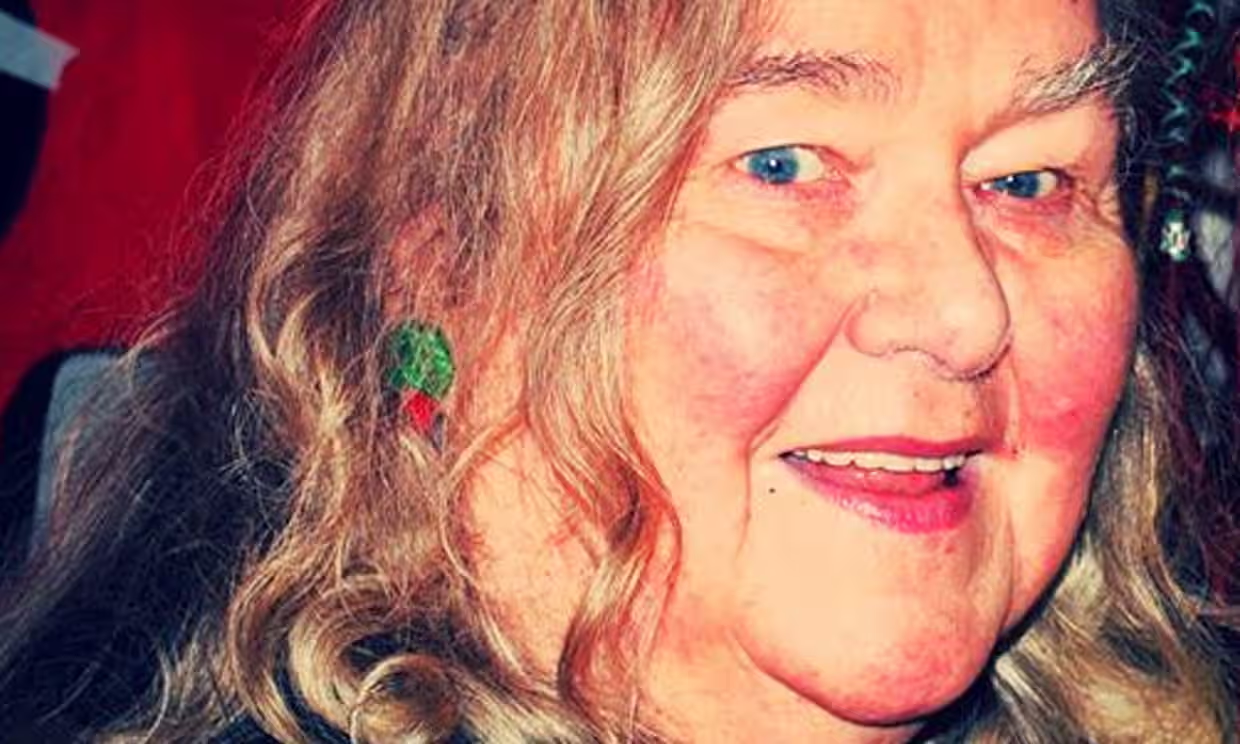
After her retirement in 1998, Sue Atkins threw herself into the development of the Youth Association South Yorkshire

My friend and colleague Susan Atkins, who has died aged 86, was a highly respected youth worker in Sheffield who also played, over many decades, a national role in the validation of youth and community work training courses in higher education.

Sue was destined to be a youth worker. Born in Uxbridge, west London, she was the daughter of Kit and Paul Beaven, who ran a thriving open-access youth club that drew the attention of Jennie Lee, Labour’s minister for the arts, through its combination of informal social space with drama, music and art.

After leaving Bishopshalt school, Sue forged a reputation in the local amateur theatre group the Argosy Players, holding down an eclectic variety of daytime jobs to finance her thespian talent. In later years she would depict youth work as an unfolding drama, an improvised script, the authors of which were young people and youth workers as animated equals.

In 1966, she barely “survived” the one-year qualifying course at the new National College for Youth Leaders in Leicester. This experience of higher education that faltered on the edge of failure stayed with her for the rest of her remarkable career – and sometimes Sue expressed herself with a feigned anti-intellectualism.

In 1967, she accepted what was intended to be a temporary post in Sheffield as a community-based youth worker with immigrants. She was never to leave, and worked in tandem with Mike Atkins, soon to be the city’s race adviser, whom she married in 1969. Her pioneering work with the Afro-Caribbean community created a responsive youth service within which young people prospered, often becoming education and welfare practitioners in their own right.

She was a dynamic presence within the Community and Youth Workers’ Union (now part of Unite the Union), embracing a caucusing structure that amplified the voices of women, and black, gay and part-time workers. Serving as president of the union in the mid-1980s, she was a leading negotiator for improved wages and conditions.

After her retirement in 1998, Sue threw herself into the development of YASY (the Youth Association South Yorkshire), and, from 2009, she was energised by the In Defence of Youth Work campaign. She identified passionately with its vision of youth work as “volatile and voluntary, creative and collective – an association and conversation without guarantees”. Dubbing herself teasingly as “a woolly Marxist optimist”, she was a socialist-feminist and supported Jeremy Corbyn’s leadership of the Labour party.

In the last of 20 annual reports to her beloved YASY, she ended: “For me, Youth Work has always sought to enable and facilitate young people to test, explore and flourish, to discover their hopes and dreams and find their focus and direction.” The day before she died Sue was in a meeting called to design a training programme for volunteers. Throughout, she was devoted to her life’s work.

Sue is survived by Mike, a stepdaughter, Kiya, and grandson, Isaiah, and her brother, Peter.

Tony Taylor

Women and Resistance – The Miners’ Strike 84/85

The In Defence of Youth Work campaign, of which I was the coordinator has just hosted a Zoom Seminar on Resistance. My dear friend, Sue Atkins opened the event with a tour de force on the 3R’s – Resistance, Rebellion and Revolution. to be found on the IDYW web site. Other contributions will appear in the next few weeks. All of these in different ways pose the question of how we resist the closing down of alternative, dissenting voices in reactionary circumstances.

By coincidence I discovered belatedly the other day an on-line version of the special exhibition, ‘Women in the Miners Strike 1984/85′ which is being hosted in the National Coal Mining Museum. It contains an essay on the significance of women in the Great Strike, photos and a video.

Download the exhibition essay here

By twist of fate Marilyn and I found ourselves involved closely with the women of the Derbyshire coalfield. Part way through the strike we had moved from Leicestershire where we had been members of the ‘Dirty Thirty’ Miners Support Group to Chesterfield. Marilyn was caught off guard, not being a miner’s spouse, by the invitation to join the Chesterfield Women’s Action group. The women decided her heart was in the right place and ‘with her being a clever lass who could type’, she became the Minutes Secretary. It’s a matter of great historical and political regret that the tapes of the meetings she kept were lost.

Women from North-East Derbyshire prior to a sponsored run

As for my part I took up the job of Community Education Officer for the district, which contained, amongst others, the Bolsover and Shirebrook collieries. Going to work on my patch meant running the gauntlet of police harassment. In Shirebrook itself the old primary school had been converted into the food distribution centre, housing the supplies brought in solidarity from near and far. At the end of the strike such had been the immense contribution of the women – organising the canteens, ‘womanning’ the picket lines and speaking eloquently from the platforms, here, there and everywhere – the school was transformed into the Shirebrook Women’s Centre, offering a creche run by qualified staff and a diverse programme of workshops and activities. I was proud to have my office tucked away on the first floor and privileged to be swept away in the energy of the first few years.

On our way in solidarity round the now silent colleries

Inevitably as the neoliberal project to undermine traditions of solidarity and community deepened its hold on society even this partial gain was to disappear, all the more so as employment prospects in the coalfield communities dwindled.

Where is this perhaps romantic nostalgia leading? For now it renders me obliged to visit afresh the legacy of neoliberalism’s ideology of self-centred individualism and to explore whether we are in transition to a form of technocratic capitalism, an anti-democratic rule by experts. In doing so the crucial question is to ponder how we resist collectively the conscious closing down by the powerful of our relationships with each other in the personal, social and political sphere? To be melodramatic how do we fight back against an assault on our very humanity?

Whether I write anything of use is quite another matter but I’ll give it a go.

In the meantime the women and men of the Strike remain an inspiration as does the very best of a youth work practice that knows it does not know what is best.

Thanks to Dave Dronfield for the photos.

In Praise of May Day: In Praise of the Workers

Towards the end of a strange May Day, bereft of rallies and demonstrations, I’m posting simply the montage, my dear ‘wooly Marxist’ friend Sue Atkins has put together. However I’m hoping to follow it up with some thoughts provoked by a special Covid-19 issue of CONCEPT, the Scottish Community Education journal, especially around how might resist a return to the normal, new or old.

However in Athens the Greek Communist Party [KKE] under the banner of its trade union, PAME, protested outside the Greek Parliament today with social distancing and masks in an act of flagrant, yet disciplined and heart-warming disobedience. Let me be clear over the years the official Communist Parties have hardly been my best mates, but respect when it is due. The party measured out precisely the necessary social distancing, putting the police and government on the back foot. In the end the state and its armed body decided to keep its distance.