Musings on the politics of youth work, community work and society at large – dedicated to the memory of Steve Waterhouse, Malcolm Ball and Sue Atkins, great youth workers, comrades and human beings
As I try to keep my promise of sharing links to folk I find stimulating and provocative, I am taken aback by the number of posts I’d like to make. For example. I want to respond to my dear friend, Siyavash’s commentary on the crisis in Iran and I’d like to draw your attention to a challenging series of pieces on Autism.
As of today here is an article by Paul Kingsnorth, who describes himself as a writer, Orthodox Christian, reactionary radical, aspiring beekeeper. I came across him about seven years ago and found him eloquent and questioning. Back in 2021 I was at one in our refusal to accept the authoritarian, manufactured COVID narrative. I shared his rage against the Machine. I agreed that resistance needed a spiritual dimension. In the end I remain at odds with what feels like his increasing certainty that the way forward is to embrace the Christian God. He explains his conversion in a rich and compelling biographical account, The Cross and Machine. Whilst I remain a subscriber to his blog, I visit it erratically – a sign perhaps of my atheistic prejudice.
It is a powerful engagement with the threat to ‘being human’ posed by Artificial Intelligence. It should be read in full but here are a couple of extracts.
Maybe the book was the only technology I ever really fell in love with. It is a technology, of course; so are words. Language – languages, since we have so many of them, though fewer than we once did – are one of the key markers of our humanity. We speak, we tell stories, we write the stories down and thus we are able to share them with people we will never meet and who will never meet us, but who will know us in some way by our words. Humans are storytelling animals if we are anything at all. All of our religions begin with stories, and all of our nations and cultures. Our personal biographies are stories we construct. We tell stories by naming everything else that lives. We tell stories about progress and decline, good and evil, kings and peasants, fairies and ghosts, detectives and serial killers. We sing stories to music, and record them and play them back again and again. We fight over stories, and we send our sons out to die for them.
Stories will keep being told, of course. It’s just that their authors might no longer be human.
If AI doesn’t kill us, it will certainly render us incapable of understanding what reality is. Having outsourced our physical labour to machines (and poor people in poor countries, who we never have to meet or think about), we are now outsourcing our intellectual labour to them too.
If the machines can do our research and write our stories, and build our houses and think ‘smarter’ thoughts than we can and all the rest of it – what is our role? What is the point of humanity at all? For the subset of us who write and tell stories, another question emerges too: can we even find the space, away from the buzzing of the Machine, to incubate the stories we want to tell? Stories descend when you make the right space for them within you. Writers are vessels. How can we possibly tell real, human, stories if our heads are full of digital noise? Will the ‘writers’ of the future even know what stories are, away from the enabling, imprisoning Panopticon of the digital world?
Thinking about story-telling is likely to evoke a wry smile from Marilyn Taylor. Over the years she has sighed in frustration at my failure to embrace and reciprocate her deep love for fiction in all its diversity. Again it is to my detriment. Yet, in my own way, I would claim to tell stories.
The majority of my sporadic contributions over the years to journals of one kind or another draw explicitly upon my personal experience. Indeed I have been criticised for this tendency, frowned upon in some academic circles. This opening to a piece that appeared in Youth & Policy catches the flavour of my biographical approach.
‘The Decline of the Local Authority Youth Service in England: Reflections of an actor in its demise.‘
‘These assertive and tentative reflections cover the period from the genuine promise of a radical 1968 to the artificial optimism of a populist, authoritarian 2019. Across four decades I sold my labour to three different Local Authority Education [LEA] departments. Most recently, retired from the fray, I’ve sought to observe and comment upon the shifting landscape of contemporary youth work. For better or worse, however flawed and forgetful my memory, I’ve been party to the ups and downs of Local Authority [LA] Youth Services in England. In this spirit I will begin the story with two snapshots from my chequered career.
In the first I am to be found in the main hall of a rambling Wigan youth centre. A hirsute, profusely sweating part-time youth worker, I organise on two evenings a week a diversity of activities from weight training to basketball predominantly with young men, offset by a token last half hour of mixed volleyball. At first glance I appear to be the Positive Activities worker of New Labour’s late 1990’s dreams. Contrarily, I am seeing myself more and more as an informal educator, stimulated by the flux of my interaction with young people. I am intrigued by the infinite, if uncertain possibilities of association and conversation, the potential of relating without either imposed authority or a prescribed script.
More than a quarter of a century later I am to be found, besuited as befits a Chief Youth & Community Officer, in the Wigan Enterprise Centre surrounded by colleagues from the Planning Department. We are putting together a bid for time-limited funding aimed at ‘disadvantaged’ young people. The rules of the competition demand that we promise to deliver on a number of targets – percentage reductions in anti-social behaviour, drug use and teenage pregnancies. I try to argue that the introduction of these outcomes will distort the Youth Service’s relationship with young people. My misgivings are expressed to no avail. I leave, heavy of heart, having in the name of jobs rather than young people’s needs, been incorporated into a sham. A colleague attempts to persuade me I have been pragmatically principled. I am reduced to uttering dismissive expletives.
More broadly, if we are perusing the mass of sociological and political analysis served up to us, the authors, it would appear, see themselves as standing outside of the very social relations they are contemplating, the narratives of which they are so fond. There is no elevated vantage point from which the intellectual, the commentator speculates as if he or she is above it all. We are all, for better or worse, part of the story. Or perchance, we will let AI have the last word.
To the credit of the In Defence of Youth Work [IDYW] campaign, of which I was a coordinator for over a decade from 2009, it looked to story-telling as the way to illuminate the nature of a youth work process, which was uncertain, authentic and human. It did so in the face of authoritarian and behavioural prescriptions of what it ought to achieve. IDYW produced a book, This is Youth Work containing ten stories of practice, which was translated into Russian and Finnish. In addition we ran story-telling workshops across Europe, even reaching out to Japan
At the end of Writers against AI Paul argues,
“I have decided, as a writer, not to consciously engage with AI in any way in the course of my work, and I want to give other writers – and readers – who share these views a chance to demonstrate it, and band together in refusal of the machines and in celebration of raw human creativity and the power of stories. This essay, then, is the launch of a campaign of refusal and resistance. I have no funding and no plan, and I don’t intend to run anything – but I don’t need to. Like the Internet itself, resistance to AI is decentralised. Each of us is a campaign hub. Saying no to AI and yes to human stories can happen anywhere. It costs nothing. You can start right here, right now, if you haven’t started already.
In the war against stories, I am taking a side. If you take the same side, then we’re in it together. Let’s gang up. There’s strength in numbers.”
A Manifesto
I’m calling this the Writers Against AI campaign. It is built on a simple three-point manifesto. To support the campaign, a writer must make three pledges:
I will not use AI in my work as a writer.
I will not support writers who use AI in their work.
I will support writers, illustrators, editors and others in related fields whose work is entirely human-made.
The first of these points draws a line for our own creative work. We say, as storytellers: we will remain human. With the second, we refuse to lend our voices or our money to anyone who uses this technology to replace human creativity. Finally, we commit to doing something positive: supporting, financially and morally, other creators who are drawing the line too, and refusing to be dehumanised.
If you are a writer who agrees with these pledges and who wants to sign up to this campaign – well, that agreement is all it takes. You’re in, and there’s a very simple way to show it. Colorado craftsman Justin Clark has created a set of logos that can be downloaded and used by any writer who wants to adhere to these three points and resist the use of AI in writing and publishing. Justin is not a writer – or, indeed, a graphic designer – but he responded to my call for logos back in September, and I think his creations are striking and powerful. It’s not just writers this thing threatens, of course. All craftspeople are under attack. But we have an advantage: we have both hands and hearts.
You can find Justin’s campaign logos on this page. They are free to use and anti-copyright for any writer who supports the aims of this campaign. Put them on your website or blog, or print them in your books if you like. You don’t have to ask permission: you just have to commit to the three pledges, and use your words to support them.
‘But what about readers?’
But, I hear you cry, I am a reader, not a writer, and I hate AI too! What can I do? Never fear, because you are also catered for. Justin has also produced reader-themed versions of the campaign logos:
They can be found, and downloaded, in the same place. Print them out and stick them in your books, or on your website, or on the self-driving car windscreens of any AI developers who live in your neighbourhood.
What happens next? The answer is: you do. I have said my piece here, with this essay and manifesto, and Justin has done his work with these striking images. This is the firing of a starting gun. How far the race is run is now up to you. If you want to join the campaign, all you need to do it take this little manifesto and these images far and wide. Use them in your own work. Write about them. Badger others. Above all, continue to write stories with only your hand, your heart and your human brain.
Together, we can all take a stand. If we don’t, our children and grandchildren will not be visiting public libraries to seek out battered old paperbacks containing human-produced magic. They will be listening to AIs reading them AI-created stories through their neuralink brain chips.
Nothing is off limits now – unless we place limits around it. At the very least, we can all plant a seed. Isn’t that how we learned to love stories in the first place?
It’s not snow but a bitterly cold Yorkshire setting, January 1971. I’m hanging on to the heels of the great Mick Holmes, now sadly deceased.
As has been my fetish since around 1968 I trained on New Years Day. Although I don’t think the aspiring athlete of well over half a century ago would recognise my shuffling attempt to race walk as worthy of the epithet, ‘training’. On the other hand, 2024, a year of relative sickness, has sapped me of my long-standing confidence in an ability to fend off the years. It wasn’t snowing in our Cretan village but Marilyn’s lovely watercolour of a route I used to run back in the day brought back frozen memories of the joy of movement. As it was my slow progress allowed me to take in the beauty and tranquillity of my pine-filled surroundings, enabling my affectionate conversation in both English and Greek with dogs, cats, sheep and goats along the way. I swear they look forward to me coming! Back home in virtual reality, slumped at the computer, I pondered a New Year’s message to my less than adoring public.
It’s been a lean year for posts on this website. Meanwhile the world continues to be in collective, apparently crazed convulsion. Genocide is normalised. There is not just talk of crisis but of polycrisis. I find myself claiming to be confused. There is so much going on I can’t see the roof for the tiles. This tame assertion contains grains of truth but is no more than a limp excuse. For I do possess an overview of what’s happening in the world and, to an extent, I outlined this perspective, however flawed, a year ago. Indeed, when I go back to the three or four pieces I published back then, there is little I would change and much I would add – see the link below.
In claiming that I have some kind of overall insight into the present course of history (and in the light of observations I have made, in particular, about the COVID melodrama) I open myself to the curt dismissal that I am a simpleton, a conspiracy theorist. The knee-jerk charge, whether explicit or implicit, allows its prosecutors, drawn initially from the professional milieu or the ‘knowledge industry’, to pass judgement without recourse to dialogue. This facile reasoning does trickle down, courtesy of a largely grovelling mass media, into day-to-day discourse. Only so far, though. There is also a widespread reaction, which questions the patronising certainty of today’s priests – experts, politicians, journalists, technocrats, professionals, academics, influencers, Ursula van Leyden, Uncle Tony Fauci and all – who demand, despite their often demonstrable deceit, that society submits to their unswerving hierarchical faith and trusts the[ir] Science.
Inevitably this refusal or, at least, reluctance to comply takes many different forms, which in themselves, are strewn with contradiction. However the necessity of grappling with the intertwining, oft conflicting tendencies within those who demur, is spurned by those who know better. The generalisations, the stereotypes flood and drown debate. Who are we talking about here? Who are the refuseniks, the populists, that dubious and derided category of humanity standing in the way of progress ? Amongst them in the States are Clinton’s deplorables, Biden’s garbage, Obama’s sewage. Whilst in the UK and Europe we find racist, xenophobic, working class Brexiteers, far right nationalists of differing hues. All of whose wayward opinions are being given succour, so the narrative goes, by an eclectic and politically diffuse array of authoritarians and anti-authoritarians, peopling the airwaves of the alternative media with its daily dissenting diet of live coverage and lengthy podcasts, the latter the very opposite of superficial sound-bites. My oldest grandson, Ben swears by the strength of the podcast in challenging him to think critically, outside of the status quo. Of course, in my naivete, I’m overlooking that this motley crew of Far Right sympathisers, especially its lumpen elements, is in thrall to strong leaders, symbolised by Trump, a fascist by all ‘progressive’ accounts and has no legitimate agenda of its own. This arrogant trivialisation of grass-roots unrest is symbolised by the demise of the Democratic Party in the USA, which even the loyalist Bernie Sanders admits has abandoned the working class.
On a personal level I am disturbed by the way in which my public outlook and practice has been infected by the dominant narrative and I’m long out of the orthodox bubble. Sure, my nerves are not at all what they were. Age and illness have taken their toll. Just a fortnight ago, a concerned neurologist sent me for an MRI scan to determine further, if possible, the reason for my debilitating tremors and disorientation. As best can be seen, Parkinson’s is not on the horizon but the doctor spoke of ‘accelerated ageing’. Like it or not, this notion does fit with how I’m feeling! This self-centredness aside, I do find myself shaking externally and internally when overhearing in the taverna the predictable pronouncements on the state of the world proffered so confidently by well-off English-speaking tourists and migrants. Nowadays it matters little whether these prejudices are garnered from the Daily Mail or the Guardian. They are uttered shamelessly, unhesitatingly. To my shame I keep my gob shut.
How to understand this level of anxiety around standing up for what I believe? And what is it I believe and why does it feel so problematic to give voice to my opinion? After all since the mid-70s haven’t I often been a disagreeable voice within personal, professional and political situations? Perhaps I exaggerate but I often felt disaffected colleagues looked to me to be their spokesperson. What were the balance of forces into which I was intervening? Let me answer my question somewhat crudely. Certainly within the professional and academic world it was a matter of challenging the liberal order with a demand that the relations of exploitation and oppression be addressed. What of now? In my head and my heart I wish to express still an anti-capitalist, humanist and universalist opposition to the desires of those upstairs, the powerful. I strive to stay true to the memory of my dear friend and comrade, Sue Atkins. Yet I feel down if not out. She would not have approved of my dismay.
I’m at odds with a so-called progressive politics, which in Malcolm Ball’s turn of phrase wishes ‘to change the word and not the world’. Of course words as well as sticks and stones are hurtful. Indeed, in the part-time youth worker training I organised and facilitated in the late 1970s, we engaged directly with the impact of racist, sexist and homophobic language upon ourselves and young people. Although, on reflection, our missionary zeal foreshadowed some of today’s unforgiving insistence on prescribed verbal adherence.
I’ll stop here as I’m opening a receptacle of wriggling rats such as global governance and the nation-state, censorship and surveillance, the climate crisis, identity politics, Zionism, the material and the spiritual, all of which and more needs serious unravelling, It remains to be seen whether I do so. For what it’s worth I’ll try to post links to stimulating writing from across the spectrum. I promised this last year and failed. I’m going to begin revisiting stuff I’ve written in the past, which still seems relevant. I suspect I carry a chip on my shoulder about how much of it has ever been read! Finally I have embarked on a pretentious project, an autobiography. The rough draft of a first decade from 1958 to 1968, from passing the eleven plus to leaving teacher training college awaits revision, At the very least it is helping me to understand better how I’ve come to be who I am today. If, nothing else, it ought to keep me out of mischief.
After her retirement in 1998, Sue Atkins threw herself into the development of the Youth Association South Yorkshire
My friend and colleague Susan Atkins, who has died aged 86, was a highly respected youth worker in Sheffield who also played, over many decades, a national role in the validation of youth and community work training courses in higher education.
Sue was destined to be a youth worker. Born in Uxbridge, west London, she was the daughter of Kit and Paul Beaven, who ran a thriving open-access youth club that drew the attention of Jennie Lee, Labour’s minister for the arts, through its combination of informal social space with drama, music and art.
After leaving Bishopshalt school, Sue forged a reputation in the local amateur theatre group the Argosy Players, holding down an eclectic variety of daytime jobs to finance her thespian talent. In later years she would depict youth work as an unfolding drama, an improvised script, the authors of which were young people and youth workers as animated equals.
In 1966, she barely “survived” the one-year qualifying course at the new National College for Youth Leaders in Leicester. This experience of higher education that faltered on the edge of failure stayed with her for the rest of her remarkable career – and sometimes Sue expressed herself with a feigned anti-intellectualism.
In 1967, she accepted what was intended to be a temporary post in Sheffield as a community-based youth worker with immigrants. She was never to leave, and worked in tandem with Mike Atkins, soon to be the city’s race adviser, whom she married in 1969. Her pioneering work with the Afro-Caribbean community created a responsive youth service within which young people prospered, often becoming education and welfare practitioners in their own right.
She was a dynamic presence within the Community and Youth Workers’ Union (now part of Unite the Union), embracing a caucusing structure that amplified the voices of women, and black, gay and part-time workers. Serving as president of the union in the mid-1980s, she was a leading negotiator for improved wages and conditions.
After her retirement in 1998, Sue threw herself into the development of YASY (the Youth Association South Yorkshire), and, from 2009, she was energised by the In Defence of Youth Work campaign. She identified passionately with its vision of youth work as “volatile and voluntary, creative and collective – an association and conversation without guarantees”. Dubbing herself teasingly as “a woolly Marxist optimist”, she was a socialist-feminist and supported Jeremy Corbyn’s leadership of the Labour party.
In the last of 20 annual reports to her beloved YASY, she ended: “For me, Youth Work has always sought to enable and facilitate young people to test, explore and flourish, to discover their hopes and dreams and find their focus and direction.” The day before she died Sue was in a meeting called to design a training programme for volunteers. Throughout, she was devoted to her life’s work.
Sue is survived by Mike, a stepdaughter, Kiya, and grandson, Isaiah, and her brother, Peter.
I’ve pasted this acknowledgement of Susan Atkins’ inspirational dedication to a challenging young person-centred, process-led youth work from across on the old IDYW website. It might be of interest to some.
I am not sure Sue will thank me for noting that, committed as ever in her ninth decade, she continues to defend. to borrow a phrase, ‘youth work that is volatile and voluntary, creative and collective – an association and conversation without guarantees’. She remains an inspiration and it’s a pleasure to draw your attention to her latest Youth Association South Yorkshire [YASY] Annual Report.
Youth Association South Yorkshire Annual Report 2023
Locally, nationally and globally our world seems to be entering another period of transition. We have weathered so many changes over the years as an organisation. There were the rich years when we were able to support organisations across the city with training in Youth Work Practice, together with supporting young people and their workers with programmes in Arts, Health Education & Accreditation of their chosen activities; when we linked up with Regional, National organisations and their infrastructure. The more recent times of diminished resources have seen changes in national policy bringing in ‘austerity’, the cost-of-living crisis and local government’s reduced ability to support development to meet the ever-growing needs of young people, especially those who have missed out on their education.
Once we were able to respond positively and creatively to issues raised by the young people we encountered; to support them and reflect their voices and experiences at Regional and National levels. Young people themselves were active and engaged in their communities and with each other across our city. Thus we have an enormous bank of goodwill and living networks among many of those young people, now adults with their own families, but the resources to carry on that work are no longer available.
Our story now is one of a much more restricted ability to meet and respond as once again the ground shifts, and yet again YASY adjusts, adapts, and looks for ways of continuing to develop our services to support young people and those who work with them. Sheffield Council have made a commitment to restoring open youth clubs across the city, and we were successful in winning their contract to deliver Youth Work Training across the statutory & voluntary sectors.
People tell me that Youth Work, has changed, that young people have changed since my day. Hello, I’m still here! Of course, things change, food has changed the way we eat, where we eat has changed AND the bottom line is we still need to eat, still need food. We also know now that the quality of that food is significant for the way we develop and lead healthy and productive lives. So yes, we live in an ever-changing world, yet there are basics, like food we always need.
For the last 150 years, some form of Youth Work has taken place. On reflection, this has always been about creating spaces for young people, maybe originally to convey certain aspects of lifestyle and ‘build character’. Yet, for me, Youth Work has always sought to enable & facilitate young people within that space to test, explore and flourish, to discover their hopes & dreams and find their focus and direction.
You may notice we have changed our address; we have downsized. In that process, we have packed up boxes of the accumulated story of Youth Work both in Sheffield and beyond, including over eighty years’ worth of our organisation’s Annual Reports. Of those, I have introduced at least twenty. Looking back over those reports, and the hundreds of other documents, in the photographs and personal stories we have assembled that are packed in boxes in our new home, a really vivid picture emerges. It demonstrates the state of Youth Work in our City, and maybe more significantly reveals the current issues faced by young people and our ability, or lack of ability, to respond to these.
We are planning to work with others on bringing these archives alive, they tell a story of social history, of young people who made it in Sheffield, of social & political change; there are lessons to be learned that could stand us in good stead as we face the uncertainty of the ever-shifting global landscape that is the future.
As for now, I am pleased and somewhat relieved to be introducing this Report on behalf of the Youth Association South Yorkshire, affectionately known as YASY. In the words of that anthem of the 80s, ‘We WILL Survive’! We look forward to continuing to play our part in the regeneration of Youth Work in communities that is happening right now across the statutory & voluntary sectors here in the City of Sheffield.
My latest shoveling into the IDYW archives for pieces, I think, remain of interest and pertinence.
Back in June 2009, Jean Spence, a leading voice in youth and community circles through her endeavours as a lecturer at Durham University, through her valuable research – see ‘Youth Work: Voices of Practice, available as a pdf – and her pionering contribution to the emergence of ‘Youth & Policy’ in the 1980s, gave this contribution to a Leeds ‘In Defence of Youth Work’ seminar. Within it she engaged particularly with a certain anti-intellectualism within our work, which seems to persist , even unto the present, despite our status as a graduate profession. Her thoughts are not past their sell-by date.
Jean on her retirement from the Y&P Editorial Board in 2016
I’m glad to be able to make an active contribution to the series of meetings organised in Defence of Youth Work.
The last meeting that I attended was in Newcastle a couple of weeks ago, where I think more than 90 people turned up. Meetings being picked up in other parts of the country suggest that the Open Letter has touched a nerve amongst those of us who have some commitment to youth work.
Clearly if we feel the need to defend youth work, we must be also feeling that it is somehow under attack. The nervousness, not to say antagonism of some of the managers of local authority services to the North East event highlighted the fact that organising to defend youth work cannot be undertaken naively – it cannot be assumed simply that defending youth work is a straightforward matter of supporting good workers who are working for the good of young people and not being appreciated. Life is more complicated than that. At the very least, if we are discussing attack and defence, we are inevitably engaging in conflict – and there is some need to understand who will be on what side in the conflict, and for what reason.
I don’t want to complicate things too much, but I do want to draw upon some of the issues which were raised for me through my participation in the Newcastle event. Later, and partly in recognition that this event is also to celebrate 20 years of Community and Youth Work education in Leeds, and Marion Charlton’s 30-plus years contribution to the education and training of community and youth workers, if I have time, I want to draw a little from a celebration event that I attended in the same week as defending youth work. This was a 30-year celebration of a voluntary youth project where I worked between 1979 and 1985 as a detached/neighbourhood youth worker with a remit to focus on work with girls and young women. These two personal experiences raised all sorts of questions for me and I want to offer some of these questions to you for debate in the hope that there are some universal concerns in them about youth work.
Firstly, to go back to Newcastle. That event was attended by academics, managers and practitioners from a wide range of projects, practices and working approaches. During its course, we addressed the question of what it was we wanted to defend which involved considering the focus of youth work. Among the various propositions, I heard an academic suggest that the focus should be upon civil society and democracy. This was countered by detached youth workers who wanted to focus upon the process of listening to young people and the following discussion in a small group became oppositional. The language used by the two parties was operating in two different planes. In response to an effort to create a conversation wherein the two sides might find common ground for conversation, I suggested the possibility of listening ‘in context’. Implicitly, listening in context is connected with questions of civil society and democracy because it is a listening which understands the circumstances not only of being young, but of being situated in sets of social relations which are inherently unequal. Listening effectively and actively requires some knowledge on the part of the worker. They might need to know something of youth subcultures, but under this, they might need to know something about class and poverty, about racism and sexism, about the realities of global displacement, about structural relations of power in which some voices are silenced and in which listening must be an active process of encouraging speaking, not just the speaking of individuals, though that is important, but the speaking which enables groups to find collective voices and thus to combine and act on their situation. Just as the ‘In Defence of Youth Work’ meetings are attempting to do for youth work as a profession silenced in a set of power relations. There is a direct connection therefore between questions of power, voice, listening and speaking, and issues of politics, democracy and civil society.
Now I know I must own up to being some sort of an academic – even if the academy has a highly ambiguous and grudging relationship with my area of knowledge relating to community and youth work – and therefore I might be perceived as someone who does not understand the realities of practice. However, I was shocked at the response to my efforts at finding common grounds for discussion. Firstly, the meaning of ‘context’ was misunderstood: it was assumed that I was referring to ‘place’ and therefore the protagonists felt it necessary to inform the group that not all young people congregated where they lived. Secondly, perhaps in pursuit of the point, the detached workers insisted that youth workers needed to know NOTHING. Apparently, all youth workers need to do is learn the skills of listening to young people. I hope I am not misrepresenting the case or offering a caricature here, but I was left with the distinct impression that the position that was being taken, that what we were being asked to defend, was a process of youth work as listening, in which the youth workers act as sponges, absorbing what young people say to them. I have yet to discover what youth workers are then to do with such listening. Of course, not all youth workers were taking this position, but it did force me not only to repeat to myself the question, ‘What exactly are we trying to defend?’ but it also make me ask, ‘Do I want to defend this? Am I on the same side as those detached workers?’
Here the ongoing and perennial tension between academics and practitioners, between theory and practice starts to raise its ugly head. This tension is not a new one. In some of the historical work which I have done the question emerges time and again as part of the struggle for professionalization. I digress for a moment, but it is interesting to see how the earliest youth workers in the late nineteenth century, who were integrated within the broad set of activities known as social work, which included community work, welfare rights work, campaigning and various other types of social intervention, and which even sometimes laid claim to the concept of socialism as a term to describe their interventions, it is interesting to see how for the pioneers of this work, there was no split between theory and practice. Indeed, practising social, community and youth workers were also pioneers of the new discipline of social science and it was only when social science began to be accepted within the academy that the split began to happen.
Anyway, to put that to one side, for a moment and return to the reality of the present tensions, in the plenary session, one of the organisers felt it necessary to say something about the fact that this was a grass roots organisation of workers and to underline the point, to say that they wouldn’t be using long academic words and jargon in their approach. No doubt this was said to encourage those who might be intimidated by academic pretensions, and later it was suggested to me that this was in response to the academic use of the word ‘hegemony’. Nevertheless, it came across as pandering to an assumed anti-intellectualism amongst youth workers which to my mind is part of the reason why the profession has been so weak and is now in so need of defending. Can anyone tell me why youth workers should not understand the meaning of hegemony? And if they don’t understand it, why they shouldn’t seek to understand it?
This question is particularly important given that one of the points most frequently reiterated in the feedback from the group discussions was that youth work needs to promote what it does more effectively, that youth work voices need to be heard in appropriate places, and that youth workers should make more effective use of the media in order that they should receive credit and status for their achievements. This is fine, but I do wonder if this is all. Indeed I wonder why we think that youth work is so unknown. There are some grounds for believing that on a day to day basis those who are not involved in youth work don’t really appreciate the complexity of the work, and sometimes confuse it with other social services. There are also some grounds for thinking that related professionals in health, social work, and teaching are sometimes, though not always, vague about youth work, but I am not sure that this can be said to be true of politicians and policy makers. There is now a distinct body of research which demonstrates what youth work does and what it achieves, some of which itself has been commissioned by government and there is a whole programme of policy which relates to youth work practice. The inclusion or omission of youth work from policy directives seems to me to be self conscious. And here we might do well to remember that some politicians don’t actually like some aspects of youth work which many youth workers consider central to their practice identity. To paraphrase an extract from Bernard Davies and Bryan Merton in an article about to be published in Y&P:
One Children’s Minister (Margaret Hodge) generated the headline ‘Youth clubs can be bad for you’ (Hodge, 2005; Ward, 2005); and another (Beverley Hughes) asserted that youth work must be ‘primarily about activities rather than informal education’, with ‘self-development’, though welcome, not seen as an essential goal (Barrett, 2005).
There are not a few MPs who themselves have been youth and/or community workers and often I hear youth workers speaking on the radio in response to some issue that has arisen about young people. So how does this square up with the idea that the work isn’t known? I would like to suggest that the tension between theory and practice in youth work has to be considered in order to understand why youth work is either misunderstood or dismissed. It is no good promoting it. What we have to do is demonstrate in practice that it is a profession with distinct characteristics and that includes, with intellectual credibility, with a historical tradition, with a discourse of its own, and with a desire to engage critically with lively, open and informed debate and action relating to young people and to the type of work we think is central to the profession. This debate is not about promotion. It is about professional, intellectual and political engagement in the areas that are relevant to our work. Ultimately it returns to questions of democracy and civil society.
And this brings me back to the fact that the academic in my Newcastle group has a particular interest in community development raising an enormous question about the distance between the language of community work and that of youth work. As Jeffs and Smith argued years ago, the thrust of policy since the Thatcher period has been towards an increasing individualisation of youth work. Incrementally, youth work has been moved away from working with groups, away from working with political issues, away from working with local cultures and questions of community identity, away from working with the large social issues of poverty, class and social inequalities. As I tried to argue in ‘Youth Work: Voices of Practice’, what is central to the self understanding of the youth worker, has become marginal in the contemporary conditions of practice. And those things which should be secondary, have been made primary. So instead of working with potential, we are required to work with problems. Instead of working educationally, we are required to offer support. Instead of seeking partnership with colleagues on the basis of issues arising from our engagement with young people, we are required to be integrated from an organisational perspective. And most importantly, instead of being able to use the privilege of professional status to build confidence, and trust, and to make professional decisions about risk and about sharing with others, we are required to act as technicians delivering policy directives and feeding information into highly dubious systems. Insofar as we are increasingly driven towards children’s services and social work, so we are incrementally driven away from community and community work issues. The consequence is an absence of political engagement. Do we think that work with young people is not political? Do we think that we can work with young asylum seekers without dealing with the disgrace of policy in these matters, without dealing with global issues, without thinking about racism and sexism, without considering community identities for instance?
So if we are keen to defend youth work, what do we want to defend? It really is the simple question but it is meaningless without considering what we need to build and what we need to attack and destroy. We can have no chance of answering these questions without engaging in critical and informed debate. So the second question must be:
How can we hope to engage in critical and informed debate if some of us continue to denigrate theory, if we do not acknowledge the value of intellectual understanding and the importance of continuous learning in what we do. So how do we challenge this tension between theory and practice? What can we do about it?
And linked to the need to develop a disciplinary discourse for professional youth work, is the question of where we would like our field of knowledge to reside. How do we think about the core of our practice? Is it within the disciplinary domain of social work, or education or politics or community work? Or is it worth thinking of it as different from all of these and if so, can we build a unique body of theory around its core practices drawing from the related disciplines and professions without being sucked into them as second-class actors?
And having asked these questions, I want to turn to the questions which emerged from my 30 years of Southwick Neighbourhood Youth Project anniversary experience. Firstly in this regard, I would like to say that there are some advantages to growing older and one is the privilege of being able to attend more of such events and through them to gain a view of the longer-term impact of youth work practice, education and training. It is easy at gloomy moments to think that we have little impact but a reunion or an anniversary celebration can really inject some optimism about the importance of youth work. I first had a sense of this when I went to the launch of Celia Rose’s book on the Clapton Jewish Youth Club. There was a gathering of people who had been members of the club from as long as 50 years ago. Some had even travelled from the USA to meet old friends at the Jewish Museum in Finchley where the event was held, and it was seriously moving to hear people’s testimony to the positive impact which the club had had on their lives. I once interviewed a man who was a member of a Sunderland boys’ club during the 1930s which was a hard time in Sunderland as everywhere. This man had returned to Sunderland on his retirement, having been an engineer and an FE teacher in Lewisham. I asked him what membership of the club had done for him, and he told me that it had made him believe that he could be somebody in a world where that message was coming from nowhere else. He retrieved and showed me the reference which the Warden of the club had written for him to help him in his search for jobs, and he firmly believed that any success which he had in life, had been a consequence of attachment to the club.
Southwick Neighbourhood Youth Project, known as SNYP, emerged from the Inner City partnerships of the mid 1970s. It started as a small youth club in a Neighbourhood Action Project (SNAP) and was successful in gaining Urban Aid funding for 3 years in 1979. I was appointed with one other full-time worker as a neighbourhood and detached worker in early 1979 and was very pleased to be given the brief to work focus my attention on work with girls. The project was situated in an area of Sunderland which had had a long history as a village, only joining with the town in 1923. It had retained a strong village mentality and community identity. Many of the people who lived there had done so for generations and they tended not to travel far. There was no way any outsider could work with the young people of that area without addressing the question of community, without being accepted by the community and without understanding something of the local culture and family relations. The industrial development and growth of Southwick had been built upon shipbuilding and mining. As a consequence, the local culture was strongly masculine in a very old-fashioned sense. Men and boys ruled OK and there was a general acceptance of this truth. The area was also almost completely white and most of its inhabitants were unselfconsciously racist. So as youth workers we had to work very self-consciously to know and understand local social relations, and this meant local history and culture as well as active relationships between people, and at the same time, in order to mobilise the principles of equality and justice which we brought as core values to our work, we had to work critically and developmentally with the sexism, racism and homophobia which were part of the everyday relations of that community.
By the time I left Southwick in 1985, these issues were becoming more acute and pressing as the industrial base which underpinned social relations and local culture and community disintegrated and the youth job market collapsed. Problems associated with displaced working class masculinity, including violence and crime increased, and racism became more active as a poor area became even poorer and as the young people became increasingly hopeless about their future. Although the language we used was not the same as today, the workers in SNYP understood their youth work with reference to both the context of the local community and with reference to a broader set of values about the type of social relationships we wanted to encourage. We were in no doubt that our work was political, that it was allied to community work, that it was educational and that it was concerned with groups, social change and social conflict as much as, if not more than with individual support and social cohesion.
So what did I find at the 30 year celebration and reunion. Firstly, I found lots of aging young people. And some of their parents. Those who I had worked with when they were in their teens, were now in their mid to late forties. One whole family had turned out, the parents telling us that they had just celebrated their golden wedding. Secondly, I found how poverty had taken its toll with tales of accidental deaths, suicides, alcoholism and serious ill health amongst some. In those tales, it was strikingly obvious how services failed to meet the needs of people in poor communities. I also heard tales of rags to riches and great escapes. However, what was most touching were the repeated tales of how SNYP had broadened the lives of so many of the young people who associated with it.
One woman talked with some passion about how we had shown her different types of food and how we had taken her to Kent, and shown her things she could never have seen otherwise when she had never previously been out of Sunderland. Actually, we took her to Belgium, but what was important was Kent. It was like the other end of the world to her.
Most significant for me, a woman who was a lesbian who just wanted to tell us how important it was to her that we showed her how to ‘get out’ and how she had been trapped and would never have found the way out had it not been for the youth project. Never in all that time did we ask her to address her sexuality, or refer to her sexuality, or make an issue out of it, even though we knew about it. But of course we were addressing it by providing a physical space for her to participate in a project in which she knew that prejudices were challenged, where justice was central and where there were opportunities for moving beyond what was given.
And I was left wondering at the end of that night, in the end, is this all that I want to defend in youth work? The right to work with people in a way which accepts and understands who they are and why, which addresses inequality and injustice and which offers opportunities for them to broaden their lives? I think it probably is. And ultimately, this is the right of a professional worker, based upon responsibility, knowledge and skill, to interpret the context in which they need to work with young people and strive with them for a justice in a wider world than that into which they were born. This means defending a whole understanding of the meaning of professionalism which is clearly at odds with the technical definitions of professionalism to which we are currently being asked to subscribe. And this leads me to my last three questions for informing your discussion.
The first is about the extent of our claims for the value of our engagement with young people. What do we really offer? Is it certificates, information, advice on applying for jobs, information about sexual health and healthy eating ? Or is it the space in which to experience difference, to consider alternatives and to learn about things which might not otherwise enter the frame of lives limited by poverty, silence and injustice?
The second is about organisations. Is it an organisation like SNYP that I want to defend, or is it simply a way of working that is expressed in some organisations? Is there a dange that in defending youth work, we simply try to hang on to our own organisations?
The third concerns the meaning of professionalism. How can we be professional youth workers if the space to take risks, to criticise, challenge and develop alongside young people is closed? What do we want to defend, and what do we want to open up? Do we think that the promise of professional status which is supposed to accompany the degree level qualification in 2010 means that we will achieve the type of professionalism that we need?
My final word today is my own view. Do not think that youth work can defend its practices in isolation or that it is the only profession under threat. One of the central threats to all the people professions, is the incremental removal of opportunity for self defined collective organisation, conversation and informal space in everyday practice. To quote a favourite academic of mine – Stuart Hall: Speaking at a seminar in Durham in 2001, and referring to the policy initiatives of New Labour, he said ‘This is the most deeply penetrative government we have ever had’ and to add to this insights from Jeffs and Smith, it is also one of the most deeply authoritarian administrations we have ever experienced. Government has colonised professional practice from the centre down. And if we do not think that our practice is and our action is political in this context, then our practice is not worth defending and our action will be pointless.
If I have to pull out three key questions from this, they are as follows:
Is all our practice worth defending and what should we defend?
Is there a need to address the tension between theory and practice, between the academic and the practitioner as an aspect of our defence? And if so, how do we do it?
What can youth work legitimately claim about its achievements, and how do we know or evidence these achievements and use them to support our defence of youth work?
This is another historical piece lifted from the In Defence of Youth Work [IDYW] archives that may be of some passing interest.
This post contains an exchange between myself and Ravi Chandirimani, then the editor of CYPN. It dates from May 2009. He advised those involved in IDYW to embrace pragmatism. Being pragmatic has certainly done him no harm. He sits today on the Mark Allen Board of Directors. Fair enough. Does the success of his individual pragmatism expose the naive preciousness of the collective, that was the IDYW? Or, ironically, given the failure of IDYW to organise a successful resistance to the behavioural capture of youth work, what has been the price of the victory of Ravi’s pragmatic advice?
The links in the following paragraph do not work. Evidently, CYPN and its owners, the market-leading brand, Mark Allen Holdings don’t do history.
The debate about youth work values and core principles continues on the pages of Children and Young People Now In the article ‘Are government policies chipping away at youth work values?’ Janaki Mahadevan collects together the views of ‘a panel of experts’. Now being dubbed an expert does my head in, but we’ll leave this contemporary obsession with experts to another day. Whilst in a related Opinion piece ‘Youth Work must avoid isolationism’ Ravi Chandiramani advises us ‘to be pragmatic, not precious’.
Ravi Chandirimani
His argument unfolds as follows:
Youth work must avoid isolationism
De Montfort University’s inquiry on the impact of government policies on youth work has added to the sense of unease expressed in Tony Taylor’s open letter, In Defence of Youth Work, that its core principles are under threat.
This week we ask a number of experts to evaluate these concerns.
The anxieties themselves derive partly from the fact that the more eye-catching, headline-grabbing – and crucially, properly funded – initiatives that involve youth workers target certain groups of young people deemed to be “troubled”, “vulnerable”, “at risk” or whatever administrative label is the flavour of the month. Our feature this week on non-negotiable support offers one such example of these initiatives. Such targeted youth support defies youth work’s cherished value that the relationship between a young person and youth worker is voluntary. It may not be youth work in its purest form, granted, but targeted support calls on a number of youth work skills to build relationships with young people.
The anxieties are fuelled also by requirements for youth work nowadays to demonstrate accredited outcomes and the feeling that these are dictating practice. However, as London Youth’s Nick Wilkie states, it is entirely reasonable to assess youth work’s impact on young lives, particularly since cuts in public spending are forcing all children’s and youth services to prove their benefit.
What we have at the moment is a bit of a stand-off between policymakers and some sections of the youth work community. From the government, amid initiative after initiative targeting the country’s problematic youth, what is missing is a clear articulation of support for youth work in its purest sense: as voluntary, informal, providing young people with someone to talk to, somewhere to socialise, and activities that boost young people’s confidence.
That said, youth workers have to accept reality. Other professions in the children’s sector – teachers and social workers among them – have had to adapt beyond their core skills base to ensure the young get the services and support they need. At a time when youth workers are being given the opportunity to play a more central role through the youth professional status, some risk becoming isolationist, and marginalising themselves from the Every Child Matters agenda, which has plenty to commend it. They should defend their turf, by all means, but now is a good time to be pragmatic, not precious.
I have responded in the following vein:
Ravi
This is a curious piece. In order to make your case you are forced to create a Strawperson: a precious youth worker refusing to face reality, devoid of pragmatic intuition, marching off into splendid isolation. Now the DMU Inquiry is not the work of such a fictional character. Bernard Davies and Brian Merton have laboured seriously for decades in both a pragmatic and principled way in support of process-led, young person-centred voluntary youth work practice. If there is a stand-off between policymakers and the likes of Bernard and Brian, it is a situation of the policymakers’ making. It is down to the bureaucracy’s failure to enter into an authentic dialogue with the folk who understand and do the job. Of course, I accept that I might be identified as an out-of-touch maverick. However, the contradiction is that the Open Letter is not at all a personal statement. It is an effort to distil the mood and thinking of a diversity of practitioners with whom I have been closely involved in recent years. Within the missive, we use the idea of ‘democratic and emancipatory’ youth work to describe the form of youth work we favour and wish to defend. Myself, unlike some of my closest friends, I have no desire to claim that what is going on under New Labour is not Youth Work. My problem is that it is a form of Youth Work that is imposed, prescriptive and normative, which doesn’t mean that the people doing it are evil and nasty. It does mean that those, going along with its agenda, have accepted that the purpose of Youth Work is control and conformity.
And it is the question of purpose which is at the heart of the resurgent debate about Youth Work. It has little to do with your confusing reference to skills. If teachers and social workers have ‘adapted beyond their core skills base’, it is not so that they can become better at working with their students and clients, but rather that they become better at form-filling and the like. What has been altered is the focus of education and social work: away from educating a child for life towards a narrow vocationalism, away from social welfare to social punishment. Increasingly within these professions, people are protesting that enough is enough. And so it is within Youth Work. Our desire is to contest the meaning imposed on our engagement with young people.
I will outstay my welcome if I respond properly to the mythical idea that the quantitative amassing of accredited outcomes gives some ground-breaking insight into the impact of youth work on young people or that it provides some ‘robust’ defence against public spending cuts. So let me close on the question of pragmatism, which has never been in short supply within Youth Work. In my own case, you don’t hold down jobs in senior management in Youth Work for 20 years without sadly having to be pragmatic. But it’s one thing being pragmatic as a necessity in specific circumstances, it is quite another to make of pragmatism a virtue, or even a philosophy. For pragmatism suffers at heart from a lack of vision and imagination.
Ravi, I think your advice is wide of the historical mark. With politicians and policymakers on the run, spewing in their breathlessness chunks of rhetoric about democracy, the devolution of power and the crisis of the body politic, our arguments about the need for an open, democratic and pluralist youth work will not isolate or marginalise us. More and more folk are saying similar things about their particular turf in all parts of the State and civil society. Now is a precious time, not to be wasted, to be principled and imaginative, not passively pragmatic.
Tony
As ever your criticisms and comments are welcomed. Are we in danger of being isolated?
A couple of days ago I gave a talk initially entitled ‘Sleepwalking into Authoritarianism’ in the surreal setting of a sleepy Greek village. As is my wont I had made heavy weather of putting together the presentation. Even the day before the event the floor around my desk was laden with discarded attempts to write something worth hearing.
Amongst the many considerations influencing my weary way – I still handwrite and forever return to my varied beginnings to start afresh – were two in particular.
I felt overwhelmed with information. I didn’t view this mass of opinion as misinformed, disinformed or whatever. It was simply stuff I had to scrutinise to the best of my ability and in the full knowledge of my own ideological disposition. Somehow I had to pull something together that reflected my sense of what’s happening in society without boring folk to tears.
And the folk in question, so it proved, were a motley bunch with no shared background, expertise or experience. Even if a majority were retired immigrants from the UK, others present were younger, alongside those for whom English was a second language.
In the event, it seemed to go well. I was forgiven for my age-old habit of preparing flip chart prompts, only to overlook them completely. There was exquisitely timed melodrama. As I uttered the exclamation, ‘all hell was let loose’ a plastic chair, not for the first or last time on Crete, collapsed under poor Ralph sitting in the front row. He went down with quite a wallop, his coffee flying in all directions. As ever in such circumstances hilarity mixed with concern. However, Ralph quickly regained his composure, aided by the provision of two chairs in one. In accord with the adage, the show went on regardless. I hardly had time to take a breath.
In truth, if I dare use such an abused phrase, this lively moment was probably a blessed relief, given the doom-laden content of much of my offering. Nonetheless, a number of people responded positively to the idea of a monthly discussion group, to the opportunity of meeting regularly to converse critically about what’s going on in the world.
Thus I will write up my notes under the changed title, ‘Authoritarianism: Chains Loosened, Shackles Tightened’. and incorporate some of the telling points made in the Q&A end to the morning. Hopefully, I’ll sort this out in the next fortnight. All being well we will meet in the week beginning Sunday, March 19th. Further details will be circulated soon.
Thanks to all who came, to the committee of the Kalamitsi village for the use of the Old School and to Phil and Fran [Kalamitsi Arts Group] for the arrangements.
When I first discovered left-wing politics or more precisely Trotskyism in the early 1970s there was growing criticism that Marxism in practice prioritised class struggle above all else. The typical class militant was seen as telling women, black people, gays and lesbians that they must wait upon their demands till after the revolution. I was fortunate to join the Marxist Worker Group [MWG], a tiny organisation based in the North-West of England. Therein the question of women’s liberation was central. Within the group, we read and discussed passionately the works of Rosa Luxemburg, Clara Zeitkin and Alexandra Kollontai, along with contemporary figures such as Sheila Rowbotham, whose groundbreaking book, ‘Woman’s Consciousness, Man’s World’ was published in 1974. Over the decades I moved slowly and contrarily away from Marxism’s certitude towards Anarchism’s uncertainty. However, I will remain forever grateful to the members of MWG, such as the formidable Eileen Murphy for an argumentative, challenging beginning to my political life in which class, gender, race and sexuality were inextricably intertwined.
Thus, over the decades, I have sought to argue for this crucial intertwining in both practice and theory. In the Community and Youth Workers Union, along with Roy Ratcliffe himself a leading figure in MWG. we gained majority support in 1981 for a constitution, which placed the right to caucus at the very heart of the union’s democracy, emphasising the interrelatedness of class, gender, race and sexuality.
Ironically, given my opening remarks, as the years passed by, I found myself lamenting the disappearance of a class struggle analysis from both the professional and political spheres. For example, I wrote a piece for Youth & Policy’s History series, ‘Youth Work and Class: The Struggle that dare not Speak Its Name’, which argued at one point:
In focusing on a notion of the Class Struggle and its absence from Youth Work discourse I risk being seen as a geriatric Leftie, trying stubbornly to resurrect the discredited idea that class is primary, relegating the significance of other social relations. This is not at all my desire. My point is no more and no less than that the political struggle for equality, freedom and justice must have a rounded and interrelated sense of the relations of class, gender, race, sexuality and disability. None of them makes proper sense without reference to each other. If this inextricable knot is recognised, the silence about class within most Youth Work is deeply disturbing.
As best I can see and my glasses may need more than a cursory clean the outlook of the contemporary Left and its base in the professional classes is dominated by a version of ‘identity politics’, within which the inextricable knot is utterly undone. Identities compete rather than cooperate. Over forty years ago Heidi Hartmann worried about the unhappy marriage of Marxism and Feminism. She argued for a more progressive union. Today we witness a clash between trans and feminist politics that seems to defy any idea of reconciliation. In this context to ponder a relationship between trans and class politics seems to be off with the fairies. Whilst I am aware that trans activists have influenced the policies of trade unions, to what extent have they captured the hearts and minds of the memberships? On the ground the going might well be tough I remember the rows between women and men at one of the first 1984 national miners’ demonstrations in Mansfield. The miners were taken to task for chanting, ‘get yer tits out for the lads’. The women, the feminists didn’t write off the blokes. They argued their corner and, to use a trite phrase, good things happened. Perhaps I’m out of touch but as much as ever we need to renew a questioning yet forgiving dialogue across the identities. Such a culture of openness requires time, patience and guts. If we take courage, the rich need take care. For now, the ruling class remains delighted by our divisions, both feeding and feeding off our estrangement from one another. Certainly though, we can all, whoever we are, draw strength from the inspiring intervention in 1984/85 of the group, ‘Lesbians and Gays Support the Miners’. I can vouch for the impact of its courageous intervention upon the consciousness of both the men and women of the mining communities in Leicestershire and Derbyshire, where I was a committed activist.
Grateful thanks to Working Class History for reminding us of the following.
Yesterday, 11 February 1987, Mark Ashton, Irish communist and co-founder of Lesbians and Gays Support the Miners, died aged just 26. LGSM raised huge amounts of money for Welsh miners during the great strike of 1984-5, and both brought the ideas of the workers’ movement to the gay community and brought the idea of gay and sexual liberation to the workers’ movement.
Ashton died of complications related to AIDS, at a time when the UK government had failed to take action to combat HIV.
His friend, LGSM co-founder Mike Jackson, stated at a memorial event: “To this day, Mark’s loss remains deeply felt by so many family members and friends… Driven, principled and charismatic, Mark would have achieved so much more if he had not died so young.”
The group, and Mark, were immortalised in the fantastic 2014 film, Pride.
I’ve copied this from the In Defence of Youth Work website, which I still maintain. It may be of interest to some.
Months ago I promised that I would begin retrieving posts from what we dubbed the IDYW archive. It is belated but hopefully, this is a start.
The challenging piece, ‘The Great Youth Work Heist’ appeared on the IDYW website in January 2010. I had come across the author Lenny Sellars on a youth work forum hosted to its credit at that time by the magazine, ‘Children and Young People Now’, a commitment to debate long past. However, I knew Lenny only by his pseudonym, ‘God’s Lonely Youth Worker’. We bumped into one another in the bar at the November 2009 Federation of Detached Youth Work conference held in a miserably wet Wigan. My recollection is that we were a mite uncertain about one another, our opening exchanges somewhat stilted. We did discover though a common bond from outside youth work, namely the pits, appropriate seeing we were sat at the centre of the once vital Lancashire coalfield. We were both from mining families. Lenny had worked down the pit and out of it during the historic NUM Strike of 1984/85. My dad was the last Taylor to go underground but I had been a committed activist in Leicestershire and Derbyshire during the dispute. Stories swapped we warmed to one another.
Lenny became very involved for some years in the IDYW Campaign. For example, he led a discussion on ‘Where Are We Up To?’ and ‘Where Are We Going?’ at a December 2012 Seminar in Manchester. I reported.
The opening contribution to the first session around the Campaign’s sense of identity and purpose was led by the self-styled ‘raggedy-arsed’ Lenny Sellars from Grimethorpe, home of arguably the greatest colliery brass band formed in the revolutionary year of 1917. His forthright challenge might be summed up as follows:
Has our commitment to defending democratic youth work been compromised by our involvement in the wider campaign to defend jobs and services in their increasing plurality?
Are the omens for the development of IDYW good or bad?
With the demise of New Labour, our initial foe, who or what is today’s nemesis?
Is IDYW failing to widen its support because it is viewed as too political and/or too intellectual?
Lenny kept true to this line of questioning and in the end felt that IDYW had lost its way. We parted company on the best of terms. We were poorer for his absence from our ranks.
The following has lost none of its necessary provocations.
So… I attended the Federation for Detached Youth Work Conference at Wigan in November last year and I must declare that I became increasingly charged throughout the weekend with a delightful positivity and felt an unusual level of intense inspiration from the radiant enthusiasm and passion of the guest speakers and other attendees. And then Tom Wylie spoke. He charged youth work purists with being hopeless romantics and scoffed at the thought that there was any value in the convivial relationship between youth worker and young person. My positivity plummeted and my hope wilted with every word that fell from his lips. There seemed to be a cruel irony in that a conference with the theme “Positive About The Street” should end with such a negative tone. Nonetheless, I took a lot from the conference and have managed to recoup some positivity by exorcising all those nagging despondencies by writing them down on a sheet of paper (or three) and sharing them with some poor recipient who probably doesn’t deserve the burden. It’s a lengthy diatribe and the first page of overcast reflection was written about 6 months ago so I’m actually recycling despair.
There’s an enthusiastic buzz in the conference rooms about a new youth initiative. It sits well on the handouts and the power-point presentation is dynamic. The power suits love it. They are impressed. Eagerly they display their new buzz-words and acronyms like kids display the labels on their designer clothes. I look forward to the meeting in 2 months’ time when we hear the feedback that despite the fact that they displayed the posters, posted the leaflets, spent £200 on a buffet, £80 on renting a room and £100 on hiring a scratch DJ… no one turned up. I could tell them now but that would seem arrogant, negative and curmudgeonly.
So I’m looking up at the mountain. The lofty peaks of middle-class strategy; the precarious ridges of output driven work; the sheer-face obstacles of tedious bureaucracy; the harsh climate of prescribed funding…. and I think, why can’t someone just give me the money and the resources to continue delivering the effective, front-line, needs-led work that I’ve been practising for the last 17 years?
Does it sound treacherous to declare my contempt for the Every Child Matters agenda and everything it stands for? I have to be careful about this. I feel as though I’m offending the deeply religious principle of some deeply religious disciples.
Something’s got to give. I’ve been at odds with the system for the past 15 years. In fact, we now seem to be walking in opposite directions. I’ve tried to push against it but it’s too big. I’ve even tried to ignore it but it owns the tools that I need to do my work. The system also seems to have become much more aggressive over the years. It wears an imperious sneer as it keeps wasting vast amounts of money on initiatives that defy logic and this is where I am defeated because I have one of those heads that refuses to engage with the illogical. So it isn’t that I won’t play it’s more that I can’t play.
It’s a pretty simple diagram. The more you get involved with the strategic levels the further away you move from the reality of your purpose. The closer to front-line delivery you work, the more ridiculous the strategic aims look.
What is the way forward? Well, having travelled this path of disenchantment for about 10 years I have something of a vague bearing.
And so, to the notion of creating a parallel youth service which engages with real young people with real issues leaving the more functional kids to the existing youth service. They can wallow in accreditations and create school councils for every day of the week. I wish.
I know in my heart that the proposed services will fail to have a sufficient impact on the young people who need the most support. But this is irrelevant to the bureaucrat. As long as services can feed the bureaucratic machinery with the right buzzwords and numbers that “add up” then the machinery will run smoothly. The machinery is concerned with breadth and not depth and it has no empathy with the disaffected and no sympathy with the front-line worker.
For the sake of some sort of continuity I’m publishing here my final post from the In Defence of Youth Work website. It contains themes emanating from the authoritarian imposition of the COVID measures, which I will continue to take up in one way or another on this blog.
Below you will find the lead contribution I made to the final IDYW Steering Group meeting held on Friday, October 8th in Manchester. As it was the train of my thought was often, necessarily and fruitfully interrupted by the musings and memories of those present. These interventions made for a challenging yet always supportive critical, collective conversation. Unfortunately I can’t do justice to that process. Hence you are getting no more than my opening and closing remarks. The substance of my offering was an effort to trace major events and significant themes in the life of IDYW since 2009. These are to be found, now archived on this site.
A group discussion at our fifth national conference in Birmingham
Thinking About the Past, Present and Future of IDYW.
Opening Remarks
I’m anxious about this bit of an opening presentation, which might well seem ridiculous. I long ago gave up paid work, selling my soul to the State with all its attendant tensions. Why the disquiet!? The principal reason for my apprehension is that I’ve scoured back through all the IDYW website posts since March 2009. I stopped counting at 1500 plus. What riches, what a turmoil of contradictions, hope and despair and what a plurality of offerings. I was bemused. How could I possibly do justice to this fascinating potpourri? My confusion was not eased in finding myself listening to the videos of the first National Conference in February 2010 – Janet Batsleer welcoming us to an ‘unauthorised space’, Kev Jones introducing my rant, Tania de St Croix warning about surveillance and Bernard Davies making the youth work case. Thoughts and sentiments that would not be out of place today. In thinking about the inaugural Conference I remembered also meeting Sue Atkins on the Didsbury campus in the dark the night before. We had something to sort out. I remember not what. It might well have been 20 years since we’d last crossed paths. A tear in our eyes it was as if we’d never been apart.
So forgive me if my recollection of IDYW’s history is riddled with absences. If there isn’t a book there is certainly an MA, even, a PhD to be found in the IDYW archives. Although on second thoughts a PhD collecting dust on a shelf would hardly move us forward.
So why did IDYW emerge in late 2008 on the back of the Open Letter I penned. It ventured:
Thirty years ago Youth Work aspired to a special relationship with young people. It wanted to meet young women and men on their terms. It claimed to be ‘on their side’. Three decades later Youth Work is close to abandoning this distinctive commitment. Today it accepts the State’s terms. It sides with the State’s agenda. Perhaps we exaggerate, but a profound change has taken place.
The shift has not happened overnight. Back in the 1980’s the Thatcherite effort via the Manpower Services Commission to shift the focus of Youth Work from social education to social and life skills was resisted. In the early 90’s the attempt to impose a national curriculum on the diverse elements of the Youth Service ground to a halt. However, with the accession of New Labour, the drive to impose an instrumental framework on Youth Work gathered increased momentum. With Blair and Brown at the helm youth workers and managers have been coerced and cajoled into embracing the very antithesis of the Youth Work process: predictable and prescribed outcomes. Possessing no vision of a world beyond the present New Labour has been obsessed with the micro-management of problematic, often demonised youth. Yearning for a generation stamped with the State’s seal of approval the government has transformed Youth Work into an agency of behavioural modification. It wishes to confine to the scrapbook of history the idea that Youth Work is volatile and voluntary, creative and collective – an association and conversation without guarantees.
Of course, the idea of the Letter did not spring out of the blue. It was not at all my individual creation. The inspiration for challenging the neo-liberal consensus goes back for me to the late 1960s. I want to argue that IDYW was but a particular expression of a post-war liberal/social democratic belief that education ought to be child/young person-centred, process-led, holistic and questioning in its desire. IDYW was born too out of a frustration that this humanistic perspective had struggled to dent a behavioural tradition focused on social control and conformity. In my own experience back in the late 1970s, Roy Ratcliffe and I were disciplined for supporting the autonomous voice of an embryo Youth Council. We wrote about this setback and the lack of support from fellow professionals in a piece to be found within the Inner London Education Authority’s ‘Schooling & Culture’, entitled ‘Stuttering Steps in Political Education’. As the Youth Service Training Officer in Wigan, I fought a bitter battle with Youth Service officers and workers to rewrite a part-time youth worker training course that sought to introduce Carl Rogers to Karl Marx, to question liberal taken-for-granteds by way of socialist and feminist understandings. Over in the newly created Community and Youth Workers Union, the Women’s Caucus emerging from the social movements turned the organisation upside down, Stimulated by the sisters Roy and I (in perhaps the best thing I’ve ever done) drafted a member-led and democratic constitution which directly challenged in practice both hierarchy and bureaucracy. Yet despite the radicalisation of full-time training courses, behaviourism was reasserting itself by the late 1980s as the servant of neo-liberal ideology. Indeed some former advocates of a radical grass-roots agenda were to the fore in advocating the managerial imposition of its tenets.
To say the least, this analysis is sweeping. I’ve always tended to be that way inclined. Yet, as an example of the shift, when I went in 1990 as the Wigan Chief Youth Officer to a Confederation of Heads of Youth Services national conference with perhaps 100 managers in attendance I sat in a corner over a drink with at most half a dozen fellow travellers. The majority embraced prescribed outcomes and the accumulation of data as the only way to save the Youth Service and Youth Work.
As it is I fled the scene at the end of the 1990s because of Marilyn, my wife’s serious illness. However, I was not quite finished. With Malcolm Ball, Steve Waterhouse (tragically both no longer with us) Deb Ball, Tim Price and Steve Monaghan we formed the minuscule Critically Chatting Collective, continuing to question what was going on through a website and tiny gatherings. For example, I remember back in 2005 Bernard Davies addressing a central London meeting of no more than six people – hardly an indication of mass support for our meanderings. Be that as it may, this continuation of a critical perspective was essential to my subsequent scribbling of the Open Letter which was rejected by the National Youth Agency’s organ, ‘Young People Now’ as being too heavy for its readership. I declined the offer to rewrite.
Thus we circulated the Letter at the 2009 Youth & Policy History Conference in Durham, knowing that Y & P itself stood for an open and serious appraisal of the State’s relationship with young people. I have failed to track down the place where the signatories are housed, well over 700 as I remember. In short, the Open Letter opposed the behavioural and instrumental, the imposition of rules, norms and outcomes upon practice. As I argued, “we described a clash between the process of ‘becoming a person, individually, socially and politically aware’, which held good for ourselves and young people and neoliberalism’s desire to manufacture self-centred conformism and unquestioning obedience to the status quo amongst both ourselves and young people”.
All of which preamble leads to a specific engagement with the history of IDYW itself. As I have more than hinted there is a book to be written. I will have to content myself with a limited number of memories.
At this point in my contribution to the meeting, I began to explore all that we had done across the life of IDYW. In this context to do so here would come across as a list with little in the way of explanation and exploration. Hence, for now, I can only ask the reader to interrogate for themselves the IDYW archive. For my part I am committed monthly, if not more frequently, to post afresh gems from the archive and hope you might keep your eye on their appearance. Amongst the themes I touched upon were:
The Annual Conferences The Regional Seminars The range of questioning articles and books produced by IDYW activists Our unstinting support for wider initiatives, exemplified by our involvement in Choose Youth and ‘Is the Tide Turning’ Our input into the European Youth Work debate
Concluding Remarks
Given I’m somewhat retired from the fray I don’t want to overstay my return to a discussion about IDYW’s future or indeed claim that my finger is on the pulse. My piece on ‘Resistance in a Climate of Anxiety’ conveys still much of my perspective.
Firstly, IDYW was born out of a spirit of resistance to and dissension from the mainstream behavioural narrative besetting our relations with young people.
Secondly, therefore, my question is whether IDYW remains a critical voice, given that the formalisation of the informal within Youth Work has continued apace? Or has it been slowly sanitised, swallowed up safely into the mainstream as symbolised by a Facebook page dominated by exchanges and requests far removed from the philosophy and politics of the Open Letter?
Finally, in my opinion, neither Youth Work nor IDYW itself can sidestep facing the implications for both young people and society as a whole of the consciously created COVID pandemic. As best I can see the profession meekly and unquestioningly complied with a flagrantly undemocratic, disgracefully unethical, utterly one-sided governmental response to a virus which, if placed in context, has been far from the 21st-century Great Plague predicted by that methodological absurdity, theScience, its cynical experts and obedient stenographers. We witnessed the overnight abandonment of a holistic, measured, informed Public Health Policy and the character assassination of those brave souls, who pointed this out.
In particular, youth workers and education professionals as a whole ought to examine on what unevidenced grounds they cooperated with the closing down and stifling of children and young people’s provision and ask themselves to what extent they were complicit in the transmission of the fearmongering propaganda disseminated by the behavioural psychologists and their ‘nudge, nudge’ advertising arm? For what it’s worth, even if this emergency dies down and the covid zealots retreat, I don’t think it’s possible to proceed as if not much has gone on, to accept their New Normal.
The logo of our friends at the now defunct National Coalition for Independent Action
Above all, a supposed democratic and emancipatory youth work is now put to the test in terms of its own integrity. Is it possible to abandon the pursuit of truth and critical reflection with hardly a whimper, then as the dust settles, claim to be its principled advocates? I ask this with some pessimism as more than ever in the light of the pandemic I believe that the struggle to defend and extend the power of the people against the technocratic authoritarianism of the ruling class and its supporters on both the Left and Right is now the overwhelming political struggle of our time. Indeed it is a struggle, which transcends simplistic political categories. It is a struggle, within and without youth work, which demands a renewed critical dialogue across a veritable diversity of voices. IDYW in its time sought to do so but fell short. Crucially we never developed a vibrant, living network of local and regional IDYW support groups. It falls upon a younger generation in particular to revive the spirit of its intent.









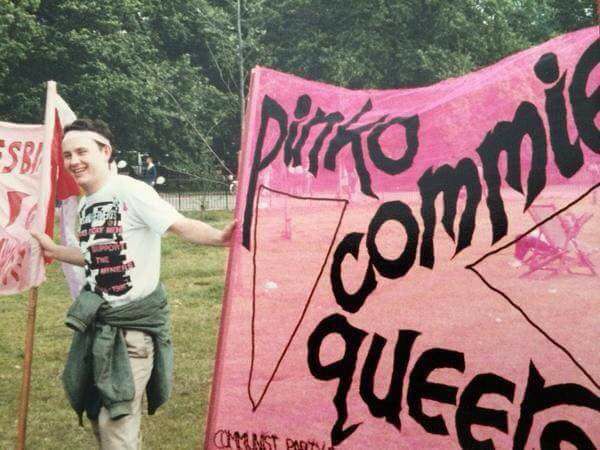


 CHATTING CRITICALLY