Musings on the politics of youth work, community work and society at large – dedicated to the memory of Steve Waterhouse, Malcolm Ball and Sue Atkins, great youth workers, comrades and human beings
To my surprise and indeed delight, I’ve been reacquainted with the writings of C. S. Lewis. Thanks are due to a series of articles by my favourite Appalachian philosopher, W. D. James. Previously my last encounter with Lewis had been back in around 1960. At the time I was in the last throes of my once passionate relationship with the Church and Christianity. I found myself reading Lewis’s ‘Mere Christianity’, perhaps an unfortunate title, if I was to be returned to the fold. He failed to prevent my Fall from grace and I embraced an irreconcilable atheism or radical humanism.
I remain so inclined but in recent years disturbed deeply by the growing post and anti-humanist outlook of a technocratic elite, who desire to be Gods, I converse with a plurality of dissenting voices, many religious in timbre. With a bit of luck and effort I hope to explore some of my response to the following pieces on Lewis’s philosophy. particularly the notion of Tao and Natural Law to be found therein.
I recommend highly your engagement with the following links.
The powerful, the ruling class of any historical period has spread fear as an essential element in the maintenance of its social and political control. Hence I’m stretching a point to suggest that we are living through an unprecedented era of Anxiety. And yet, even today, I’ve been warned to beware a possible proliferation of epidemic-catalysing viruses, all given the COVID script being existential threats, and instructed to fill the larder with supplies sufficient to last 72 hours in case of war.
We imagine the world as unsafe, and then we dream the world as unsafe, and then feel in our bodies that the world is unsafe. And this is an inverted order of things, the opposite of how our bodies come to knowledge. Rhyd Wildermuth
Sometime, perhaps never, I will seek to explore the contemporary phenomenon of algorithmic- created anxiety. For now, in the past few weeks I’ve sought to escape being suffocated inside the virtual by way of being scared of reality, namely giving another solo concert in my Cretan village. The nerves did indeed jangle. If you are kind enough to watch the two videos below you might well discern my tension. In terms of the songs themselves, it’s most obvious in my rushing through the Schubert composition, ‘Der Leiermann’, losing on the way much of its ambiguous mystery. Next time…….
A couple of people have asked for details of the latest programme. If I wasn’t so nervous about singing in the correct key I would relax and say more about the songs at the concert itself.
1. 0 Waly, Waly
Somerset folk song
2. Somewhere a Voice’s Calling and Smilin’ Through
American Parlour-Songs recorded in 1914 and 1919 by John McCormack, the famous Irish lyric tenor and sung by me as a boy soprano in 1957!!
3. Unbelievable, The Nearness of You and Bewitched, Bothered and Bewildered
American classics and often jazz standards – Livingstone, Carmichael and Rodgers
4, Hands, Eyes, Heart and Tired – Vaughan Williams and Now Sleeps the Petal – Quilter.
English Art Song
5. I am a Poor Wayfaring Stranger
North American folk song and spiritual
6. Ti eínai aftó pou to léne agápi from the Boy on a Dolphin, If I Loved You from Carousel and Summertime from Porgy and Bess
Songs from film and musicals – Morakis, Rodgers and Gershwin
Interval.
7. Im Wunderschönen Monat Mai – Schumann, Das Wandern and Der Leiermann – Schubert
German Lieder
8. Danny Boy
Irish folk song
9. My Funny Valentine, When I Fall in Love and The First Time Ever I Saw Your Face
Classic Love songs – Rodgers, Young and MacColl
10. Whither do I wander – Vaughan Williams, Sea Fever – Ireland and Come Again – Dowland
English and Elizabethan song
11. One Little Quarrel and Guilty
Tribute to Al Bowly and 1930s dance bands
12. Πάμε μια βόλτα στο φεγγάρι or Let’s take a walk to the moon
Greek classic – Hadjidakis
———————————————————————————————————————————————
Our villagekafeneio, H Elpida, the cafe of Hope
There seems little doubt, in my mind, that preparing for and giving this little concert, despite the blemishes, kept me out of what Anthony Rella calls the ‘psychic pollution’ infecting our relation to the internet and social media. OK, I admit, the warbling kept me away only for some of the time. Certainly I would suggest that prioritising time away from the screen in all its forms is a necessary form of resistance to the Machine. Lately I’ve gone back to printing off copies of stuff I’d like to read and taking them to peruse in the village kafeneio. A precious bonus is that Georgos brews a fine cappuccino and I get to pass the time of day with our village’s motley characters.
I must close by thanking Ken Carpenter for filming and editing the videos – all out of the goodness of his heart.
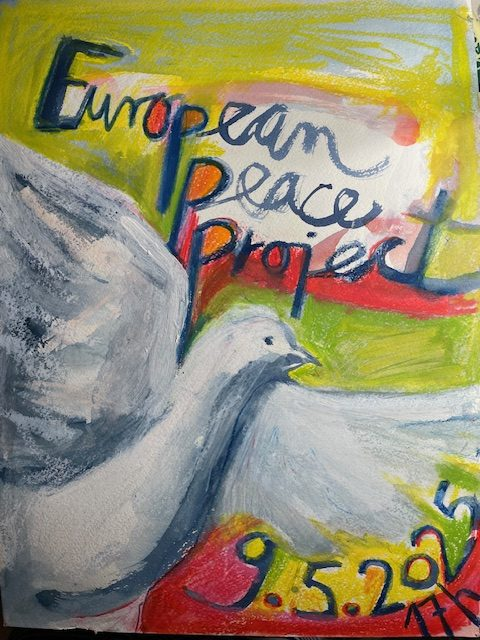
“On May 9 at 5 pm – it’s time to set an example for the peaceful future of Europe!”
The Manifesto – European Peace Project
Today, on May 9, 2025 – exactly 80 years after the end of the Second World War, which cost the lives of 60 million people, including 27 million Soviet citizens – we, the citizens of Europe, raise our voices! We are ashamed of our governments and the EU, which have not learned the lessons of the 20th century. The EU, once conceived as a peace project, has been perverted and has thus betrayed the essence of Europe! We, the citizens of Europe, are therefore taking our destiny and our history into our own hands today, on May 9. We declare the EU a failure. We start with citizen diplomacy and refuse the planned war against Russia! We recognize the co-responsibility of the “West”, the European governments and the EU in this conflict.
We, the citizens of Europe, together with the European Peace Project, oppose the shameless hypocrisy and lies that are being spread today – on Europe Day – at official ceremonies and on public broadcasters.
We are reaching out to the citizens of Ukraine and Russia. You are part of the European family and we are convinced that together we can organize peaceful coexistence on our continent.
We have the images of the military cemeteries before our eyes – from Volgograd to Riga to Lorraine. We see the fresh graves left behind by this senseless war in Ukraine and Russia. While most EU governments and those responsible for the war are rushing and suppressing what war means for the population, we have learned the lesson of the last century: Europe means “Never again war!”
We remember the European reconstruction achievements of the last century and the promises made in 1989 after the peaceful revolution. We call for a European-Russian Youth Exchange, modelled alike the French-German Youth Office of 1963, which ended the “hereditary enmity” between Germany and France. We demand an end to sanctions and the reconstruction of the Nord Stream II pipeline. We refuse to waste our tax money on armaments and militarization at the expense of social standards and infrastructure. Within the framework of an OSCE peace conference, we call for the creation of a European security architecture with and not against Russia, as laid down in the 1990 Charter of Paris. We call for a neutral Europe, emancipated from the USA, which takes on a mediating role in a multipolar world. Our Europe is post-colonial and post-imperial.
We, the citizens of Europe, hereby declare this war to be over! We will not take part in the war games. We will not turn our men and sons into soldiers, our daughters into nurses in military hospitals and our countries into battlefields.
We offer to immediately send a delegation of European citizens to Kiev and Moscow to start a dialog. We will no longer stand by and watch our future and that of our children being sacrificed on the altar of power politics.
Long live Europe, long live peace, long live freedom
“Give me the liberty to know, to utter, and to argue freely according to conscience, above all liberties.” ― John Milton , Areopagitica
Last week I gave a talk, entitled ‘Free Speech in Authoritarian Times?’ to an audience of 24 or so people, mainly but not exclusively English, brought together by Phil and Francesca Harrison under the banner of the Kalamitsi Arts Group in the old village school of Kalamitsi Amigdali. It was sweeping, ridden with obvious silences and contradictions. I had no intention of posting it here. My desire was no more than to raise questions in an often unquestioning world. However, whilst walking this morning, worrying about to what extent I am doing anything useful politically anymore, it struck me that, if nothing else, I should continue to scribble. Trying to write personally and politically is some sort of activism. And it’s long overdue that I cease self-censorship, that I rid my head of today’s puritanical authoritarians, housed in both corporate and state institutions, academic and bureaucratic or employed as no more than stenographers in the mainstream media. Being immersed in John Milton and J. S. Mill recently has strengthened a conviction that I should cast caution to the winds in order to speak freely and eccentrically.
“In this age, the mere example of non-conformity, the mere refusal to bend the knee to custom, is itself a service. Precisely because the tyranny of opinion is such as to make eccentricity a reproach, it is desirable, in order to break through that tyranny, that people should be eccentric. Eccentricity has always abounded when and where strength of character has abounded; and the amount of eccentricity in a society has generally been proportional to the amount of genius, mental vigor, and moral courage which it contained. That so few now dare to be eccentric, marks the chief danger of the time.” ― John Stuart Mill, On Liberty
In the next few weeks or so I’ll revisit my scattered, handwritten notes and post a revised version here.
In the meantime I’ll begin, as frequently promised but rarely delivered, drawing your attention to writing I find challenging, precisely because it is often but not always at odds with much of my ‘Left’ history.
Jeffrey Tucker, the author of this article, is described as a libertarian anarcho-capitalist and is the president of the Brownstone Institute, which, in its words, is a nonprofit 501(c)(3) organization founded May 2021. Its vision is of a society that places the highest value on the voluntary interaction of individuals and groups while minimizing the use of violence and force including that which is exercised by public or private authorities. This vision is that of the Enlightenment which elevated learning, science, progress, and universal rights to the forefront of public life. Presently, it is constantly threatened by ideologies and systems that would take the world back to before the triumph of the ideal of freedom.
It represents a liberal tradition, which has been sidelined by both neoliberalism and social democracy. Given both these ideologies are in crisis and sliding deeper into authoritarianism, the supporters of the Institute see the possibility of a renewal of its creed. Certainly at this particular moment their interpretation of the Trump phenomenon is generous, contrary and even naive. Yet theirs is a voice that needs to be heard.
These few paragraphs in themselves deserve discussion.
As it turns out, generations of ideological philosophizing had been chasing fictional rabbits. This is true for all the main debates about socialism and capitalism but also the side debates about religion, demographics, climate change, and so much more. Nearly everyone had been distracted from seeing the things that matter by hunting for things that did not actually matter.
This realization transversed typical partisan and ideological boundaries. Those who did not like to think about issues of class conflict had to face the ways in which the whole system was serving one class at the expense of everyone else. The cheerleaders of government beneficence faced the unthinkable: their true love had become malevolent. The champions of private enterprise had to deal with the ways in which private corporations participated and benefited from the entire fiasco. All major political parties and their journalistic backers participated.
No one’s ideological priors were confirmed in the course of events, and everyone was forced to realize that the world worked in a very different way from what we had been told. Most governments in the world had come to be controlled by people no one elected and these administrative forces were loyal not to voters but to industrial interests in media and pharma, while the intellectuals we had long trusted to say what is true went along with even the craziest of claims, while condemning dissent.
Rightly or wrongly I’ve felt a certain disdain from both Left intellectuals, politicians and activists towards the notion of the deep state. I’ve found this perplexing, especially as Chris Mullin, a Labour MP wrote a successful novel, ‘A Very British Coup’ back in 1982. Within its pages Harry Perkins appears as the left-wing Leader of the Labour Party and Member of Parliament for Sheffield Central. Beating all the odds, Harry becomes Prime Minister following a landslide victory in the 1989 general election, and sets out to dismantle media monopolies, establish Britain as a neutral country through withdrawal from NATO, the removal of American military bases from British soil and unilateral nuclear disarmament, achieve public control of finances, revive manufacturing by withdrawing from the Common Market and imposing import controls, and create an open government. Many people in the media, financial services, and the intelligence services are deeply unhappy with Harry’s win and his policies, and they unite with the United States government to stop him by any means.
For those of us involved in the labour movement of the time, often Leninist in our outlook yet supportive of the charismatic Methodist Socialist, Tony Benn, the scenario painted was certainly credible. However its diagnosis of the political situation was deeply worrying, especially for the Labour Party’s leadership at all levels and its membership. It suggested, at the very least, that the parliamentary road to socialism was fraught. The conclusion that the Party could not be a vehicle for radical change was too much to bear. Perhaps the demise of Corbynism has put paid finally to the illusion that there is a party political path to emancipation.
In recent years, as Christian Parenti, a professor of economics at the John Jay College, CYNU. notes, in the following article, the idea of the deep state has become a key part of MAGA [Make America Great Again] politics. My belief of four decades ago that a deep state stood firmly in the way of revolution was described as Far Left. To argue still that the deep state is a profound obstacle to implementing the demands of working people is to be Far Right.
War has come to the deep state or so it seems. During Donald Trump’s first weeks in office, he summarily fired a dozen top FBI officials and a similar number of US attorneys deemed hostile to the White House, and nominated deep-state critics including Tulsi Gabbard, Kash Patel, and Robert F. Kennedy Jr. for cabinet posts, while issuing executive orders to declassify all documents related to the assassinations of the Kennedy brothers and Martin Luther King Jr. Meanwhile, Elon Musk’s Department of Government Efficiency dismantled the CIA’s favorite cutout, USAID.
Given the centrality of the “deep state” to the MAGA worldview, merely uttering the phrase will immediately code you as a Trump partisan. But until quite recently, the concept was the province of the political left. Understanding its origins and evolution makes clear that the stakes are far greater than the political fate of Donald Trump and the MAGA movement. The deep state is a cancer that undermines popular sovereignty. Those who wish to restore democratic rule, regardless of political orientation, must therefore take it seriously.
He ends:
“The deep state is a cancer that undermines popular sovereignty.”
A robust national debate is also essential if we are to prevent the deep state’s relaunch from within the “reformed” remnants of old agencies. In short, this surgery cannot be left to the experts: It requires the disinfecting sunlight of declassification and public discussion. If the vaults of files are not disgorged, then it will be clear that Trumpian efforts against the deep state are nothing but limited insider-vs-insider score settling. Popular pressure must be exerted now to help us avoid that fate.
Against the horrifying historical backcloth of abuse in Mother and Baby institutions in the Irish Republic and the Six Counties, Phil Scraton reflects on the creation of ‘truth investigations’ as a grounded alternative to the fundamental limitations of State Inquiries.
Thanks to irishcentral.com
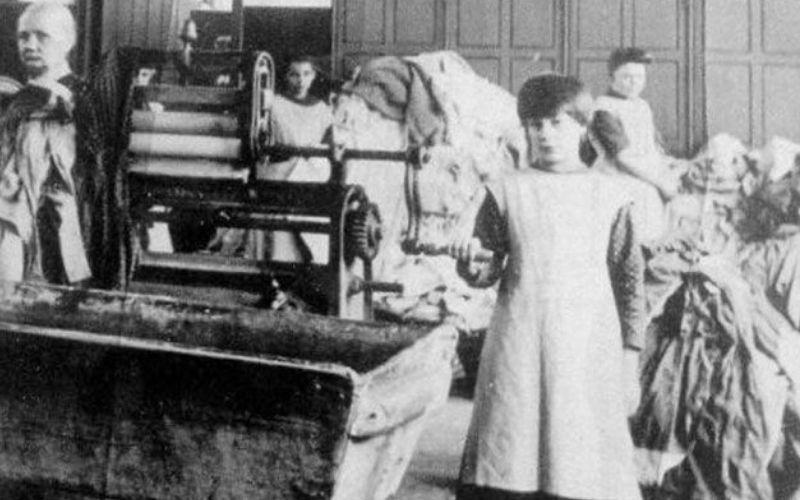
Then they took her …’ Disappearance, Loss and Searching: Mother and Baby Institutions, Magdalene Laundries and Workhouses.
Mothers
‘Trauma is the biggest harm that’s been caused. Imagine yourself giving birth being let feed and wash the baby then people coming, and taking her, then 40/50/60/70 years of questioning yourself. What is she doing now? Who is she? Like wondering if she had a good life. It’s a void that can never be filled. Always being afraid. What if they come take my other kids?’
‘The lack of empathy, the insulting way the nuns treated me and left me with a lifelong complex and inferior feelings of myself. Doctor or social worker didn’t explain the rigid rules and verbal abuse, as well as physical abuse taking place daily in the Magdalene home.’
‘The impact this has had on my life and the difficulties I have had dealing with my emotions on such a delicate part of my life. The lifelong loss of my own mother, my brothers and the endless hours of worry about where I belonged in life.’
Children
‘The trauma of realising late in life as an adoptee that the adoption may not have been freely entered into by your birth mother, adding to the sense of guilt and pain at being given up without the true consent of your own mother.’
‘The impact on me has been lifetime. I’m 50 years of age and I still struggle with it. Psychologically it’s devastating. So many types of harm – physical, mental, psychological, sexual.’
‘The lasting damage done to my mental health overshadowed my life and the lives of my family.’
‘It has to end with us as we do not want to pass this horrible legacy on to the next generation.’
These reflective, moving testimonies are spoken by those most profoundly impacted by institutional policies and practices operating to mask harm perpetrated on young mothers through forced removal of their babies. The pain of loss is mirrored by the pain of not-knowing. As mothers and their children – now adults – navigate daily life often separated by continents, cultures and language, they reflect on hidden histories and unknown possibilities. While dealing with stigma and shame associated with the label of illegitimacy – a ‘non-legitimate’ person – many were encouraged to believe they had been unwanted by their birth mothers.
In 2021 Ireland’s Mother and Baby Homes Commission of Investigation published its final report. It revealed that between 1922 and 1998 in eighteen institutions, 56,000 women and girls, some as young as 12, birthed 57,000 babies. Within the institutions, fifteen per cent of mothers and 9,000 babies died of malnutrition or illness. Without adult consent many were used for vaccination trials and up to 1,000 were trafficked. Commenting on the discovery of a mass grave in Tuam, County Galway, Taoiseach Enda Kenny stated mothers had been ‘treated as some kind of sub- species … took their babies, and gifted them, sold them, trafficked them, starved them, neglected them, denied them to the point of disappearance from our hearts, our sight, our country … from life itself.’ Yet this was not the full story. A further 25,000 babies were born in County Homes, their fate excluded from the Commission’s remit.
In Northern Ireland’s six counties between 1922 and 1990, 14,000 girls and women gave birth in Mother and Baby Institutions, Magdalene Laundries and Industrial Homes. A third were under 19, the youngest aged 12. As in the Irish Republic, many were survivors of persistent sexual abuse, incest and rape within families and by neighbours. A quarter of surviving babies were adopted, most without their mothers’ consent, their destination unknown. Some mothers remained incarcerated in Magdalene Laundries, working without remuneration in harsh conditions.
‘On my hands and knees, I scrubbed the tiled floors. They were already clean. I held my belly with my other hand. She stood over me, chastised me, called me a sinner. The birth was so painful. A wee while after, I was told to dress my baby in clothes that had been sent in. I kissed her, they took her. I lay on my bed howling, the empty cot alongside me.’
The key question remains: who knew? Those who ran the institutions, and profited from trafficking, doctors, health visitors, social workers, clergy, non-government organisations and a wider public were all aware. The rights of mothers and their children were violated systematically through an established administrative process. How was this institutionalised process accepted, legitimated? Writing on the hidden history of aboriginal oppression in Queensland, Australia, Henry Reynolds recalls meeting two young aboriginal girls sitting on a filthy mattress in a police cell floor surrounded by shards of glass. It was 1968. They had a bucket for defecation, the air foul. The young, newly-appointed university lecturer, was shocked by the disproportionate punishment inflicted by teachers. Yet within the white community, it was rationalised. He asked, ‘If this could be done to children, whatever punishments were meted out to adults? Why didn’t I know? Why hadn’t I been told?’
His questions relate directly to how sociological, historical, political and deep philosophical analyses frame what is considered reliable, ‘scientific’ knowledge regarding the legitimacy of state and non-state institutions. Central to critical social analysis is how political-economic power and the philosophical ideas that underwrite them is sustained by what Michel Foucault termed ‘regimes of truth’. Similar to ‘ways of seeing’ art, regimes of truth rely on shared viewing and acceptance that amounts to intellectual collusion. Refuting deeply entrenched mainstream assumptions is the principal objective of all critical analysis, creating dissenting accounts, generating alternative discourses. It is achieved by being there, by bearing witness.
Gathering testimonies alongside those who have endured cruelty in harsh institutional regimes is essential to truth recovery. Inevitably, people’s memories fade or are imprecise. Emerging from personal testimonies, however are consistent themes, institutional practices and named individuals involved in vindictive, hurtful, occasionally brutal acts. They are known within institutions, embedded in their operation and philosophically rationalised in the name of civility. Through these consistent revelations as C Wright Mills observed, the truth and the deceit of regimes become apparent, contextualising personal troubles as public issues. Shared personal experiences provide foundations to social-culltural histories of moment and place. Accumulating shared personal truth from women enduring gendered marginalisation is the substance of the German socialist-feminist Frigga Haug’s pursuit of archiving ‘memory work’. On such solid experiential foundations those who suffered in institutions whose lives have remained blighted by the harsh realities they endured, gain a measure of solace from shared memorialisation. The importance of accumulated testimonies, however, also extends to formal recognition through official inquiries.
Much has been written critiquing the limitations of public inquiries in hearing selective evidence, becoming battlegrounds for vested interests committed to escaping liability while marginalising the experiences of those whose lives should be the sole priority. In our work, we propose ‘truth investigations’ as an alternative form of inquiry through which independent panels with extensive expertise gather oral and written evidence from victims/survivors without cross-examination. The aggregated truth developed through this process then feeds into a full statutory inquiry. This model, derived in my work heading the research for the Hillsborough Independent Panel, now has been adopted in Northern Ireland. Our Independent truth Recovery Panel made 80 recommendations, prioritising access for victims/survivors to all personal records; support in giving in-depth, confidential interviews reflecting their experiences; redress, reparation and compensation; full apology from State and all organisations involved accompanied by a process of memorialisation; and the establishment of a permanent, dedicated truth archive.
An integrated truth investigation prioritises ‘knowing’ and ‘memorialising’ through gathering survivors’ and relatives’ testimonies. Establishing an archive to ensure survivors, relatives, researchers and the public have negotiated access to records, including institutions’ operational practices, lays foundations for investigating human rights violations while providing the means and understanding through which institutions and individuals will be held to account. Such questions of justice take us into the heart of our deepest held concerns, demonstrating that the experiential cannot be separated from the political. Processes of public recognition have the potential to lift the veil of shame and silence imposed on mothers and the children who were disappeared.
Our work, alongside those who have suffered for so long in silence, illustrates the significance of critical research not only in truth recovery, but also as resistance to institutional power; it exists alongside those for whom such truth systematically has been denied. Through the work of collective inquiring minds, bearing witness to private suffering while revealing cruelties of institutional practices, shame can be lifted from women who have suffered in silence. This is the potential of a more aggregated conception of truth at the heart of alternative accounts, providing solid foundations for public recognition of social injustice. Thus State and all other institutions involved are held to account as the institutional abuse of power is exposed, securing social and cultural rights as exposing intolerable practices lay the foundations for a new form of questioning. Clearly there remain issues to be resolved regarding the legal process, together with full disclosure of the institutional denial of international rights and their purposeful integration and silencing within institutional regimes of power. Yet, as Deena Haydon and I concluded elsewhere, a continuing commitment to securing rights and justice requires a ‘fundamental shift in structural relations and the determining contexts of power which marginalize and exclude [victims/survivors] from effective participation in the processes that govern their lives’.
The Opening testimonies are taken from the Report of the Independent Truth Recovery Panel: Mahon, D., O’Rourke, M., and Scraton, P. (2021) Truth, Acknowledgement and Accountability: Mother and Baby Institutions, Magdalene Laundries and Workhouses in Northern Ireland. Belfast: Truth Recovery Design Panel/ NI Executive. A version of the above is published in the journal, The Philosopher, Special Issue on Violence, Autumn 2024.
Phil Scraton is Emeritus Professor, School of Law, Queen’s University, Belfast
At a time when it is tempting to use the analogy of ‘lunatics running the asylum’ or should that be ‘Sociopaths running Society’, I drew inspiration and joy from this powerful tale of solidarity.
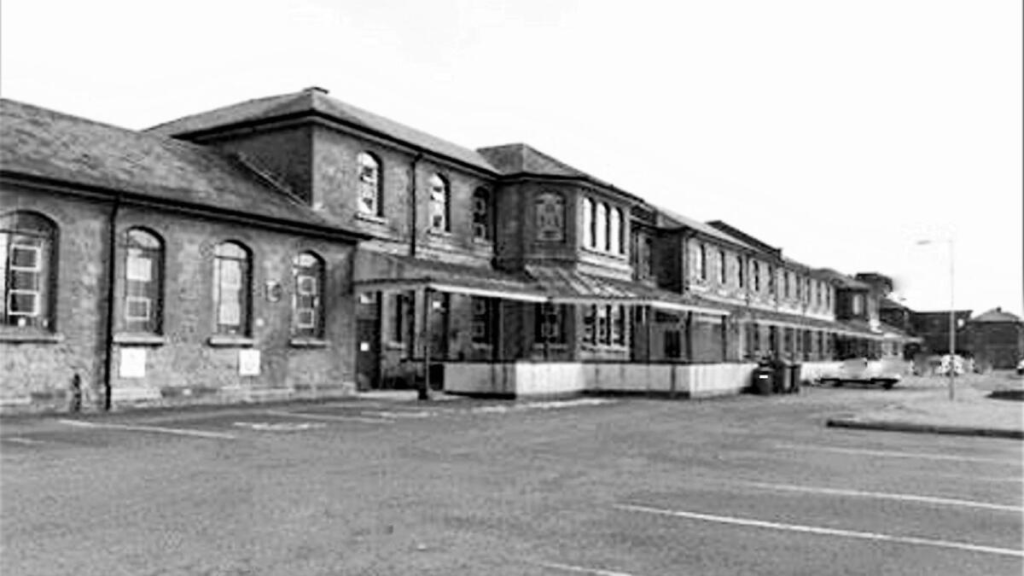
On 24 January 1919, staff and patients barricaded themselves inside the Monaghan Lunatic Asylum in Ireland and declared a soviet (workers’ council). The asylum workers had already shown militancy during a 1918 strike when they chased away visiting staff who attempted to cross the picket line.
By 1919, attendants and nurses were working a 93-hour week and earning just £60-£70 per annum. They invited Peadar O’Donnell, a leading militant in the Irish Transport and General Workers Union, to negotiate on their behalf. And when negotiations failed to resolve their grievances, they hoisted the red flag and ran the asylum in cooperation with the patients. O’Donnell implemented a 48-hour working week and locked one attendant in a padded cell for “defeatism.” The staff and patients showed extraordinary resolve to maintain the occupation even when surrounded by 125 armed police.
Unusually, no great animosity seems to have existed between police and strikers, and during the occupation they co-organised dances and football matches. Nevertheless, when a rumour circulated that military police were about to force entry, the occupiers sealed windows, barricaded corridors, swapped clothes with patients (to confuse the attackers), and attempted to arm themselves with shovels, spades, and pitchforks. When authorities offered to meet wage demands for male workers only, the occupiers refused to concede, insisting on parity for women workers.
In the end, the standoff was resolved peacefully, with the total capitulation of the Asylum Committee. The occupiers held a victory dance in one of the dining halls, which was attended by many local townspeople as well as some of the police force. The following morning, February 4, they returned to work.
It seems unbelievable that the slaughter of the innocents continues; that the calculated genocide pursued by the Zionist Israeli government remains its official policy, afforded succour and ammunition on a daily basis by the USA, the UK and the EU.
With a heavy heart I can do no more than offer the Reverend’s 2024 calm. yet anguished reflection on the situation facing Palestinians today. I can but weep.
“‘Never again’ should mean never again to all peoples,” Munther says in his sermon. “‘Never again’ has become ‘yet again’ — yet again to supremacy, yet again to racism and yet again to genocide. And sadly, ‘never again’ has become yet again for the weaponization of the Bible and the silence and complicity of the Western church, yet again for the church siding with power, the church siding with the empire.”
“So, today, after all this, of total destruction, annihilation, Gaza is erased — millions have become refugees and homeless, tens of thousands killed. And why is anyone still debating whether this is a genocide or not?”
“We’re still seeing images of children pulled from under the rubble. It’s unthinkable to me that it’s been more than 14 months now into this genocide, and we’re still seeing the same images. It seems like we’re powerless, and it seems that the world is content with letting this go on. And here in the West Bank, as we watch from Bethlehem what’s happening in Ramallah or Hebron, we wonder, ‘Are we next?’ Israel has made it clear they plan to annex the West Bank next year. What would this mean on the ground?”
“Our fear here in Bethlehem is that there is no one who’s going to hold Israel accountable.”
Yes, it has been 440 days. It is 440 days of Palestinians’ resilience, sumud. Indeed, it is 76 years of sumud. But we have not and will not lose hope. Yes, it is 76 years of an ongoing Nakba, but it is also 76 years of Palestinian sumud, clinging to our rights and justice of our cause, 76 years of praying and singing for peace. I was thinking about it. We are stubborn people. We continue to pray for peace year after year after year, and sing about peace, and we will continue to do so. And we will continue to echo the words of the angels, “Glory to God in the highest, peace on Earth.”
As for an ageing, irreconcilable atheist like myself I can but pledge my unswerving support for the Palestinian cause and with the good Reverend pray for ‘peace on earth’.
It’s not snow but a bitterly cold Yorkshire setting, January 1971. I’m hanging on to the heels of the great Mick Holmes, now sadly deceased.
As has been my fetish since around 1968 I trained on New Years Day. Although I don’t think the aspiring athlete of well over half a century ago would recognise my shuffling attempt to race walk as worthy of the epithet, ‘training’. On the other hand, 2024, a year of relative sickness, has sapped me of my long-standing confidence in an ability to fend off the years. It wasn’t snowing in our Cretan village but Marilyn’s lovely watercolour of a route I used to run back in the day brought back frozen memories of the joy of movement. As it was my slow progress allowed me to take in the beauty and tranquillity of my pine-filled surroundings, enabling my affectionate conversation in both English and Greek with dogs, cats, sheep and goats along the way. I swear they look forward to me coming! Back home in virtual reality, slumped at the computer, I pondered a New Year’s message to my less than adoring public.
It’s been a lean year for posts on this website. Meanwhile the world continues to be in collective, apparently crazed convulsion. Genocide is normalised. There is not just talk of crisis but of polycrisis. I find myself claiming to be confused. There is so much going on I can’t see the roof for the tiles. This tame assertion contains grains of truth but is no more than a limp excuse. For I do possess an overview of what’s happening in the world and, to an extent, I outlined this perspective, however flawed, a year ago. Indeed, when I go back to the three or four pieces I published back then, there is little I would change and much I would add – see the link below.
In claiming that I have some kind of overall insight into the present course of history (and in the light of observations I have made, in particular, about the COVID melodrama) I open myself to the curt dismissal that I am a simpleton, a conspiracy theorist. The knee-jerk charge, whether explicit or implicit, allows its prosecutors, drawn initially from the professional milieu or the ‘knowledge industry’, to pass judgement without recourse to dialogue. This facile reasoning does trickle down, courtesy of a largely grovelling mass media, into day-to-day discourse. Only so far, though. There is also a widespread reaction, which questions the patronising certainty of today’s priests – experts, politicians, journalists, technocrats, professionals, academics, influencers, Ursula van Leyden, Uncle Tony Fauci and all – who demand, despite their often demonstrable deceit, that society submits to their unswerving hierarchical faith and trusts the[ir] Science.
Inevitably this refusal or, at least, reluctance to comply takes many different forms, which in themselves, are strewn with contradiction. However the necessity of grappling with the intertwining, oft conflicting tendencies within those who demur, is spurned by those who know better. The generalisations, the stereotypes flood and drown debate. Who are we talking about here? Who are the refuseniks, the populists, that dubious and derided category of humanity standing in the way of progress ? Amongst them in the States are Clinton’s deplorables, Biden’s garbage, Obama’s sewage. Whilst in the UK and Europe we find racist, xenophobic, working class Brexiteers, far right nationalists of differing hues. All of whose wayward opinions are being given succour, so the narrative goes, by an eclectic and politically diffuse array of authoritarians and anti-authoritarians, peopling the airwaves of the alternative media with its daily dissenting diet of live coverage and lengthy podcasts, the latter the very opposite of superficial sound-bites. My oldest grandson, Ben swears by the strength of the podcast in challenging him to think critically, outside of the status quo. Of course, in my naivete, I’m overlooking that this motley crew of Far Right sympathisers, especially its lumpen elements, is in thrall to strong leaders, symbolised by Trump, a fascist by all ‘progressive’ accounts and has no legitimate agenda of its own. This arrogant trivialisation of grass-roots unrest is symbolised by the demise of the Democratic Party in the USA, which even the loyalist Bernie Sanders admits has abandoned the working class.
On a personal level I am disturbed by the way in which my public outlook and practice has been infected by the dominant narrative and I’m long out of the orthodox bubble. Sure, my nerves are not at all what they were. Age and illness have taken their toll. Just a fortnight ago, a concerned neurologist sent me for an MRI scan to determine further, if possible, the reason for my debilitating tremors and disorientation. As best can be seen, Parkinson’s is not on the horizon but the doctor spoke of ‘accelerated ageing’. Like it or not, this notion does fit with how I’m feeling! This self-centredness aside, I do find myself shaking externally and internally when overhearing in the taverna the predictable pronouncements on the state of the world proffered so confidently by well-off English-speaking tourists and migrants. Nowadays it matters little whether these prejudices are garnered from the Daily Mail or the Guardian. They are uttered shamelessly, unhesitatingly. To my shame I keep my gob shut.
How to understand this level of anxiety around standing up for what I believe? And what is it I believe and why does it feel so problematic to give voice to my opinion? After all since the mid-70s haven’t I often been a disagreeable voice within personal, professional and political situations? Perhaps I exaggerate but I often felt disaffected colleagues looked to me to be their spokesperson. What were the balance of forces into which I was intervening? Let me answer my question somewhat crudely. Certainly within the professional and academic world it was a matter of challenging the liberal order with a demand that the relations of exploitation and oppression be addressed. What of now? In my head and my heart I wish to express still an anti-capitalist, humanist and universalist opposition to the desires of those upstairs, the powerful. I strive to stay true to the memory of my dear friend and comrade, Sue Atkins. Yet I feel down if not out. She would not have approved of my dismay.
I’m at odds with a so-called progressive politics, which in Malcolm Ball’s turn of phrase wishes ‘to change the word and not the world’. Of course words as well as sticks and stones are hurtful. Indeed, in the part-time youth worker training I organised and facilitated in the late 1970s, we engaged directly with the impact of racist, sexist and homophobic language upon ourselves and young people. Although, on reflection, our missionary zeal foreshadowed some of today’s unforgiving insistence on prescribed verbal adherence.
I’ll stop here as I’m opening a receptacle of wriggling rats such as global governance and the nation-state, censorship and surveillance, the climate crisis, identity politics, Zionism, the material and the spiritual, all of which and more needs serious unravelling, It remains to be seen whether I do so. For what it’s worth I’ll try to post links to stimulating writing from across the spectrum. I promised this last year and failed. I’m going to begin revisiting stuff I’ve written in the past, which still seems relevant. I suspect I carry a chip on my shoulder about how much of it has ever been read! Finally I have embarked on a pretentious project, an autobiography. The rough draft of a first decade from 1958 to 1968, from passing the eleven plus to leaving teacher training college awaits revision, At the very least it is helping me to understand better how I’ve come to be who I am today. If, nothing else, it ought to keep me out of mischief.
After her retirement in 1998, Sue Atkins threw herself into the development of the Youth Association South Yorkshire
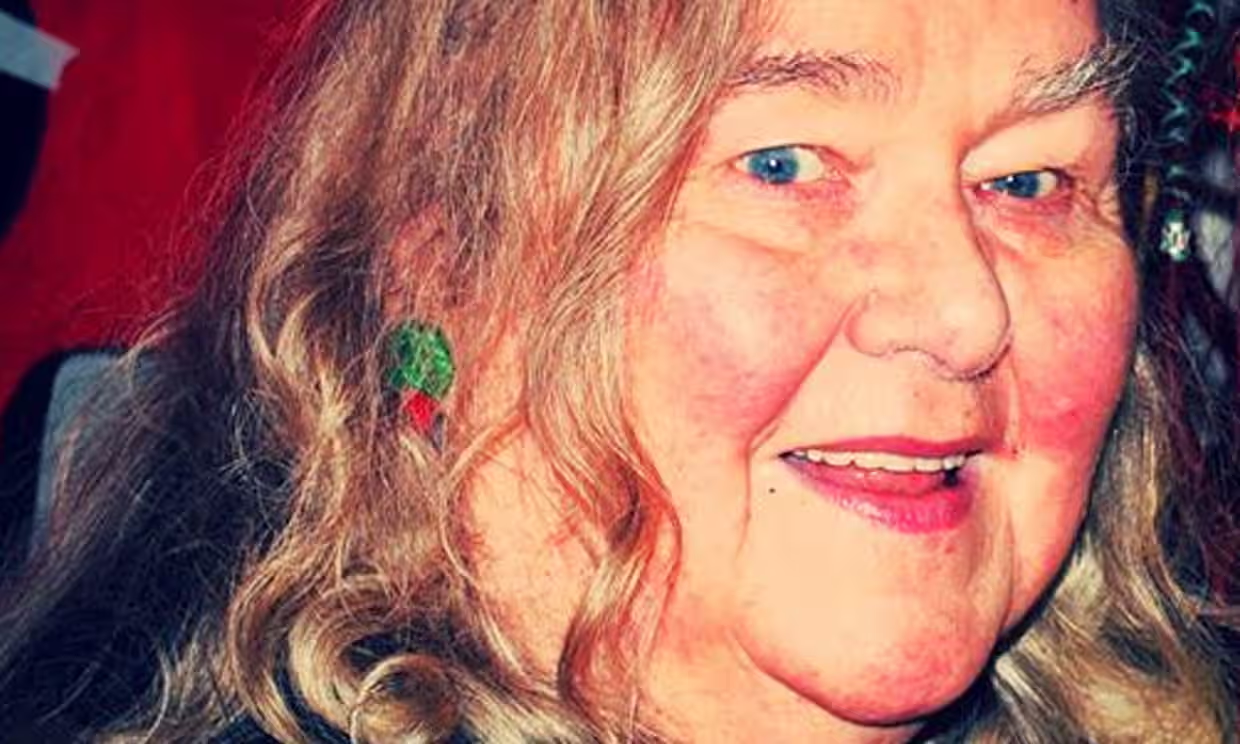
My friend and colleague Susan Atkins, who has died aged 86, was a highly respected youth worker in Sheffield who also played, over many decades, a national role in the validation of youth and community work training courses in higher education.
Sue was destined to be a youth worker. Born in Uxbridge, west London, she was the daughter of Kit and Paul Beaven, who ran a thriving open-access youth club that drew the attention of Jennie Lee, Labour’s minister for the arts, through its combination of informal social space with drama, music and art.
After leaving Bishopshalt school, Sue forged a reputation in the local amateur theatre group the Argosy Players, holding down an eclectic variety of daytime jobs to finance her thespian talent. In later years she would depict youth work as an unfolding drama, an improvised script, the authors of which were young people and youth workers as animated equals.
In 1966, she barely “survived” the one-year qualifying course at the new National College for Youth Leaders in Leicester. This experience of higher education that faltered on the edge of failure stayed with her for the rest of her remarkable career – and sometimes Sue expressed herself with a feigned anti-intellectualism.
In 1967, she accepted what was intended to be a temporary post in Sheffield as a community-based youth worker with immigrants. She was never to leave, and worked in tandem with Mike Atkins, soon to be the city’s race adviser, whom she married in 1969. Her pioneering work with the Afro-Caribbean community created a responsive youth service within which young people prospered, often becoming education and welfare practitioners in their own right.
She was a dynamic presence within the Community and Youth Workers’ Union (now part of Unite the Union), embracing a caucusing structure that amplified the voices of women, and black, gay and part-time workers. Serving as president of the union in the mid-1980s, she was a leading negotiator for improved wages and conditions.
After her retirement in 1998, Sue threw herself into the development of YASY (the Youth Association South Yorkshire), and, from 2009, she was energised by the In Defence of Youth Work campaign. She identified passionately with its vision of youth work as “volatile and voluntary, creative and collective – an association and conversation without guarantees”. Dubbing herself teasingly as “a woolly Marxist optimist”, she was a socialist-feminist and supported Jeremy Corbyn’s leadership of the Labour party.
In the last of 20 annual reports to her beloved YASY, she ended: “For me, Youth Work has always sought to enable and facilitate young people to test, explore and flourish, to discover their hopes and dreams and find their focus and direction.” The day before she died Sue was in a meeting called to design a training programme for volunteers. Throughout, she was devoted to her life’s work.
Sue is survived by Mike, a stepdaughter, Kiya, and grandson, Isaiah, and her brother, Peter.
My impression remains that people either want to forget or deny the suppression of society during the so-called ‘pandemic’. Given the mounting evidence that, at the very, very least, the undemocratic, unevidenced assault on liberty was problematic, it’s no longer straightforward to dismiss COVID critics as unhinged, anti-science conspiracy theorists. It seems preferable to pretend the nightmare was a dream and consign it to the past.
Amongst the many issues still on the table I’ll draw your attention to just two. Firstly there remain many courageous individuals, who voiced utterly legitimate concerns about the lockdowns, whose lives and careers have been shattered – see the example of the incredibly modest and inspiring Dr. Kulvinder Kaur Gill.
New Illusion of Consensus podcast! Dr. @dockaurG is a Canadian doctor who speaks bravely vs. lockdowns. She faces a vicious smear campaign & legal action that threatens to bankrupt her. This is her first public interview. Please donate to her legal fund:https://t.co/Y7Q3b2Pyk3pic.twitter.com/2KOtD2P87t
Dr. Kulvinder Kaur Gill is a frontline physician in Ontario, Canada who supports fully informed voluntary consent without any forms of coercion or restriction in all medical decision-making. She is a long-time advocate for patient autonomy, evidence-based decision-making, protection of the patient-doctor relationship, and an accessible, quality healthcare system.
In the summer of 2020, Dr. Gill was one of the first Canadian physicians to bravely speak out publicly on social media about the catastrophic and irreparable harms of lockdowns. She quickly became the target of an orchestrated malicious online smear campaign that encouraged the public to lodge complaints to her regulatory college. In an attempt to clear her name from spurious defamation, she had launched legal proceedings against those responsible; but a pre-trial procedural ruling against her had led to a cost order of up to $1.2M in October 2022. This court procedural/motion decision and the cost order were both appealed, ultimately leading to a costs order of nearly $300K ordered in late February 2024 with just weeks to pay.
Dr. Gill was once a lone voice against lockdowns in Canada: a compassionate voice for humanity who has inspired countless people around the world to take a stand against harmful government measures. The arc of history has bent towards Dr. Gill; sadly her early warnings on lockdown harms have come to fruition. Compelled by her conscience, her courageous and ethical efforts to uphold the Hippocratic oath in supporting patient autonomy and speaking out against harmful lockdowns have come at an immense personal cost to Dr. Gill. Her supporters are using this platform to fundraise to support her legal fund, and her fight for our human rights. Please donate and share.
Secondly, are we so naive as to think there are no more emergencies in the pipeline as the ruling class creates an era of anxiety? And that it seeks to introduce evermore definitions of what it sees as unacceptable dissension from its authoritarian agenda. For example, see Michael Gove’s new definition of ‘extremism‘. HART, the independent and questioning ‘Health Advisory and Recovery Team’ point out who ought to be the first to be charged under its tenuous tenets.
In the latest egregious bout of trolling from HM Gov, it takes about 3 milliseconds of studying the new definition of extremism to realise that during the so-called ‘pandemic’, the government did precisely everything therein:
negate or destroy the fundamental rights and freedoms of others;
What, like denying them social contact, denying them the right to be with their dying relatives, forcing medical procedures on them in order to continue their job, denying them the right to earn a living, denying their rights of free movement, locking them in their homes and arresting them for sitting on a bench? That kind of thing?
undermine, overturn or replace the UK’s system of liberal parliamentary democracy and democratic rights;
What, you mean like introducing a brand new legal act (in spite of there already existing an appropriate instrument) that completely tramples parliamentary democracy, giving the sitting government the right to jackboot their way into people’s lives as outlined in point 1 above? Or like shutting down parliament entirely and cancelling elections? Or perhaps like Matt Hancock telling parliament that he had unilaterally decided to offer the pharmaceutical companies indemnity for their products.
intentionally create a permissive environment for others to achieve the results in (1) or (2).
What, you mean by censoring and smearing any opposing views, demonising anyone who didn’t get with the programme and creating an environment of extremism via a media monopoly that would have been more fitting in Mao Zedong’s China.
Thanks to Edward Curtin for taking me back to a poem I had filed away at the beginning of the New Year
It was composed by the Palestinian poet Refaat Alareer, who was killed in Gaza by an IDF airstrike on December 6, 2023 along with his brother, nephew, sister, and three of her children.
If I Must Die
If I must die, you must live to tell my story to sell my things to buy a piece of cloth and some strings, (make it white with a long tail) so that a child, somewhere in Gaza while looking heaven in the eye awaiting his dad who left in a blaze — and bid no one farewell not even to his flesh not even to himself — sees the kite, my kite you made, flying up above, and thinks for a moment an angel is there bringing back love. If I must die let it bring hope, let it be a story.









 CHATTING CRITICALLY