IRON LADIES – INSPIRING AND UNITING RESISTANCE

It is almost five years since we made one of our last references to the enduring legacy of the Great Miners’ Strike in this post, Women and Resistance – The Miners’ Strike 84/85. Within it can be found the following vital concern. The crucial question is to ponder how we resist collectively the conscious closing down by the powerful of our relationships with each other in the personal, social and political sphere? To be melodramatic how do we fight back against an assault on our very humanity? We closed by emphasising that the passionate, unselfish struggle waged by the women and men of the Strike remains an inspiration.

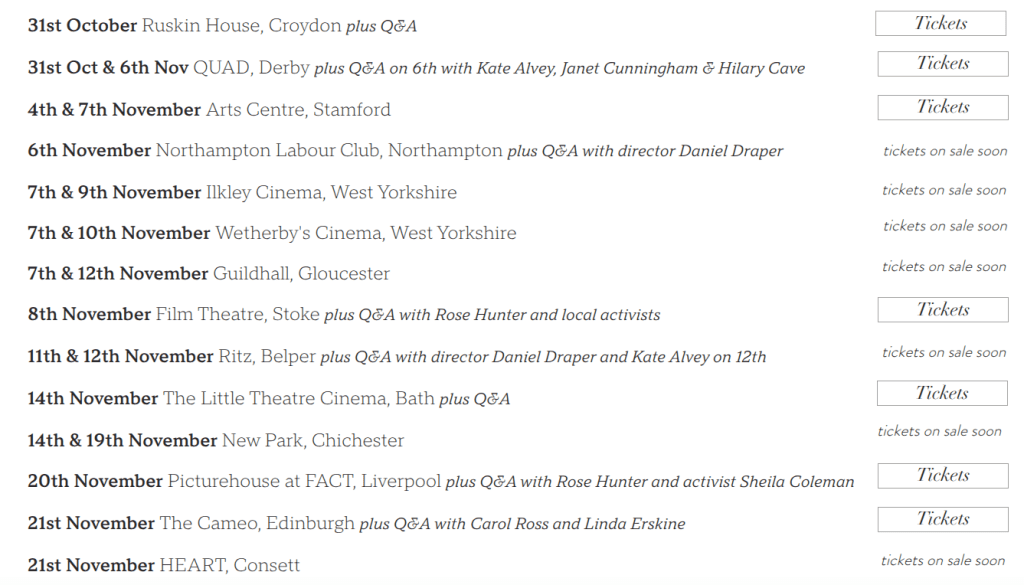
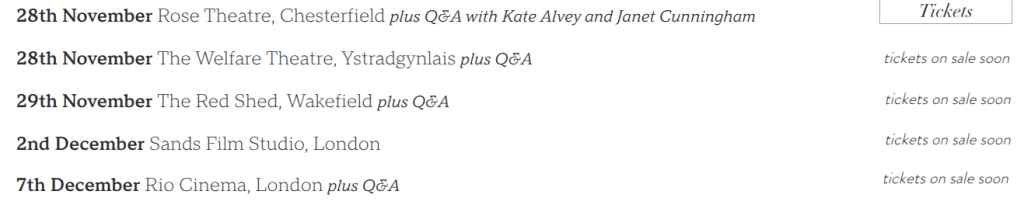
With this in mind we welcome with arms spread wide notice that the pioneering film company, Shut Out the Light has made a new documentary, Iron Ladies – a celebration of the iron willed women who maintained the 1984/85 Miners’ Strike as they fought for the future of their communities. The film is about to hit the streets. Here is a list of the showings and a trailer. We urge you to support this vital venture and indeed look forward to receiving your very own reviews of its content. Spread the word.

Go to the website https://www.shutoutthelight.co.uk/iron-ladies to buy tickets.

Shut Out The Light Films is an independent film and distribution company, founded in Liverpool in 2014 by Christie Allanson and Daniel Draper.

When Fear Becomes Strategy: Anti-semitism, Aliyah, and the Calculus of Zionism

Siyavash Doostkhah, an Iranian refugee himself, sends this thoughtful and provocative piece from Australia, which seeks both to engage with contradiction and to peer beneath the surface of things.

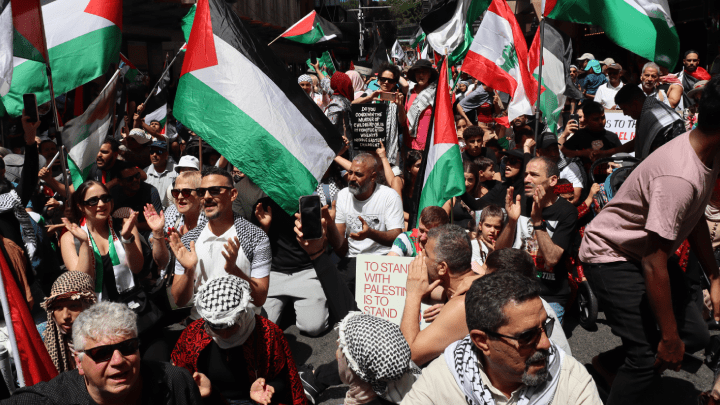
Pro-Palestine demo, Sydney, 2025. Thanks to sydneycriminallawyers.com.au

In recent months, Australia has witnessed an unprecedented rise in both impassioned pro-Palestinian activism and deeply troubling anti-Semitic incidents. Tens of thousands have marched through the streets of Sydney, Melbourne, and Brisbane, voicing legitimate grief and fury over the ongoing humanitarian catastrophe in Gaza. At the same time, Jewish schools have been defaced, community centres targeted, and Jewish Australians report growing fear and isolation.

This dual reality, empathy for Palestinians and anxiety within Jewish communities, demands careful and principled reflection. But equally important is this: Why is the Israeli government, self-proclaimed protector of the Jewish people, not doing more to counter this rising tide of antisemitism?

The silence, or, at best, tepid response, from Netanyahu’s administration isn’t just puzzling. It may be strategic.

There is a long, uncomfortable history in which fear has been used not only as a political tool but as an engine of migration. The Israeli state’s Zionist foundations have always relied, in part, on Aliyah, the migration of Jews to Israel, as both a demographic imperative and a spiritual calling. Throughout the 20th century, waves of migration were often triggered or accelerated by persecution: from Nazi Germany and post-war Europe to crises in Arab countries, Ethiopia, and the former Soviet Union. Often under the banner of rescue, but always with a demographic calculus in mind. Fear has long been a midwife to the Zionist project. In this vision, a swelling Jewish population is not merely a response to antisemitism, it is a geopolitical lever.

In the current moment, with the concept of Eretz Yisrael HaShlema “Greater Israel” driving Israeli policy and settlement expansion, we must ask: is fear again being used to accelerate Aliyah? Could the Israeli state be tolerating, or even quietly capitalising on, a global climate of antisemitism to encourage Jews to migrate “home”?

The Aliyah narrative has become more than a cultural call; it is a lever of statecraft. If Jews in Paris, New York, or Sydney no longer feel safe, Israel presents itself as refuge. But if Israel actively stokes the conflict that fuels that fear, through disproportionate violence, provocative incursions, and refusal to engage in diplomatic solutions, then we must ask: Is it still acting in the interest of Jewish safety, or in the interest of a nationalistic expansion project?

For progressive Australians, particularly those committed to Palestinian justice, the challenge is delicate. Solidarity must not slide into complicity. There is a fine but vital line between opposing the Israeli occupation and inadvertently legitimising oppressive actors such as Hamas or the Islamic Republic of Iran, both of whom exploit Palestinian suffering while offering no vision of human rights or freedom. Hamas’s violent tactics and Iran’s authoritarian repression cannot be sanitised simply because they oppose Israel.

Just yesterday, a protestor in Sydney was seen holding a poster of Ayatollah Khamenei, the brutal dictator of Iran, at the pro-Palestinian rally across the Harbour Bridge. That image, with thousands of Australians in the background, will no doubt be used by the Iranian regime and its supporters to manufacture legitimacy. This is how protests are hijacked.

I first encountered this tactic in the 80’s, when I was a refugee in India. On a crowded train platform, I witnessed a man tossing handfuls of coins into the air. Predictably, a crowd quickly gathered. Then, suddenly, placards bearing the image of Rajavi, the leader of the MEK organisation, were raised in the crowd, and someone began photographing the scene. These photos would later be used to suggest mass support for the MEK among Iranian dissidents in exile, an illusion created with a bag of coins and a camera.

We cannot afford to be naive. In Australia, outrage at Israeli state violence must not drift into antisemitism, overt or coded. When Jewish businesses are attacked in Melbourne, when graffiti defiles synagogues in Sydney, or when Jewish Australians feel compelled to hide symbols of their identity, it does not weaken the occupation, it strengthens it. It reinforces the Israeli narrative that the diaspora is unsafe and that Aliyah is the only answer.

There is an old strategy at play: If Jews feel unwelcome elsewhere, the Zionist project gains strength. If Palestinians are framed as irredeemable threats, then Israeli expansionism proceeds unchecked. The answer, for those of us who reject both antisemitism and colonialism, is to break this cycle, not feed it.

We must hold the Israeli government to account, yes, but we must also call out those who hijack solidarity for their own bigotry. We must demand justice for Palestinians, but not by echoing the authoritarian rhetoric of Hamas or Tehran. And we must ensure Jewish Australians are not collateral damage in a geopolitical game they did not consent to play.

True solidarity is principled. It condemns ethnic cleansing and occupation without resorting to hate. It recognises that antisemitism, even when disguised as anti-Zionism, serves no liberation. And it sees clearly how fear, if left unchecked, can become a weapon in the hands of those who seek to redraw borders, not build bridges.

If we are to help build a future where both Palestinians and Israelis can live with dignity and peace, then progressive Australia must sharpen its lens, and its conscience.


With their permission I attach the dialogue between Siyavash and Rasheed, which unfolded on Facebook following the appearance of Siyavash’s original. I do so because such a healthy exchange of opinion is all too rare in the intolerant and suffocating atmosphere dominant today.

Rasheed Abu Hamda responds to Siyavash:

In Brisbane where the protests took place in the last two years there were many jewish voices who spoke against the Israeli occupation of Palestine. And no one made them feel unwelcome otherwise they would’ve stopped attending the protests.

Anecdotally, at least in Brisbane I don’t think that antisemitism is disguising as anti-Zionism.

There was a shop in Paddington that was named and shamed because they were very open about supporting Israeli practices in occupied Palestine. This was an example where an Australian Jewish were overtly in support of Israeli terrorism. I haven’t heard of a single account in Brisbane where Australian Jewish were targeted because of their faith. Targeted because they sided with the apartheid state? Yes, especially the ones who went to Israel to serve in the IDF. My other take on the article is Iranian regime and HAMAS painted with a similar brush is not tactful. HAMAS was a direct produce of 50 years of occupation. It’s like a foster kid who was removed from a violent home and continued to move from family to another. A foster kid that was failed by the system – the international community that let Israel go on and on ( for decades) in their barabric attacks on Palestinians. And when the foster kid grown up and have more power to cause damage to the system, what do we do? We incarcerate the kid. Without taking responsibility (as international community) to acknowledge the systematic failure. The latter continue as we speak 77 years and counting. Addressing the symptoms is less effective than addressing the root cause of this chronic problem.

Siyavash replies:

 Hey Rasheed, I really appreciate you taking the time to reflect and share your thoughts, there’s clearly deep care in your words and I totally respect that. I just want to clarify a few things, not defensively, but to continue the dialogue with honesty.

Firstly, I never said Jewish people were being targeted at the protests themselves. In fact, I fully acknowledge and celebrate the many Jewish voices who stand in solidarity with Palestinians, those voices are powerful and necessary. But outside of those protest spaces, there have been disturbing incidents across Australia with many families reporting feeling unsafe just for being visibly or knowingly Jewish.

As someone who’s been part of anti-Zionist activism in Brisbane since the early days, when it was just a small handful of us, I’ve observed a real shift in recent years. There’s been a creeping conflation of “Israeli” and “Jew,” even in educated circles. I get where it’s coming from, people are angry, traumatised, and rightly horrified by what’s happening to Palestinians. But I think it’s dangerous when that anger is redirected, intentionally or not, at Jewish people more broadly.

You mentioned that Hamas is a result of decades of occupation. I hear that analogy, and yes, the international community absolutely bears responsibility for abandoning Palestinians. But I still think it’s important to be honest about how Hamas came to power. Its rise wasn’t entirely organic. Israel once saw Hamas as a counterweight to the PLO, helping it grow in the 80s to weaken secular Palestinian nationalism.

That’s what I was getting at when I grouped Hamas and the Iranian regime together, not because they’re the same, but because both have been propped up in various ways by external powers (including the West and Israel) when it suited their strategic interests. And now they serve as convenient “boogeymen” to justify continued military aggression and repression.

I also worry when I see some on the Western left romanticising these authoritarian groups simply because they oppose Israel. I’ve lived through this myself, as a refugee from Iran, I watched the left in my country get crushed by the very theocracy they once helped empower. The Iranian left thought they could ally with religious fundamentalists to bring down the Shah, and they were the first ones the regime turned on after the revolution.

It’s a tough, messy landscape. But I think we owe it to ourselves, and to the Palestinian people, to stay sharp, to question all forms of power, and to be wary of letting righteous anger cloud our ethics. We can (and must) be anti-occupation, anti-colonial, and still protect Jewish communities from harm and fear. The two things are not mutually exclusive.

Let’s keep talking.

Over to Rasheed

Thank you Siyavash for sharing your thoughts – I do appreciate you and your thoughts. The Jewish people participating in protests was just an example to demonstrate that tolerance exist providing they are not pro-zionism – sorry I should have clarified that in the first place, a room for improvement. And to hear there are Jewish families who are not pro Zionism are being harassed, it doesn’t sets well with me. As this is what Palestinians are been subjected to and this is what we are protesting against. Except what Palestinians are enduring is more than harassment. As a Palestinian who lived as a refugee for most of my life and lost family members and farming lands to the occupation forces, the question remain in front of mind is do we focus our efforts to expose and hopfully remove the Apartheid system – the main cause of disease, get distracted with addressing the by products of the occupation, or address both while lives are lost on a daily bases in Gaza, West Bank and more Palestinians inside Israel are further marginalised? I personally belive that we need to stop the fire first and stop the one who caused it in the first place prior to get the house back in shape. I’d love to hear your views in that regards especially the ones that are different from what I just shared. After all, I don’t know what I don’t know and multiple perspectives helps us to see the picture better. P.S. I do admire Jewish people who can see right through the fake face of Zionism considering the fears and traumas of many generations while living in Europe. It takes a huge amount of courage to do so.

All of which prompts Siyavash to respond:

Thank you for your heartfelt and grounded message. If I were to sum up my response in a spirit you might relate to, given your deep love for dance, I’d offer the quote often attributed to Emma Goldman: “If I can’t dance, I don’t want to be part of your revolution.”

It speaks to the kind of liberation we both long for, one where joy, dignity, and humanity are not sacrificed in the process of resistance.

You asked an important question about whether we should focus our energy on the system of apartheid or deal with its toxic by-products too. I think the two are deeply linked. From my experience in Iran, I saw firsthand what happens when we think the “enemy of my enemy could be our friend.” We threw our lot in with religious fundamentalists just because they opposed the Shah. That miscalculation cost us deeply. We didn’t realise that by fighting one form of oppression, we were handing power to something even more repressive. That enemy of our enemy quickly became our jailer.

In Persian we say: “از چاله به چاه افتادن” — “to fall from a pothole into a well.” And another saying: “اول چاه را بکن بعد مناره را بدزد” — “Dig the well before you steal the minaret.”

They’re old phrases, but they feel painfully relevant now.

I worry deeply that the incredible sacrifice and resistance of the Palestinian people might one day be co-opted or hijacked by forces that do not represent their dreams for freedom and dignity. I say this not from afar, but from the lessons carved into the Iranian soul over the last 45 years. I look at what Hamas has become, and who benefits from its existence, and I sincerely hope that the secular and nationalist movements can once again take the reins and chart a course for true liberation, free of both occupation and authoritarianism.

Your personal story touches me. Losing land, family, and a sense of home is a grief I cannot claim to fully understand, but I see its depth and weight in your words. Your clarity and refusal to let that grief turn into hate or tunnel vision is powerful. That’s the kind of strength that builds bridges, not just in politics, but between hearts.

I truly hope that in our lifetimes, we’ll sit together in a café in a free Gaza, maybe even during a Waziz reunion concert, and look back on these conversations with gratitude, for having spoken honestly, and for having listened with open hearts.

Much love and respect

And Rasheed closes the conversation:

Thank you Siyavash for your kind and sweet response. I must say your writing style beyond being objective is charming and engaging. How did you do that?


CRUSHING DISSENT AND RESISTANCE

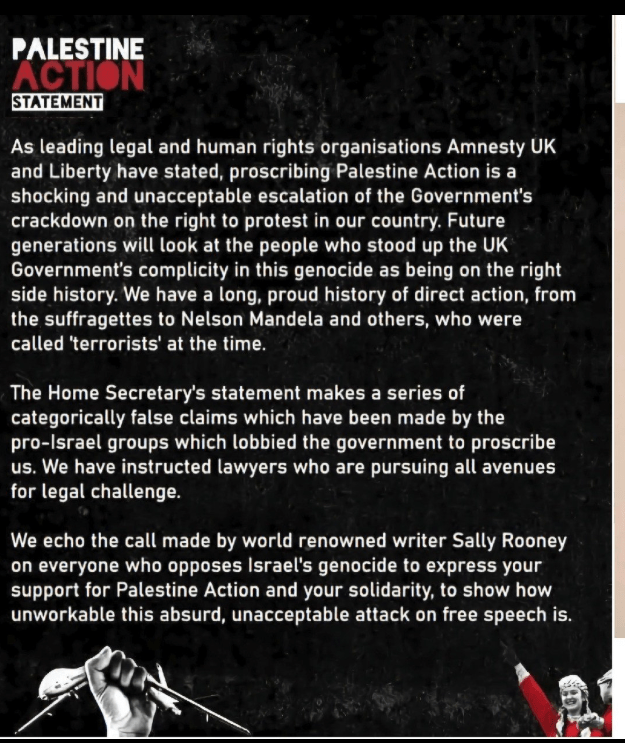
I started to put this hardly controversial post together yesterday morning and it’s already been overtaken by numerous pieces despairing at Labour’s proscription of Palestine Action. A direct action group seeking to raise awareness of the obscene genocide in Gaza, of the war crimes of a terrorist State is without any due process defined as a terrorist organisation. Even the Guardian is forced to descend from the fence in an article, ‘It’s a complete assault on free speech’: how Palestine Action was targeted for proscription as terrorists’

The article notes, if the group is proscribed next week, as is expected, being a member of or inviting support for Palestine Action will carry a maximum penalty of 14 years. Wearing clothing or publishing a logo that arouses reasonable suspicion that someone supports Palestine Action will carry a sentence of up to six months.

In a week’s time we wait to applaud the Guardian’s recovery of its liberal tradition, whereby the paper explicitly backs the right of Palestine Action [PA] to exist and resist.


The arrogant and ignorant authoritarianism at the heart of today’s Labour Party is exemplified by the Home Secretary’s condemnation of PA’s militant tactics. In 2018 she spoke in the House of Commons, expressing her admiration for the suffragette movement, and celebrated its herstory by wearing a rosette in the suffragette colours of purple, white and green.

It seems to have slipped her mind that the suffragettes were not shy when it came to attacking the patriarchal state that denied them even a voice. Thus, at 6.10am on the 19 February 1913, a bomb exploded at the summer house that was being built for Chancellor of the Exchequer, David Lloyd George, at Walton-on-the-Hill, causing damage estimated at £500 (modern equivalent nearly £55,000 in today’s money). On the evening of the incident Emmeline Pankhurst, one of the leaders of the Women’s Social and Political Union (WSPU), claimed responsibility for the bomb at a meeting at Cory Hall, Cardiff, where she admits that they have “blown up the Chancellor of the Exchequer’s house”. Pankhurst was willing to be arrested for the incident saying “I have advised, I have incited, I have conspired”; and that if she is arrested for the incident she shall prove that the “punishment unjustly imposed upon women who have no voice in making the laws cannot be carried out”. We presume the Home Secretary might well retrospectively need to proscribe the WSPU as a terrorist organisation.

See this great piece that elaborates the story, Lloyd George and the Suffragette Bomb Outrage


And, let’s not forget……….

Greenham Common Women’s Peace Camp
1981 – 2000  

On the 5th September 1981, the Welsh group “Women for Life on Earth” arrived on Greenham Common, Berkshire, England. They marched from Cardiff with the intention of challenging, by debate, the decision to site 96 Cruise nuclear missiles there. On arrival they delivered a letter to the Base Commander which among other things stated ‘We fear for the future of all our children and for the future of the living world which is the basis of all life’.

When their request for a debate was ignored they set up a Peace Camp just outside the fence surrounding RAF Greenham Common Airbase. They took the authorities by surprise and set the tone for a most audacious and lengthy protest that lasted 19 years. Within 6 months the camp became known as the Women’s Peace Camp and gained recognition both nationally and internationally by drawing attention to the base with well publicised imaginative gatherings.This unique initiative threw a spotlight on ‘Cruise’ making it a national and international political issue throughout the 80s and early 90s.

The presence of women living outside an operational nuclear base 24 hours a day, brought a new perspective to the peace movement – giving it leadership and a continuous focus. At a time when the USA and the USSR were competing for nuclear superiority in Europe, the Women’s Peace Camp on Greenham Common was seen as an edifying influence. The commitment to non-violence and non-alignment gave the protest an authority that was difficult to dismiss – journalists from almost every corner of the globe found their way to the camp and reported on the happenings and events taking place there.

Living conditions were primitive. Living outside in all kinds of weather especially in the winter and rainy seasons was testing. Without electricity, telephone, running water etc, frequent evictions and vigilante attacks, life was difficult. In spite of the conditions women, from many parts of the UK and abroad, came to spend time at the camp to be part of the resistance to nuclear weapons. It was a case of giving up comfort for commitment.

The protest, committed to disrupting the exercises of the USAF, was highly effective. Nuclear convoys leaving the base to practice nuclear war, were blockaded, tracked to their practice area and disrupted.Taking non-violent direct action meant that women were arrested, taken to court and sent to prison.

The conduct and integrity of the protest mounted by the Women’s Peace Camp was instrumental in the decision to remove the Cruise Missiles from Greenham Common. Under the Intermediate Nuclear Forces (INF) Treaty, the missiles were flown back to the USA along with the USAF personnel in 91/92. The Treaty signed by the USA and the USSR in 1987, is in accord with the stated position held by women, in defence of their actions on arrest, when it states :

“Conscious that nuclear weapons would have devastating consequences for all mankind”

A number of initiatives were made by women in Court testing the legality of nuclear weapons. Also, challenges to the conduct and stewardship of the Ministry of Defence as landlords of Greenham Common. In 1992 Lord Taylor, Lord Chief Justice, delivering the Richard Dimbleby Lecture for the BBC, referring to the Bylaws case ( won by Greenham women in the House of Lords in 1990) said ‘…it would be difficult to suggest a group whose cause and lifestyle were less likely to excite the sympathies and approval of five elderly judges. Yet it was five Law Lords who allowed the Appeal and held that the Minister had exceeded his powers in framing the byelaws so as to prevent access to common land’.

The Camp was brought to a close in 2000 to make way for the Commemorative and Historic Site on the land that housed the original Women’s Peace Camp at Yellow Gate Greenham Common between the years 1981 – 2000.

Sarah Hipperson

This remarkable book tells how the women of the Yellow Gate peace camp at Greenham Common took on the law – and in some instances won.

They challenged the laws under which they were arrested and as Judge Hague said said in the County Court “…they are no strangers to litigation, both criminal and civil. In the courts they have sometimes had a considerable measure of success, and indeed they are immortalised in the Law Reports in connection with two of their successes in the higher courts.”

This book offers inspiration and encouragement to all who take part in non-violent direct action or want to challenge the powers of the state or large institutions. In its detailed descriptions of each case, it suggests how this can be done successfully.

The last chapter tells the story of the Commemorative and Historic Site, a garden of peace where once the women of Yellow Gate camp lived and confronted the Cruise Missiles – and the powers of the state.

To buy a copy of this book, send a cheque for £9.98 (+ £1.00 p & p) payable to ‘Greenham Publications’ to 15 Sydney Road, London E11 2JW or order one from your bookseller (ISBN 0-9550122-0-1)


AND AS OF NOW

https://www.theguardian.com/politics/2025/jun/25/mass-protests-uk-nuclear-deterrent-expansion

The biggest expansion of the UK’s nuclear deterrent in a generation will put the nation on the “nuclear frontline” and mobilise a new generation of anti-nuclear weapons protesters, campaign groups have warned.

Anti-nuclear and anti-arms campaign groups are planning mass protests against nuclear weapons – of a kind not seen since the days of the Greenham Common peace camp in the 80s – in response to government plans to significantly expand its nuclear deterrent by buying a squadron of American fighter jets capable of carrying nuclear weapons.

The Campaign for Nuclear Disarmament (CND) protested on Saturday, June 28th at RAF Marham in Norfolk, which is used by the US air force.

Campaign groups said the decision to buy 12 F-35A jets, which are capable of carrying conventional arms, and also the US B61-12 gravity bomb, a variant of which has more than three times the explosive power of the weapon dropped on Hiroshima, had been taken without parliamentary debate and undermined democracy.


Returning to Iran, Siya Vash, reports that within the convulsions inside the country suppression of dissent deepens.

The paranoid and humiliated Revolutionary Guards in Iran have been sending the following text messages to people’s mobile numbers:

Warning
Following or joining pages affiliated with the Zionist regime constitutes a criminal act and is subject to legal prosecution. Therefore, given the recorded activity of this number on virtual pages of the Zionist regime, you are hereby warned to immediately remove supportive comments and likes, and exit these pages without delay. Failure to do so will result in legal action in accordance with Article 8 of the Law on Confronting Hostile Actions of the Zionist Regime.
Deputy for Social Affairs and Crime Prevention, Judiciary of the Islamic Republic of Iran
Honourable People of Iran


In recent days, your exemplary cooperation and solidarity with your servants in the IRGC Intelligence Organisation—through public reporting—has not only altered the enemy’s calculations but has also led to their defeat on the battlefield. Therefore, we kindly ask you to continue this valuable approach and report any suspicious activity by contacting 110, 113, or 114, or through available channels on domestic messaging platforms.
IRGC Intelligence Organisation


In a philosophical atmosphere, all of the above would be open to criticism, agreement and disagreement. However the creeping authoritarianism I have sought to address since the ascent of neoliberalism in the 1980’s, its fetish of individualism and its hatred of autonomous collectivity has gathered pace across the decades, not least during the manufactured COVID pandemic. Central to the shift into an era of technocratic capitalism is the Expert, who takes different forms and cannot be questioned. To do so is to be beyond the pale. This demand for conformity and obedience is profoundly anti-democratic. And its prophets and disciples come from both the traditional Left and Right. If I get my act together I will try to put flesh on these bare bones.

A WAR FORETOLD – AN IRANIAN PERSPECTIVE

In recent weeks I have despaired. Such anguish can feel, can seem self-centred and indulgent, less than genuine. As such I hardly share it publicly. Meanwhile, neighbours and friends are getting on with their lives, seemingly unaware of the evil enveloping the world. Or perhaps they are burning inside with anger and, like me, are too embarrassed to speak up. knowing they will not be thanked for disturbing the peace.

Earlier I was intending, at the very least, to post a couple of articles about the Israeli declaration of war on Iran, when I received this powerful and personal message from my dear friend, Siya Vash, who I was privileged to meet In Queensland, Australia almost a decade ago. We were together for only a few days but our friendship has deepened despite the oceans that separate us.

Siya Vash begins:

A War Foretold: The Manufactured Crisis Behind the Iran–Israel–US Conflict

The current war between Iran and the Israel–US alliance did not erupt suddenly. It is the result of decades of manipulation, ideological obsession, and calculated imperial ambition. It is a war seeded in lies, watered with treachery, and now blooming into a catastrophe many of us feared, because we have lived it before.

Memory of Fire: The Iran–Iraq War Never Ended

I was a teenager when the Iran–Iraq War began. Like many Iranians, we were told it would be over quickly. A border skirmish, a short-lived aggression. But it dragged on for eight horrific years, a conflict that devoured hundreds of thousands of lives and left deep, still-bleeding scars across our land.

I still remember the sirens. The sound of missiles and bombs landing. The fear etched into the faces of my friends, some of whom are still alive, barely. They are dying a slow, painful death caused by chemical weapons dropped by Saddam Hussein, weapons supplied to him by Western countries who watched from a distance, hands stained but silent. American AWACS radar planes even helped Saddam locate Iranian troop gatherings which he then bombed with poison.

This memory is why I now look at this war, this unfolding confrontation with Israel and the West with the same dread. The same lie is being told again. The same script, only updated for the digital age. And once again, it is the Iranian people who will suffer.

Netanyahu’s Eternal Alarm: The Cry of the Wolf

Since the early 1990s, Israeli Prime Minister Benjamin Netanyahu has warned the world again and again that Iran is “just months away” from acquiring a nuclear bomb. He has sounded this alarm so often, in so many forums from the Knesset to the UN, from U.S. Congress to global media that it has become the central pillar of Israel’s foreign policy narrative.

Yet these claims have been repeatedly contradicted by intelligence agencies, including Israel’s own Mossad and the CIA. They acknowledge Iran’s enrichment activity but have found no evidence of an active weapons program.

Still, Netanyahu’s warnings like a wolf crying for the camera have served their purpose: stirring panic, securing Western support, and justifying pre-emptive aggression. The Zionist lobby in the U.S. and Europe has amplified this message, pushing American and European leaders toward confrontation. It worked in Iraq. It’s working again this time, with Iran in the crosshairs.

The JCPOA: A Deal That Could Have Prevented War

In 2015, the world had a choice. The Joint Comprehensive Plan of Action (JCPOA), signed between Iran and the P5+1 nations, offered a diplomatic solution: Iran would strictly limit its nuclear program, subject to the most rigorous inspections in the world, in exchange for sanctions relief.

Iran upheld its end of the deal. The IAEA confirmed it. But in 2018, Donald Trump under pressure from Netanyahu, Saudi Arabia, and hawkish advisors unilaterally withdrew. Europe condemned the move but eventually aligned itself with the U.S. position in silence, revealing a tragic hypocrisy.

Now, the very nations that once praised the JCPOA insist that Iran has no right to enrich uranium at all not even for peaceful, civilian purposes. The goalposts have moved. The truth has been buried.

The Nuclear Hypocrisy of Israel

While Iran is demonised for enrichment under international supervision, Israel, a nuclear-armed state, remains outside the Non-Proliferation Treaty (NPT). It has never admitted to its arsenal, but global consensus acknowledges that Israel possesses dozens, if not hundreds, of nuclear warheads.

Even worse, Israel has now been found guilty of genocide by the International Court of Justice and yet continues to enjoy Western backing, arms shipments, and diplomatic immunity. The historical trauma of Jewish suffering is weaponised again and again, not for healing, but for justifying new cycles of occupation, dispossession, and war.

Who else but Israel could commit war crimes while claiming perpetual victimhood?

Greater Israel and the Real Strategic Goal

The Iranian nuclear issue is a cover. The real objective is regional dominance. From assassinating scientists to bombing Damascus and Beirut, Israel’s long-term project is the dismantling of all resistance to its supremacy a vision loosely framed in the doctrine of “Greater Israel.”

Iran, Syria, and Hezbollah stand in its way. The path to their neutralization is paved with pretexts and nuclear hysteria has been the most effective one.

Empire in Decline, Searching for War

The United States, meanwhile, is a crumbling empire seeking relevance. After two decades of failed wars, the focus has shifted toward China. But Iran with its strategic location, energy reserves, and ties to Russia and China has become a critical pawn in Washington’s renewed Cold War.

Destroying Iran’s sovereignty isn’t just about Israel. It’s about control over the future of Asia. It’s about preventing the emergence of a new, multipolar order where America is no longer the center of the universe.

The West’s Two-Faced Game

Let us not forget: it was the West that helped bring Khomeini to power. They saw the Shah growing independent raising oil prices, strengthening the military and decided he was no longer controllable. Better to have a theocracy suspicious of both East and West than a nationalist king with ambition.

And now, some of the same Western elites who orchestrated that regime change are floating the idea of restoring Reza Pahlavi, the Shah’s son, as a new monarch. The circle of manipulation never ends. Freedom has never been the goal, only influence.

The Future: Remembering the Past, Resisting the Present

We have seen this story before. We have lived it. We remember what chemical war feels like. We know what it means to bury children whose only crime was being born on the wrong side of a border drawn by empires.

This new war was foretold. But it is not inevitable.

Iran may be battered, but it is not broken. The Iranian people despite their suffering under both foreign pressure and domestic repression are not passive pawns. They are resilient, resourceful, and rooted in a deep civilizational memory of resistance.

The West must reckon with its hypocrisy. And the world must finally ask: how many more lies, how many more dead, how many more wars before we say enough?

History will remember. Not just who launched the first missile but who wrote the script.


Complementary to Siya Vash’s calm yet intense explanation of how he is seeing matters unfold, I offer in addition these alternative and differing critiques of the present nightmare.

Israel’s attack on Iran: The violent new world being born is going to horrify you – Jonathan Cook

This is a key moment in the Pentagon’s 20-year plan for “global full-spectrum dominance”: a unipolar world in which the US is unconstrained by military rivals or the imposition of international law. A world in which a tiny, unaccountable elite, enriched by wars, dictate terms to the rest of us.

If all this sounds like a sociopath’s approach to foreign relations, that is because it is. Years of impunity for Israel and the US have brought us to this point. Both feel entitled to destroy what remains of an international order that does not let them get precisely what they want.

The current birth pangs will grow. If you believe in human rights, in limits on the power of government, in the use of diplomacy before military aggression, in the freedoms you grew up with, the new world being born is going to horrify you.

The Function of Stupidity in History – Jeff Noonan

Consider the profound moral stupidity of Israeli Defence Minister Israel Katz’s pronouncement that Khameini is a “modern day Hitler” that “can no longer be allowed to exist” and that the missile strike on the hospital in southern Israel was a war crimes. One simply cannot believe the moral blindness of a man who belongs to a government whose armed forces have destroyed every hospital in Gaza, almost every house, shoots people begging for food that Israel has made artifically scarce and killed tens of thousands of people. All necessary, of course! If Khameini is Hitler for partially damaging one hospital what is Netanyahu for ordering the destruction of the whole life-infrastructure of Gaza?

A war criminal?

The War Against Iran: 30 Years in the Making – Piers Robinson

Whatever happens, Western publics should be under no illusion as to how this situation has come to be. The conflicts are the direct consequence of our governments and their associated military industrial complexes pursuing policies of war and, to do so, engaging in covert actions and major deceptions, which include the 9/11 false flag as well as the utilisation of brutal extremist groups in countries such as Syia. The death toll from these conflicts runs well into the millions while the misery is incalculable.

Propaganda, deception and lies, all in the name of war, are becoming firmly established as the parting legacy of the Western empire.

The American Game: Playing and Being Played on the Road to Nuclear War – Edward Curtin

“To hell with the truth! As the history of the world proves, the truth has no bearing on anything. It’s irrelevant and immaterial, as the lawyers say. The lie of a pipe dream is what gives life to the whole misbegotten mad lot of us, drunk or sober.”                        Eugene O’Neill, The Iceman Cometh

The U.S.A. is a warfare state; it’s as simple as that. Without waging wars, the U.S. economy, as presently constituted, would collapse. It is an economy based on fantasy and fake money with a national debt over 36 trillion dollars that will never be repaid. That’s another illusion. But I am speaking of pipe dreams, am I not?

And whether they choose to be aware of it or not, the vast majority of Americans support this killing machine by their indifference and ignorance of its ramifications throughout the society and more importantly, its effects in death and destruction on the rest of the world. But that’s how it goes as their focus is on the masked faces that face each other on the electoral stage of the masquerade ball every four years. Liars all.

But they all speak the double-speak that creates pipe-dreams on the road to nuclear war.

Will we ever stop believing them before it is too late?


If, by chance, you read any of the above, not for a moment, do I expect you to embrace uncritically these viewpoints. I do hope for a provisional and questioning response, the very basis of give and take, a critical dialogue. I do hope for a response that refuses the cowardly, immoral and unethical ambivalence and ambiguity of the liberal and professional mouthpiece, that is the Guardian newspaper. And, for my sins, I do skim its pages everyday, hoping for a moment when it speaks plainly at last, when it condemns without caveat the genocide in Gaza and now the attack on Iran.

The Greek Robin Hood

On Friday, 17 May 1966, Vassilis Palaiokostas, “the Greek Robin Hood,” was born in the mountain village of Moschofito, Greece.

In the 1990s-2000s he became famous for robbing the rich and handing his takings to the poor — former comrade Kostas Samaras remembers “he and his brother Nikos would stop the car and hand robbery money to immigrants in the street.”

Palaiokostas has been linked to some of the most audacious illegalism in Greek history, including the 1992 Kalambaka robbery (the country’s biggest ever bank heist) and pioneering bossnapping with the ransoms of notorious industrialists Alexander Haitoglou in 1995 and George Mylonas in 2008.

He is even more famous however for his series of prison escapes which earned him a police nickname — The Uncatchable. The most extraordinary of these were in 2006 and 2009, when he escaped from Korydallos Prison not once but twice by helicopter, bringing him international renown.

A folk hero among the working classes of his homeland, he is still free, still on the run, with a 1.4 million Euro bounty on his head.

His autobiography was released by @freedom_news1886 in English in 2021.

THANKS TO WORKING CLASS HISTORYhttps://www.facebook.com/workingclasshistory

C.S. Lewis on writing and much more

To my surprise and indeed delight, I’ve been reacquainted with the writings of C. S. Lewis. Thanks are due to a series of articles by my favourite Appalachian philosopher, W. D. James. Previously my last encounter with Lewis had been back in around 1960. At the time I was in the last throes of my once passionate relationship with the Church and Christianity. I found myself reading Lewis’s ‘Mere Christianity’, perhaps an unfortunate title, if I was to be returned to the fold. He failed to prevent my Fall from grace and I embraced an irreconcilable atheism or radical humanism.

I remain so inclined but in recent years disturbed deeply by the growing post and anti-humanist outlook of a technocratic elite, who desire to be Gods, I converse with a plurality of dissenting voices, many religious in timbre. With a bit of luck and effort I hope to explore some of my response to the following pieces on Lewis’s philosophy. particularly the notion of Tao and Natural Law to be found therein.

I recommend highly your engagement with the following links.

https://wdjames.substack.com/p/the-order-of-the-soul

https://wdjames.substack.com/p/the-assault-on-the-heart

https://wdjames.substack.com/p/written-on-the-heart

https://wdjames.substack.com/p/post-humanism-and-the-regime-of-the

https://wdjames.substack.com/p/renewed-humanism

On a lighter note, Lewis, who was a famous writer of children’s books, such as The Chronicles of Narnia. offers some advice on writing.

Escaping Anxiety by way of Singing Nervously

The powerful, the ruling class of any historical period has spread fear as an essential element in the maintenance of its social and political control. Hence I’m stretching a point to suggest that we are living through an unprecedented era of Anxiety. And yet, even today, I’ve been warned to beware a possible proliferation of epidemic-catalysing viruses, all given the COVID script being existential threats, and instructed to fill the larder with supplies sufficient to last 72 hours in case of war.

We imagine the world as unsafe, and then we dream the world as unsafe, and then feel in our bodies that the world is unsafe. And this is an inverted order of things, the opposite of how our bodies come to knowledge. Rhyd Wildermuth

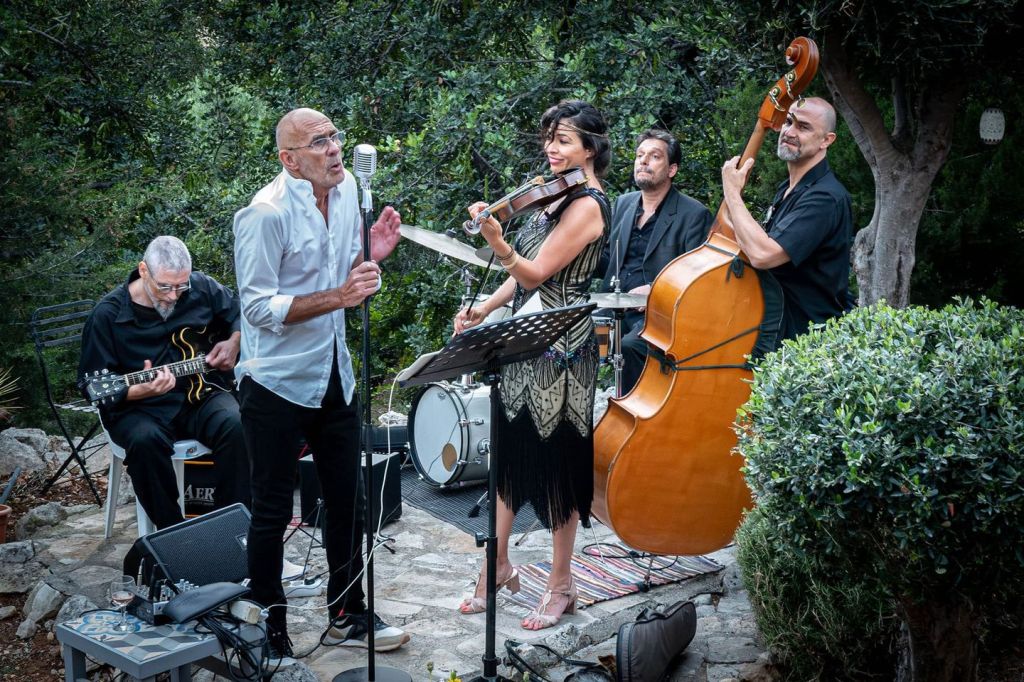
Sometime, perhaps never, I will seek to explore the contemporary phenomenon of algorithmic- created anxiety. For now, in the past few weeks I’ve sought to escape being suffocated inside the virtual by way of being scared of reality, namely giving another solo concert in my Cretan village. The nerves did indeed jangle. If you are kind enough to watch the two videos below you might well discern my tension. In terms of the songs themselves, it’s most obvious in my rushing through the Schubert composition, ‘Der Leiermann’, losing on the way much of its ambiguous mystery. Next time…….

—————————————————————————————————————————————————–

A couple of people have asked for details of the latest programme. If I wasn’t so nervous about singing in the correct key I would relax and say more about the songs at the concert itself.

1. 0 Waly, Waly 

Somerset folk song

2. Somewhere a Voice’s Calling and Smilin’ Through

American Parlour-Songs recorded in 1914 and 1919 by John McCormack, the famous Irish lyric tenor and sung by me as a boy soprano in 1957!!

3. Unbelievable,  The Nearness of You and  Bewitched, Bothered and Bewildered

American classics and often jazz standards – Livingstone, Carmichael and Rodgers

4, Hands, Eyes, Heart  and Tired – Vaughan Williams and Now Sleeps the Petal – Quilter. 

English Art Song

5.  I am a Poor Wayfaring Stranger

North American folk song and spiritual

 6.  Ti eínai aftó pou to léne agápi from the Boy on a Dolphin, If I Loved You from Carousel and Summertime from Porgy and Bess

Songs from film and musicals – Morakis, Rodgers and Gershwin

Interval.

7. Im  Wunderschönen Monat Mai – Schumann, Das Wandern  and  Der Leiermann – Schubert

German Lieder 

8. Danny Boy

Irish folk song

9. My Funny Valentine, When I Fall in Love  and The First Time Ever I Saw Your Face 

Classic Love songs –  Rodgers, Young and MacColl

10. Whither do I wander – Vaughan Williams, Sea Fever – Ireland and Come Again – Dowland

English and Elizabethan song

11. One Little Quarrel and Guilty 

Tribute to Al Bowly and 1930s dance bands

12. Πάμε μια βόλτα στο φεγγάρι or Let’s take a walk to the moon

Greek classic – Hadjidakis

———————————————————————————————————————————————

Our village kafeneio, H Elpida, the cafe of Hope

There seems little doubt, in my mind, that preparing for and giving this little concert, despite the blemishes, kept me out of what Anthony Rella calls the ‘psychic pollution’ infecting our relation to the internet and social media. OK, I admit, the warbling kept me away only for some of the time. Certainly I would suggest that prioritising time away from the screen in all its forms is a necessary form of resistance to the Machine. Lately I’ve gone back to printing off copies of stuff I’d like to read and taking them to peruse in the village kafeneio. A precious bonus is that Georgos brews a fine cappuccino and I get to pass the time of day with our village’s motley characters.

I must close by thanking Ken Carpenter for filming and editing the videos – all out of the goodness of his heart.

European Peace Project – 05/09/2025@5pm

“On May 9 at 5 pm – it’s time to set an example
for the peaceful future of Europe!”

The Manifesto – European Peace Project

Today, on May 9, 2025 – exactly 80 years after the end of the Second World War, which cost the lives of 60 million people, including 27 million Soviet citizens – we, the citizens of Europe, raise our voices! We are ashamed of our governments and the EU, which have not learned the lessons of the 20th century. The EU, once conceived as a peace project, has been perverted and has thus betrayed the essence of Europe! We, the citizens of Europe, are therefore taking our destiny and our history into our own hands today, on May 9. We declare the EU a failure. We start with citizen diplomacy and refuse the planned war against Russia! We recognize the co-responsibility of the “West”, the European governments and the EU in this conflict.

We, the citizens of Europe, together with the European Peace Project, oppose the shameless hypocrisy and lies that are being spread today – on Europe Day – at official ceremonies and on public broadcasters.

We are reaching out to the citizens of Ukraine and Russia. You are part of the European family and we are convinced that together we can organize peaceful coexistence on our continent.

We have the images of the military cemeteries before our eyes – from Volgograd to Riga to Lorraine. We see the fresh graves left behind by this senseless war in Ukraine and Russia. While most EU governments and those responsible for the war are rushing and suppressing what war means for the population, we have learned the lesson of the last century: Europe means “Never again war!”

We remember the European reconstruction achievements of the last century and the promises made in 1989 after the peaceful revolution. We call for a European-Russian Youth Exchange, modelled alike the French-German Youth Office of 1963, which ended the “hereditary enmity” between Germany and France. We demand an end to sanctions and the reconstruction of the Nord Stream II pipeline. We refuse to waste our tax money on armaments and militarization at the expense of social standards and infrastructure. Within the framework of an OSCE peace conference, we call for the creation of a European security architecture with and not against Russia, as laid down in the 1990 Charter of Paris. We call for a neutral Europe, emancipated from the USA, which takes on a mediating role in a multipolar world. Our Europe is post-colonial and post-imperial.

We, the citizens of Europe, hereby declare this war to be over! We will not take part in the war games. We will not turn our men and sons into soldiers, our daughters into nurses in military hospitals and our countries into battlefields.

We offer to immediately send a delegation of European citizens to Kiev and Moscow to start a dialog. We will no longer stand by and watch our future and that of our children being sacrificed on the altar of power politics.

Long live Europe, long live peace, long live freedom

GO TO https://europeanpeaceproject.eu/en/ to support and donate.

On speaking eccentrically, the resurgence of liberalism and the deep state

“Give me the liberty to know, to utter, and to argue freely according to conscience, above all liberties.”
― John Milton , Areopagitica

Last week I gave a talk, entitled ‘Free Speech in Authoritarian Times?’ to an audience of 24 or so people, mainly but not exclusively English, brought together by Phil and Francesca Harrison under the banner of the Kalamitsi Arts Group in the old village school of Kalamitsi Amigdali. It was sweeping, ridden with obvious silences and contradictions. I had no intention of posting it here. My desire was no more than to raise questions in an often unquestioning world. However, whilst walking this morning, worrying about to what extent I am doing anything useful politically anymore, it struck me that, if nothing else, I should continue to scribble. Trying to write personally and politically is some sort of activism. And it’s long overdue that I cease self-censorship, that I rid my head of today’s puritanical authoritarians, housed in both corporate and state institutions, academic and bureaucratic or employed as no more than stenographers in the mainstream media. Being immersed in John Milton and J. S. Mill recently has strengthened a conviction that I should cast caution to the winds in order to speak freely and eccentrically.

“In this age, the mere example of non-conformity, the mere refusal to bend the knee to custom, is itself a service. Precisely because the tyranny of opinion is such as to make eccentricity a reproach, it is desirable, in order to break through that tyranny, that people should be eccentric. Eccentricity has always abounded when and where strength of character has abounded; and the amount of eccentricity in a society has generally been proportional to the amount of genius, mental vigor, and moral courage which it contained. That so few now dare to be eccentric, marks the chief danger of the time.”
― John Stuart Mill, On Liberty

In the next few weeks or so I’ll revisit my scattered, handwritten notes and post a revised version here.

In the meantime I’ll begin, as frequently promised but rarely delivered, drawing your attention to writing I find challenging, precisely because it is often but not always at odds with much of my ‘Left’ history.

First off the mark is :

The Most Dramatic Narrative Shift in Modern History

Jeffrey Tucker, the author of this article, is described as a libertarian anarcho-capitalist and is the president of the Brownstone Institute, which, in its words, is a nonprofit 501(c)(3) organization founded May 2021. Its vision is of a society that places the highest value on the voluntary interaction of individuals and groups while minimizing the use of violence and force including that which is exercised by public or private authorities. This vision is that of the Enlightenment which elevated learning, science, progress, and universal rights to the forefront of public life. Presently, it is constantly threatened by ideologies and systems that would take the world back to before the triumph of the ideal of freedom.

It represents a liberal tradition, which has been sidelined by both neoliberalism and social democracy. Given both these ideologies are in crisis and sliding deeper into authoritarianism, the supporters of the Institute see the possibility of a renewal of its creed. Certainly at this particular moment their interpretation of the Trump phenomenon is generous, contrary and even naive. Yet theirs is a voice that needs to be heard.

These few paragraphs in themselves deserve discussion.

As it turns out, generations of ideological philosophizing had been chasing fictional rabbits. This is true for all the main debates about socialism and capitalism but also the side debates about religion, demographics, climate change, and so much more. Nearly everyone had been distracted from seeing the things that matter by hunting for things that did not actually matter.

This realization transversed typical partisan and ideological boundaries. Those who did not like to think about issues of class conflict had to face the ways in which the whole system was serving one class at the expense of everyone else. The cheerleaders of government beneficence faced the unthinkable: their true love had become malevolent. The champions of private enterprise had to deal with the ways in which private corporations participated and benefited from the entire fiasco. All major political parties and their journalistic backers participated.

No one’s ideological priors were confirmed in the course of events, and everyone was forced to realize that the world worked in a very different way from what we had been told. Most governments in the world had come to be controlled by people no one elected and these administrative forces were loyal not to voters but to industrial interests in media and pharma, while the intellectuals we had long trusted to say what is true went along with even the craziest of claims, while condemning dissent.


Rightly or wrongly I’ve felt a certain disdain from both Left intellectuals, politicians and activists towards the notion of the deep state. I’ve found this perplexing, especially as Chris Mullin, a Labour MP wrote a successful novel, ‘A Very British Coup’ back in 1982. Within its pages Harry Perkins appears as the left-wing Leader of the Labour Party and Member of Parliament for Sheffield Central. Beating all the odds, Harry becomes Prime Minister following a landslide victory in the 1989 general election, and sets out to dismantle media monopolies, establish Britain as a neutral country through withdrawal from NATO, the removal of American military bases from British soil and unilateral nuclear disarmament, achieve public control of finances, revive manufacturing by withdrawing from the Common Market and imposing import controls, and create an open government. Many people in the media, financial services, and the intelligence services are deeply unhappy with Harry’s win and his policies, and they unite with the United States government to stop him by any means.

For those of us involved in the labour movement of the time, often Leninist in our outlook yet supportive of the charismatic Methodist Socialist, Tony Benn, the scenario painted was certainly credible. However its diagnosis of the political situation was deeply worrying, especially for the Labour Party’s leadership at all levels and its membership. It suggested, at the very least, that the parliamentary road to socialism was fraught. The conclusion that the Party could not be a vehicle for radical change was too much to bear. Perhaps the demise of Corbynism has put paid finally to the illusion that there is a party political path to emancipation.

In recent years, as Christian Parenti, a professor of economics at the John Jay College, CYNU. notes, in the following article, the idea of the deep state has become a key part of MAGA [Make America Great Again] politics. My belief of four decades ago that a deep state stood firmly in the way of revolution was described as Far Left. To argue still that the deep state is a profound obstacle to implementing the demands of working people is to be Far Right.

The Left-Wing Origins of ‘Deep State’ Theory

Christian Parenti begins:

War has come to the deep state or so it seems. During Donald Trump’s first weeks in office, he summarily fired a dozen top FBI officials and a similar number of US attorneys deemed hostile to the White House, and nominated deep-state critics including Tulsi Gabbard, Kash Patel, and Robert F. Kennedy Jr. for cabinet posts, while issuing executive orders to declassify all documents related to the assassinations of the Kennedy brothers and Martin Luther King Jr. Meanwhile, Elon Musk’s Department of Government Efficiency dismantled the CIA’s favorite cutout, USAID.

Given the centrality of the “deep state” to the MAGA worldview, merely uttering the phrase will immediately code you as a Trump partisan. But until quite recently, the concept was the province of the political left. Understanding its origins and evolution makes clear that the stakes are far greater than the political fate of Donald Trump and the MAGA movement. The deep state is a cancer that undermines popular sovereignty. Those who wish to restore democratic rule, regardless of political orientation, must therefore take it seriously.

He ends:

“The deep state is a cancer that undermines popular sovereignty.”

A robust national debate is also essential if we are to prevent the deep state’s relaunch from within the “reformed” remnants of old agencies. In short, this surgery cannot be left to the experts: It requires the disinfecting sunlight of declassification and public discussion. If the vaults of files are not disgorged, then it will be clear that Trumpian efforts against the deep state are nothing but limited insider-vs-insider score settling. Popular pressure must be exerted now to help us avoid that fate.


Recovering the Truth in the face of State collusion

Against the horrifying historical backcloth of abuse in Mother and Baby institutions in the Irish Republic and the Six Counties, Phil Scraton reflects on the creation of ‘truth investigations’ as a grounded alternative to the fundamental limitations of State Inquiries.

Thanks to irishcentral.com

Then they took her …’  Disappearance, Loss and Searching: Mother and Baby Institutions, Magdalene Laundries and Workhouses.

Mothers

‘Trauma is the biggest harm that’s been caused.  Imagine yourself giving birth being let feed and wash the baby then people coming, and taking her, then 40/50/60/70 years of questioning yourself.  What is she doing now?  Who is she? Like wondering if she had a good life.  It’s a void that can never be filled.  Always being afraid.  What if they come take my other kids?’

‘The lack of empathy, the insulting way the nuns treated me and left me with a lifelong complex and inferior feelings of myself.  Doctor or social worker didn’t explain the rigid rules and verbal abuse, as well as physical abuse taking place daily in the Magdalene home.’

‘The impact this has had on my life and the difficulties I have had dealing with my emotions on such a delicate part of my life.  The lifelong loss of my own mother, my brothers and the endless hours of worry about where I belonged in life.’

Children

‘The trauma of realising late in life as an adoptee that the adoption may not have been freely entered into by your birth mother, adding to the sense of guilt and pain at being given up without the true consent of your own mother.’

‘The impact on me has been lifetime.  I’m 50 years of age and I still struggle with it.  Psychologically it’s devastating.  So many types of harm – physical, mental, psychological, sexual.’

‘The lasting damage done to my mental health overshadowed my life and the lives of my family.’

‘It has to end with us as we do not want to pass this horrible legacy on to the next generation.’

These reflective, moving testimonies are spoken by those most profoundly impacted by institutional policies and practices operating to mask harm perpetrated on young mothers through forced removal of their babies.  The pain of loss is mirrored by the pain of not-knowing.  As mothers and their children – now adults – navigate daily life often separated by continents, cultures and language, they reflect on hidden histories and unknown possibilities.  While dealing with stigma and shame associated with the label of illegitimacy – a ‘non-legitimate’ person – many were encouraged to believe they had been unwanted by their birth mothers.

In 2021 Ireland’s Mother and Baby Homes Commission of Investigation published its final report.  It revealed that between 1922 and 1998 in eighteen institutions, 56,000 women and girls, some as young as 12, birthed 57,000 babies.  Within the institutions, fifteen per cent of mothers and 9,000 babies died of malnutrition or illness.  Without adult consent many were used for vaccination trials and up to 1,000 were trafficked.  Commenting on the discovery of a mass grave in Tuam, County Galway, Taoiseach Enda Kenny stated mothers had been ‘treated as some kind of sub- species … took their babies, and gifted them, sold them, trafficked them, starved them, neglected them, denied them to the point of disappearance from our hearts, our sight, our country … from life itself.’ Yet this was not the full story.  A further 25,000 babies were born in County Homes, their fate excluded from the Commission’s remit.

In Northern Ireland’s six counties between 1922 and 1990, 14,000 girls and women gave birth in Mother and Baby Institutions, Magdalene Laundries and Industrial Homes.  A third were under 19, the youngest aged 12.  As in the Irish Republic, many were survivors of persistent sexual abuse, incest and rape within families and by neighbours.  A quarter of surviving babies were adopted, most without their mothers’ consent, their destination unknown.  Some mothers remained incarcerated in Magdalene Laundries, working without remuneration in harsh conditions.

‘On my hands and knees, I scrubbed the tiled floors. They were already clean.  I held my belly with my other hand.  She stood over me, chastised me, called me a sinner.  The birth was so painful.  A wee while after, I was told to dress my baby in clothes that had been sent in.  I kissed her, they took her.  I lay on my bed howling, the empty cot alongside me.’

The key question remains: who knew?  Those who ran the institutions, and profited from trafficking, doctors, health visitors, social workers, clergy, non-government organisations and a wider public were all aware.  The rights of mothers and their children were violated systematically through an established administrative process.  How was this institutionalised process accepted, legitimated?  Writing on the hidden history of aboriginal oppression in Queensland, Australia, Henry Reynolds recalls meeting two young aboriginal girls sitting on a filthy mattress in a police cell floor surrounded by shards of glass.  It was 1968.  They had a bucket for defecation, the air foul.  The young, newly-appointed university lecturer, was shocked by the disproportionate punishment inflicted by teachers.  Yet within the white community, it was rationalised.  He asked, ‘If this could be done to children, whatever punishments were meted out to adults?  Why didn’t I know?  Why hadn’t I been told?’

His questions relate directly to how sociological, historical, political and deep philosophical analyses frame what is considered reliable, ‘scientific’ knowledge regarding the legitimacy of state and non-state institutions.  Central to critical social analysis is how political-economic power and the philosophical ideas that underwrite them is sustained by what Michel Foucault termed ‘regimes of truth’. Similar to ‘ways of seeing’ art, regimes of truth rely on shared viewing and acceptance that amounts to intellectual collusion.  Refuting deeply entrenched mainstream assumptions is the principal objective of all critical analysis, creating dissenting accounts, generating alternative discourses.  It is achieved by being there, by bearing witness.

Gathering testimonies alongside those who have endured cruelty in harsh institutional regimes is essential to truth recovery.  Inevitably, people’s memories fade or are imprecise.  Emerging from personal testimonies, however are consistent themes, institutional practices and named individuals involved in vindictive, hurtful, occasionally brutal acts.  They are known within institutions, embedded in their operation and philosophically rationalised in the name of civility.  Through these consistent revelations as C Wright Mills observed, the truth and the deceit of regimes become apparent, contextualising personal troubles as public issues.  Shared personal experiences provide foundations to social-culltural histories of moment and place.  Accumulating shared personal truth from women enduring gendered marginalisation is the substance of the German socialist-feminist Frigga Haug’s pursuit of archiving ‘memory work’. On such solid experiential foundations those who suffered in institutions whose lives have remained blighted by the harsh realities they endured, gain a measure of solace from shared memorialisation.  The importance of accumulated testimonies, however, also extends to formal recognition through official inquiries.

Much has been written critiquing the limitations of public inquiries in hearing selective evidence, becoming battlegrounds for vested interests committed to escaping liability while marginalising the experiences of those whose lives should be the sole priority. In our work, we propose ‘truth investigations’ as an alternative form of inquiry through which independent panels with extensive expertise gather oral and written evidence from victims/survivors without cross-examination. The aggregated truth developed through this process then feeds into a full statutory inquiry.  This model, derived in my work heading the research for the Hillsborough Independent Panel, now has been adopted in Northern Ireland.  Our Independent truth Recovery Panel made 80 recommendations, prioritising access for victims/survivors to all personal records; support in giving in-depth, confidential interviews reflecting their experiences; redress, reparation and compensation; full apology from State and all organisations involved accompanied by a process of memorialisation; and the establishment of a permanent, dedicated truth archive.

An integrated truth investigation prioritises ‘knowing’ and ‘memorialising’ through gathering survivors’ and relatives’ testimonies.  Establishing an archive to ensure survivors, relatives, researchers and the public have negotiated access to records, including institutions’ operational practices, lays foundations for investigating human rights violations while providing the means and understanding through which institutions and individuals will be held to account.  Such questions of justice take us into the heart of our deepest held concerns, demonstrating that the experiential cannot be separated from the political.  Processes of public recognition have the potential to lift the veil of shame and silence imposed on mothers and the children who were disappeared.

Our work, alongside those who have suffered for so long in silence, illustrates the significance of critical research not only in truth recovery, but also as resistance to institutional power; it exists alongside those for whom such truth systematically has been denied.  Through the work of collective inquiring minds, bearing witness to private suffering while revealing cruelties of institutional practices, shame can be lifted from women who have suffered in silence.  This is the potential of a more aggregated conception of truth at the heart of alternative accounts, providing solid foundations for public recognition of social injustice.  Thus State and all other institutions involved are held to account as the institutional abuse of power is exposed, securing social and cultural rights as exposing intolerable practices lay the foundations for a new form of questioning.  Clearly there remain issues to be resolved regarding the legal process, together with full disclosure of the institutional denial of international rights and their purposeful integration and silencing within institutional regimes of power.  Yet, as Deena Haydon and I concluded elsewhere, a continuing commitment to securing rights and justice requires a ‘fundamental shift in structural relations and the determining contexts of power which marginalize and exclude [victims/survivors] from effective participation in the processes that govern their lives’.


The Opening testimonies are taken from the Report of the Independent Truth Recovery Panel: Mahon, D., O’Rourke, M., and Scraton, P. (2021) Truth, Acknowledgement and Accountability: Mother and Baby Institutions, Magdalene Laundries and Workhouses in Northern Ireland. Belfast: Truth Recovery Design Panel/ NI Executive. A version of the above is published in the journal, The Philosopher, Special Issue on Violence, Autumn 2024.

Phil Scraton is Emeritus Professor, School of Law, Queen’s University, Belfast