CRUSHING DISSENT AND RESISTANCE

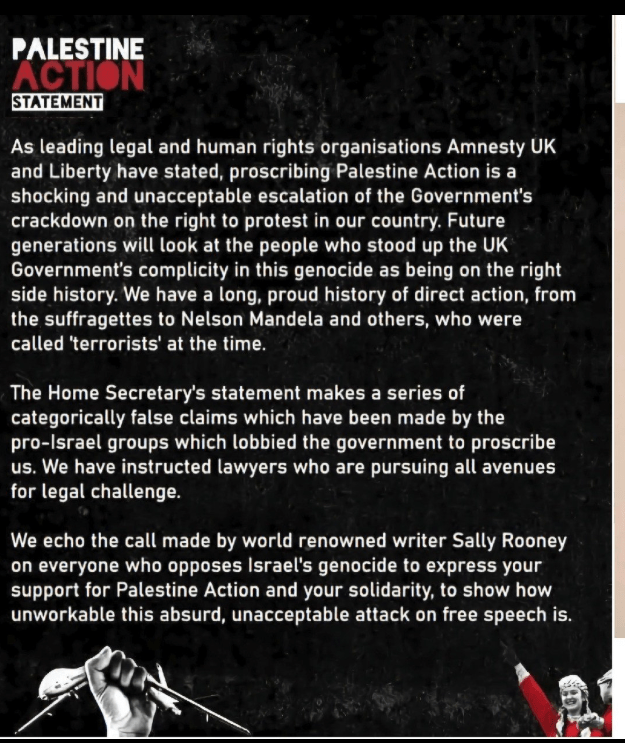
I started to put this hardly controversial post together yesterday morning and it’s already been overtaken by numerous pieces despairing at Labour’s proscription of Palestine Action. A direct action group seeking to raise awareness of the obscene genocide in Gaza, of the war crimes of a terrorist State is without any due process defined as a terrorist organisation. Even the Guardian is forced to descend from the fence in an article, ‘It’s a complete assault on free speech’: how Palestine Action was targeted for proscription as terrorists’

The article notes, if the group is proscribed next week, as is expected, being a member of or inviting support for Palestine Action will carry a maximum penalty of 14 years. Wearing clothing or publishing a logo that arouses reasonable suspicion that someone supports Palestine Action will carry a sentence of up to six months.

In a week’s time we wait to applaud the Guardian’s recovery of its liberal tradition, whereby the paper explicitly backs the right of Palestine Action [PA] to exist and resist.


The arrogant and ignorant authoritarianism at the heart of today’s Labour Party is exemplified by the Home Secretary’s condemnation of PA’s militant tactics. In 2018 she spoke in the House of Commons, expressing her admiration for the suffragette movement, and celebrated its herstory by wearing a rosette in the suffragette colours of purple, white and green.

It seems to have slipped her mind that the suffragettes were not shy when it came to attacking the patriarchal state that denied them even a voice. Thus, at 6.10am on the 19 February 1913, a bomb exploded at the summer house that was being built for Chancellor of the Exchequer, David Lloyd George, at Walton-on-the-Hill, causing damage estimated at £500 (modern equivalent nearly £55,000 in today’s money). On the evening of the incident Emmeline Pankhurst, one of the leaders of the Women’s Social and Political Union (WSPU), claimed responsibility for the bomb at a meeting at Cory Hall, Cardiff, where she admits that they have “blown up the Chancellor of the Exchequer’s house”. Pankhurst was willing to be arrested for the incident saying “I have advised, I have incited, I have conspired”; and that if she is arrested for the incident she shall prove that the “punishment unjustly imposed upon women who have no voice in making the laws cannot be carried out”. We presume the Home Secretary might well retrospectively need to proscribe the WSPU as a terrorist organisation.

See this great piece that elaborates the story, Lloyd George and the Suffragette Bomb Outrage


And, let’s not forget……….

Greenham Common Women’s Peace Camp
1981 – 2000  

On the 5th September 1981, the Welsh group “Women for Life on Earth” arrived on Greenham Common, Berkshire, England. They marched from Cardiff with the intention of challenging, by debate, the decision to site 96 Cruise nuclear missiles there. On arrival they delivered a letter to the Base Commander which among other things stated ‘We fear for the future of all our children and for the future of the living world which is the basis of all life’.

When their request for a debate was ignored they set up a Peace Camp just outside the fence surrounding RAF Greenham Common Airbase. They took the authorities by surprise and set the tone for a most audacious and lengthy protest that lasted 19 years. Within 6 months the camp became known as the Women’s Peace Camp and gained recognition both nationally and internationally by drawing attention to the base with well publicised imaginative gatherings.This unique initiative threw a spotlight on ‘Cruise’ making it a national and international political issue throughout the 80s and early 90s.

The presence of women living outside an operational nuclear base 24 hours a day, brought a new perspective to the peace movement – giving it leadership and a continuous focus. At a time when the USA and the USSR were competing for nuclear superiority in Europe, the Women’s Peace Camp on Greenham Common was seen as an edifying influence. The commitment to non-violence and non-alignment gave the protest an authority that was difficult to dismiss – journalists from almost every corner of the globe found their way to the camp and reported on the happenings and events taking place there.

Living conditions were primitive. Living outside in all kinds of weather especially in the winter and rainy seasons was testing. Without electricity, telephone, running water etc, frequent evictions and vigilante attacks, life was difficult. In spite of the conditions women, from many parts of the UK and abroad, came to spend time at the camp to be part of the resistance to nuclear weapons. It was a case of giving up comfort for commitment.

The protest, committed to disrupting the exercises of the USAF, was highly effective. Nuclear convoys leaving the base to practice nuclear war, were blockaded, tracked to their practice area and disrupted.Taking non-violent direct action meant that women were arrested, taken to court and sent to prison.

The conduct and integrity of the protest mounted by the Women’s Peace Camp was instrumental in the decision to remove the Cruise Missiles from Greenham Common. Under the Intermediate Nuclear Forces (INF) Treaty, the missiles were flown back to the USA along with the USAF personnel in 91/92. The Treaty signed by the USA and the USSR in 1987, is in accord with the stated position held by women, in defence of their actions on arrest, when it states :

“Conscious that nuclear weapons would have devastating consequences for all mankind”

A number of initiatives were made by women in Court testing the legality of nuclear weapons. Also, challenges to the conduct and stewardship of the Ministry of Defence as landlords of Greenham Common. In 1992 Lord Taylor, Lord Chief Justice, delivering the Richard Dimbleby Lecture for the BBC, referring to the Bylaws case ( won by Greenham women in the House of Lords in 1990) said ‘…it would be difficult to suggest a group whose cause and lifestyle were less likely to excite the sympathies and approval of five elderly judges. Yet it was five Law Lords who allowed the Appeal and held that the Minister had exceeded his powers in framing the byelaws so as to prevent access to common land’.

The Camp was brought to a close in 2000 to make way for the Commemorative and Historic Site on the land that housed the original Women’s Peace Camp at Yellow Gate Greenham Common between the years 1981 – 2000.

Sarah Hipperson

This remarkable book tells how the women of the Yellow Gate peace camp at Greenham Common took on the law – and in some instances won.

They challenged the laws under which they were arrested and as Judge Hague said said in the County Court “…they are no strangers to litigation, both criminal and civil. In the courts they have sometimes had a considerable measure of success, and indeed they are immortalised in the Law Reports in connection with two of their successes in the higher courts.”

This book offers inspiration and encouragement to all who take part in non-violent direct action or want to challenge the powers of the state or large institutions. In its detailed descriptions of each case, it suggests how this can be done successfully.

The last chapter tells the story of the Commemorative and Historic Site, a garden of peace where once the women of Yellow Gate camp lived and confronted the Cruise Missiles – and the powers of the state.

To buy a copy of this book, send a cheque for £9.98 (+ £1.00 p & p) payable to ‘Greenham Publications’ to 15 Sydney Road, London E11 2JW or order one from your bookseller (ISBN 0-9550122-0-1)


AND AS OF NOW

https://www.theguardian.com/politics/2025/jun/25/mass-protests-uk-nuclear-deterrent-expansion

The biggest expansion of the UK’s nuclear deterrent in a generation will put the nation on the “nuclear frontline” and mobilise a new generation of anti-nuclear weapons protesters, campaign groups have warned.

Anti-nuclear and anti-arms campaign groups are planning mass protests against nuclear weapons – of a kind not seen since the days of the Greenham Common peace camp in the 80s – in response to government plans to significantly expand its nuclear deterrent by buying a squadron of American fighter jets capable of carrying nuclear weapons.

The Campaign for Nuclear Disarmament (CND) protested on Saturday, June 28th at RAF Marham in Norfolk, which is used by the US air force.

Campaign groups said the decision to buy 12 F-35A jets, which are capable of carrying conventional arms, and also the US B61-12 gravity bomb, a variant of which has more than three times the explosive power of the weapon dropped on Hiroshima, had been taken without parliamentary debate and undermined democracy.


Returning to Iran, Siya Vash, reports that within the convulsions inside the country suppression of dissent deepens.

The paranoid and humiliated Revolutionary Guards in Iran have been sending the following text messages to people’s mobile numbers:

Warning
Following or joining pages affiliated with the Zionist regime constitutes a criminal act and is subject to legal prosecution. Therefore, given the recorded activity of this number on virtual pages of the Zionist regime, you are hereby warned to immediately remove supportive comments and likes, and exit these pages without delay. Failure to do so will result in legal action in accordance with Article 8 of the Law on Confronting Hostile Actions of the Zionist Regime.
Deputy for Social Affairs and Crime Prevention, Judiciary of the Islamic Republic of Iran
Honourable People of Iran


In recent days, your exemplary cooperation and solidarity with your servants in the IRGC Intelligence Organisation—through public reporting—has not only altered the enemy’s calculations but has also led to their defeat on the battlefield. Therefore, we kindly ask you to continue this valuable approach and report any suspicious activity by contacting 110, 113, or 114, or through available channels on domestic messaging platforms.
IRGC Intelligence Organisation


In a philosophical atmosphere, all of the above would be open to criticism, agreement and disagreement. However the creeping authoritarianism I have sought to address since the ascent of neoliberalism in the 1980’s, its fetish of individualism and its hatred of autonomous collectivity has gathered pace across the decades, not least during the manufactured COVID pandemic. Central to the shift into an era of technocratic capitalism is the Expert, who takes different forms and cannot be questioned. To do so is to be beyond the pale. This demand for conformity and obedience is profoundly anti-democratic. And its prophets and disciples come from both the traditional Left and Right. If I get my act together I will try to put flesh on these bare bones.

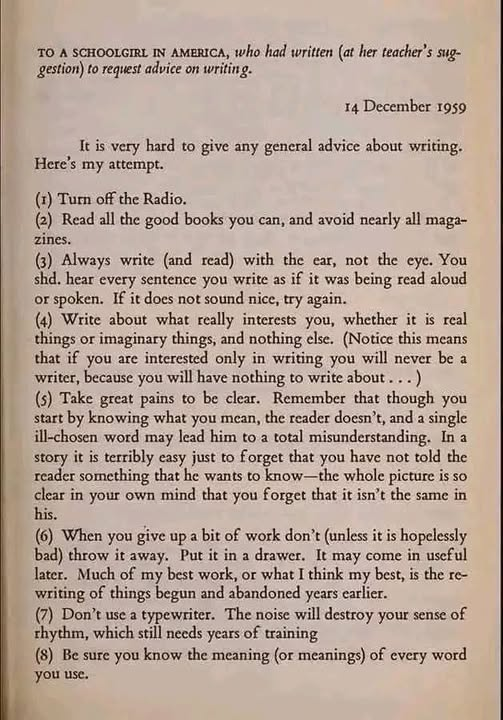
C.S. Lewis on writing and much more

To my surprise and indeed delight, I’ve been reacquainted with the writings of C. S. Lewis. Thanks are due to a series of articles by my favourite Appalachian philosopher, W. D. James. Previously my last encounter with Lewis had been back in around 1960. At the time I was in the last throes of my once passionate relationship with the Church and Christianity. I found myself reading Lewis’s ‘Mere Christianity’, perhaps an unfortunate title, if I was to be returned to the fold. He failed to prevent my Fall from grace and I embraced an irreconcilable atheism or radical humanism.

I remain so inclined but in recent years disturbed deeply by the growing post and anti-humanist outlook of a technocratic elite, who desire to be Gods, I converse with a plurality of dissenting voices, many religious in timbre. With a bit of luck and effort I hope to explore some of my response to the following pieces on Lewis’s philosophy. particularly the notion of Tao and Natural Law to be found therein.

I recommend highly your engagement with the following links.

https://wdjames.substack.com/p/the-order-of-the-soul

https://wdjames.substack.com/p/the-assault-on-the-heart

https://wdjames.substack.com/p/written-on-the-heart

https://wdjames.substack.com/p/post-humanism-and-the-regime-of-the

https://wdjames.substack.com/p/renewed-humanism

On a lighter note, Lewis, who was a famous writer of children’s books, such as The Chronicles of Narnia. offers some advice on writing.

Escaping Anxiety by way of Singing Nervously

The powerful, the ruling class of any historical period has spread fear as an essential element in the maintenance of its social and political control. Hence I’m stretching a point to suggest that we are living through an unprecedented era of Anxiety. And yet, even today, I’ve been warned to beware a possible proliferation of epidemic-catalysing viruses, all given the COVID script being existential threats, and instructed to fill the larder with supplies sufficient to last 72 hours in case of war.

We imagine the world as unsafe, and then we dream the world as unsafe, and then feel in our bodies that the world is unsafe. And this is an inverted order of things, the opposite of how our bodies come to knowledge. Rhyd Wildermuth

Sometime, perhaps never, I will seek to explore the contemporary phenomenon of algorithmic- created anxiety. For now, in the past few weeks I’ve sought to escape being suffocated inside the virtual by way of being scared of reality, namely giving another solo concert in my Cretan village. The nerves did indeed jangle. If you are kind enough to watch the two videos below you might well discern my tension. In terms of the songs themselves, it’s most obvious in my rushing through the Schubert composition, ‘Der Leiermann’, losing on the way much of its ambiguous mystery. Next time…….

—————————————————————————————————————————————————–

A couple of people have asked for details of the latest programme. If I wasn’t so nervous about singing in the correct key I would relax and say more about the songs at the concert itself.

1. 0 Waly, Waly 

Somerset folk song

2. Somewhere a Voice’s Calling and Smilin’ Through

American Parlour-Songs recorded in 1914 and 1919 by John McCormack, the famous Irish lyric tenor and sung by me as a boy soprano in 1957!!

3. Unbelievable,  The Nearness of You and  Bewitched, Bothered and Bewildered

American classics and often jazz standards – Livingstone, Carmichael and Rodgers

4, Hands, Eyes, Heart  and Tired – Vaughan Williams and Now Sleeps the Petal – Quilter. 

English Art Song

5.  I am a Poor Wayfaring Stranger

North American folk song and spiritual

 6.  Ti eínai aftó pou to léne agápi from the Boy on a Dolphin, If I Loved You from Carousel and Summertime from Porgy and Bess

Songs from film and musicals – Morakis, Rodgers and Gershwin

Interval.

7. Im  Wunderschönen Monat Mai – Schumann, Das Wandern  and  Der Leiermann – Schubert

German Lieder 

8. Danny Boy

Irish folk song

9. My Funny Valentine, When I Fall in Love  and The First Time Ever I Saw Your Face 

Classic Love songs –  Rodgers, Young and MacColl

10. Whither do I wander – Vaughan Williams, Sea Fever – Ireland and Come Again – Dowland

English and Elizabethan song

11. One Little Quarrel and Guilty 

Tribute to Al Bowly and 1930s dance bands

12. Πάμε μια βόλτα στο φεγγάρι or Let’s take a walk to the moon

Greek classic – Hadjidakis

———————————————————————————————————————————————

Our village kafeneio, H Elpida, the cafe of Hope

There seems little doubt, in my mind, that preparing for and giving this little concert, despite the blemishes, kept me out of what Anthony Rella calls the ‘psychic pollution’ infecting our relation to the internet and social media. OK, I admit, the warbling kept me away only for some of the time. Certainly I would suggest that prioritising time away from the screen in all its forms is a necessary form of resistance to the Machine. Lately I’ve gone back to printing off copies of stuff I’d like to read and taking them to peruse in the village kafeneio. A precious bonus is that Georgos brews a fine cappuccino and I get to pass the time of day with our village’s motley characters.

I must close by thanking Ken Carpenter for filming and editing the videos – all out of the goodness of his heart.

Having something or nothing to say as the years roll by

It’s not snow but a bitterly cold Yorkshire setting, January 1971. I’m hanging on to the heels of the great Mick Holmes, now sadly deceased.

As has been my fetish since around 1968 I trained on New Years Day. Although I don’t think the aspiring athlete of well over half a century ago would recognise my shuffling attempt to race walk as worthy of the epithet, ‘training’. On the other hand, 2024, a year of relative sickness, has sapped me of my long-standing confidence in an ability to fend off the years. It wasn’t snowing in our Cretan village but Marilyn’s lovely watercolour of a route I used to run back in the day brought back frozen memories of the joy of movement. As it was my slow progress allowed me to take in the beauty and tranquillity of my pine-filled surroundings, enabling my affectionate conversation in both English and Greek with dogs, cats, sheep and goats along the way. I swear they look forward to me coming! Back home in virtual reality, slumped at the computer, I pondered a New Year’s message to my less than adoring public.

It’s been a lean year for posts on this website. Meanwhile the world continues to be in collective, apparently crazed convulsion. Genocide is normalised. There is not just talk of crisis but of polycrisis. I find myself claiming to be confused. There is so much going on I can’t see the roof for the tiles. This tame assertion contains grains of truth but is no more than a limp excuse. For I do possess an overview of what’s happening in the world and, to an extent, I outlined this perspective, however flawed, a year ago. Indeed, when I go back to the three or four pieces I published back then, there is little I would change and much I would add – see the link below.

The Inextricable Relations of the Struggle around Class, Race, Gender and Sexuality

In claiming that I have some kind of overall insight into the present course of history (and in the light of observations I have made, in particular, about the COVID melodrama) I open myself to the curt dismissal that I am a simpleton, a conspiracy theorist. The knee-jerk charge, whether explicit or implicit, allows its prosecutors, drawn initially from the professional milieu or the ‘knowledge industry’, to pass judgement without recourse to dialogue. This facile reasoning does trickle down, courtesy of a largely grovelling mass media, into day-to-day discourse. Only so far, though. There is also a widespread reaction, which questions the patronising certainty of today’s priests – experts, politicians, journalists, technocrats, professionals, academics, influencers, Ursula van Leyden, Uncle Tony Fauci and all – who demand, despite their often demonstrable deceit, that society submits to their unswerving hierarchical faith and trusts the[ir] Science.

Inevitably this refusal or, at least, reluctance to comply takes many different forms, which in themselves, are strewn with contradiction. However the necessity of grappling with the intertwining, oft conflicting tendencies within those who demur, is spurned by those who know better. The generalisations, the stereotypes flood and drown debate. Who are we talking about here? Who are the refuseniks, the populists, that dubious and derided category of humanity standing in the way of progress ? Amongst them in the States are Clinton’s deplorables, Biden’s garbage, Obama’s sewage. Whilst in the UK and Europe we find racist, xenophobic, working class Brexiteers, far right nationalists of differing hues. All of whose wayward opinions are being given succour, so the narrative goes, by an eclectic and politically diffuse array of authoritarians and anti-authoritarians, peopling the airwaves of the alternative media with its daily dissenting diet of live coverage and lengthy podcasts, the latter the very opposite of superficial sound-bites. My oldest grandson, Ben swears by the strength of the podcast in challenging him to think critically, outside of the status quo. Of course, in my naivete, I’m overlooking that this motley crew of Far Right sympathisers, especially its lumpen elements, is in thrall to strong leaders, symbolised by Trump, a fascist by all ‘progressive’ accounts and has no legitimate agenda of its own. This arrogant trivialisation of grass-roots unrest is symbolised by the demise of the Democratic Party in the USA, which even the loyalist Bernie Sanders admits has abandoned the working class.

On a personal level I am disturbed by the way in which my public outlook and practice has been infected by the dominant narrative and I’m long out of the orthodox bubble. Sure, my nerves are not at all what they were. Age and illness have taken their toll. Just a fortnight ago, a concerned neurologist sent me for an MRI scan to determine further, if possible, the reason for my debilitating tremors and disorientation. As best can be seen, Parkinson’s is not on the horizon but the doctor spoke of ‘accelerated ageing’. Like it or not, this notion does fit with how I’m feeling! This self-centredness aside, I do find myself shaking externally and internally when overhearing in the taverna the predictable pronouncements on the state of the world proffered so confidently by well-off English-speaking tourists and migrants. Nowadays it matters little whether these prejudices are garnered from the Daily Mail or the Guardian. They are uttered shamelessly, unhesitatingly. To my shame I keep my gob shut.

How to understand this level of anxiety around standing up for what I believe? And what is it I believe and why does it feel so problematic to give voice to my opinion? After all since the mid-70s haven’t I often been a disagreeable voice within personal, professional and political situations? Perhaps I exaggerate but I often felt disaffected colleagues looked to me to be their spokesperson. What were the balance of forces into which I was intervening? Let me answer my question somewhat crudely. Certainly within the professional and academic world it was a matter of challenging the liberal order with a demand that the relations of exploitation and oppression be addressed. What of now? In my head and my heart I wish to express still an anti-capitalist, humanist and universalist opposition to the desires of those upstairs, the powerful. I strive to stay true to the memory of my dear friend and comrade, Sue Atkins. Yet I feel down if not out. She would not have approved of my dismay.

I’m at odds with a so-called progressive politics, which in Malcolm Ball’s turn of phrase wishes ‘to change the word and not the world’. Of course words as well as sticks and stones are hurtful. Indeed, in the part-time youth worker training I organised and facilitated in the late 1970s, we engaged directly with the impact of racist, sexist and homophobic language upon ourselves and young people. Although, on reflection, our missionary zeal foreshadowed some of today’s unforgiving insistence on prescribed verbal adherence.

I’ll stop here as I’m opening a receptacle of wriggling rats such as global governance and the nation-state, censorship and surveillance, the climate crisis, identity politics, Zionism, the material and the spiritual, all of which and more needs serious unravelling, It remains to be seen whether I do so. For what it’s worth I’ll try to post links to stimulating writing from across the spectrum. I promised this last year and failed. I’m going to begin revisiting stuff I’ve written in the past, which still seems relevant. I suspect I carry a chip on my shoulder about how much of it has ever been read! Finally I have embarked on a pretentious project, an autobiography. The rough draft of a first decade from 1958 to 1968, from passing the eleven plus to leaving teacher training college awaits revision, At the very least it is helping me to understand better how I’ve come to be who I am today. If, nothing else, it ought to keep me out of mischief.

Καλη χρονια με υγεια

Yours in struggle, as best I can

STAYING ALIVE, BEING HUMAN – PLAYING MUSIC LIVE

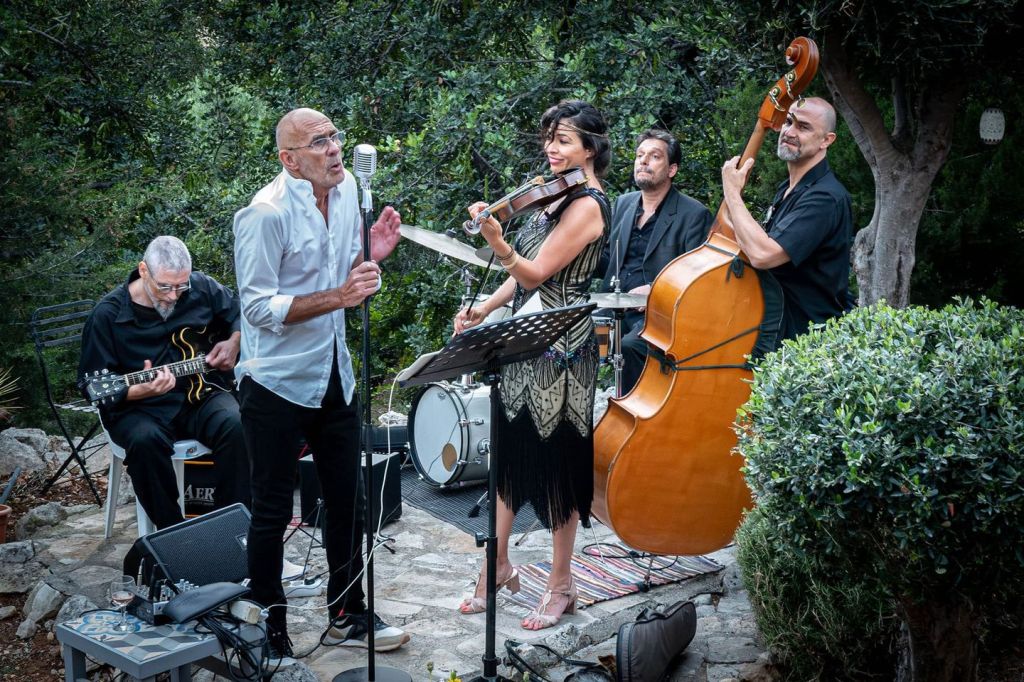
As a break from my usual ramblings on the state of the world but not at all at odds with its philosophy, enjoy this brief extract of the quartet, ‘ΤΕΤΡΑΗΧΟ”, playing in the picturesque village of Pollirinia on Crete back in July 2023. I’ve been privileged to hear them breaking boundaries with this unusual combination of instruments and styles. My dear friend, Maria, an outstanding jazz violinist brought together two great figures from the Cretan violin tradition in Michalis and Markos, together with the outstanding lute player, Kiriakos to explore and improvise without any guarantees of whether it would work. The outcome was a joyous, anarchic celebration of intimate music-making founded on listening, always listening to one another. You should have heard their exuberant version of a Brahms Hungarian Dance! It exuded a love of humanity, a mutual affection, which more than ever we need to defend. I’m still trying to ascertain who won the children’s running race taking place in the background! Kids!

‘ΤΕΤΡΑΗΧΟ”
Violins: Μαρία Μανουσάκη, Μιχάλης Λουφαρδάκης, Μάρκος Ρενιέρης
Laouto [Cretan lute]: Κυριάκος Σταυριανουδάκης

Thanks to Kiriakos for circulating the video.

‘The Progress of Knowledge Has Led to a Regression of Thought’ By Edgar Morin

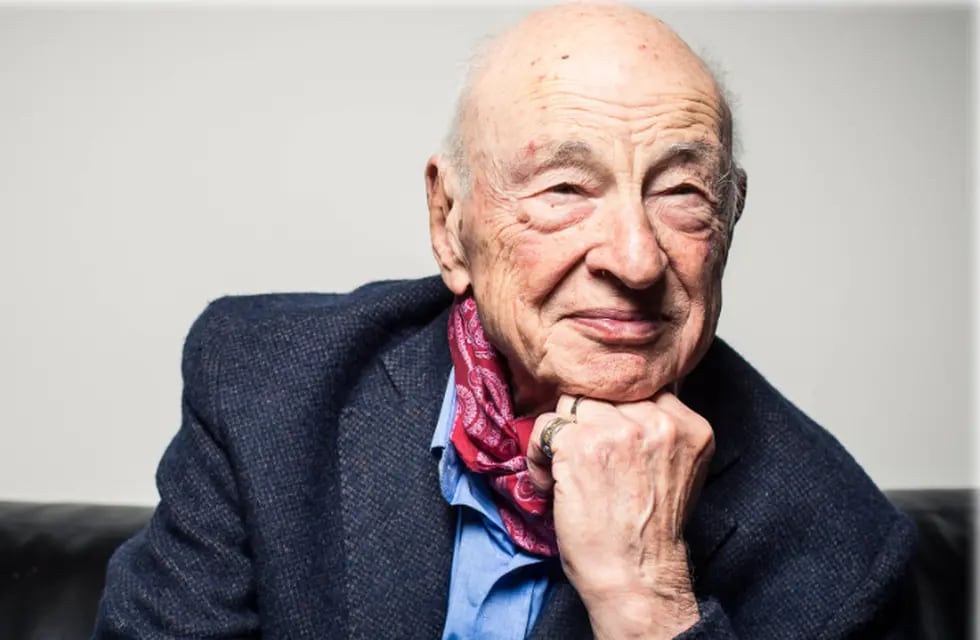
It is many years since I read any Edgar Morin and then only in second-hand summaries. It may be my ignorance but he has never seemed as fashionable as the likes of Foucault or Derrida. He describes himself as in fact an anthropologist, in the old sense of the term, exploring the interconnection of all knowledge about man. He notes, ‘This has led me to a transdisciplinary approach’. Born Edgar Nahoum; 8 July 1921 he continues to ponder, 102 years young. I tripped over this stimulating piece published in La Monde only a few weeks ago, courtesy of MoneyCircus, a dissident blogger I follow.

Thanks to lavoz.com.ar

‘The Progress of Knowledge Has Led to a Regression of Thought’

Midnight in the century

When Victor Serge published the novel with this title in 1939, the year of the German-Soviet pact and the dismemberment of Poland, it was indeed midnight and an irrevocable night was about to thicken and extend for five years.

Isn’t it midnight now in our century? Two wars are ongoing. The war in Ukraine has already mobilized economic and military aid from a part of the world, with radicalization and a risk of widening the conflict. Russia has not managed to annex Ukraine, but it maintains its presence in the previously separatist Russophone regions. The blockade has partially weakened it, but it has also stimulated its scientific and technical development, especially in the military field. This war has already had considerable consequences: the variously advanced autonomization of the South with respect to the West and the tightening of a Russia-China bloc.

A new warfront has ignited in the Middle East following the massacre committed by Hamas on October 7, 2023, followed by Israel’s deadly bombing of Gaza. These massacres, accompanied by persecutions in the West Bank and annexationist declarations, have reawakened the dormant Palestinian issue. They have shown both the urgency, the necessity, and the impossibility of a decolonization of what remains of Arab Palestine and the creation of a Palestinian state.

As no pressure is, or will be, exerted on Israel to arrive at a two-state solution, only an aggravation, even an expansion of this terrible conflict can be predicted. It’s a tragic lesson of history: the descendants of a people persecuted for centuries by the Christian, then racist, West, can become both persecutors and the advanced bastion of the West in the Arab world.

Thought has become blind

These wars worsen the conjunction of crises that strike nations, fueled by the virulent antagonism between three empires: the United States, Russia, and China. The crises feed on each other in a sort of polycrisis—ecological, economic, political, social, civilizational—and it is escalating.

Ecological degradation affects human societies through urban and rural pollution, with the latter exacerbated by industrial agriculture. The hegemony of uncontrolled profit (a major cause of the ecological crisis) increases inequalities within each nation and across the entire planet. The qualities of our civilization have deteriorated and its deficiencies have increased, notably in the spread of selfishness and the disappearance of traditional solidarities.

Democracy is in crisis on every continent: it is increasingly being replaced by authoritarian regimes, which, by having the means of computerized control over populations and individuals, tend to form societies of submission that could be called neo-totalitarian. Globalization has created no solidarity and the united Nations are increasingly disunited.

This paradoxical situation fits into a global paradox inherent to humanity. Prodigious technological and scientific progress in all areas is the cause of the worst regressions of our century. It enabled the scientific organization of the Auschwitz extermination camp; it made possible the design and manufacture of the most destructive weapons, including the first atomic bomb; it makes wars increasingly deadly; driven by the thirst for profit, it has created the planetary ecological crisis.

Though difficult to conceive, we must realize that the progress of knowledge, through themultiplication and mutual separation of disciplines, has caused a regression of thought, which in fact has become blind. Linked to a dominance of calculation in an increasingly technocratic world, the progress of knowledge is unable to conceive the complexity of reality, especially human realities. This leads to a return of dogmatisms and fanaticisms, as well as a crisis of morality with the unleashing of hatreds and idolatries.

The absence of hope

We are heading towards probable catastrophes. Is this catastrophism? This word exorcises evil and gives an illusory serenity. The polycrisis we are experiencing across the planet is an anthropological crisis: it is the crisis of humanity failing to become Humanity.

There was a time – not so long ago – when a change of course could be envisioned. It seems now that it is too late. Certainly, the improbable and especially the unforeseen can happen. We do not know if the global situation is only desperate [désespérante] or truly hopeless [désespérée]. This means that we must, with or without hope, with or without despair, move on to Resistance. The word irresistibly evokes the resistance of the years of the German occupation (1940-1945), whose very modest beginnings were made difficult by the absence of a foreseeable hope after the defeat of 1940.

The absence of foreseeable hope is similar in our own times, but the conditions are different. We are not currently under an enemy military occupation: we are dominated by formidable political and economic powers and threatened by the establishment of a society of submission. We are doomed to suffer the struggle between two imperialist giants and the possible warlike eruption of the third. We are being dragged into a race towards disaster.

Fellowship, life, and love

The first and fundamental resistance is that of the spirit. It requires resisting the intimidation of every lie asserted as truth, the contagion of every collective intoxication. It requires never yielding to the delirium of the collective responsibility of a people or an ethnicity. It demands resisting hatred and contempt. It prescribes the concern to understand the complexity of problems and phenomena rather than yielding to a partial or unilateral vision. It requires research, verification of information, and acceptance of uncertainties.

Resistance would also involve the safeguarding or creation of oases of (agroecological) communities with relative autonomy and networks of social and economic solidarity. It would also suppose the coordination of associations devoted to solidarity and the refusal of hatreds. Resistance would prepare younger generations to think and act for the forces of union of fellowship, life, and love that we can conceive under the name of Eros, and against the forces of dislocation, disintegration, conflict, and death that we can conceive under the names of Polemos and Thanatos [war and death].

It is the union, within our beings, of the powers of Eros and those of the awakened and responsible spirit that will nourish our resistance to subjugations, ignominies, and lies. The tunnels are not endless, the probable is not the certain, and the unexpected is always possible.

Acknowledgement to https://footnotes2plato.com/ and to Sean Kelly for a corrected ChatGpt translation.

SUFFOCATING, NOT GOING UNDER AND TAKING A BREATH

When I was about 8 years old my primary school teacher, frustrated by my reluctance to enter, pushed me into the pool at the town’s Baths.  I thought I was going to drown but my fellow pupils came to the rescue.  How could she have done this?  What callousness!  Or so the story goes.  In truth I’m not sure the incident ever happened.  However, I’ve told the tale so many times, often embellished, that I’ve come to believe it.  Why the need for this dubious childhood anecdote?  Certainly it has served to excuse my genuine fear of putting my head under water.  Friends who have sought to teach me to swim can attest to my frenzied splashing in protest.  Indeed it appears to explain my life-long struggle to stifle frightening dreams, within which I experience being suffocated, physically with a pillow, or psychologically by guilt, having betrayed my beliefs or people dear to me.  I awake dramatically, fighting for my breath.  By and large I deal with this, park the neurosis in its place.  And then again, perhaps not.

For over the last four years, in particular, I have felt suffocated, drowning in an unrelenting deluge of information, opinion, analysis and gossip.  I experience being in a state of alternative asphyxia.  It is not that I am starved of the oxygen of ideas, rather I gorge, I binge compulsively on their 24/7 availability. Some sort of diet beckons.

This self-indulgent, breathless cry for relief from the day-to-day assault on my senses inflicted by the media of whatever ilk is very much personal.  It is not to be taken in any way as an argument against the widest possible array of views being out there and accessible.  I oppose censorship, the suppression of opinion, most of all when I disagree even vehemently with such speculation.  I stand against authoritarianism, whether dressed in the cloak of the Left, Centre or Right.  Obviously I have no time for the manufactured categories of mis and disinformation through which the powerful seek to silence criticism and opposition.  Plainly the charge of misinformation is directed principally at those who question the dominant narrative.  It is applied to those who desire to make public what the ruling class wishes to remain private. According to the ever suave Barack Obama, I’m severely mistaken. I’m sinking into the ‘raw sewage’ pumped into the public square by the alternative media. Thus, misled, he opines it’s no wonder I’ve lost faith in society’s politicians, institutions and media and in doing so I represent a disturbing threat – let’s not mince his words –  to the future of humankind. Given this apocalyptic charge, it’s no surprise that the 2024 World Economic Forum in Davos is deeply bothered about my dissidence.

In his opening remarks to the conference of the great and good, Klaus Schwab, its founder and chair expressed his concern – “We must rebuild trust – trust in the future, trust in our capacity to overcome challenges and, most importantly, trust in each other.” In order to win back my undying support the elite will continue to encourage the creation of an armoury of so-called ‘independent’ disinformation agencies, funded by a mix of  private and public sources. For example the European Union has “a network of  anti-disinformation hubs that are part of the European Digital Media Observatory (EDMO), the independent platform for fact-checkers, academic researchers and other relevant stakeholders contributing to addressing disinformation in Europe”. Forgive the obvious but there is not the faintest scent of humility in these manoeuvrings, the slightest nod of recognition that their arrogant and authoritarian programme of propaganda and restriction might have something to do with our mistrust of their motives.

In the UK’s recently passed ‘Online Safety Bill’ you can see how the government intends to win back our trust. Section 179 section makes it illegal to publish false information with intent to cause harm…..

…..but Section 180 exempts all Mainstream Media outlets from this new law!

Of course I might not be seeing the wall for the bricks but this suggests strongly that the MSM are explicitly permitted to “knowingly publish false information with intent to cause non-trivial harm”. Yet you or I can be imprisoned for a year for committing a criminal act in drawing attention to their conscious deceit. A touch topsy-turvy!

Hence, for my part, I will not be intimidated into accepting the powerful’s rule over what I think or believe. Perhaps you might think me simple but, on a day-to-day basis, I will proceed on the basis of receiving, reading and thinking about information. It will be whatever it is, a product of those who put it together, informed by their expertise or lack of it, their integrity, their prejudices, their beliefs and so on.  It is my job as the aspiring, thoughtful citizen of Aristotle’s imagination to interpret and judge what I am told to the best of my faculties. Certainly such an ability, as far as it goes in my case, is born of a splicing of political activism with professional education and a measure of involvement in academia. At my most pretentious I fancied myself as one of Gramsci’s organic intellectuals.

Thanks to avanti.it

In this context, summed up in the world of youth and community work [YCW]  work, within which I laboured, as the desire to be a critically reflective practitioner, I didn’t expect to be so isolated as the COVID manufactured melodrama unfolded. I remain perplexed at the extent to which the professional class, including its YCW members, embraced and colluded uncritically with an unevidenced and unethical regime of societal restriction. An emergency was asserted but never proven. Fear provided its justification. Naively, I thought such authoritarianism would spark resistance. In retrospect, I failed to recognise how deeply behaviourism, its apparatus of preordained scripts, prescribed targets and imposed outcomes, was embedded in the professional psyche – not least in work with young people.This acceptance of a discourse of certainty about the correctness of our data-driven, objective models, the righteousness of our impact, the benificence of our worthy goals,  spilled over into life as a whole. And, as far as I can see, practitioners remain in denial as to what they were up to. No more than fleeting research confirms that masking, social distancing [made up on the back of a cigarette packet], the closure of children’s and young people’s provision were harmful and unnecessary. I await the National Youth Agency even shyly allowing it was a touch over the top, even as it bemoans a deterioration in young people’s mental health. Evidently it was the virus ‘wot dun it’ not the conscious application by practitioners of draconian social policy. Perhaps, though I’m too harsh, even the much revered Noam Chomsky, ‘an intellectual superstar’, according to the Guardian, succumbed utterly to the smear that the unvaccinated were dangerous and irresponsible, arguing that they should be ‘isolated’.

Ironically and thankfully, Chomsky along with much of the Left recovered his balance as the seemingly endless tragedy of Gaza erupted, as genocide stared us in the face. Almost overnight we rediscovered our ‘instinctive mistrust of the state’, of careerist and opportunist politicians, of undemocratic, unelected bodies of experts. In particular, perhaps, having swallowed whole the COVID propaganda spewing from the mass media, we remembered belatedly our relentless and scathing critique of the bourgeois press, which goes back at least in academic and activist circles to 1974 and the creation of the Glasgow Media Group. 

Enough is enough. I’ve peddled this perspective before without reaction, which is fair enough. Who on earth am I? My insignificance acknowledged, it does mean therefore that I must take a deep breath about my suffocating immersion in the currents of available opinion. It is extraordinary but I’m ‘sut on mi bum’ to use a Lancashire expression more than ever in my whole life.  True, I still drag myself out more or less every day to indulge the narcotic of my lingering athletic obsession.  I persuade myself I feel better for having done it.  Yet, outside this hour or so of exertion, I’m sometimes spending up to eight hours hunched over the laptop in a pompous search for the Holy Grail containing ‘the Truth’! Inevitably it’s always just out of reach. I need a break from this self-inflicted imprisonment.

To cut my usual ramble short I’m determined to work out a fresh approach in my declining days. I need to get out more as the saying goes.

  1. I won’t abandon Chatting Critically but, in addition to my occasional originals, I want to use it more as a conduit to challenging thinkers and activists who you might not trip over. In doing so I’ve already culled the number of people I’ve been following because I can’t keep up. A future post  will single out blogs and websites, which continue to stimulate me. You might well shake your head at my choices. On the ground I remain committed to our local Chatting Critically group.
  2. I shall spend more time on a project to record the history of the Lancashire Walking Club , of which I am a life member. It gives me pleasure, believe it or not, to do so.
  3. I am close to giving up on even being the In Defence of Youth Work [IDYW] archivist, the initiative of which I was once coordinator. Few seem interested. To all appearances its open-ended philosophy has been defeated – see the inanities of its supposed Facebook page, which ought to be closed out of respect to IDYW’s corpse.
  4. I’m going to ramble and cycle as I wish without feeling the need to rush back home.
  5. I’m going to spend more time singing and becoming musically literate.
  6. I’m going to  spend more time musing for the sake of musing in our village kafeneion.
  7. I cannot promise but I ought to improve my Greek.

On reading this afresh it ends up looking like a belated set of New Year’s resolutions. Given my past track record in keeping to such sensible proposals as cutting down on the village wine, the omens are not promising. We will see.

Tony Taylor


To end positively, let me introduce you to the writings of W.D. James, who teaches philosophy in Kentucky, USA and his substack Philosopher’s Holler

He explains:

Egalitarian Anti-Modernist philosophical ruminations on our contemporary conundrums. In my native dialect, a ‘holler’ can refer to a hollow (empty space), a yell, or a work song.

I’m thinking my way through our current times and I tend to do that by digging into the ‘classics’ of Westen political philosophy to see what light they can shine on the contemporary moment.

My basic stance is characterized by:

  • Anti-Modernism
  • Anti-Globalism
  • Deep respect for pre-modern wisdom traditions, including religious traditions
  • Liberty
  • Defense of the opportunity for a good life for everyone
  • A critique of the modern state
  • Grounding in nature/reality, intellectually, morally, and existentially

For my part, TT speaking, I would recommend you download and dip into the free pdf, Egalitarian Anti-Modernism

CONTENTS
Foreword by Paul Cudenec
Part 1: Was Jerusalem Builded Here?
Part 2: Jean-Jacques Against the Pathologies
of Civilization
Part 3: Rousseau and the Evils of Inequality
Part 4: Rousseau’s Revival
Part 5: William Morris and the Political
Economy of Beauty
Part 6: William Morris – Dreaming of Justice
and of Home
Part 7: What is Wrong With the World?
Part 8: Chesterton Against Servility
Part 9: Catastrophe
Part 10: Egalitarian Anti-Modernism and the
Contemporary Political Landscape

I enjoyed and was challenged by its content and argument, given that for a long time in my political life I believed in the inexorable relationship between progress and the continual development of the productive forces. I’m less confident nowadays.

Christ in the Rubble of Gaza

As an antidote to what some might see as a lapse into ahistorical sentimentality from an avowed irreconcilable atheist – my previous post, Bah Humbug – I recommend viewing this powerful video or reading the transcript of the pastor’s sermon. His impassioned call transcends religious and secular divides. It is a heart-rending appeal to our shared, common humanity.

TRANSCRIPT

This is a rush transcript. The copy may not be in its final form.

REV. MUNTHER ISAAC: Christ Under the Rubble.

We are angry. We are broken. This should have been a time of joy; instead, we are mourning. We are fearful.

More than 20,000 killed. Thousands are still under the rubble. Close to 9,000 children killed in the most brutal ways, day after day. One-point-nine million displaced. Hundreds of thousands of homes destroyed. Gaza as we know it no longer exists. This is an annihilation. This is a genocide.

The world is watching. Churches are watching. The people of Gaza are sending live images of their own execution. Maybe the world cares. But it goes on.

We are asking here: Could this be our fate in Bethlehem? In Ramallah? In Jenin? Is this our destiny, too?

We are tormented by the silence of the world. Leaders of the so-called free lined up one after the other to give the green light for this genocide against a captive population. They gave the cover. Not only did they make sure to pay the bill in advance, they veiled the truth and context, providing the political cover. And yet another layer has been added: the theological cover, with the Western church stepping into the spotlight.

Our dear friends in South Africa taught us the concept of the “state theology,” defined as “the theological justification of the status quo with its racism, capitalism and totalitarianism.” It does so by misusing theological concepts and biblical texts for its own political purposes.

Here in Palestine, the Bible is weaponized against us — our very own sacred text. In our terminology in Palestine, we speak of the empire. Here we confront the theology of the empire, a disguise for superiority, supremacy, chosenness and entitlement. It is sometimes given a nice cover, using words like “mission” and “evangelism,” “fulfillment of prophecy,” and “spreading freedom and liberty.”

The theology of the empire becomes a powerful tool to mask oppression under the cloak of divine sanction. It speaks of land without people. It divides people into “us” and “them.” It dehumanizes and demonizes. The concept of land without people, again, even though they knew too well that the land had people — and not just any people, a very special people. Theology of the empire calls for emptying Gaza, just like it called for the ethnic cleansing in 1948, a “miracle,” or “a divine miracle,” as they called it. It calls for us Palestinians now to go to Egypt, maybe Jordan. Why not just the sea?

I think of the words of the disciples to Jesus when he was about to enter Samaria: “Lord, do you want us to command fire to come down from heaven and consume them?” they said of the Samaritans. This is the theology of the empire. This is what they’re saying about us today.

This war has confirmed to us that the world does not see us as equal. Maybe it’s the color of our skins. Maybe it is because we are on the wrong side of a political equation. Even our kinship in Christ did not shield us. So they say if it takes killing 100 Palestinians to get a single “Hamas militant,” then so be it. We are not humans in their eyes. But in God’s eyes, no one can tell us that.

The hypocrisy and racism of the Western world is transparent and appalling. They always take the word of Palestinians with suspicion and qualification. No, we’re not treated equally. Yet, on the other side, despite a clear track record of misinformation, lies, their words are almost always deemed infallible.

To our European friends: I never ever want to hear you lecture us on human rights or international law again. And I mean this. We are not white, I guess. It does not apply to us, according to your own logic.

In this war, the many Christians in the Western world made sure the empire has the theology needed. It is thus self-defense, we were told. And I continue to ask: How is the killing of 9,000 children self-defense? How is the displacement of 1.9 million Palestinians self-defense?

In the shadow of the empire, they turned the colonizer into the victim, and the colonized into the aggressor. Have we forgotten — have we forgotten that the state they talk to, that that state was built on the ruins of the towns and villages of those very same Gazans? Have they forgot that?

We are outraged by the complicity of the church. Let it be clear, friends: Silence is complicity. And empty calls for peace without a ceasefire and end to occupation, and the shallow words of empathy without direct action, all under the banner of complicity.

So here is my message: Gaza today has become the moral compass of the world. Gaza was hell before October 7th, and the world was silent. Should we be surprised at their silence now?

If you are not appalled by what is happening in Gaza, if you are not shaken to your core, there is something wrong with your humanity. And if we, as Christians, are not outraged by the genocide, by the weaponization of the Bible to justify it, there is something wrong with our Christian witness, and we are compromising the credibility of our gospel message.

If you fail to call this a genocide, it is on you. It is a sin and a darkness you willingly embrace. Some have not even called for a ceasefire. I’m talking about churches. I feel sorry for you.

We will be OK. Despite the immense blow we have endured, we, the Palestinians, will recover. We will rise. We will stand up again from the midst of destruction, as we have always done as Palestinians, although this is by far maybe the biggest blow we have received in a long time. But we will be OK.

But for those who are complicit, I feel sorry for you. Will you ever recover from this? Your charity and your words of shock after the genocide won’t make a difference. And I know these words of shocks are coming. And I know people will give generously for charity. But your words won’t make a difference. Words of regret won’t suffice for you. And let me say it: We will not accept your apology after the genocide. What has been done has been done. I want you to look at the mirror and ask, “Where was I when Gaza was going through a genocide?” …

In these last two months, the psalms of lament have become a precious companion to us. We cried out, “My God, my God, why have you forsaken Gaza? Why do you hide your face from Gaza?”

In our pain, anguish and lament, we have searched for God and found him under the rubble in Gaza. Jesus himself became the victim of the very same violence of the empire when he was in our land. He was tortured, crucified. He bled out as others watched. He was killed and cried out in pain, “My God, where are you?”

In Gaza today, God is under the rubble.

And in this Christmas season, as we search for Jesus, he is not to be found on the side of Rome, but our side of the wall. He’s in a cave, with a simple family, an occupied family. He’s vulnerable, barely and miraculously surviving a massacre himself. He’s among the refugees, among a refugee family. This is where Jesus is to be found today.

If Jesus were to be born today, he would be born under the rubble in Gaza. When we glorify pride and richness, Jesus is under the rubble. When we rely on power, might and weapons, Jesus is under the rubble. When we justify, rationalize and theologize the bombing of children, Jesus is under the rubble.

Jesus is under the rubble. This is his manger. He is at home with the marginalized, the suffering, the oppressed and the displaced. This is his manger.

And I have been looking and contemplating on this iconic image. God with us precisely in this way, this is the incarnation — messy, bloody, poverty. This is the incarnation.

And this child is our hope and inspiration. We look and see him in every child killed and pulled from under the rubble. While the world continues to reject the children of Gaza, Jesus says, “Just as you did to one of the least of these brothers and sisters of mine, you did it to me.” “You did it to me.” Jesus not only calls them his own, he is them. He is the children of Gaza.

We look at the holy family and see them in every family displaced and wandering, now homeless in despair. While the world discusses the fate of the people of Gaza as if they are unwanted boxes in a garage, God in the Christmas narrative shares their fate. He walks with them and calls them his own.

So this manger is about resilience. It’s about sumud. And the resilience of Jesus is in his meekness, is in his weakness, is in his vulnerability. The majesty of the incarnation lies in its solidarity with the marginalized. Resilience because this is very same child who rose up from the midst of pain, destruction, darkness and death to challenge empires, to speak truth to power and deliver an everlasting victory over death and darkness. This very same child accomplished this.

This is Christmas today in Palestine, and this is the Christmas message. Christmas is not about Santas. It’s not about trees and gifts and lights. My goodness, how we have twisted the meaning of Christmas. How we have commercialized Christmas. I was, by the way, in the U.S.A. last month, the first Monday after Thanksgiving, and I was amazed by the amount of Christmas decorations and lights and all the commercial goods. And I couldn’t help but think: They send us bombs, while celebrating Christmas in their lands. They sing about the prince of peace in their land, while playing the drum of war in our land.

Christmas in Bethlehem, the birthplace of Jesus, is this manger. This is our message to the world today. It is a gospel message. It is a true and authentic Christmas message about the God who did not stay silent but said his word, and his word was Jesus. Born among the occupied and marginalized, he is in solidarity with us in our pain and brokenness.

This message is our message to the world today, and it is simply this: This genocide must stop now. Why don’t we repeat it? Stop this genocide now. Can you say it with me? Stop this genocide —

CONGREGATION: Stop this genocide now.

REV. MUNTHER ISAAC: Let’s say it one more time. Stop this genocide —

CONGREGATION: Stop this genocide now.

REV. MUNTHER ISAAC: This is our call. This is our plea. This is our prayer. Hear, O God. Amen.


Thanks to DemocracyNow for this material – find this independent news channel at https://www.democracynow.org/about

Bah Humbug! Get thee behind me, Scrooge

In the last few months during my rambles through the undergrowth of the alternative media, I discovered a writer, W.D. James, who teaches philosophy in Kentucky, USA. He tells us that:

 I’m thinking my way through our current times and I tend to do that by digging into the ‘classics’ of Westen political philosophy to see what light they can shine on the contemporary moment.

My basic stance is characterized by:

  • Anti-Modernism
  • Anti-Globalism
  • Deep respect for pre-modern wisdom traditions, including religious traditions
  • Liberty
  • Defense of the opportunity for a good life for everyone
  • A critique of the modern state
  • Grounding in nature/reality, intellectually, morally, and existentially

I find him accessible, challenging and entertaining. From time to time I will draw your attention to stuff of his that touches one of my fragile nerves. He can be found at https://wdjames.substack.com/

Anyway, he’s just produced a post in praise of Christmas, which caused me to scribble this comment. ‘As a curmudgeon and miserablist, I’m in shock! I loved the piece and I might well be having a Scrooge-like conversion. I might well go out and buy a Christmas Tree.’

CHARLIE BROWN: CHRISTMAS AS SOCIAL PRACTICE -the link

W.D begins:

There’ll be parties for hosting
Marshmallows for toasting
And caroling out in the snow
There’ll be scary ghost stories
And tales of the glories of Christmases long, long ago

It’s the most wonderful time of the year
There’ll be much mistletoeing
And hearts will be glowing when loved ones are near
It’s the most wonderful time of the year
i

I believe that Christmas is a magical time. It is my favorite time of the year. I love the lights, the songs, the foods, the presents, mistletoe, holly (which remains green and oddly bears fruit in the winter), Santa, reindeer, snow, elves, holiday films, and the bringing of trees indoors. I am aware that from a cynical post-everything perspective, I would be seen as a sappy sucker for my naïve appreciation of the holiday. I can only plead guilty to being sappy and to loving Christmas. I agree that it is commercialized and that capitalism perverts everything it touches. But I also believe Christmas is too resilient and in tune with the human spirit to be completely subverted.

So, below all the accoutrements listed above, what do I think Christmas is really all about? I believe it is about the promise of new life. Further, I believe it is a holiday. A Holy Day. I take it that the ‘holy’ represents an aspect of our experience where we feel the transcendent breaks into our ordinary world, shining light upon its ultimate meaning and purpose. In that sense, Christmas might just be the holy day. In what follows, I will attempt to look a little more deeply at what is holy about Christmas and also look at Christmas as a thing we do (an old expression speaks of ‘keeping Christmas’, i.e., celebrating it) which means that it is a social practice that has the power to shape us in various ways.

and closes:

Therefore, perhaps we should keep Christmas. Or, we can call it the Solstice, or Saturnalia, or Hanukkah, or Yalda, or Kwanzaa, or whatever we might term it. However that turns out, may you experience a goodly measure of peace and cooperatively bring about some goodwill this season. The main thing is that it involves a tree; the old-fashioned kind made of wood.


Sadly the links to the Charlie Brown movie don’t work but as nostalgic and heartwarming compensation, what about the 1951 version of Christmas Carol with the wonderful Alistair Sim as Scrooge?