Musings on the politics of youth work, community work and society at large – dedicated to the memory of Steve Waterhouse, Malcolm Ball and Sue Atkins, great youth workers, comrades and human beings
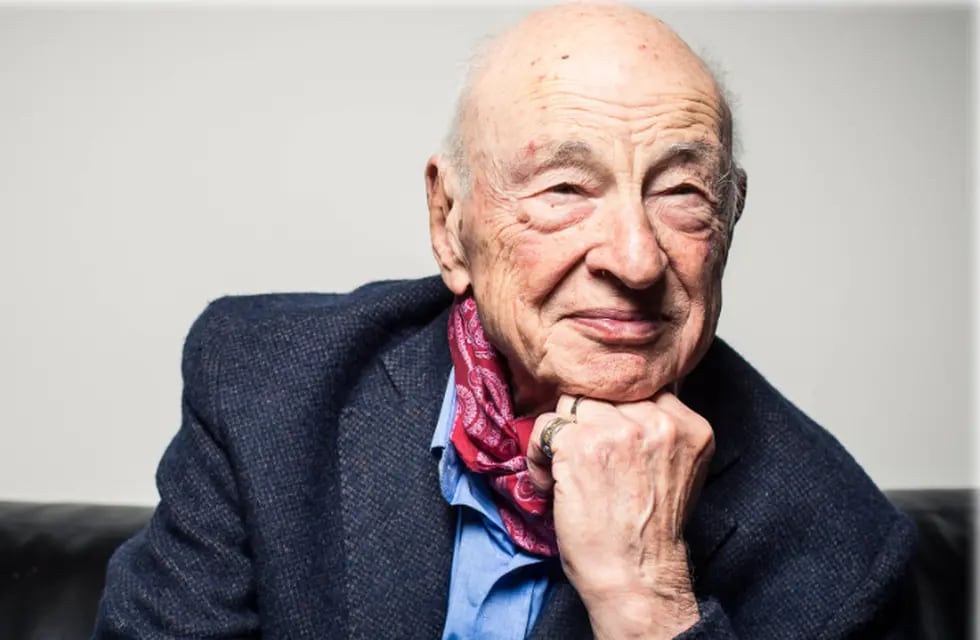
It is many years since I read any Edgar Morin and then only in second-hand summaries. It may be my ignorance but he has never seemed as fashionable as the likes of Foucault or Derrida. He describes himself as in fact an anthropologist, in the old sense of the term, exploring the interconnection of all knowledge about man. He notes, ‘This has led me to a transdisciplinary approach’. Born Edgar Nahoum; 8 July 1921 he continues to ponder, 102 years young. I tripped over this stimulating piece published in La Monde only a few weeks ago, courtesy of MoneyCircus, a dissident blogger I follow.
Thanks to lavoz.com.ar
‘The Progress of Knowledge Has Led to a Regression of Thought’
Midnight in the century
When Victor Serge published the novel with this title in 1939, the year of the German-Soviet pact and the dismemberment of Poland, it was indeed midnight and an irrevocable night was about to thicken and extend for five years.
Isn’t it midnight now in our century? Two wars are ongoing. The war in Ukraine has already mobilized economic and military aid from a part of the world, with radicalization and a risk of widening the conflict. Russia has not managed to annex Ukraine, but it maintains its presence in the previously separatist Russophone regions. The blockade has partially weakened it, but it has also stimulated its scientific and technical development, especially in the military field. This war has already had considerable consequences: the variously advanced autonomization of the South with respect to the West and the tightening of a Russia-China bloc.
A new warfront has ignited in the Middle East following the massacre committed by Hamas on October 7, 2023, followed by Israel’s deadly bombing of Gaza. These massacres, accompanied by persecutions in the West Bank and annexationist declarations, have reawakened the dormant Palestinian issue. They have shown both the urgency, the necessity, and the impossibility of a decolonization of what remains of Arab Palestine and the creation of a Palestinian state.
As no pressure is, or will be, exerted on Israel to arrive at a two-state solution, only an aggravation, even an expansion of this terrible conflict can be predicted. It’s a tragic lesson of history: the descendants of a people persecuted for centuries by the Christian, then racist, West, can become both persecutors and the advanced bastion of the West in the Arab world.
Thought has become blind
These wars worsen the conjunction of crises that strike nations, fueled by the virulent antagonism between three empires: the United States, Russia, and China. The crises feed on each other in a sort of polycrisis—ecological, economic, political, social, civilizational—and it is escalating.
Ecological degradation affects human societies through urban and rural pollution, with the latter exacerbated by industrial agriculture. The hegemony of uncontrolled profit (a major cause of the ecological crisis) increases inequalities within each nation and across the entire planet. The qualities of our civilization have deteriorated and its deficiencies have increased, notably in the spread of selfishness and the disappearance of traditional solidarities.
Democracy is in crisis on every continent: it is increasingly being replaced by authoritarian regimes, which, by having the means of computerized control over populations and individuals, tend to form societies of submission that could be called neo-totalitarian. Globalization has created no solidarity and the united Nations are increasingly disunited.
This paradoxical situation fits into a global paradox inherent to humanity. Prodigious technological and scientific progress in all areas is the cause of the worst regressions of our century. It enabled the scientific organization of the Auschwitz extermination camp; it made possible the design and manufacture of the most destructive weapons, including the first atomic bomb; it makes wars increasingly deadly; driven by the thirst for profit, it has created the planetary ecological crisis.
Though difficult to conceive, we must realize that the progress of knowledge, through themultiplication and mutual separation of disciplines, has caused a regression of thought, which in fact has become blind. Linked to a dominance of calculation in an increasingly technocratic world, the progress of knowledge is unable to conceive the complexity of reality, especially human realities. This leads to a return of dogmatisms and fanaticisms, as well as a crisis of morality with the unleashing of hatreds and idolatries.
The absence of hope
We are heading towards probable catastrophes. Is this catastrophism? This word exorcises evil and gives an illusory serenity. The polycrisis we are experiencing across the planet is an anthropological crisis: it is the crisis of humanity failing to become Humanity.
There was a time – not so long ago – when a change of course could be envisioned. It seems now that it is too late. Certainly, the improbable and especially the unforeseen can happen. We do not know if the global situation is only desperate [désespérante] or truly hopeless [désespérée]. This means that we must, with or without hope, with or without despair, move on to Resistance. The word irresistibly evokes the resistance of the years of the German occupation (1940-1945), whose very modest beginnings were made difficult by the absence of a foreseeable hope after the defeat of 1940.
The absence of foreseeable hope is similar in our own times, but the conditions are different. We are not currently under an enemy military occupation: we are dominated by formidable political and economic powers and threatened by the establishment of a society of submission. We are doomed to suffer the struggle between two imperialist giants and the possible warlike eruption of the third. We are being dragged into a race towards disaster.
Fellowship, life, and love
The first and fundamental resistance is that of the spirit. It requires resisting the intimidation of every lie asserted as truth, the contagion of every collective intoxication. It requires never yielding to the delirium of the collective responsibility of a people or an ethnicity. It demands resisting hatred and contempt. It prescribes the concern to understand the complexity of problems and phenomena rather than yielding to a partial or unilateral vision. It requires research, verification of information, and acceptance of uncertainties.
Resistance would also involve the safeguarding or creation of oases of (agroecological) communities with relative autonomy and networks of social and economic solidarity. It would also suppose the coordination of associations devoted to solidarity and the refusal of hatreds. Resistance would prepare younger generations to think and act for the forces of union of fellowship, life, and love that we can conceive under the name of Eros, and against the forces of dislocation, disintegration, conflict, and death that we can conceive under the names of Polemos and Thanatos [war and death].
It is the union, within our beings, of the powers of Eros and those of the awakened and responsible spirit that will nourish our resistance to subjugations, ignominies, and lies. The tunnels are not endless, the probable is not the certain, and the unexpected is always possible.
When I was about 8 years old my primary school teacher, frustrated by my reluctance to enter, pushed me into the pool at the town’s Baths. I thought I was going to drown but my fellow pupils came to the rescue. How could she have done this? What callousness! Or so the story goes. In truth I’m not sure the incident ever happened. However, I’ve told the tale so many times, often embellished, that I’ve come to believe it. Why the need for this dubious childhood anecdote? Certainly it has served to excuse my genuine fear of putting my head under water. Friends who have sought to teach me to swim can attest to my frenzied splashing in protest. Indeed it appears to explain my life-long struggle to stifle frightening dreams, within which I experience being suffocated, physically with a pillow, or psychologically by guilt, having betrayed my beliefs or people dear to me. I awake dramatically, fighting for my breath. By and large I deal with this, park the neurosis in its place. And then again, perhaps not.
For over the last four years, in particular, I have felt suffocated, drowning in an unrelenting deluge of information, opinion, analysis and gossip. I experience being in a state of alternative asphyxia. It is not that I am starved of the oxygen of ideas, rather I gorge, I binge compulsively on their 24/7 availability. Some sort of diet beckons.
This self-indulgent, breathless cry for relief from the day-to-day assault on my senses inflicted by the media of whatever ilk is very much personal. It is not to be taken in any way as an argument against the widest possible array of views being out there and accessible. I oppose censorship, the suppression of opinion, most of all when I disagree even vehemently with such speculation. I stand against authoritarianism, whether dressed in the cloak of the Left, Centre or Right. Obviously I have no time for the manufactured categories of mis and disinformation through which the powerful seek to silence criticism and opposition. Plainly the charge of misinformation is directed principally at those who question the dominant narrative. It is applied to those who desire to make public what the ruling class wishes to remain private. According to the ever suave Barack Obama, I’m severely mistaken. I’m sinking into the ‘raw sewage’ pumped into the public square by the alternative media. Thus, misled, he opines it’s no wonder I’ve lost faith in society’s politicians, institutions and media and in doing so I represent a disturbing threat – let’s not mince his words – to the future of humankind. Given this apocalyptic charge, it’s no surprise that the 2024 World Economic Forum in Davos is deeply bothered about my dissidence.
In his opening remarks to the conference of the great and good, Klaus Schwab, its founder and chair expressed his concern – “We must rebuild trust – trust in the future, trust in our capacity to overcome challenges and, most importantly, trust in each other.” In order to win back my undying support the elite will continue to encourage the creation of an armoury of so-called ‘independent’ disinformation agencies, funded by a mix of private and public sources. For example the European Union has “a network of anti-disinformation hubs that are part of the European Digital Media Observatory (EDMO), the independent platform for fact-checkers, academic researchers and other relevant stakeholders contributing to addressing disinformation in Europe”. Forgive the obvious but there is not the faintest scent of humility in these manoeuvrings, the slightest nod of recognition that their arrogant and authoritarian programme of propaganda and restriction might have something to do with our mistrust of their motives.
In the UK’s recently passed ‘Online Safety Bill’ you can see how the government intends to win back our trust. Section 179 section makes it illegal to publish false information with intent to cause harm…..
…..but Section 180 exempts all Mainstream Media outlets from this new law!
Of course I might not be seeing the wall for the bricks but this suggests strongly that the MSM are explicitly permitted to “knowingly publish false information with intent to cause non-trivial harm”. Yet you or I can be imprisoned for a year for committing a criminal act in drawing attention to their conscious deceit. A touch topsy-turvy!
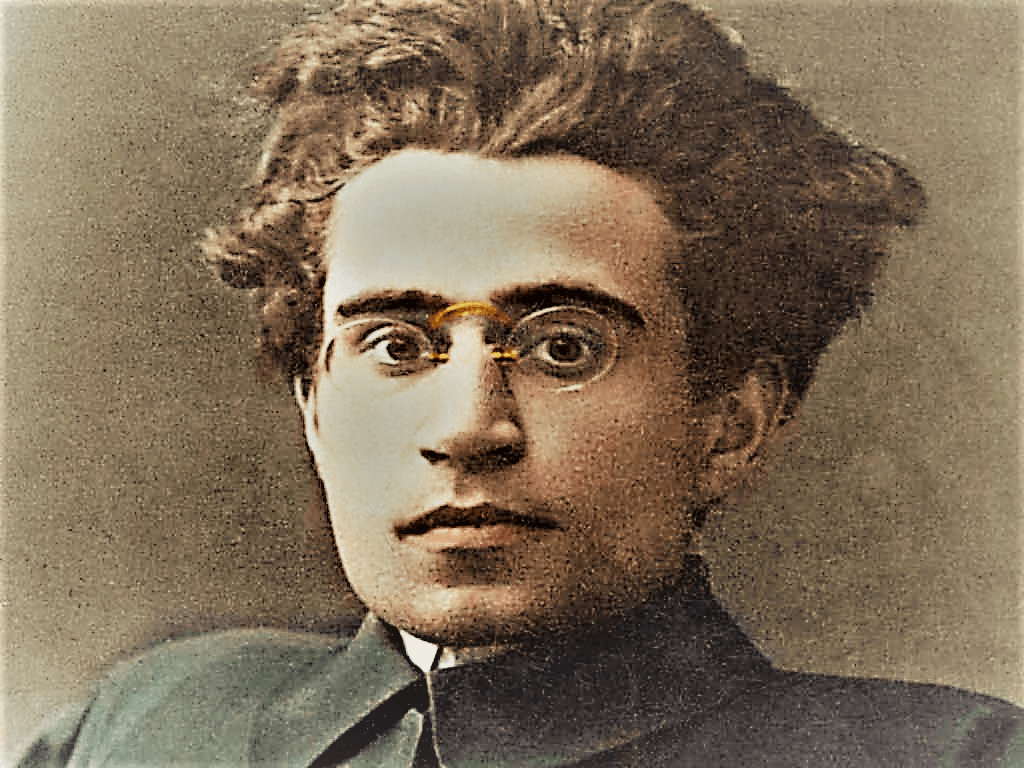
Hence, for my part, I will not be intimidated into accepting the powerful’s rule over what I think or believe. Perhaps you might think me simple but, on a day-to-day basis, I will proceed on the basis of receiving, reading and thinking about information. It will be whatever it is, a product of those who put it together, informed by their expertise or lack of it, their integrity, their prejudices, their beliefs and so on. It is my job as the aspiring, thoughtful citizen of Aristotle’s imagination to interpret and judge what I am told to the best of my faculties. Certainly such an ability, as far as it goes in my case, is born of a splicing of political activism with professional education and a measure of involvement in academia. At my most pretentious I fancied myself as one of Gramsci’s organic intellectuals.
Thanks to avanti.it
In this context, summed up in the world of youth and community work [YCW] work, within which I laboured, as the desire to be a critically reflective practitioner, I didn’t expect to be so isolated as the COVID manufactured melodrama unfolded. I remain perplexed at the extent to which the professional class, including its YCW members, embraced and colluded uncritically with an unevidenced and unethical regime of societal restriction. An emergency was asserted but never proven. Fear provided its justification. Naively, I thought such authoritarianism would spark resistance. In retrospect, I failed to recognise how deeply behaviourism, its apparatus of preordained scripts, prescribed targets and imposed outcomes, was embedded in the professional psyche – not least in work with young people.This acceptance of a discourse of certainty about the correctness of our data-driven, objective models, the righteousness of our impact, the benificence of our worthy goals, spilled over into life as a whole. And, as far as I can see, practitioners remain in denial as to what they were up to. No more than fleeting research confirms that masking, social distancing [made up on the back of a cigarette packet], the closure of children’s and young people’s provision were harmful and unnecessary. I await the National Youth Agency even shyly allowing it was a touch over the top, even as it bemoans a deterioration in young people’s mental health. Evidently it was the virus ‘wot dun it’ not the conscious application by practitioners of draconian social policy. Perhaps, though I’m too harsh, even the much revered Noam Chomsky, ‘an intellectual superstar’, according to the Guardian, succumbed utterly to the smear that the unvaccinated were dangerous and irresponsible, arguing that they should be ‘isolated’.
Ironically and thankfully, Chomsky along with much of the Left recovered his balance as the seemingly endless tragedy of Gaza erupted, as genocide stared us in the face. Almost overnight we rediscovered our ‘instinctive mistrust of the state’, of careerist and opportunist politicians, of undemocratic, unelected bodies of experts. In particular, perhaps, having swallowed whole the COVID propaganda spewing from the mass media, we remembered belatedly our relentless and scathing critique of the bourgeois press, which goes back at least in academic and activist circles to 1974 and the creation of the Glasgow Media Group.
Enough is enough. I’ve peddled this perspective before without reaction, which is fair enough. Who on earth am I? My insignificance acknowledged, it does mean therefore that I must take a deep breath about my suffocating immersion in the currents of available opinion. It is extraordinary but I’m ‘sut on mi bum’ to use a Lancashire expression more than ever in my whole life. True, I still drag myself out more or less every day to indulge the narcotic of my lingering athletic obsession. I persuade myself I feel better for having done it. Yet, outside this hour or so of exertion, I’m sometimes spending up to eight hours hunched over the laptop in a pompous search for the Holy Grail containing ‘the Truth’! Inevitably it’s always just out of reach. I need a break from this self-inflicted imprisonment.
To cut my usual ramble short I’m determined to work out a fresh approach in my declining days. I need to get out more as the saying goes.
I won’t abandon Chatting Critically but, in addition to my occasional originals, I want to use it more as a conduit to challenging thinkers and activists who you might not trip over. In doing so I’ve already culled the number of people I’ve been following because I can’t keep up. A future post will single out blogs and websites, which continue to stimulate me. You might well shake your head at my choices. On the ground I remain committed to our local Chatting Critically group.
I shall spend more time on a project to record the history of the Lancashire Walking Club , of which I am a life member. It gives me pleasure, believe it or not, to do so.
I am close to giving up on even being the In Defence of Youth Work [IDYW] archivist, the initiative of which I was once coordinator. Few seem interested. To all appearances its open-ended philosophy has been defeated – see the inanities of its supposed Facebook page, which ought to be closed out of respect to IDYW’s corpse.
I’m going to ramble and cycle as I wish without feeling the need to rush back home.
I’m going to spend more time singing and becoming musically literate.
I’m going to spend more time musing for the sake of musing in our village kafeneion.
I cannot promise but I ought to improve my Greek.
On reading this afresh it ends up looking like a belated set of New Year’s resolutions. Given my past track record in keeping to such sensible proposals as cutting down on the village wine, the omens are not promising. We will see.
Tony Taylor
To end positively, let me introduce you to the writings of W.D. James, who teaches philosophy in Kentucky, USA and his substack Philosopher’s Holler
He explains:
Egalitarian Anti-Modernist philosophical ruminations on our contemporary conundrums. In my native dialect, a ‘holler’ can refer to a hollow (empty space), a yell, or a work song.
I’m thinking my way through our current times and I tend to do that by digging into the ‘classics’ of Westen political philosophy to see what light they can shine on the contemporary moment.
My basic stance is characterized by:
Anti-Modernism
Anti-Globalism
Deep respect for pre-modern wisdom traditions, including religious traditions
Liberty
Defense of the opportunity for a good life for everyone
A critique of the modern state
Grounding in nature/reality, intellectually, morally, and existentially
For my part, TT speaking, I would recommend you download and dip into the free pdf, Egalitarian Anti-Modernism
CONTENTS Foreword by Paul Cudenec Part 1: Was Jerusalem Builded Here? Part 2: Jean-Jacques Against the Pathologies of Civilization Part 3: Rousseau and the Evils of Inequality Part 4: Rousseau’s Revival Part 5: William Morris and the Political Economy of Beauty Part 6: William Morris – Dreaming of Justice and of Home Part 7: What is Wrong With the World? Part 8: Chesterton Against Servility Part 9: Catastrophe Part 10: Egalitarian Anti-Modernism and the Contemporary Political Landscape
I enjoyed and was challenged by its content and argument, given that for a long time in my political life I believed in the inexorable relationship between progress and the continual development of the productive forces. I’m less confident nowadays.
A month ago, with some trepidation, it was agreed that our next Chatting Critically meeting would focus on the Israel/Palestine situation. It will take place on Wednesday, January 10th in the ‘Elpida’ kafeneio, Gavalohori, starting at 10.30 a.m.
As the coordinator of the group, I wanted to put together something of an introduction to help the discussion along. However, I’ve found this increasingly difficult as the tragedy unfolds. I’m conscious too that my allegiance to the Palestinian cause goes back to the mid-1970s. I’m hardly impartial.
Thus I’m doing no more than posing a few questions to think about before we get together, supplemented by links to a range of articles, the first of which is by the great independent journalist, John Pilger, who sadly died on New Year’s Eve.
To what extent have we a grasp of the historical background to the conflict? The state of Israel was only founded in 1947 based on expelling thousands of Palestinians from their homeland. How was this justified and who were the players on the world stage, ensuring that this seizure of land happened?
Israel’s establishment as an explicitly Jewish state is a primary point of contention, with many of the state’s critics arguing that this by nature casts non-Jews as second-class citizens with fewer rights. The 1950 Law of Return, for example, grants all Jews, as well as their children, grandchildren, and spouses, the right to move to Israel and automatically gain citizenship. Non-Jews do not have these rights. Palestinians and their descendants have no legal right to return to the lands their families held before being displaced in 1948 or 1967. Deep-rooted structural and social discrimination confirms the second-class status of Arabs within Israel, leading to the charge that Israel is an apartheid state? Is this claim legitimate?
Does the appalling persecution of Jews across the centuries – for a diversity of reasons, not least in the early 20th century because they were seen as socialists. even communists and the obscenity of the Holocaust, the Final Solution – mean that Israel is exempt from moral or political criticism of its actions today – acknowledged war crimes or indeed perceived genocide?
It is generally acknowledged at an international level, even if this is empty of any real meaning that the Palestinian Territories are prison camps. Given the length and intensity of the incarceration, why the surprise and shock when some of the prisoners plan and execute a violent escape. Isn’t such a brutal ‘slave revolt’, as Norman Finkelstein puts it, an inevitable consequence of Israel’s inhuman policies. And is the appropriate answer of the prison guards, the execution of the inmates left therein?
And, finally, on a personal note, how can we allow the closing down of debate by the mere accusation of anti-semitism or ‘Jew-hating’? Amongst my greatest inspirations and influences are to be found composers, Mahler, Mendelsohn and Schoenberg, artists, Menuhin and Bernstein, intellectuals, Freud and Chomsky, revolutionaries, Marx, Trotsky and Rosa Luxemburg. All were Jewish. In embracing and criticising their artistic, social and political contributions I recognised but didn’t obsess about their Jewishness. In much the same way I don’t think much about Christianity when listening to Haydn or Bruckner. I’m an atheist but I neither hate Jews nor Christians. I simply disagree.
There are many more questions, for sure.
In directing you to interesting and challenging links I cannot but begin with the late John Pilger’s very last article, written in early November, entitled. ‘We are Spartacus’
“Secretive power loathes journalists who do their job, push back screens, peer behind façades, lift rocks. Opprobrium from on high is their badge of honour.”
He opens::
Spartacus was a 1960 Hollywood film based on a book written secretly by the blacklisted novelist Howard Fast, and adapted by the screenplay writer Dalton Trumbo, one of the “Hollywood 10” who were banned for their “un-American” politics. It is a parable of resistance and heroism that speaks unreservedly to our own times.
Both writers were Communists and victims of Senator Joseph McCarthy, chairman of the Government Operations Committee and its Permanent Subcommittee on Investigations of the US Senate, which, during the Cold War, destroyed the careers and often the lives of those principled and courageous enough to stand up to a homegrown fascism in America.
“This is a sharp time, now, a precise time…”, wrote Arthur Miller in The Crucible, “We live no longer in the dusky afternoon when evil mixed itself with good and befuddled the world”.
There is one “precise” provocateur now; it is clear to see for those who want to see it and foretell its actions. It is a gang of states led by the United States whose stated objective is “full spectrum dominance”. Russia is still the hated one, Red China the feared one.
From Washington and London, the virulence has no limit. Israel, the colonial anachronism and unleashed attack dog, is armed to the teeth and granted historical impunity so that “we” the West ensure the blood and tears never dry in Palestine.
British MPs who dare call for a ceasefire in Gaza are banished, the iron door of two-party politics closed to them by a Labour leader who would withhold water and food from the children.
In expressing his undying admiration for the endeavours of David McBride and Julian Assange in exposing the crimes committed under the banner of the ‘Global War on Terror’, he closes:
Their bravery has allowed many of us, who might despair, to understand the real meaning of a resistance we all share if we want to prevent the conquest of us, our conscience, our self respect, if we prefer freedom and decency to compliance and collusion. In this, we are all Spartacus.
Spartacus was the rebellious leader of Rome’s slaves in 71-73 B.C. There is a thrilling moment in the Kirk Douglas movie Spartacus when the Romans call on Spartacus’s men to identify their leader and so be pardoned. Instead hundreds of his comrades stand and raise their fists in solidarity and shout, “I am Spartacus!”. The rebellion is under way.
Julian and David are Spartacus. The Palestinians are Spartacus. People who fill the streets with flags and principle and solidarity are Spartacus. We are all Spartacus if we want to be.
Nira Yuval-Davis is a diasporic Israeli Jew, Professor Emeritus, Honorary Director of the Research Centre on Migration, Refugees and Belonging (CMRB) at the University of East London. She reflects on the complexities of its start and end points, beginning:
One of the most contested issues regarding telling the story of the current war in the Middle East is about when to start it. Each narrative always has a clear starting point – if not necessarily an end point – but what is the starting point for this war? Is it the terrible massacre that Hamas fighters carried out among soldiers and civilians, Jews and non-Jews, in the South of Israel on 7 October? – the highest number of people killed in one day in the hundred years of conflict since the beginning of the Zionist settlement in Palestine – at least until that day. That’s probably where most Israelis would like to start the story.
Should I start with the ongoing massive systematic bombing, destruction, displacement and killing of thousands of Palestinians in Gaza, including thousands of children, a new Palestinian Nakba? That’s where many international protesters focus their protests.
Or I could start the narrative by telling the history of the Zionist settler colonial project, before and after 1948 and the establishment of the Israeli state. A large proportion of the Palestinian population in the Gaza strip today are 1948 refugees, and most of the settlements attacked on 7 October sit on lands where previous generations of today’s Gazans used to live, before the first Nakba.
Or maybe I should start my narrative by telling how Israeli intelligence – just like the US with the Taliban – was a cultivator of Hamas in its infancy, as part of a divide and rule policy aimed at weakening the power of the PLO; and how, until 7 October, it facilitated the rule of Hamas in Gaza by enabling the transfer of money to Hamas from Qatar via Israeli banks, so it could distribute money to people in this huge open-air prison, to maintain its control and keep the population just about surviving.
Another starting point could be the convenience of the Hamas attack and the following war for Iran and its allies, as it has put in jeopardy the anti-Iran, anti-Palestinian, so called ‘normalisation’ agreement that was soon to be signed between Israel and Saudi Arabia. In many ways, this is not just a war between Israel and Gaza, but a regional war, in which various pro-Iranian groups, from Yemen to Syria and Lebanon, are taking part in an anti-American as well as anti-Israeli war, although at the moment, at least, in a contained way.
Related to that, one could start by describing the war as a result of miscalculated wishful thinking. Hamas was hoping that Hezbollah, Iran and other forces in the Arab world would join the war in a much more total way; and Israel has been hoping that Egypt and/or the PLO would take responsibility for governing the population in Gaza instead of Hamas, and, better still, would allow them to be displaced to the Sinai desert. But these organisations and governments have learned their lessons from previous history and are not co-operating.
The timing of the war has also been convenient for Netanyahu and the Israeli government. In one day it stopped the six-month long major protest movement which was demanding the ending of the judicial coup in Israel and the resignation of Netanyahu: the leader of the opposition has joined the government and war cabinet, and all the huge protest and pro-democracy posters which were plastered all over public buildings and public spaces have been replaced with others, even larger, which say – No Left, No Right, together we’ll all win the war.
She ends:
Many of us have been taking part in protest activities against the war in Gaza and its growing human and humanitarian costs, while knowing that the issues cannot be resolved solely by an end to that war. There is a need for the end of the occupation and the de-Zionisation of Palestine/Israel into a state with equal individual and collective rights for all its residents. This seems more than ever a faraway dream, but giving up on striving for it, not keeping alive this alternative narrative, would only be much worse.
RANDA ABDEL-FATTAH explores the central and sensitive question of how the hurt experienced by People in and out of Israel, particularly those wedded to Zionism, is used to deflect us from the reality of genocide.
She ends:
My responsibility is to commit myself to the liberation of Palestine. I am confident that my fight against Zionism as a form of racism aligns with my unequivocal rejection and condemnation of antisemitism. I recognize the lethal and genocidal history of European antisemitism that produced the Holocaust and the destruction of European Jewry. I reject that because of European antisemitic racism, Palestinians must pay the price. I reject essentializing language, stereotypes, or theories that claim that there are particular traits or characteristics unique to “Jewish people” as a homogenous collective, or “being a Jew.” I defend the right of Jewish people to openly practice Judaism and freely express their religious and cultural identity. I defend the right of Jewish people to practice their faith even though I unequivocally reject and condemn Zionism as a political ideology. I do not accept that such a right can be enjoyed at the expense of Palestinian life, freedom, and self-determination.
No amount of intimidation or emotional blackmail will cower Palestinians into silence, into shrinking our voices, adjusting our language, compromising our demands and claims, or repressing our feelings. When the feelings and fragility of Zionists are used as a rhetorical shield to deflect from engaging with the moral and material reality of genocide, Palestinians are left to ask: how many of us must be killed, maimed and injured, forced from our traditional land and beloved homes, be tortured and have our schools, universities, and livelihoods destroyed, for those in power – those who have the power to stop this genocide – to say in public never again. Khallas. Enough.
A thoughtful video, which touches on whether there are solutions acceptable to all parties.
A second Nakba? What history tells us about Palestine and Israel In this episode of UpFront, we look back at the history and context leading up to the current Israel-Gaza war. Nearly two months after the October 7 attack by Hamas, Israel’s response has killed more than 14,500 Palestinians.
While many see the current conflict as a reaction to the attack that killed 1,200 people in Israel, others have pointed out that this view ignores crucial historical context and that the conflict has been ongoing for generations.
Following the 1917 Balfour Declaration which led to an influx of Jewish immigrants, the creation of Israel in 1948 saw an enormous displacement of Palestinians, in addition to the expulsion of hundreds of thousands who remain refugees to this day.
On UpFront, Mustafa Barghouti, the co-founder of the Palestinian National Initiative, and author Ghada Karmi, join Marc Lamont Hill to look back at the history of Palestine and contextualise the current war.
Like other British imperial possessions, Palestine was acquired on the cheap and under false pretences, official corruption sealing a deal doomed to end in perpetual violence.
“Zionism will fail, the experiment to which the noble Earl referred will fail, the harm done by dumping down an alien population upon an Arab country – Arab all around in the hinterland – may never be remedied…what we have done is, by concessions, not to the Jewish people but to a Zionist extreme section, to start a running sore in the East, and no one can tell how far that sore will extend.”
– British Government, Hansard, House of Lords, 21 June 1922, p. 1025
Biden’s position on Israel-Palestine does not constitute any real shift from that of Trump and thus similarly gratifies the desires of Christian Zionists.
I had no sense of this significant support for Israel in the USA.
In my last post I explained how Netanyahu played a crucial role in bolstering Hamas in order to “divide and conquer” the Palestinians and delegitimise the Palestinian National Authority — the continuation of a strategy which Israel had been pursuing, in various forms, since the 1980s.
Later in the piece, he quotes Yasser Arafat, who was the leader of the PLO at the time I was closest to what was going on in Palestine., more than thirty years ago.
“Hamas was constituted with the support of Israel. The aim was to create an organisation antagonistic to the PLO. They [Hamas] received financing and training from Israel. They have continued to benefit from permits and authorisations, while we have been limited, even [for permits] to build a tomato factory.”
When asked what he thought of “these sons of Palestine who blow themselves up and spread death among Israeli civilians”, Arafat answered: “Israel does not allow us to live a normal life. Youth who have nothing to eat, who don’t see any future in front of them, are easy prey of the Islamist movements, which have large amounts of financing at their disposal”.
.
Last but not least a video of Gerald Kaufman, Labour Member of Parliament speaking in Parliament, the year 2009, the event an Israeli attack on Gaza. For my sins, I was heavily involved in the British Labour Party in the 1980s and met Gerald, always immaculately attired several times, once by chance for a coffee at Euston railway station. At the time he was a sworn enemy, being a fierce critic of Tony Benn, to whom I gave cautious support! Anyway, he was charming company and we parted on amicable terms. Fifteen years on this brave speech retains all its relevance.
And, lest I forget, I must register deep gratitude to my dear friend, Steph Green, who has sent me regularly in the last months both links and her own insightful commentary on the continuing crisis in Gaza. I hope I have done her efforts to keep me alert some justice.
“We will not rest until we have justice. Until all people, Israelis and Palestinians, between the river and the sea, can live in peaceful liberty.” The United Kingdom’s Labour Party suspended Member of Parliament, Andy McDonald for reciting the above in a speech at a pro-Palestinian rally.
As an antidote to what some might see as a lapse into ahistorical sentimentality from an avowed irreconcilable atheist – my previous post, Bah Humbug – I recommend viewing this powerful video or reading the transcript of the pastor’s sermon. His impassioned call transcends religious and secular divides. It is a heart-rending appeal to our shared, common humanity.
TRANSCRIPT
This is a rush transcript. The copy may not be in its final form.
REV. MUNTHER ISAAC: Christ Under the Rubble.
We are angry. We are broken. This should have been a time of joy; instead, we are mourning. We are fearful.
More than 20,000 killed. Thousands are still under the rubble. Close to 9,000 children killed in the most brutal ways, day after day. One-point-nine million displaced. Hundreds of thousands of homes destroyed. Gaza as we know it no longer exists. This is an annihilation. This is a genocide.
The world is watching. Churches are watching. The people of Gaza are sending live images of their own execution. Maybe the world cares. But it goes on.
We are asking here: Could this be our fate in Bethlehem? In Ramallah? In Jenin? Is this our destiny, too?
We are tormented by the silence of the world. Leaders of the so-called free lined up one after the other to give the green light for this genocide against a captive population. They gave the cover. Not only did they make sure to pay the bill in advance, they veiled the truth and context, providing the political cover. And yet another layer has been added: the theological cover, with the Western church stepping into the spotlight.
Our dear friends in South Africa taught us the concept of the “state theology,” defined as “the theological justification of the status quo with its racism, capitalism and totalitarianism.” It does so by misusing theological concepts and biblical texts for its own political purposes.
Here in Palestine, the Bible is weaponized against us — our very own sacred text. In our terminology in Palestine, we speak of the empire. Here we confront the theology of the empire, a disguise for superiority, supremacy, chosenness and entitlement. It is sometimes given a nice cover, using words like “mission” and “evangelism,” “fulfillment of prophecy,” and “spreading freedom and liberty.”
The theology of the empire becomes a powerful tool to mask oppression under the cloak of divine sanction. It speaks of land without people. It divides people into “us” and “them.” It dehumanizes and demonizes. The concept of land without people, again, even though they knew too well that the land had people — and not just any people, a very special people. Theology of the empire calls for emptying Gaza, just like it called for the ethnic cleansing in 1948, a “miracle,” or “a divine miracle,” as they called it. It calls for us Palestinians now to go to Egypt, maybe Jordan. Why not just the sea?
I think of the words of the disciples to Jesus when he was about to enter Samaria: “Lord, do you want us to command fire to come down from heaven and consume them?” they said of the Samaritans. This is the theology of the empire. This is what they’re saying about us today.
This war has confirmed to us that the world does not see us as equal. Maybe it’s the color of our skins. Maybe it is because we are on the wrong side of a political equation. Even our kinship in Christ did not shield us. So they say if it takes killing 100 Palestinians to get a single “Hamas militant,” then so be it. We are not humans in their eyes. But in God’s eyes, no one can tell us that.
The hypocrisy and racism of the Western world is transparent and appalling. They always take the word of Palestinians with suspicion and qualification. No, we’re not treated equally. Yet, on the other side, despite a clear track record of misinformation, lies, their words are almost always deemed infallible.
To our European friends: I never ever want to hear you lecture us on human rights or international law again. And I mean this. We are not white, I guess. It does not apply to us, according to your own logic.
In this war, the many Christians in the Western world made sure the empire has the theology needed. It is thus self-defense, we were told. And I continue to ask: How is the killing of 9,000 children self-defense? How is the displacement of 1.9 million Palestinians self-defense?
In the shadow of the empire, they turned the colonizer into the victim, and the colonized into the aggressor. Have we forgotten — have we forgotten that the state they talk to, that that state was built on the ruins of the towns and villages of those very same Gazans? Have they forgot that?
We are outraged by the complicity of the church. Let it be clear, friends: Silence is complicity. And empty calls for peace without a ceasefire and end to occupation, and the shallow words of empathy without direct action, all under the banner of complicity.
So here is my message: Gaza today has become the moral compass of the world. Gaza was hell before October 7th, and the world was silent. Should we be surprised at their silence now?
If you are not appalled by what is happening in Gaza, if you are not shaken to your core, there is something wrong with your humanity. And if we, as Christians, are not outraged by the genocide, by the weaponization of the Bible to justify it, there is something wrong with our Christian witness, and we are compromising the credibility of our gospel message.
If you fail to call this a genocide, it is on you. It is a sin and a darkness you willingly embrace. Some have not even called for a ceasefire. I’m talking about churches. I feel sorry for you.
We will be OK. Despite the immense blow we have endured, we, the Palestinians, will recover. We will rise. We will stand up again from the midst of destruction, as we have always done as Palestinians, although this is by far maybe the biggest blow we have received in a long time. But we will be OK.
But for those who are complicit, I feel sorry for you. Will you ever recover from this? Your charity and your words of shock after the genocide won’t make a difference. And I know these words of shocks are coming. And I know people will give generously for charity. But your words won’t make a difference. Words of regret won’t suffice for you. And let me say it: We will not accept your apology after the genocide. What has been done has been done. I want you to look at the mirror and ask, “Where was I when Gaza was going through a genocide?” …
In these last two months, the psalms of lament have become a precious companion to us. We cried out, “My God, my God, why have you forsaken Gaza? Why do you hide your face from Gaza?”
In our pain, anguish and lament, we have searched for God and found him under the rubble in Gaza. Jesus himself became the victim of the very same violence of the empire when he was in our land. He was tortured, crucified. He bled out as others watched. He was killed and cried out in pain, “My God, where are you?”
In Gaza today, God is under the rubble.
And in this Christmas season, as we search for Jesus, he is not to be found on the side of Rome, but our side of the wall. He’s in a cave, with a simple family, an occupied family. He’s vulnerable, barely and miraculously surviving a massacre himself. He’s among the refugees, among a refugee family. This is where Jesus is to be found today.
If Jesus were to be born today, he would be born under the rubble in Gaza. When we glorify pride and richness, Jesus is under the rubble. When we rely on power, might and weapons, Jesus is under the rubble. When we justify, rationalize and theologize the bombing of children, Jesus is under the rubble.
Jesus is under the rubble. This is his manger. He is at home with the marginalized, the suffering, the oppressed and the displaced. This is his manger.
And I have been looking and contemplating on this iconic image. God with us precisely in this way, this is the incarnation — messy, bloody, poverty. This is the incarnation.
And this child is our hope and inspiration. We look and see him in every child killed and pulled from under the rubble. While the world continues to reject the children of Gaza, Jesus says, “Just as you did to one of the least of these brothers and sisters of mine, you did it to me.” “You did it to me.” Jesus not only calls them his own, he is them. He is the children of Gaza.
We look at the holy family and see them in every family displaced and wandering, now homeless in despair. While the world discusses the fate of the people of Gaza as if they are unwanted boxes in a garage, God in the Christmas narrative shares their fate. He walks with them and calls them his own.
So this manger is about resilience. It’s about sumud. And the resilience of Jesus is in his meekness, is in his weakness, is in his vulnerability. The majesty of the incarnation lies in its solidarity with the marginalized. Resilience because this is very same child who rose up from the midst of pain, destruction, darkness and death to challenge empires, to speak truth to power and deliver an everlasting victory over death and darkness. This very same child accomplished this.
This is Christmas today in Palestine, and this is the Christmas message. Christmas is not about Santas. It’s not about trees and gifts and lights. My goodness, how we have twisted the meaning of Christmas. How we have commercialized Christmas. I was, by the way, in the U.S.A. last month, the first Monday after Thanksgiving, and I was amazed by the amount of Christmas decorations and lights and all the commercial goods. And I couldn’t help but think: They send us bombs, while celebrating Christmas in their lands. They sing about the prince of peace in their land, while playing the drum of war in our land.
Christmas in Bethlehem, the birthplace of Jesus, is this manger. This is our message to the world today. It is a gospel message. It is a true and authentic Christmas message about the God who did not stay silent but said his word, and his word was Jesus. Born among the occupied and marginalized, he is in solidarity with us in our pain and brokenness.
This message is our message to the world today, and it is simply this: This genocide must stop now. Why don’t we repeat it? Stop this genocide now. Can you say it with me? Stop this genocide —
CONGREGATION: Stop this genocide now.
REV. MUNTHER ISAAC: Let’s say it one more time. Stop this genocide —
CONGREGATION: Stop this genocide now.
REV. MUNTHER ISAAC: This is our call. This is our plea. This is our prayer. Hear, O God. Amen.
In the last few months during my rambles through the undergrowth of the alternative media, I discovered a writer, W.D. James, who teaches philosophy in Kentucky, USA. He tells us that:
I’m thinking my way through our current times and I tend to do that by digging into the ‘classics’ of Westen political philosophy to see what light they can shine on the contemporary moment.
My basic stance is characterized by:
Anti-Modernism
Anti-Globalism
Deep respect for pre-modern wisdom traditions, including religious traditions
Liberty
Defense of the opportunity for a good life for everyone
A critique of the modern state
Grounding in nature/reality, intellectually, morally, and existentially
I find him accessible, challenging and entertaining. From time to time I will draw your attention to stuff of his that touches one of my fragile nerves. He can be found at https://wdjames.substack.com/
Anyway, he’s just produced a post in praise of Christmas, which caused me to scribble this comment. ‘As a curmudgeon and miserablist, I’m in shock! I loved the piece and I might well be having a Scrooge-like conversion. I might well go out and buy a Christmas Tree.’
There’ll be parties for hosting Marshmallows for toasting And caroling out in the snow There’ll be scary ghost stories And tales of the glories of Christmases long, long ago
It’s the most wonderful time of the year There’ll be much mistletoeing And hearts will be glowing when loved ones are near It’s the most wonderful time of the yeari
I believe that Christmas is a magical time. It is my favorite time of the year. I love the lights, the songs, the foods, the presents, mistletoe, holly (which remains green and oddly bears fruit in the winter), Santa, reindeer, snow, elves, holiday films, and the bringing of trees indoors. I am aware that from a cynical post-everything perspective, I would be seen as a sappy sucker for my naïve appreciation of the holiday. I can only plead guilty to being sappy and to loving Christmas. I agree that it is commercialized and that capitalism perverts everything it touches. But I also believe Christmas is too resilient and in tune with the human spirit to be completely subverted.
So, below all the accoutrements listed above, what do I think Christmas is really all about? I believe it is about the promise of new life. Further, I believe it is a holiday. A Holy Day. I take it that the ‘holy’ represents an aspect of our experience where we feel the transcendent breaks into our ordinary world, shining light upon its ultimate meaning and purpose. In that sense, Christmas might just be the holy day. In what follows, I will attempt to look a little more deeply at what is holy about Christmas and also look at Christmas as a thing we do (an old expression speaks of ‘keeping Christmas’, i.e., celebrating it) which means that it is a social practice that has the power to shape us in various ways.
and closes:
Therefore, perhaps we should keep Christmas. Or, we can call it the Solstice, or Saturnalia, or Hanukkah, or Yalda, or Kwanzaa, or whatever we might term it. However that turns out, may you experience a goodly measure of peace and cooperatively bring about some goodwill this season. The main thing is that it involves a tree; the old-fashioned kind made of wood.
Sadly the links to the Charlie Brown movie don’t work but as nostalgic and heartwarming compensation, what about the 1951 version of Christmas Carol with the wonderful Alistair Sim as Scrooge?
Thanks to Autonomies, where I found this ‘powerful’ testimonial.
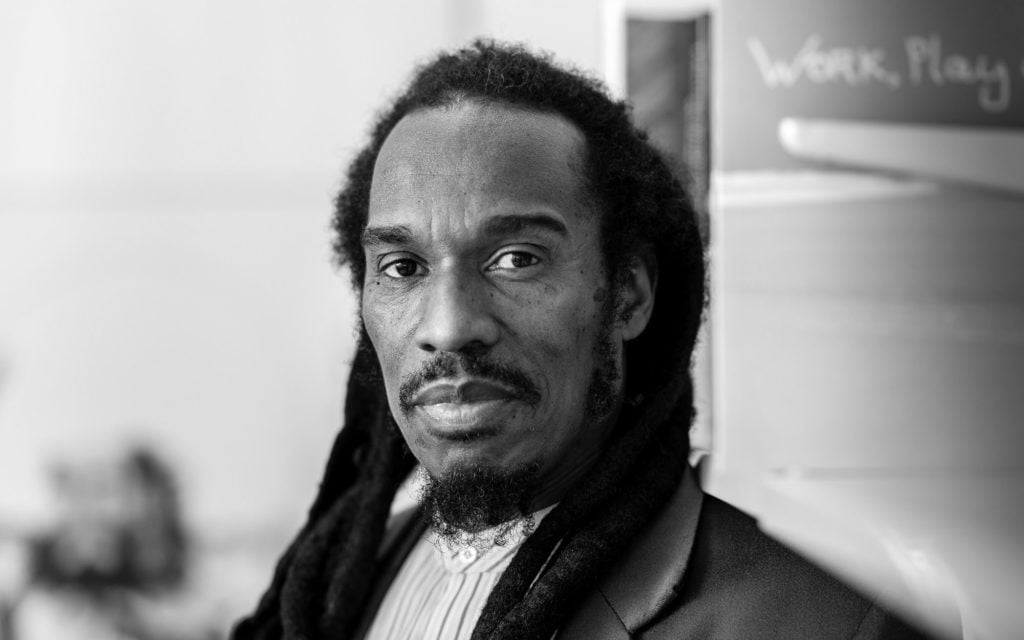
A testimonial by poet and writer Benjamin Zephaniah
I got political after I suffered my first racist attack at the age of seven. I didn’t understand any political theory, I just knew that I had been wronged, and I knew there was another way. A few years later, when I was fifteen a marked police car pulled up to me as I walked in Birmingham in the early hours of the morning, three cops got out of the car, they pushed me into a shop doorway, then they beat me up. They got back into their car, and drove off as if nothing had happened. I had read nothing about policing policy, or anything on so-called law and order, I just knew I had been wronged. When I got my first job as a painter, I had read nothing on the theory of working class struggles or how the rich exploited the poor, but when my boss turned up every other day in a different supercar, and we were risking our lives up ladders and breathing in toxic fumes, I just knew I had been wronged.
I grew up (like most people around me) believing Anarchism meant everyone just going crazy, and the end of everything. I am very dyslexic so I often have to use a spellchecker or a dictionary to make sure I’ve written words correctly. I was hearing words like Socialism and Communism all the time, but even the Socialists and Communists that I came across tended to dismiss Anarchists as either a fringe group, who they always blamed if there was trouble on demonstrations, or dreamers. Even now, I just checked a spellchecker and it describes Anarchism as chaos, lawlessness, mayhem, and disorder. I like the disorder thing, but for the ‘average’ person, disorder does mean chaos, lawlessness, and mayhem. The very things they’re told to fear the most.
The greatest thing I’ve ever done for myself is to learn how to think for myself. I began to do that at an early age, but it’s really difficult to do that when there are things around you all the time telling you how to think. Capitalism is seductive. It limits your imagination, and then tells you that you should feel free because you have choices, but your choices are limited to the products they put before you, or the limits of your now limited imagination. I remember visiting São Paulo many years ago when it introduced its Clean City Law. The mayor didn’t suddenly become an Anarchist, but he did realise that the continuous and ubiquitous marketing people were subjected to was not just ugly, but distracting people from themselves. So more than 15,000 marketing billboards were taken down. Buses, taxis, neon and paper poster advertisements were all banned. At first it looked a little odd, but instead of either looking at, or trying not to look at advertising broads, I walked, and as I walked I looked around me. I found that I only purchased what I really needed, not what I was told I needed, and what was most noticeable was that I met and talked to new people every day. These conversations tended to be relevant, political, and meaningful. Capitalism keeps us in competition with each other, and the people who run Capitalism don’t really want us to talk to each other, not in a meaningful way.
I’m not going to go on about Capitalism, Socialism, or Communism, but it is clear that one thing they all have in common is their need for power. Then to back up their drive for power they all have theories, theories about taking power and what they want to do with power, but therein lies the problem. Theories and power. I became an Anarchist when I decided to drop the theories and stop seeking power. When I stopped concerning myself with those things I realised that true Anarchy is my nature. It is our nature. It is what we were doing before the theories arrived, it is what we were doing before we were encouraged to be in competition with each other. There have been some great things written about Anarchism, and I guess that’s Anarchist theory, but when I try to get my friends to read these things (I’m talking about big books with big words), they get headaches and turn away. So, then I turn off the advertising (the TV etc.) and sit with them, and remind them of what they can do for themselves. I give them examples of people who live without governments, people who organise themselves, people who have taken back their own spiritual identity – and then it all makes sense.
If we keep talking about theories then we can only talk to people who are aware of those theories, or have theories of their own, and if we keep talking in the round about theories we exclude a lot of people. The very people we need to reach, the very people who need to rid themselves of the shackles of modern, Capitalistic slavery. The story of Carne Ross is inspiring, not because he wrote something, but because he lived it. I love the work of Noam Chomsky and I love the way that Stuart Christie’s granny made him an Anarchist, but I’m here because I understand that the racist police who beat me have the state behind them, and the state itself is racist. I’m here because I now understand that the boss-man who exploited me to make himself rich didn’t care about me. I’m here because I know how the Marrons in Jamaica freed themselves and took to the hills and proved to all enslaved people that they (the Marrons), could manage themselves. Don’t get me wrong, I love books (I’m a writer, by the way), and I know we need people who think deeply – we should all think deeply. But my biggest inspirations come from everyday people who stop seeking power for themselves, or seeking the powerful to rescue them, and they do life for themselves. I have met people who live Anarchism in India, Kenya, Jamaica, Ethiopia, and in Papua New Guinea, but when I tell them they are Anarchists most will tell me they have not heard of such a word, and what they are doing is natural and uncomplicated. I’m an Anarchist because I’ve been wronged, and I’ve seen everything else fail.
I spent the late seventies and the eighties living in London with many exiled ANC activists – after a long struggle Nelson Mandela was freed and the exiles returned home. I remember looking at a photo of the first democratically elected government in South Africa and realising that I knew two thirds of them. I also remember seeing a photo of the newly elected Blair (New Labour) government and realising that I knew a quarter of them, and on both occasions I remember how I was filled with hope. But in both cases it didn’t take long to see how power corrupted so many members of those governments. These were people I would call and say, “Hey, what are you doing?”, and the reply was always something along the lines of, “Benjamin, you don’t understand how having power works”. Well I do. Fuck power, and lets just take care of each other.
Most people know that politics is failing. That’s not a theory or my point of view. They can see it, they can feel it. The problem is they just can’t imagine an alternative. They lack confidence. I simply blanked out all the advertising, I turned off the ‘tell-lie-vision’, and I started to think for myself. Then I really started to meet people – and, trust me, there is nothing as great as meeting people who are getting on with their lives, running farms, schools, shops, and even economies, in communities where no one has power.
The five year delay in making a statement on the James Jones’ report is the latest example of Government complacency in responding to the suffering long endured by Hillsborough bereaved families and survivors. Following the publication of two extensive reports on the disaster in 1990 and 1995, in 1997 Howard Davis and I published a Home Office commissioned report ‘Beyond Disaster’. Its key recommendation was to establish a Charter for the Bereaved. Its 53 detailed recommendations focused on central and local government responses and obligations in the aftermath of tragedies, the need for integrated organisational structures for inter-agency cooperation, together with specialist crisis support for the bereaved and survivors. The Report was shelved.
In 2012 the findings of Hillsborough Independent Panel Report, for which I headed the research and was primary author, brought a ‘double apology’ from the then Conservative Prime Minister David Cameron, a new criminal investigation and new inquests. The latter reversed the verdicts of accidental death, finding that all who died had been killed unlawfully while attributing primary responsibility to the South Yorkshire Police and exonerating fans of any blame.
Since then it has taken eleven years for the Government to respond and seven years since the James Jones’ report. Yet still the Government fails to address the core issues initially raised by our research 26 years ago. Yes, a quarter of a century! While 97 men, women and children died at Hillsborough, the lives of many others have been cut short as a consequence of their struggle for justice. Today constitutes yet another blow to dignified families and survivors whose determination and fortitude has given hope to so many people involved in other campaigns.’
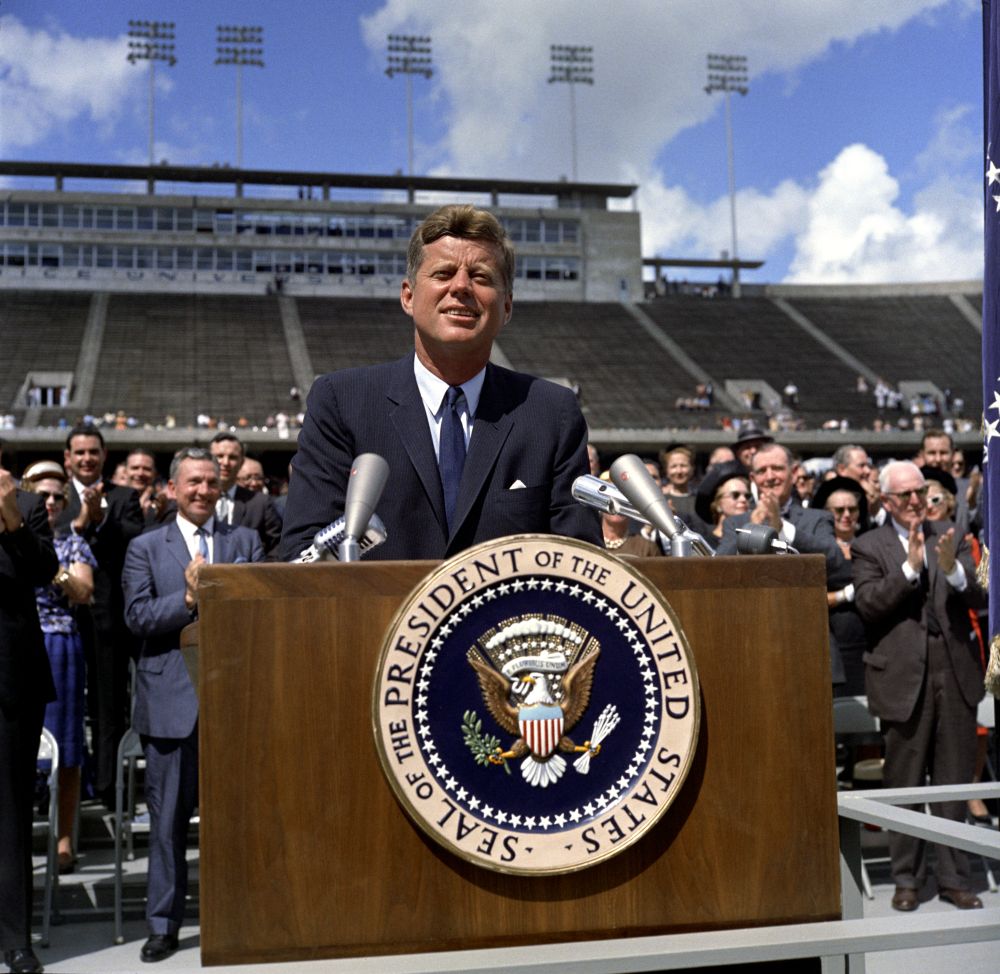
Credit “Robert Knudsen, White House/John F. Kennedy Presidential Library and Museum, Boston”
I was 16 years young at the time of the assassination of J.F. Kennedy, a gauche, apolitical member of my Grammar School’s Lower Sixth Form. I never quite believed the official version of the drama but knew no better. For a time, the UK Sunday papers carried supplements covering ‘meticulously’ the minutiae of the event. Like others, intrigued I pored over them. If anything these detailed accounts left me no wiser and probably even less convinced by what we would now call the mainstream narrative. My life moved on and I pushed doubts aside. Later, by my mid-twenties, increasingly involved in Left debate and activity, a would-be revolutionary, I recollect little or no engagement with the significance of the President’s death. Much later I began to notice that the mere mention of his murder was scornfully dismissed as evidence of paranoia, that you were losing your grip. The tragedy was long gone. Scrutinising what happened seemed an obsessive, indulgent distraction from the politics of the day. In truth, it’s only in the last four years or so that escaping from my Left bubble I have revisited the times I have lived through and the strengths and weaknesses of my analysis thereof. Sometimes, faced with my take on world-shattering events, I’ve been forced to acknowledge my profound ignorance. One of those moments is to be traced to Dallas in 1963.
During this recent period of rampant intellectual and ideological promiscuity, I discovered, amongst others a bedfellow in the person of Edward Curtin, whose book, ‘Seeking Truth in a Country of Lies’ was revelatory. He describes himself as ‘a writer, researcher, and former professor of sociology, poet, essayist, journalist, novelist….writer – beyond a cage of categories’. I’m not always on the same page with him, however eloquently expressed. He is deeply religious. I remain still an irreconcilable atheist. However, I both welcome and fear the doubts he sows. A couple of years ago he put together a powerful summary of the prosecution case that the CIA murdered JFK. In a post on his blog today he urges us to read anew or afresh the argument. Even as I encourage you to do so I wonder, even suspect that to do so will be seen as proof of my further descent into an underworld, a Hades of conspiracy.
Over to Edward Curtin
What is the truth, and where did it go? Ask Oswald and Ruby, they oughta know “Shut your mouth,” said the wise old owl Business is business, and it’s a murder most foul . . . . . . . . . . . . . . . . . . . . . . . . . . . . . . . . . . . . . . Don’t worry, Mr. President Help’s on the way Your brothers are coming, there’ll be hell to pay Brothers? What brothers? What’s this about hell? Tell them, “We’re waiting, keep coming” We’ll get them as well
Why President Kennedy was publicly murdered by the CIA sixty years ago has never been more important. All pseudo-debates to the contrary – including the numerous and growing claims that it was not the U.S. national security state but the Israelis that assassinated the president, which exonerates the CIA – the truth about the assassination has long been evident. There is nothing to debate unless one is some sort of intelligence operative, has an obsession, or is out to make a name or a buck. I suggest that all those annual JFK conferences in Dallas should finally end, but my guess is that they will be rolling along for many more decades. To make an industry out of a tragedy is wrong. And these conferences are so often devoted to examining and debating minutiae that are a distraction from the essential truth.
As for the corporate mainstream media, they will never admit the truth but will continue as long as necessary to titillate the public with lies, limited hangouts, and sensational non-sequiturs. To do otherwise would require admitting that they have long been complicit in falsely reporting the crime and the endless coverup. That they are arms of the CIA and NSA.
The Cold War, endless other wars, and the nuclear threat John Kennedy worked so hard to end have today been inflamed to a fever pitch by U.S. leaders in thrall to the forces that killed the president. President Joseph Biden, like all the presidents that followed Kennedy, is JFK’s opposite, an unrepentant war-monger, not only in Ukraine with the U.S. war against Russia and the U.S. nuclear first-strike policy, but throughout the world – the Middle East, Africa, Syria, Iran, and on and on, including the push for war with China.
Nowhere is this truer than with the U.S. support for the current Israeli genocide of the Palestinians in Gaza, a slaughter also supported by Robert Kennedy, Jr., who, ironically, is campaigning for the presidency on the coattails of JFK and his father Senator Robert F. Kennedy, who would be appalled by his unequivocal support for the Israeli government. By such support and his silence as the slaughter in Gaza continues, RFK, Jr. is, contrary to his other expressed opinions, supporting a wide range of war-related matters that involve the U.S.- Israel alliance, which is central to the military-industrial forces running U.S. foreign policy. To say this is dispiriting is a great understatement, for RFK, Jr., a very intelligent man, knows that the CIA killed his uncle and father, and he is campaigning as a spiritually awakened man intent on ending the U.S. warfare state, something impossible to accomplish when one gives full-fledged support to Israel. And I believe he will be elected the next U.S. president.
The Biden administration is doing all in its power to undo the legacy of JFK’s last year in office when on every front he fought for peace, not war. It is not hard to realize that all presidents since John Kennedy have been fully aware that a bullet to the head in broad daylightcould be their fate if they bucked their bosses. They knew this when they sought the office because they were run by the same bosses before election. Small-souled men, cowards on the make, willing to sacrifice millions to their ambition.
I believe that the following article – my final one on this matter – which I published two years ago, is worth reading again if you have once done so, and even more important if you have never read it. It is not based on speculation but on well-sourced facts, and it will make clear the importance of President Kennedy and why his assassination lay the foundation for today’s dire events. In this dark time, when the world is spinning out of control, the story of his great courage in the face of an assassination he expected, can inspire us to oppose the systemic forces of evil that control the United States and are leading the world into the abyss.
Freedom is always and exclusively freedom for those who think differently” – Rosa Luxemburg
On the subject of failing to put words on paper, the cliche is at hand. I am suffering from writer’s block, a psychological inability to write. One definition suggests this has to do with having nothing to say. Such a judgement scratches a raw nerve, its implication too close for comfort. Indeed I often feel wearily repetitive and stale. Haven’t others said much the same thing and better? Haven’t I said much the same thing and forgotten saying it? And, even when I think I’ve said it well, how many have noticed? Hence the obvious, why am I so bothered about the paralysis, both in thought and action?
Well, one reason for sure is that I seem to compose endlessly, from dawn to dusk and then in my dreams. Walking the dog, sitting on the terrace or in the kafeneio, or riding my bike, I string sentences and plait paragraphs into captivating prose, only to see the words slip from my grasp. This hardly matters. Unlike the novelist, I am not searching for an unexpected, yet unknown twist in a story. Unlike the poet, I am not seeking a subtle alliterative allusion.
The crude and sophisticated thoughts, sometimes pounding, other times petalling the interior of my head are here, there and everywhere. They are the stuff of gossip, of idle and animated conversations, of the media in all its forms, of propaganda, both good and bad. Whatever our education such ruminations are a messy mix of the psychological, social and political. All of us in one way or another psychologise, offering opinions about why people, including ourselves, say what they say, do what they do.
In my case the psychological, social and political explanations to hand owe still a great deal to my chance recruitment in the mid-70s to a small Trotskyist organisation, the Marxist Workers Group. There I tussled with the inextricable relationships between class, gender, race and sexuality – long before if I might say so, the appearance of intersectionality. Privileged later to spend a year in Higher Education I sought with Marilyn Taylor to sketch the outline of a grounded Marxist-Feminist psychology, which situated the unique individual within the constraints of her circumstances. The project remains incomplete but snatches of our exploration are to be heard in the tinnitus of voices accompanying me as I wend my way along the paths of my daily existence.
For now, though, I need to emphasise, that, although seen as something of a maverick, I saw myself as a man of the Left. Indeed I saw myself pretentiously as more Left than the majority of the Left. My increasing hostility to the authoritarian inclinations of the traditional Left, both social-democratic and revolutionary led me to seek out the dissident writings of the German, Dutch and Italian Left, dismissed by Lenin as ‘infantile’, the works of anarchists such as Bakunin and Kropotkin and somewhat later the autonomous provocations of Castoriadis. Steadfast I was always enamoured with Rosa Luxembourg, her overflowing humanity. In doing so I was fortunately able to discuss the importance or otherwise of these thinkers for over two decades in a pluralist caucus of activists, known in one of its incarnations as the Critically Chatting Collective. The group included Malcolm Ball and Steve Waterhouse, to whom this website is dedicated and I can still see them outside in the garden of Exeter Community Centre arguing passionately the toss. I wish so much they were here to take me to task for my ramblings.
Within Youth Work, which continued to occupy much of my time after ‘retirement’, my writing and activity remained rooted in a defence of a radical practice with social and political justice at its heart but one, which was ‘volatile and voluntary, creative and collective – an association and conversation without guarantees’. It was a direct refusal to bow to the diktat of behaviourism, the imposition of prescribed scripts and predictable, necessary and expected outcomes. Without quite knowing, it was a rejection of impact capitalism. Thus, almost to the dying days of In Defence of Youth Work, I focused on the destructive legacy of a destitute neoliberalism and the frightening dominance of behavioural psychology at all levels of practice and policy in welfare and education. I continued to hold to a view I expressed in 2008 that we were in danger of ‘sleepwalking into authoritarianism’. And I feared the Left was not unduly concerned. In fact, in retrospect, it was undeniably implicated.
Nevertheless, not being a purist in practice, I lent my genuine if cautious support to what now seem to be the dying moments of left social democracy, namely Corbyn’s Labour Party in the UK and SYRIZA in Greece, where I happened to live. Corbyn fell foul of foes within the Party itself and the media, not least the nauseous Guardian, hung him on the absurd charge of anti-semitism. Tsipras, the leader of SYRIZA, despite referendum support to resist the demands of the International Monetary Fund and its allies, capitulated. The night previous to his treachery my small Cretan village was abuzz with an uncertain feisty excitement. Within hours this gave way to a cynical disillusionment that persists to this very day.
During 2019 I was reading analyses that argued the economic crisis was much worse than in 2008. Quantitative easing, the relentless printing of money for money’s sake could not be sustained and needed to be hidden. What was the ruling class, the elite going to do? True to form the elite has gone to war. Historically the strategy has served them well. And the enemy, whatever the appearance of things, has always been the working class, the peasantry, the dispossessed, the oppressed and exploited.
Crisis capitalism was the order of the day. First, a respiratory virus of less than existential concern was used to manufacture unprecedented global consent by way of fear-mongering propaganda for an astonishing authoritarian programme of restrictions on personal and social liberties. The Left in the UK approved, simply frustrated that it was not the government of the moment. Immune to the soaring profits of Big Pharma, it would have been even tougher. As this threat to humanity faded, the virus shrank into the shadows and the climate crisis took centre stage. Unless fossil fuels were sorted, by whom and by when was not that clear, 2030 or 2050, Armageddon was at hand,. As best I can see, many in the better-off parts of the world are less than convinced, for those less well-off so what? However, if this catastrophic scenario is not inducing sufficient angst there is always proper, bombastic war – missile after missile, death after death. Entering from the Left or Right, it matters not which entrance, the conflicts in the Ukraine and Palestine boost immeasurably the profits of the armaments industry and serve to buttress the USA’s and its allies’ desire to retain global influence whilst dismissing the slaughter of the innocents and the views and needs of folk back home, wherever that may be. Democracy is a word to be cynically abused, a rhetorical device devoid of meaning.
Of course, these are sweeping assertions, replete with contradictions, which I acknowledge and would want to discuss. Indeed I have written about these, especially with respect to COVID, without any serious engagement with my mutterings. The main point I’m clumsily trying to make is that since COVID I have broken out of my Left bubble. I have followed, read and conversed with figures across the political spectrum, critical of the authoritarian arrogance of the elite, the ruling class and its army of compromised, careerist technocrats and its team of amoral, behaviourist managerial manipulators.
I’ve found these relationships, their contempt for the deceitful discourse of ‘misinformation’ spread by all of the mainstream media thought-provoking and heartening without knowing where any of it is going. I have gained a great deal from these encounters. Little more than a month ago I would have argued that an open and questioning dialogue across ideologies premised on a challenge to hierarchy, authoritarianism and the spectre of global governance is both possible and crucial. I still do but my naive optimism has been dented. Suddenly the Israeli/Palestine’s inevitable eruption has seen free speech advocates of the past few years rush to condemn and silence pro-Palestinian sentiment. It saddens me into despair.
Glyka
And thus on tomorrow’s favoured ramble through the olive groves, I will hear another swish of doubt amidst the swirl of thoughts between my ears. What the fuck is it all about and what can I say or do? Then the gritty voice of the goatherd and the tinny clanging of their bells will interrupt my self-centredness and my uncertainty. We will exchange greetings as we would have centuries before. Such ordinariness is heart-warming. It lasts for seconds yet forever. And, I know, as best I can, I should carry on struggling with uncertainty. And then, my dearest Glyka wags her tail and I know for certain she loves me and I love her. Time to head home for breakfast.
POSTSCRIPT
In lieu of any original offering from me, I’m determined to start sharing links to interesting and provocative articles you might well miss. I’m off for a week but hope to fulfil this promise soon.
Nine years ago, for a brief period, IDYW was aware of a group, Gaza Youth Break Out [GBYO]. We had stumbled over its Facebook page, which is now long gone. As it was, not to our credit, we lost touch.
On the 19th of July, 2014 we posted the following on our website.
Gaza Youth Speak Out: Enough is Enough!
The group, Gaza Youth Break Out [GBYO], unfailingly brave in their criticisms of both Fatah and Hamas within Palestinian politics, send a message of anguish in the face of the Israeli assault.
We do not want to hate, we do not want to feel all of these feelings, we do not want to be victims anymore. ENOUGH! Enough pain, enough tears, enough suffering, enough control, limitations, unjust justifications, terror, torture, excuses, bombings, sleepless nights, dead civilians, black memories, bleak future, heart-aching present, disturbed politics, fanatic politicians, religious bullshit, enough incarceration! WE SAY STOP! This is not the future we want!
A fortnight later we linked to an opinion piece in the Guardian by Paul Mason, then the economics editor of Channel Four News, entitled ‘Gaza is not as I expected. Amid the terror, there is hope’. Documenting the oppressive conditions inside Gaza he noted,
I have lost track of how many times I’ve met a young guy, 18 or 19 years old, proud not to be a fighter, a militant, or a duck-and-dive artist on the street. When you ask what his job is, the common answer is “carpenter”. Working with wood – not metal or computer code – is the limit of what the blockade has enabled the skilled manual worker here to achieve.
Faced with such hopelessness, naturally, many become resigned: “Living is the same as being dead” is a phrase you hear among young men. It is the perfect rationale for the nihilist military organisation some choose to join. But its opposite is the resourcefulness that rewires a house after its front has been blown off; that sits on the carpet making bread on a hot pan after a home has been reduced to dust.
Almost a decade later, hope is in short supply – the resourcefulness exhausted?
Meanwhile, Jonathan Cook continues to offer his sense of what’s going on in Israel, Palestine and far beyond.
As Western politicians line up to cheer on Israel as it starves Gaza’s civilians and plunges them into darkness to soften them up before the coming Israeli ground invasion, it is important to understand how we reached this point – and what it portends for the future.
In a different vein, Charles Eisenstein explores making the impossible happen through the rejection of vengeance.












 CHATTING CRITICALLY