Musings on the politics of youth work, community work and society at large – dedicated to the memory of Steve Waterhouse, Malcolm Ball and Sue Atkins, great youth workers, comrades and human beings
Against the horrifying historical backcloth of abuse in Mother and Baby institutions in the Irish Republic and the Six Counties, Phil Scraton reflects on the creation of ‘truth investigations’ as a grounded alternative to the fundamental limitations of State Inquiries.
Thanks to irishcentral.com
Then they took her …’ Disappearance, Loss and Searching: Mother and Baby Institutions, Magdalene Laundries and Workhouses.
Mothers
‘Trauma is the biggest harm that’s been caused. Imagine yourself giving birth being let feed and wash the baby then people coming, and taking her, then 40/50/60/70 years of questioning yourself. What is she doing now? Who is she? Like wondering if she had a good life. It’s a void that can never be filled. Always being afraid. What if they come take my other kids?’
‘The lack of empathy, the insulting way the nuns treated me and left me with a lifelong complex and inferior feelings of myself. Doctor or social worker didn’t explain the rigid rules and verbal abuse, as well as physical abuse taking place daily in the Magdalene home.’
‘The impact this has had on my life and the difficulties I have had dealing with my emotions on such a delicate part of my life. The lifelong loss of my own mother, my brothers and the endless hours of worry about where I belonged in life.’
Children
‘The trauma of realising late in life as an adoptee that the adoption may not have been freely entered into by your birth mother, adding to the sense of guilt and pain at being given up without the true consent of your own mother.’
‘The impact on me has been lifetime. I’m 50 years of age and I still struggle with it. Psychologically it’s devastating. So many types of harm – physical, mental, psychological, sexual.’
‘The lasting damage done to my mental health overshadowed my life and the lives of my family.’
‘It has to end with us as we do not want to pass this horrible legacy on to the next generation.’
These reflective, moving testimonies are spoken by those most profoundly impacted by institutional policies and practices operating to mask harm perpetrated on young mothers through forced removal of their babies. The pain of loss is mirrored by the pain of not-knowing. As mothers and their children – now adults – navigate daily life often separated by continents, cultures and language, they reflect on hidden histories and unknown possibilities. While dealing with stigma and shame associated with the label of illegitimacy – a ‘non-legitimate’ person – many were encouraged to believe they had been unwanted by their birth mothers.
In 2021 Ireland’s Mother and Baby Homes Commission of Investigation published its final report. It revealed that between 1922 and 1998 in eighteen institutions, 56,000 women and girls, some as young as 12, birthed 57,000 babies. Within the institutions, fifteen per cent of mothers and 9,000 babies died of malnutrition or illness. Without adult consent many were used for vaccination trials and up to 1,000 were trafficked. Commenting on the discovery of a mass grave in Tuam, County Galway, Taoiseach Enda Kenny stated mothers had been ‘treated as some kind of sub- species … took their babies, and gifted them, sold them, trafficked them, starved them, neglected them, denied them to the point of disappearance from our hearts, our sight, our country … from life itself.’ Yet this was not the full story. A further 25,000 babies were born in County Homes, their fate excluded from the Commission’s remit.
In Northern Ireland’s six counties between 1922 and 1990, 14,000 girls and women gave birth in Mother and Baby Institutions, Magdalene Laundries and Industrial Homes. A third were under 19, the youngest aged 12. As in the Irish Republic, many were survivors of persistent sexual abuse, incest and rape within families and by neighbours. A quarter of surviving babies were adopted, most without their mothers’ consent, their destination unknown. Some mothers remained incarcerated in Magdalene Laundries, working without remuneration in harsh conditions.
‘On my hands and knees, I scrubbed the tiled floors. They were already clean. I held my belly with my other hand. She stood over me, chastised me, called me a sinner. The birth was so painful. A wee while after, I was told to dress my baby in clothes that had been sent in. I kissed her, they took her. I lay on my bed howling, the empty cot alongside me.’
The key question remains: who knew? Those who ran the institutions, and profited from trafficking, doctors, health visitors, social workers, clergy, non-government organisations and a wider public were all aware. The rights of mothers and their children were violated systematically through an established administrative process. How was this institutionalised process accepted, legitimated? Writing on the hidden history of aboriginal oppression in Queensland, Australia, Henry Reynolds recalls meeting two young aboriginal girls sitting on a filthy mattress in a police cell floor surrounded by shards of glass. It was 1968. They had a bucket for defecation, the air foul. The young, newly-appointed university lecturer, was shocked by the disproportionate punishment inflicted by teachers. Yet within the white community, it was rationalised. He asked, ‘If this could be done to children, whatever punishments were meted out to adults? Why didn’t I know? Why hadn’t I been told?’
His questions relate directly to how sociological, historical, political and deep philosophical analyses frame what is considered reliable, ‘scientific’ knowledge regarding the legitimacy of state and non-state institutions. Central to critical social analysis is how political-economic power and the philosophical ideas that underwrite them is sustained by what Michel Foucault termed ‘regimes of truth’. Similar to ‘ways of seeing’ art, regimes of truth rely on shared viewing and acceptance that amounts to intellectual collusion. Refuting deeply entrenched mainstream assumptions is the principal objective of all critical analysis, creating dissenting accounts, generating alternative discourses. It is achieved by being there, by bearing witness.
Gathering testimonies alongside those who have endured cruelty in harsh institutional regimes is essential to truth recovery. Inevitably, people’s memories fade or are imprecise. Emerging from personal testimonies, however are consistent themes, institutional practices and named individuals involved in vindictive, hurtful, occasionally brutal acts. They are known within institutions, embedded in their operation and philosophically rationalised in the name of civility. Through these consistent revelations as C Wright Mills observed, the truth and the deceit of regimes become apparent, contextualising personal troubles as public issues. Shared personal experiences provide foundations to social-culltural histories of moment and place. Accumulating shared personal truth from women enduring gendered marginalisation is the substance of the German socialist-feminist Frigga Haug’s pursuit of archiving ‘memory work’. On such solid experiential foundations those who suffered in institutions whose lives have remained blighted by the harsh realities they endured, gain a measure of solace from shared memorialisation. The importance of accumulated testimonies, however, also extends to formal recognition through official inquiries.
Much has been written critiquing the limitations of public inquiries in hearing selective evidence, becoming battlegrounds for vested interests committed to escaping liability while marginalising the experiences of those whose lives should be the sole priority. In our work, we propose ‘truth investigations’ as an alternative form of inquiry through which independent panels with extensive expertise gather oral and written evidence from victims/survivors without cross-examination. The aggregated truth developed through this process then feeds into a full statutory inquiry. This model, derived in my work heading the research for the Hillsborough Independent Panel, now has been adopted in Northern Ireland. Our Independent truth Recovery Panel made 80 recommendations, prioritising access for victims/survivors to all personal records; support in giving in-depth, confidential interviews reflecting their experiences; redress, reparation and compensation; full apology from State and all organisations involved accompanied by a process of memorialisation; and the establishment of a permanent, dedicated truth archive.
An integrated truth investigation prioritises ‘knowing’ and ‘memorialising’ through gathering survivors’ and relatives’ testimonies. Establishing an archive to ensure survivors, relatives, researchers and the public have negotiated access to records, including institutions’ operational practices, lays foundations for investigating human rights violations while providing the means and understanding through which institutions and individuals will be held to account. Such questions of justice take us into the heart of our deepest held concerns, demonstrating that the experiential cannot be separated from the political. Processes of public recognition have the potential to lift the veil of shame and silence imposed on mothers and the children who were disappeared.
Our work, alongside those who have suffered for so long in silence, illustrates the significance of critical research not only in truth recovery, but also as resistance to institutional power; it exists alongside those for whom such truth systematically has been denied. Through the work of collective inquiring minds, bearing witness to private suffering while revealing cruelties of institutional practices, shame can be lifted from women who have suffered in silence. This is the potential of a more aggregated conception of truth at the heart of alternative accounts, providing solid foundations for public recognition of social injustice. Thus State and all other institutions involved are held to account as the institutional abuse of power is exposed, securing social and cultural rights as exposing intolerable practices lay the foundations for a new form of questioning. Clearly there remain issues to be resolved regarding the legal process, together with full disclosure of the institutional denial of international rights and their purposeful integration and silencing within institutional regimes of power. Yet, as Deena Haydon and I concluded elsewhere, a continuing commitment to securing rights and justice requires a ‘fundamental shift in structural relations and the determining contexts of power which marginalize and exclude [victims/survivors] from effective participation in the processes that govern their lives’.
The Opening testimonies are taken from the Report of the Independent Truth Recovery Panel: Mahon, D., O’Rourke, M., and Scraton, P. (2021) Truth, Acknowledgement and Accountability: Mother and Baby Institutions, Magdalene Laundries and Workhouses in Northern Ireland. Belfast: Truth Recovery Design Panel/ NI Executive. A version of the above is published in the journal, The Philosopher, Special Issue on Violence, Autumn 2024.
Phil Scraton is Emeritus Professor, School of Law, Queen’s University, Belfast
After her retirement in 1998, Sue Atkins threw herself into the development of the Youth Association South Yorkshire
My friend and colleague Susan Atkins, who has died aged 86, was a highly respected youth worker in Sheffield who also played, over many decades, a national role in the validation of youth and community work training courses in higher education.
Sue was destined to be a youth worker. Born in Uxbridge, west London, she was the daughter of Kit and Paul Beaven, who ran a thriving open-access youth club that drew the attention of Jennie Lee, Labour’s minister for the arts, through its combination of informal social space with drama, music and art.
After leaving Bishopshalt school, Sue forged a reputation in the local amateur theatre group the Argosy Players, holding down an eclectic variety of daytime jobs to finance her thespian talent. In later years she would depict youth work as an unfolding drama, an improvised script, the authors of which were young people and youth workers as animated equals.
In 1966, she barely “survived” the one-year qualifying course at the new National College for Youth Leaders in Leicester. This experience of higher education that faltered on the edge of failure stayed with her for the rest of her remarkable career – and sometimes Sue expressed herself with a feigned anti-intellectualism.
In 1967, she accepted what was intended to be a temporary post in Sheffield as a community-based youth worker with immigrants. She was never to leave, and worked in tandem with Mike Atkins, soon to be the city’s race adviser, whom she married in 1969. Her pioneering work with the Afro-Caribbean community created a responsive youth service within which young people prospered, often becoming education and welfare practitioners in their own right.
She was a dynamic presence within the Community and Youth Workers’ Union (now part of Unite the Union), embracing a caucusing structure that amplified the voices of women, and black, gay and part-time workers. Serving as president of the union in the mid-1980s, she was a leading negotiator for improved wages and conditions.
After her retirement in 1998, Sue threw herself into the development of YASY (the Youth Association South Yorkshire), and, from 2009, she was energised by the In Defence of Youth Work campaign. She identified passionately with its vision of youth work as “volatile and voluntary, creative and collective – an association and conversation without guarantees”. Dubbing herself teasingly as “a woolly Marxist optimist”, she was a socialist-feminist and supported Jeremy Corbyn’s leadership of the Labour party.
In the last of 20 annual reports to her beloved YASY, she ended: “For me, Youth Work has always sought to enable and facilitate young people to test, explore and flourish, to discover their hopes and dreams and find their focus and direction.” The day before she died Sue was in a meeting called to design a training programme for volunteers. Throughout, she was devoted to her life’s work.
Sue is survived by Mike, a stepdaughter, Kiya, and grandson, Isaiah, and her brother, Peter.
A month ago, with some trepidation, it was agreed that our next Chatting Critically meeting would focus on the Israel/Palestine situation. It will take place on Wednesday, January 10th in the ‘Elpida’ kafeneio, Gavalohori, starting at 10.30 a.m.
As the coordinator of the group, I wanted to put together something of an introduction to help the discussion along. However, I’ve found this increasingly difficult as the tragedy unfolds. I’m conscious too that my allegiance to the Palestinian cause goes back to the mid-1970s. I’m hardly impartial.
Thus I’m doing no more than posing a few questions to think about before we get together, supplemented by links to a range of articles, the first of which is by the great independent journalist, John Pilger, who sadly died on New Year’s Eve.
To what extent have we a grasp of the historical background to the conflict? The state of Israel was only founded in 1947 based on expelling thousands of Palestinians from their homeland. How was this justified and who were the players on the world stage, ensuring that this seizure of land happened?
Israel’s establishment as an explicitly Jewish state is a primary point of contention, with many of the state’s critics arguing that this by nature casts non-Jews as second-class citizens with fewer rights. The 1950 Law of Return, for example, grants all Jews, as well as their children, grandchildren, and spouses, the right to move to Israel and automatically gain citizenship. Non-Jews do not have these rights. Palestinians and their descendants have no legal right to return to the lands their families held before being displaced in 1948 or 1967. Deep-rooted structural and social discrimination confirms the second-class status of Arabs within Israel, leading to the charge that Israel is an apartheid state? Is this claim legitimate?
Does the appalling persecution of Jews across the centuries – for a diversity of reasons, not least in the early 20th century because they were seen as socialists. even communists and the obscenity of the Holocaust, the Final Solution – mean that Israel is exempt from moral or political criticism of its actions today – acknowledged war crimes or indeed perceived genocide?
It is generally acknowledged at an international level, even if this is empty of any real meaning that the Palestinian Territories are prison camps. Given the length and intensity of the incarceration, why the surprise and shock when some of the prisoners plan and execute a violent escape. Isn’t such a brutal ‘slave revolt’, as Norman Finkelstein puts it, an inevitable consequence of Israel’s inhuman policies. And is the appropriate answer of the prison guards, the execution of the inmates left therein?
And, finally, on a personal note, how can we allow the closing down of debate by the mere accusation of anti-semitism or ‘Jew-hating’? Amongst my greatest inspirations and influences are to be found composers, Mahler, Mendelsohn and Schoenberg, artists, Menuhin and Bernstein, intellectuals, Freud and Chomsky, revolutionaries, Marx, Trotsky and Rosa Luxemburg. All were Jewish. In embracing and criticising their artistic, social and political contributions I recognised but didn’t obsess about their Jewishness. In much the same way I don’t think much about Christianity when listening to Haydn or Bruckner. I’m an atheist but I neither hate Jews nor Christians. I simply disagree.
There are many more questions, for sure.
In directing you to interesting and challenging links I cannot but begin with the late John Pilger’s very last article, written in early November, entitled. ‘We are Spartacus’
“Secretive power loathes journalists who do their job, push back screens, peer behind façades, lift rocks. Opprobrium from on high is their badge of honour.”
He opens::
Spartacus was a 1960 Hollywood film based on a book written secretly by the blacklisted novelist Howard Fast, and adapted by the screenplay writer Dalton Trumbo, one of the “Hollywood 10” who were banned for their “un-American” politics. It is a parable of resistance and heroism that speaks unreservedly to our own times.
Both writers were Communists and victims of Senator Joseph McCarthy, chairman of the Government Operations Committee and its Permanent Subcommittee on Investigations of the US Senate, which, during the Cold War, destroyed the careers and often the lives of those principled and courageous enough to stand up to a homegrown fascism in America.
“This is a sharp time, now, a precise time…”, wrote Arthur Miller in The Crucible, “We live no longer in the dusky afternoon when evil mixed itself with good and befuddled the world”.
There is one “precise” provocateur now; it is clear to see for those who want to see it and foretell its actions. It is a gang of states led by the United States whose stated objective is “full spectrum dominance”. Russia is still the hated one, Red China the feared one.
From Washington and London, the virulence has no limit. Israel, the colonial anachronism and unleashed attack dog, is armed to the teeth and granted historical impunity so that “we” the West ensure the blood and tears never dry in Palestine.
British MPs who dare call for a ceasefire in Gaza are banished, the iron door of two-party politics closed to them by a Labour leader who would withhold water and food from the children.
In expressing his undying admiration for the endeavours of David McBride and Julian Assange in exposing the crimes committed under the banner of the ‘Global War on Terror’, he closes:
Their bravery has allowed many of us, who might despair, to understand the real meaning of a resistance we all share if we want to prevent the conquest of us, our conscience, our self respect, if we prefer freedom and decency to compliance and collusion. In this, we are all Spartacus.
Spartacus was the rebellious leader of Rome’s slaves in 71-73 B.C. There is a thrilling moment in the Kirk Douglas movie Spartacus when the Romans call on Spartacus’s men to identify their leader and so be pardoned. Instead hundreds of his comrades stand and raise their fists in solidarity and shout, “I am Spartacus!”. The rebellion is under way.
Julian and David are Spartacus. The Palestinians are Spartacus. People who fill the streets with flags and principle and solidarity are Spartacus. We are all Spartacus if we want to be.
Nira Yuval-Davis is a diasporic Israeli Jew, Professor Emeritus, Honorary Director of the Research Centre on Migration, Refugees and Belonging (CMRB) at the University of East London. She reflects on the complexities of its start and end points, beginning:
One of the most contested issues regarding telling the story of the current war in the Middle East is about when to start it. Each narrative always has a clear starting point – if not necessarily an end point – but what is the starting point for this war? Is it the terrible massacre that Hamas fighters carried out among soldiers and civilians, Jews and non-Jews, in the South of Israel on 7 October? – the highest number of people killed in one day in the hundred years of conflict since the beginning of the Zionist settlement in Palestine – at least until that day. That’s probably where most Israelis would like to start the story.
Should I start with the ongoing massive systematic bombing, destruction, displacement and killing of thousands of Palestinians in Gaza, including thousands of children, a new Palestinian Nakba? That’s where many international protesters focus their protests.
Or I could start the narrative by telling the history of the Zionist settler colonial project, before and after 1948 and the establishment of the Israeli state. A large proportion of the Palestinian population in the Gaza strip today are 1948 refugees, and most of the settlements attacked on 7 October sit on lands where previous generations of today’s Gazans used to live, before the first Nakba.
Or maybe I should start my narrative by telling how Israeli intelligence – just like the US with the Taliban – was a cultivator of Hamas in its infancy, as part of a divide and rule policy aimed at weakening the power of the PLO; and how, until 7 October, it facilitated the rule of Hamas in Gaza by enabling the transfer of money to Hamas from Qatar via Israeli banks, so it could distribute money to people in this huge open-air prison, to maintain its control and keep the population just about surviving.
Another starting point could be the convenience of the Hamas attack and the following war for Iran and its allies, as it has put in jeopardy the anti-Iran, anti-Palestinian, so called ‘normalisation’ agreement that was soon to be signed between Israel and Saudi Arabia. In many ways, this is not just a war between Israel and Gaza, but a regional war, in which various pro-Iranian groups, from Yemen to Syria and Lebanon, are taking part in an anti-American as well as anti-Israeli war, although at the moment, at least, in a contained way.
Related to that, one could start by describing the war as a result of miscalculated wishful thinking. Hamas was hoping that Hezbollah, Iran and other forces in the Arab world would join the war in a much more total way; and Israel has been hoping that Egypt and/or the PLO would take responsibility for governing the population in Gaza instead of Hamas, and, better still, would allow them to be displaced to the Sinai desert. But these organisations and governments have learned their lessons from previous history and are not co-operating.
The timing of the war has also been convenient for Netanyahu and the Israeli government. In one day it stopped the six-month long major protest movement which was demanding the ending of the judicial coup in Israel and the resignation of Netanyahu: the leader of the opposition has joined the government and war cabinet, and all the huge protest and pro-democracy posters which were plastered all over public buildings and public spaces have been replaced with others, even larger, which say – No Left, No Right, together we’ll all win the war.
She ends:
Many of us have been taking part in protest activities against the war in Gaza and its growing human and humanitarian costs, while knowing that the issues cannot be resolved solely by an end to that war. There is a need for the end of the occupation and the de-Zionisation of Palestine/Israel into a state with equal individual and collective rights for all its residents. This seems more than ever a faraway dream, but giving up on striving for it, not keeping alive this alternative narrative, would only be much worse.
RANDA ABDEL-FATTAH explores the central and sensitive question of how the hurt experienced by People in and out of Israel, particularly those wedded to Zionism, is used to deflect us from the reality of genocide.
She ends:
My responsibility is to commit myself to the liberation of Palestine. I am confident that my fight against Zionism as a form of racism aligns with my unequivocal rejection and condemnation of antisemitism. I recognize the lethal and genocidal history of European antisemitism that produced the Holocaust and the destruction of European Jewry. I reject that because of European antisemitic racism, Palestinians must pay the price. I reject essentializing language, stereotypes, or theories that claim that there are particular traits or characteristics unique to “Jewish people” as a homogenous collective, or “being a Jew.” I defend the right of Jewish people to openly practice Judaism and freely express their religious and cultural identity. I defend the right of Jewish people to practice their faith even though I unequivocally reject and condemn Zionism as a political ideology. I do not accept that such a right can be enjoyed at the expense of Palestinian life, freedom, and self-determination.
No amount of intimidation or emotional blackmail will cower Palestinians into silence, into shrinking our voices, adjusting our language, compromising our demands and claims, or repressing our feelings. When the feelings and fragility of Zionists are used as a rhetorical shield to deflect from engaging with the moral and material reality of genocide, Palestinians are left to ask: how many of us must be killed, maimed and injured, forced from our traditional land and beloved homes, be tortured and have our schools, universities, and livelihoods destroyed, for those in power – those who have the power to stop this genocide – to say in public never again. Khallas. Enough.
A thoughtful video, which touches on whether there are solutions acceptable to all parties.
A second Nakba? What history tells us about Palestine and Israel In this episode of UpFront, we look back at the history and context leading up to the current Israel-Gaza war. Nearly two months after the October 7 attack by Hamas, Israel’s response has killed more than 14,500 Palestinians.
While many see the current conflict as a reaction to the attack that killed 1,200 people in Israel, others have pointed out that this view ignores crucial historical context and that the conflict has been ongoing for generations.
Following the 1917 Balfour Declaration which led to an influx of Jewish immigrants, the creation of Israel in 1948 saw an enormous displacement of Palestinians, in addition to the expulsion of hundreds of thousands who remain refugees to this day.
On UpFront, Mustafa Barghouti, the co-founder of the Palestinian National Initiative, and author Ghada Karmi, join Marc Lamont Hill to look back at the history of Palestine and contextualise the current war.
Like other British imperial possessions, Palestine was acquired on the cheap and under false pretences, official corruption sealing a deal doomed to end in perpetual violence.
“Zionism will fail, the experiment to which the noble Earl referred will fail, the harm done by dumping down an alien population upon an Arab country – Arab all around in the hinterland – may never be remedied…what we have done is, by concessions, not to the Jewish people but to a Zionist extreme section, to start a running sore in the East, and no one can tell how far that sore will extend.”
– British Government, Hansard, House of Lords, 21 June 1922, p. 1025
Biden’s position on Israel-Palestine does not constitute any real shift from that of Trump and thus similarly gratifies the desires of Christian Zionists.
I had no sense of this significant support for Israel in the USA.
In my last post I explained how Netanyahu played a crucial role in bolstering Hamas in order to “divide and conquer” the Palestinians and delegitimise the Palestinian National Authority — the continuation of a strategy which Israel had been pursuing, in various forms, since the 1980s.
Later in the piece, he quotes Yasser Arafat, who was the leader of the PLO at the time I was closest to what was going on in Palestine., more than thirty years ago.
“Hamas was constituted with the support of Israel. The aim was to create an organisation antagonistic to the PLO. They [Hamas] received financing and training from Israel. They have continued to benefit from permits and authorisations, while we have been limited, even [for permits] to build a tomato factory.”
When asked what he thought of “these sons of Palestine who blow themselves up and spread death among Israeli civilians”, Arafat answered: “Israel does not allow us to live a normal life. Youth who have nothing to eat, who don’t see any future in front of them, are easy prey of the Islamist movements, which have large amounts of financing at their disposal”.
.
Last but not least a video of Gerald Kaufman, Labour Member of Parliament speaking in Parliament, the year 2009, the event an Israeli attack on Gaza. For my sins, I was heavily involved in the British Labour Party in the 1980s and met Gerald, always immaculately attired several times, once by chance for a coffee at Euston railway station. At the time he was a sworn enemy, being a fierce critic of Tony Benn, to whom I gave cautious support! Anyway, he was charming company and we parted on amicable terms. Fifteen years on this brave speech retains all its relevance.
And, lest I forget, I must register deep gratitude to my dear friend, Steph Green, who has sent me regularly in the last months both links and her own insightful commentary on the continuing crisis in Gaza. I hope I have done her efforts to keep me alert some justice.
“We will not rest until we have justice. Until all people, Israelis and Palestinians, between the river and the sea, can live in peaceful liberty.” The United Kingdom’s Labour Party suspended Member of Parliament, Andy McDonald for reciting the above in a speech at a pro-Palestinian rally.
As an antidote to what some might see as a lapse into ahistorical sentimentality from an avowed irreconcilable atheist – my previous post, Bah Humbug – I recommend viewing this powerful video or reading the transcript of the pastor’s sermon. His impassioned call transcends religious and secular divides. It is a heart-rending appeal to our shared, common humanity.
TRANSCRIPT
This is a rush transcript. The copy may not be in its final form.
REV. MUNTHER ISAAC: Christ Under the Rubble.
We are angry. We are broken. This should have been a time of joy; instead, we are mourning. We are fearful.
More than 20,000 killed. Thousands are still under the rubble. Close to 9,000 children killed in the most brutal ways, day after day. One-point-nine million displaced. Hundreds of thousands of homes destroyed. Gaza as we know it no longer exists. This is an annihilation. This is a genocide.
The world is watching. Churches are watching. The people of Gaza are sending live images of their own execution. Maybe the world cares. But it goes on.
We are asking here: Could this be our fate in Bethlehem? In Ramallah? In Jenin? Is this our destiny, too?
We are tormented by the silence of the world. Leaders of the so-called free lined up one after the other to give the green light for this genocide against a captive population. They gave the cover. Not only did they make sure to pay the bill in advance, they veiled the truth and context, providing the political cover. And yet another layer has been added: the theological cover, with the Western church stepping into the spotlight.
Our dear friends in South Africa taught us the concept of the “state theology,” defined as “the theological justification of the status quo with its racism, capitalism and totalitarianism.” It does so by misusing theological concepts and biblical texts for its own political purposes.
Here in Palestine, the Bible is weaponized against us — our very own sacred text. In our terminology in Palestine, we speak of the empire. Here we confront the theology of the empire, a disguise for superiority, supremacy, chosenness and entitlement. It is sometimes given a nice cover, using words like “mission” and “evangelism,” “fulfillment of prophecy,” and “spreading freedom and liberty.”
The theology of the empire becomes a powerful tool to mask oppression under the cloak of divine sanction. It speaks of land without people. It divides people into “us” and “them.” It dehumanizes and demonizes. The concept of land without people, again, even though they knew too well that the land had people — and not just any people, a very special people. Theology of the empire calls for emptying Gaza, just like it called for the ethnic cleansing in 1948, a “miracle,” or “a divine miracle,” as they called it. It calls for us Palestinians now to go to Egypt, maybe Jordan. Why not just the sea?
I think of the words of the disciples to Jesus when he was about to enter Samaria: “Lord, do you want us to command fire to come down from heaven and consume them?” they said of the Samaritans. This is the theology of the empire. This is what they’re saying about us today.
This war has confirmed to us that the world does not see us as equal. Maybe it’s the color of our skins. Maybe it is because we are on the wrong side of a political equation. Even our kinship in Christ did not shield us. So they say if it takes killing 100 Palestinians to get a single “Hamas militant,” then so be it. We are not humans in their eyes. But in God’s eyes, no one can tell us that.
The hypocrisy and racism of the Western world is transparent and appalling. They always take the word of Palestinians with suspicion and qualification. No, we’re not treated equally. Yet, on the other side, despite a clear track record of misinformation, lies, their words are almost always deemed infallible.
To our European friends: I never ever want to hear you lecture us on human rights or international law again. And I mean this. We are not white, I guess. It does not apply to us, according to your own logic.
In this war, the many Christians in the Western world made sure the empire has the theology needed. It is thus self-defense, we were told. And I continue to ask: How is the killing of 9,000 children self-defense? How is the displacement of 1.9 million Palestinians self-defense?
In the shadow of the empire, they turned the colonizer into the victim, and the colonized into the aggressor. Have we forgotten — have we forgotten that the state they talk to, that that state was built on the ruins of the towns and villages of those very same Gazans? Have they forgot that?
We are outraged by the complicity of the church. Let it be clear, friends: Silence is complicity. And empty calls for peace without a ceasefire and end to occupation, and the shallow words of empathy without direct action, all under the banner of complicity.
So here is my message: Gaza today has become the moral compass of the world. Gaza was hell before October 7th, and the world was silent. Should we be surprised at their silence now?
If you are not appalled by what is happening in Gaza, if you are not shaken to your core, there is something wrong with your humanity. And if we, as Christians, are not outraged by the genocide, by the weaponization of the Bible to justify it, there is something wrong with our Christian witness, and we are compromising the credibility of our gospel message.
If you fail to call this a genocide, it is on you. It is a sin and a darkness you willingly embrace. Some have not even called for a ceasefire. I’m talking about churches. I feel sorry for you.
We will be OK. Despite the immense blow we have endured, we, the Palestinians, will recover. We will rise. We will stand up again from the midst of destruction, as we have always done as Palestinians, although this is by far maybe the biggest blow we have received in a long time. But we will be OK.
But for those who are complicit, I feel sorry for you. Will you ever recover from this? Your charity and your words of shock after the genocide won’t make a difference. And I know these words of shocks are coming. And I know people will give generously for charity. But your words won’t make a difference. Words of regret won’t suffice for you. And let me say it: We will not accept your apology after the genocide. What has been done has been done. I want you to look at the mirror and ask, “Where was I when Gaza was going through a genocide?” …
In these last two months, the psalms of lament have become a precious companion to us. We cried out, “My God, my God, why have you forsaken Gaza? Why do you hide your face from Gaza?”
In our pain, anguish and lament, we have searched for God and found him under the rubble in Gaza. Jesus himself became the victim of the very same violence of the empire when he was in our land. He was tortured, crucified. He bled out as others watched. He was killed and cried out in pain, “My God, where are you?”
In Gaza today, God is under the rubble.
And in this Christmas season, as we search for Jesus, he is not to be found on the side of Rome, but our side of the wall. He’s in a cave, with a simple family, an occupied family. He’s vulnerable, barely and miraculously surviving a massacre himself. He’s among the refugees, among a refugee family. This is where Jesus is to be found today.
If Jesus were to be born today, he would be born under the rubble in Gaza. When we glorify pride and richness, Jesus is under the rubble. When we rely on power, might and weapons, Jesus is under the rubble. When we justify, rationalize and theologize the bombing of children, Jesus is under the rubble.
Jesus is under the rubble. This is his manger. He is at home with the marginalized, the suffering, the oppressed and the displaced. This is his manger.
And I have been looking and contemplating on this iconic image. God with us precisely in this way, this is the incarnation — messy, bloody, poverty. This is the incarnation.
And this child is our hope and inspiration. We look and see him in every child killed and pulled from under the rubble. While the world continues to reject the children of Gaza, Jesus says, “Just as you did to one of the least of these brothers and sisters of mine, you did it to me.” “You did it to me.” Jesus not only calls them his own, he is them. He is the children of Gaza.
We look at the holy family and see them in every family displaced and wandering, now homeless in despair. While the world discusses the fate of the people of Gaza as if they are unwanted boxes in a garage, God in the Christmas narrative shares their fate. He walks with them and calls them his own.
So this manger is about resilience. It’s about sumud. And the resilience of Jesus is in his meekness, is in his weakness, is in his vulnerability. The majesty of the incarnation lies in its solidarity with the marginalized. Resilience because this is very same child who rose up from the midst of pain, destruction, darkness and death to challenge empires, to speak truth to power and deliver an everlasting victory over death and darkness. This very same child accomplished this.
This is Christmas today in Palestine, and this is the Christmas message. Christmas is not about Santas. It’s not about trees and gifts and lights. My goodness, how we have twisted the meaning of Christmas. How we have commercialized Christmas. I was, by the way, in the U.S.A. last month, the first Monday after Thanksgiving, and I was amazed by the amount of Christmas decorations and lights and all the commercial goods. And I couldn’t help but think: They send us bombs, while celebrating Christmas in their lands. They sing about the prince of peace in their land, while playing the drum of war in our land.
Christmas in Bethlehem, the birthplace of Jesus, is this manger. This is our message to the world today. It is a gospel message. It is a true and authentic Christmas message about the God who did not stay silent but said his word, and his word was Jesus. Born among the occupied and marginalized, he is in solidarity with us in our pain and brokenness.
This message is our message to the world today, and it is simply this: This genocide must stop now. Why don’t we repeat it? Stop this genocide now. Can you say it with me? Stop this genocide —
CONGREGATION: Stop this genocide now.
REV. MUNTHER ISAAC: Let’s say it one more time. Stop this genocide —
CONGREGATION: Stop this genocide now.
REV. MUNTHER ISAAC: This is our call. This is our plea. This is our prayer. Hear, O God. Amen.
In the last few months during my rambles through the undergrowth of the alternative media, I discovered a writer, W.D. James, who teaches philosophy in Kentucky, USA. He tells us that:
I’m thinking my way through our current times and I tend to do that by digging into the ‘classics’ of Westen political philosophy to see what light they can shine on the contemporary moment.
My basic stance is characterized by:
Anti-Modernism
Anti-Globalism
Deep respect for pre-modern wisdom traditions, including religious traditions
Liberty
Defense of the opportunity for a good life for everyone
A critique of the modern state
Grounding in nature/reality, intellectually, morally, and existentially
I find him accessible, challenging and entertaining. From time to time I will draw your attention to stuff of his that touches one of my fragile nerves. He can be found at https://wdjames.substack.com/
Anyway, he’s just produced a post in praise of Christmas, which caused me to scribble this comment. ‘As a curmudgeon and miserablist, I’m in shock! I loved the piece and I might well be having a Scrooge-like conversion. I might well go out and buy a Christmas Tree.’
There’ll be parties for hosting Marshmallows for toasting And caroling out in the snow There’ll be scary ghost stories And tales of the glories of Christmases long, long ago
It’s the most wonderful time of the year There’ll be much mistletoeing And hearts will be glowing when loved ones are near It’s the most wonderful time of the yeari
I believe that Christmas is a magical time. It is my favorite time of the year. I love the lights, the songs, the foods, the presents, mistletoe, holly (which remains green and oddly bears fruit in the winter), Santa, reindeer, snow, elves, holiday films, and the bringing of trees indoors. I am aware that from a cynical post-everything perspective, I would be seen as a sappy sucker for my naïve appreciation of the holiday. I can only plead guilty to being sappy and to loving Christmas. I agree that it is commercialized and that capitalism perverts everything it touches. But I also believe Christmas is too resilient and in tune with the human spirit to be completely subverted.
So, below all the accoutrements listed above, what do I think Christmas is really all about? I believe it is about the promise of new life. Further, I believe it is a holiday. A Holy Day. I take it that the ‘holy’ represents an aspect of our experience where we feel the transcendent breaks into our ordinary world, shining light upon its ultimate meaning and purpose. In that sense, Christmas might just be the holy day. In what follows, I will attempt to look a little more deeply at what is holy about Christmas and also look at Christmas as a thing we do (an old expression speaks of ‘keeping Christmas’, i.e., celebrating it) which means that it is a social practice that has the power to shape us in various ways.
and closes:
Therefore, perhaps we should keep Christmas. Or, we can call it the Solstice, or Saturnalia, or Hanukkah, or Yalda, or Kwanzaa, or whatever we might term it. However that turns out, may you experience a goodly measure of peace and cooperatively bring about some goodwill this season. The main thing is that it involves a tree; the old-fashioned kind made of wood.
Sadly the links to the Charlie Brown movie don’t work but as nostalgic and heartwarming compensation, what about the 1951 version of Christmas Carol with the wonderful Alistair Sim as Scrooge?
Nine years ago, for a brief period, IDYW was aware of a group, Gaza Youth Break Out [GBYO]. We had stumbled over its Facebook page, which is now long gone. As it was, not to our credit, we lost touch.
On the 19th of July, 2014 we posted the following on our website.
Gaza Youth Speak Out: Enough is Enough!
The group, Gaza Youth Break Out [GBYO], unfailingly brave in their criticisms of both Fatah and Hamas within Palestinian politics, send a message of anguish in the face of the Israeli assault.
We do not want to hate, we do not want to feel all of these feelings, we do not want to be victims anymore. ENOUGH! Enough pain, enough tears, enough suffering, enough control, limitations, unjust justifications, terror, torture, excuses, bombings, sleepless nights, dead civilians, black memories, bleak future, heart-aching present, disturbed politics, fanatic politicians, religious bullshit, enough incarceration! WE SAY STOP! This is not the future we want!
A fortnight later we linked to an opinion piece in the Guardian by Paul Mason, then the economics editor of Channel Four News, entitled ‘Gaza is not as I expected. Amid the terror, there is hope’. Documenting the oppressive conditions inside Gaza he noted,
I have lost track of how many times I’ve met a young guy, 18 or 19 years old, proud not to be a fighter, a militant, or a duck-and-dive artist on the street. When you ask what his job is, the common answer is “carpenter”. Working with wood – not metal or computer code – is the limit of what the blockade has enabled the skilled manual worker here to achieve.
Faced with such hopelessness, naturally, many become resigned: “Living is the same as being dead” is a phrase you hear among young men. It is the perfect rationale for the nihilist military organisation some choose to join. But its opposite is the resourcefulness that rewires a house after its front has been blown off; that sits on the carpet making bread on a hot pan after a home has been reduced to dust.
Almost a decade later, hope is in short supply – the resourcefulness exhausted?
Meanwhile, Jonathan Cook continues to offer his sense of what’s going on in Israel, Palestine and far beyond.
As Western politicians line up to cheer on Israel as it starves Gaza’s civilians and plunges them into darkness to soften them up before the coming Israeli ground invasion, it is important to understand how we reached this point – and what it portends for the future.
In a different vein, Charles Eisenstein explores making the impossible happen through the rejection of vengeance.
I’ve pasted this acknowledgement of Susan Atkins’ inspirational dedication to a challenging young person-centred, process-led youth work from across on the old IDYW website. It might be of interest to some.
I am not sure Sue will thank me for noting that, committed as ever in her ninth decade, she continues to defend. to borrow a phrase, ‘youth work that is volatile and voluntary, creative and collective – an association and conversation without guarantees’. She remains an inspiration and it’s a pleasure to draw your attention to her latest Youth Association South Yorkshire [YASY] Annual Report.
Youth Association South Yorkshire Annual Report 2023
Locally, nationally and globally our world seems to be entering another period of transition. We have weathered so many changes over the years as an organisation. There were the rich years when we were able to support organisations across the city with training in Youth Work Practice, together with supporting young people and their workers with programmes in Arts, Health Education & Accreditation of their chosen activities; when we linked up with Regional, National organisations and their infrastructure. The more recent times of diminished resources have seen changes in national policy bringing in ‘austerity’, the cost-of-living crisis and local government’s reduced ability to support development to meet the ever-growing needs of young people, especially those who have missed out on their education.
Once we were able to respond positively and creatively to issues raised by the young people we encountered; to support them and reflect their voices and experiences at Regional and National levels. Young people themselves were active and engaged in their communities and with each other across our city. Thus we have an enormous bank of goodwill and living networks among many of those young people, now adults with their own families, but the resources to carry on that work are no longer available.
Our story now is one of a much more restricted ability to meet and respond as once again the ground shifts, and yet again YASY adjusts, adapts, and looks for ways of continuing to develop our services to support young people and those who work with them. Sheffield Council have made a commitment to restoring open youth clubs across the city, and we were successful in winning their contract to deliver Youth Work Training across the statutory & voluntary sectors.
People tell me that Youth Work, has changed, that young people have changed since my day. Hello, I’m still here! Of course, things change, food has changed the way we eat, where we eat has changed AND the bottom line is we still need to eat, still need food. We also know now that the quality of that food is significant for the way we develop and lead healthy and productive lives. So yes, we live in an ever-changing world, yet there are basics, like food we always need.
For the last 150 years, some form of Youth Work has taken place. On reflection, this has always been about creating spaces for young people, maybe originally to convey certain aspects of lifestyle and ‘build character’. Yet, for me, Youth Work has always sought to enable & facilitate young people within that space to test, explore and flourish, to discover their hopes & dreams and find their focus and direction.
You may notice we have changed our address; we have downsized. In that process, we have packed up boxes of the accumulated story of Youth Work both in Sheffield and beyond, including over eighty years’ worth of our organisation’s Annual Reports. Of those, I have introduced at least twenty. Looking back over those reports, and the hundreds of other documents, in the photographs and personal stories we have assembled that are packed in boxes in our new home, a really vivid picture emerges. It demonstrates the state of Youth Work in our City, and maybe more significantly reveals the current issues faced by young people and our ability, or lack of ability, to respond to these.
We are planning to work with others on bringing these archives alive, they tell a story of social history, of young people who made it in Sheffield, of social & political change; there are lessons to be learned that could stand us in good stead as we face the uncertainty of the ever-shifting global landscape that is the future.
As for now, I am pleased and somewhat relieved to be introducing this Report on behalf of the Youth Association South Yorkshire, affectionately known as YASY. In the words of that anthem of the 80s, ‘We WILL Survive’! We look forward to continuing to play our part in the regeneration of Youth Work in communities that is happening right now across the statutory & voluntary sectors here in the City of Sheffield.
My latest shoveling into the IDYW archives for pieces, I think, remain of interest and pertinence.
Back in June 2009, Jean Spence, a leading voice in youth and community circles through her endeavours as a lecturer at Durham University, through her valuable research – see ‘Youth Work: Voices of Practice, available as a pdf – and her pionering contribution to the emergence of ‘Youth & Policy’ in the 1980s, gave this contribution to a Leeds ‘In Defence of Youth Work’ seminar. Within it she engaged particularly with a certain anti-intellectualism within our work, which seems to persist , even unto the present, despite our status as a graduate profession. Her thoughts are not past their sell-by date.
Jean on her retirement from the Y&P Editorial Board in 2016
I’m glad to be able to make an active contribution to the series of meetings organised in Defence of Youth Work.
The last meeting that I attended was in Newcastle a couple of weeks ago, where I think more than 90 people turned up. Meetings being picked up in other parts of the country suggest that the Open Letter has touched a nerve amongst those of us who have some commitment to youth work.
Clearly if we feel the need to defend youth work, we must be also feeling that it is somehow under attack. The nervousness, not to say antagonism of some of the managers of local authority services to the North East event highlighted the fact that organising to defend youth work cannot be undertaken naively – it cannot be assumed simply that defending youth work is a straightforward matter of supporting good workers who are working for the good of young people and not being appreciated. Life is more complicated than that. At the very least, if we are discussing attack and defence, we are inevitably engaging in conflict – and there is some need to understand who will be on what side in the conflict, and for what reason.
I don’t want to complicate things too much, but I do want to draw upon some of the issues which were raised for me through my participation in the Newcastle event. Later, and partly in recognition that this event is also to celebrate 20 years of Community and Youth Work education in Leeds, and Marion Charlton’s 30-plus years contribution to the education and training of community and youth workers, if I have time, I want to draw a little from a celebration event that I attended in the same week as defending youth work. This was a 30-year celebration of a voluntary youth project where I worked between 1979 and 1985 as a detached/neighbourhood youth worker with a remit to focus on work with girls and young women. These two personal experiences raised all sorts of questions for me and I want to offer some of these questions to you for debate in the hope that there are some universal concerns in them about youth work.
Firstly, to go back to Newcastle. That event was attended by academics, managers and practitioners from a wide range of projects, practices and working approaches. During its course, we addressed the question of what it was we wanted to defend which involved considering the focus of youth work. Among the various propositions, I heard an academic suggest that the focus should be upon civil society and democracy. This was countered by detached youth workers who wanted to focus upon the process of listening to young people and the following discussion in a small group became oppositional. The language used by the two parties was operating in two different planes. In response to an effort to create a conversation wherein the two sides might find common ground for conversation, I suggested the possibility of listening ‘in context’. Implicitly, listening in context is connected with questions of civil society and democracy because it is a listening which understands the circumstances not only of being young, but of being situated in sets of social relations which are inherently unequal. Listening effectively and actively requires some knowledge on the part of the worker. They might need to know something of youth subcultures, but under this, they might need to know something about class and poverty, about racism and sexism, about the realities of global displacement, about structural relations of power in which some voices are silenced and in which listening must be an active process of encouraging speaking, not just the speaking of individuals, though that is important, but the speaking which enables groups to find collective voices and thus to combine and act on their situation. Just as the ‘In Defence of Youth Work’ meetings are attempting to do for youth work as a profession silenced in a set of power relations. There is a direct connection therefore between questions of power, voice, listening and speaking, and issues of politics, democracy and civil society.
Now I know I must own up to being some sort of an academic – even if the academy has a highly ambiguous and grudging relationship with my area of knowledge relating to community and youth work – and therefore I might be perceived as someone who does not understand the realities of practice. However, I was shocked at the response to my efforts at finding common grounds for discussion. Firstly, the meaning of ‘context’ was misunderstood: it was assumed that I was referring to ‘place’ and therefore the protagonists felt it necessary to inform the group that not all young people congregated where they lived. Secondly, perhaps in pursuit of the point, the detached workers insisted that youth workers needed to know NOTHING. Apparently, all youth workers need to do is learn the skills of listening to young people. I hope I am not misrepresenting the case or offering a caricature here, but I was left with the distinct impression that the position that was being taken, that what we were being asked to defend, was a process of youth work as listening, in which the youth workers act as sponges, absorbing what young people say to them. I have yet to discover what youth workers are then to do with such listening. Of course, not all youth workers were taking this position, but it did force me not only to repeat to myself the question, ‘What exactly are we trying to defend?’ but it also make me ask, ‘Do I want to defend this? Am I on the same side as those detached workers?’
Here the ongoing and perennial tension between academics and practitioners, between theory and practice starts to raise its ugly head. This tension is not a new one. In some of the historical work which I have done the question emerges time and again as part of the struggle for professionalization. I digress for a moment, but it is interesting to see how the earliest youth workers in the late nineteenth century, who were integrated within the broad set of activities known as social work, which included community work, welfare rights work, campaigning and various other types of social intervention, and which even sometimes laid claim to the concept of socialism as a term to describe their interventions, it is interesting to see how for the pioneers of this work, there was no split between theory and practice. Indeed, practising social, community and youth workers were also pioneers of the new discipline of social science and it was only when social science began to be accepted within the academy that the split began to happen.
Anyway, to put that to one side, for a moment and return to the reality of the present tensions, in the plenary session, one of the organisers felt it necessary to say something about the fact that this was a grass roots organisation of workers and to underline the point, to say that they wouldn’t be using long academic words and jargon in their approach. No doubt this was said to encourage those who might be intimidated by academic pretensions, and later it was suggested to me that this was in response to the academic use of the word ‘hegemony’. Nevertheless, it came across as pandering to an assumed anti-intellectualism amongst youth workers which to my mind is part of the reason why the profession has been so weak and is now in so need of defending. Can anyone tell me why youth workers should not understand the meaning of hegemony? And if they don’t understand it, why they shouldn’t seek to understand it?
This question is particularly important given that one of the points most frequently reiterated in the feedback from the group discussions was that youth work needs to promote what it does more effectively, that youth work voices need to be heard in appropriate places, and that youth workers should make more effective use of the media in order that they should receive credit and status for their achievements. This is fine, but I do wonder if this is all. Indeed I wonder why we think that youth work is so unknown. There are some grounds for believing that on a day to day basis those who are not involved in youth work don’t really appreciate the complexity of the work, and sometimes confuse it with other social services. There are also some grounds for thinking that related professionals in health, social work, and teaching are sometimes, though not always, vague about youth work, but I am not sure that this can be said to be true of politicians and policy makers. There is now a distinct body of research which demonstrates what youth work does and what it achieves, some of which itself has been commissioned by government and there is a whole programme of policy which relates to youth work practice. The inclusion or omission of youth work from policy directives seems to me to be self conscious. And here we might do well to remember that some politicians don’t actually like some aspects of youth work which many youth workers consider central to their practice identity. To paraphrase an extract from Bernard Davies and Bryan Merton in an article about to be published in Y&P:
One Children’s Minister (Margaret Hodge) generated the headline ‘Youth clubs can be bad for you’ (Hodge, 2005; Ward, 2005); and another (Beverley Hughes) asserted that youth work must be ‘primarily about activities rather than informal education’, with ‘self-development’, though welcome, not seen as an essential goal (Barrett, 2005).
There are not a few MPs who themselves have been youth and/or community workers and often I hear youth workers speaking on the radio in response to some issue that has arisen about young people. So how does this square up with the idea that the work isn’t known? I would like to suggest that the tension between theory and practice in youth work has to be considered in order to understand why youth work is either misunderstood or dismissed. It is no good promoting it. What we have to do is demonstrate in practice that it is a profession with distinct characteristics and that includes, with intellectual credibility, with a historical tradition, with a discourse of its own, and with a desire to engage critically with lively, open and informed debate and action relating to young people and to the type of work we think is central to the profession. This debate is not about promotion. It is about professional, intellectual and political engagement in the areas that are relevant to our work. Ultimately it returns to questions of democracy and civil society.
And this brings me back to the fact that the academic in my Newcastle group has a particular interest in community development raising an enormous question about the distance between the language of community work and that of youth work. As Jeffs and Smith argued years ago, the thrust of policy since the Thatcher period has been towards an increasing individualisation of youth work. Incrementally, youth work has been moved away from working with groups, away from working with political issues, away from working with local cultures and questions of community identity, away from working with the large social issues of poverty, class and social inequalities. As I tried to argue in ‘Youth Work: Voices of Practice’, what is central to the self understanding of the youth worker, has become marginal in the contemporary conditions of practice. And those things which should be secondary, have been made primary. So instead of working with potential, we are required to work with problems. Instead of working educationally, we are required to offer support. Instead of seeking partnership with colleagues on the basis of issues arising from our engagement with young people, we are required to be integrated from an organisational perspective. And most importantly, instead of being able to use the privilege of professional status to build confidence, and trust, and to make professional decisions about risk and about sharing with others, we are required to act as technicians delivering policy directives and feeding information into highly dubious systems. Insofar as we are increasingly driven towards children’s services and social work, so we are incrementally driven away from community and community work issues. The consequence is an absence of political engagement. Do we think that work with young people is not political? Do we think that we can work with young asylum seekers without dealing with the disgrace of policy in these matters, without dealing with global issues, without thinking about racism and sexism, without considering community identities for instance?
So if we are keen to defend youth work, what do we want to defend? It really is the simple question but it is meaningless without considering what we need to build and what we need to attack and destroy. We can have no chance of answering these questions without engaging in critical and informed debate. So the second question must be:
How can we hope to engage in critical and informed debate if some of us continue to denigrate theory, if we do not acknowledge the value of intellectual understanding and the importance of continuous learning in what we do. So how do we challenge this tension between theory and practice? What can we do about it?
And linked to the need to develop a disciplinary discourse for professional youth work, is the question of where we would like our field of knowledge to reside. How do we think about the core of our practice? Is it within the disciplinary domain of social work, or education or politics or community work? Or is it worth thinking of it as different from all of these and if so, can we build a unique body of theory around its core practices drawing from the related disciplines and professions without being sucked into them as second-class actors?
And having asked these questions, I want to turn to the questions which emerged from my 30 years of Southwick Neighbourhood Youth Project anniversary experience. Firstly in this regard, I would like to say that there are some advantages to growing older and one is the privilege of being able to attend more of such events and through them to gain a view of the longer-term impact of youth work practice, education and training. It is easy at gloomy moments to think that we have little impact but a reunion or an anniversary celebration can really inject some optimism about the importance of youth work. I first had a sense of this when I went to the launch of Celia Rose’s book on the Clapton Jewish Youth Club. There was a gathering of people who had been members of the club from as long as 50 years ago. Some had even travelled from the USA to meet old friends at the Jewish Museum in Finchley where the event was held, and it was seriously moving to hear people’s testimony to the positive impact which the club had had on their lives. I once interviewed a man who was a member of a Sunderland boys’ club during the 1930s which was a hard time in Sunderland as everywhere. This man had returned to Sunderland on his retirement, having been an engineer and an FE teacher in Lewisham. I asked him what membership of the club had done for him, and he told me that it had made him believe that he could be somebody in a world where that message was coming from nowhere else. He retrieved and showed me the reference which the Warden of the club had written for him to help him in his search for jobs, and he firmly believed that any success which he had in life, had been a consequence of attachment to the club.
Southwick Neighbourhood Youth Project, known as SNYP, emerged from the Inner City partnerships of the mid 1970s. It started as a small youth club in a Neighbourhood Action Project (SNAP) and was successful in gaining Urban Aid funding for 3 years in 1979. I was appointed with one other full-time worker as a neighbourhood and detached worker in early 1979 and was very pleased to be given the brief to work focus my attention on work with girls. The project was situated in an area of Sunderland which had had a long history as a village, only joining with the town in 1923. It had retained a strong village mentality and community identity. Many of the people who lived there had done so for generations and they tended not to travel far. There was no way any outsider could work with the young people of that area without addressing the question of community, without being accepted by the community and without understanding something of the local culture and family relations. The industrial development and growth of Southwick had been built upon shipbuilding and mining. As a consequence, the local culture was strongly masculine in a very old-fashioned sense. Men and boys ruled OK and there was a general acceptance of this truth. The area was also almost completely white and most of its inhabitants were unselfconsciously racist. So as youth workers we had to work very self-consciously to know and understand local social relations, and this meant local history and culture as well as active relationships between people, and at the same time, in order to mobilise the principles of equality and justice which we brought as core values to our work, we had to work critically and developmentally with the sexism, racism and homophobia which were part of the everyday relations of that community.
By the time I left Southwick in 1985, these issues were becoming more acute and pressing as the industrial base which underpinned social relations and local culture and community disintegrated and the youth job market collapsed. Problems associated with displaced working class masculinity, including violence and crime increased, and racism became more active as a poor area became even poorer and as the young people became increasingly hopeless about their future. Although the language we used was not the same as today, the workers in SNYP understood their youth work with reference to both the context of the local community and with reference to a broader set of values about the type of social relationships we wanted to encourage. We were in no doubt that our work was political, that it was allied to community work, that it was educational and that it was concerned with groups, social change and social conflict as much as, if not more than with individual support and social cohesion.
So what did I find at the 30 year celebration and reunion. Firstly, I found lots of aging young people. And some of their parents. Those who I had worked with when they were in their teens, were now in their mid to late forties. One whole family had turned out, the parents telling us that they had just celebrated their golden wedding. Secondly, I found how poverty had taken its toll with tales of accidental deaths, suicides, alcoholism and serious ill health amongst some. In those tales, it was strikingly obvious how services failed to meet the needs of people in poor communities. I also heard tales of rags to riches and great escapes. However, what was most touching were the repeated tales of how SNYP had broadened the lives of so many of the young people who associated with it.
One woman talked with some passion about how we had shown her different types of food and how we had taken her to Kent, and shown her things she could never have seen otherwise when she had never previously been out of Sunderland. Actually, we took her to Belgium, but what was important was Kent. It was like the other end of the world to her.
Most significant for me, a woman who was a lesbian who just wanted to tell us how important it was to her that we showed her how to ‘get out’ and how she had been trapped and would never have found the way out had it not been for the youth project. Never in all that time did we ask her to address her sexuality, or refer to her sexuality, or make an issue out of it, even though we knew about it. But of course we were addressing it by providing a physical space for her to participate in a project in which she knew that prejudices were challenged, where justice was central and where there were opportunities for moving beyond what was given.
And I was left wondering at the end of that night, in the end, is this all that I want to defend in youth work? The right to work with people in a way which accepts and understands who they are and why, which addresses inequality and injustice and which offers opportunities for them to broaden their lives? I think it probably is. And ultimately, this is the right of a professional worker, based upon responsibility, knowledge and skill, to interpret the context in which they need to work with young people and strive with them for a justice in a wider world than that into which they were born. This means defending a whole understanding of the meaning of professionalism which is clearly at odds with the technical definitions of professionalism to which we are currently being asked to subscribe. And this leads me to my last three questions for informing your discussion.
The first is about the extent of our claims for the value of our engagement with young people. What do we really offer? Is it certificates, information, advice on applying for jobs, information about sexual health and healthy eating ? Or is it the space in which to experience difference, to consider alternatives and to learn about things which might not otherwise enter the frame of lives limited by poverty, silence and injustice?
The second is about organisations. Is it an organisation like SNYP that I want to defend, or is it simply a way of working that is expressed in some organisations? Is there a dange that in defending youth work, we simply try to hang on to our own organisations?
The third concerns the meaning of professionalism. How can we be professional youth workers if the space to take risks, to criticise, challenge and develop alongside young people is closed? What do we want to defend, and what do we want to open up? Do we think that the promise of professional status which is supposed to accompany the degree level qualification in 2010 means that we will achieve the type of professionalism that we need?
My final word today is my own view. Do not think that youth work can defend its practices in isolation or that it is the only profession under threat. One of the central threats to all the people professions, is the incremental removal of opportunity for self defined collective organisation, conversation and informal space in everyday practice. To quote a favourite academic of mine – Stuart Hall: Speaking at a seminar in Durham in 2001, and referring to the policy initiatives of New Labour, he said ‘This is the most deeply penetrative government we have ever had’ and to add to this insights from Jeffs and Smith, it is also one of the most deeply authoritarian administrations we have ever experienced. Government has colonised professional practice from the centre down. And if we do not think that our practice is and our action is political in this context, then our practice is not worth defending and our action will be pointless.
If I have to pull out three key questions from this, they are as follows:
Is all our practice worth defending and what should we defend?
Is there a need to address the tension between theory and practice, between the academic and the practitioner as an aspect of our defence? And if so, how do we do it?
What can youth work legitimately claim about its achievements, and how do we know or evidence these achievements and use them to support our defence of youth work?
On a number of occasions, both during and post the pandemic, faced with overwhelming professional compliance and collusion, I have expressed my despair and dismay. As best I can see and I have scoured the mainstream and alternative media for dissident voices, almost to a person, the education profession has collaborated with utterly unnecessary draconian restrictions on children’s and young people’s lives. I remain perplexed that teachers, play and youth workers, together with lecturers claiming as a result of their training to be politically informed and critically reflective could acquiesce with scarcely a murmur to a shoddily evidenced, glaringly opportunist and organised global intervention that mocked the very notion of sovereign democratic states. To add to my perplexion education professionals, amongst others, are prone to waxing lyrical about the importance of ethics, of codes come to that, yet they remained silent, nay colluded with the unethical campaign of fear concocted by SAGE’s unholy team of behavioural psychologists.
Perhaps most upsetting is that we now observe a profession in denial. Contradictorily, given the less than unusual coronavirus was marketed as an existential threat to humanity, it’s almost as if nothing much happened really. Apparently, there’s no need for any of that reflective malarkey, better the well-worn brush under the carpet. Thinking only of my old back garden in Youth Work, I suspect I will wait in vain for the appearance of any self-critical piece, ‘What Did We Do In The COVID War?’ from the likes of the National Youth Agency, the Centre for Youth Impact, the Training Agencies or the trade unions.
Without a hint of embarrassment, it’s business as usual after the unusual. There’s an unsaid caveat though. If anything unusual, as decided by our betters, does come up, we will again do as we are told and keep our mouths shut – for the common good, I’m sure. For what it’s worth I think, this would be tragic. These are not normal times. More emergencies await us. More than ever we need to talk openly to one another without the fear of being wrong, trashed or smeared.
I take comfort and inspiration from the following.
The price of speaking out
The author of this article is Mike Fairclough, a headteacher who blew the whistle on what he felt were serious safeguarding concerns about the impact of Covid interventions on children. Though whistleblowers are in principle protected by the law, he has been repeatedly smeared and victimised for voicing his concerns. Here he tells his story.
There is a great deal of discussion in the media about free speech and censorship. What are we allowed to talk about and who has the authority to silence us? Particularly in the wake of the pandemic — a period which saw increased anxiety about the consequences of expressing our opinions or even asking questions about the government’s response to Covid — but also around issues such as sex education in schools and identity politics, the closing down of debate has created a damaging culture of self-censorship. Worryingly, this has influenced many adults to put their own self-preservation ahead of the needs of children.
As the headteacher of a UK junior school, and a parent of four children, I saw it as my moral duty to speak out about my concerns regarding the catastrophic harms that the pandemic policy was doing to my pupils — from school closures and remote learning, masks, cancellations of children’s sports and lives, and then of course the drive to vaccinate children against Covid.
My approach has always been to weigh the benefits of these interventions against the known risks and safeguarding flags. As regards the Covid vaccines, my assessment was simply that we shouldn’t apply a medical intervention to children unless there is a clear benefit and a proven safety record — a view which until 2020 would have been seen not only as a reasonable position, consistent with medical ethics, but a position against which to argue would have been considered extreme. It was clear early on that for healthy children there was minimal risk from the virus and therefore no, or only very minimal, clinical benefit from the vaccine; and critically there was, and is still, no long-term safety data.
So it was my honestly held view as a parent and headteacher that the roll-out to children constituted a potentially serious safeguarding issue, and that I was legally as well as morally obliged to voice my concerns about this. People who work in education are obliged to attend annual safeguarding training which informs us that we must report all safeguarding concerns. Indeed, attempting to prevent unnecessary harm to children is a legal requirement within my profession. The professional who turns a blind eye to abuse is held equally accountable, even if not directly enacting the harm themselves. Silence is never an option.
However, my experience of becoming a whistleblower on these safeguarding issues — lockdowns and masks as much as vaccines — is one of relentless attacks and smears both online and in the press, frequently being mis-labelled as an “anti-vaxxer”, and enduring multiple attempts to silence me.
My employer has supported three investigations into my conduct, following whistleblowing complaints relating to views I had expressed about child safeguarding. Indeed, the most recent unfounded allegation involved the complainants reporting me to the Department for Education’s Counter Extremism team as well as to Ofsted. Results of an FOI request reveal that I have also been monitored by the UK Counter Disinformation Unit.
Although I have been cleared of any wrong-doing on all occasions, following independent investigations, these attacks have inevitably taken their toll on me. My nineteen-year career as a headteacher has been overwhelmingly successful up until this point. My employer, Ofsted and the DfE have always supported my educational innovations and celebrated the achievements of the school prior to this time. However, I am now perceived as an extremist and a troublemaker, despite being cleared of the radical allegations against me. I have also been told by former colleagues that I deserve to be punished and should never have spoken out. It appears that any criticism of the government in relation to its pandemic response and its effects on children is seen as a form of blasphemy by devout followers of the orthodox Covid consensus.
Some of those colleagues believe I was wrong to even question the vaccine roll-out to children because, they tell me, children needed to be vaccinated in order to protect vulnerable adults. I go to sleep thinking about the situation, I dream about it and then wake up in the morning worrying about it again. As a result, my health has suffered in ways which I have never before experienced. I have lost weight, have a constant knot in the pit of my stomach and feel agitated and low much of the time. My personal relationships have also suffered and it feels like every aspect of my life has taken a hit. All because I did my job by blowing the whistle about my safeguarding concerns for the children in my care. This is something which I should be protected for doing, not attacked for, provided I have acted in good faith. I don’t regret speaking out but I won’t pretend that it has been an easy ride.
Along the way, I have received support from many people, including fellow headteachers and others within my profession, albeit almost always in private messages and secretive whispers. These people have thanked me for voicing my opinions but said that they have been too fearful to speak out themselves. Sometimes they have pointed to the attacks which I have faced as the reason for their silence. I have been grateful for their encouragement but I feel it’s now important for everyone to find their voice. If we see a safeguarding concern regarding children’s health and wellbeing we have a moral obligation to report it. I will emphasise again, it is also a legal duty within the education profession to do this.
In the shadow of this pandemic I believe we all now need to empower ourselves, and each other, to speak up and speak out, rather than simply leaving it to others to fight our corner. Nowhere is this need more urgent than in the context of safeguarding for children.
As a career educator, I have a strongly held philosophical belief in the importance of critical thinking and in freedom of speech. I challenge orthodoxies when I encounter them and then publicly share my thoughts, always careful to maintain respect for other people’s differing views and trying always to remain open to changing my existing opinions.
I don’t suggest this is a new idea: educators and thinkers have adopted this approach to life for millennia, with philosophers such as Socrates using this method of thinking and communicating since the time of ancient Greece. And yet, though we like to think that we live in an advanced and progressive liberal democracy, we now find that challenging orthodoxies has become one of the greatest taboos. Critical thinking is frequently assigned to the realms of the conspiracy theorist and pointing out the obvious can become a punishable offence with sanctions delivered both by zealous authorities and by our fellow citizens.
There is an increasing number of people who now say that they opposed many of the government’s pandemic responses but didn’t make their views public at the time. Individuals who had recognised the potential harms caused by lockdowns, masks or the vaccine mandates but stayed silent. The minority who did speak openly about their concerns were often attacked, which no doubt will have played a part in others’ self-censorship. But, if more people had publicly voiced their concerns, I’m sure we could have collectively prevented at least some of the unnecessary harms unleashed on us, and on our children.
This is why it is so important that we create a cultural landscape within which different opinions can be freely expressed. And I believe that we each have a significant role to play in bringing this about. Speaking our truth about controversial or sensitive subjects and ending this culture of self-censorship and fear. If we don’t do this, we risk repeating the mistakes of the past few years. Watching in silence at harms taking place around us instead of standing up and speaking our truth. Critical thinking and free speech are not dangerous. They are what free and democratic societies are built upon. Fight for them and they — and we — will flourish. Leave it to others and we risk losing our hard-won civic freedoms forever: a future for our children which none of us want to see.
As I read this afresh I’m moved to wonder how I might have responded if I had been transported to be, if not a Chief Youth Officer, some brand of Senior Manager within the remains of Services for Young People. Would I have had the bottle to stand my ground and report to politicians and bureaucrats my principled and informed opposition to the closure of playgrounds and youth centres, to express my concern that the imposition of masks and social distancing had no solid empirical basis and would undermine the very foundations of relational education? I like to think so but it’s easy to be brave from a distance. Certainly, it seems likely that when word got out about such a stance, whatever my track record, I would have become persona non grata overnight. Quite how this immediate, damning and long-lasting judgement of my worth squares with the person-centred, process-led and forgiving youth and community work tradition of yesteryear [?] is for another time.
This is another historical piece lifted from the In Defence of Youth Work [IDYW] archives that may be of some passing interest.
This post contains an exchange between myself and Ravi Chandirimani, then the editor of CYPN. It dates from May 2009. He advised those involved in IDYW to embrace pragmatism. Being pragmatic has certainly done him no harm. He sits today on the Mark Allen Board of Directors. Fair enough. Does the success of his individual pragmatism expose the naive preciousness of the collective, that was the IDYW? Or, ironically, given the failure of IDYW to organise a successful resistance to the behavioural capture of youth work, what has been the price of the victory of Ravi’s pragmatic advice?
The links in the following paragraph do not work. Evidently, CYPN and its owners, the market-leading brand, Mark Allen Holdings don’t do history.
The debate about youth work values and core principles continues on the pages of Children and Young People Now In the article ‘Are government policies chipping away at youth work values?’ Janaki Mahadevan collects together the views of ‘a panel of experts’. Now being dubbed an expert does my head in, but we’ll leave this contemporary obsession with experts to another day. Whilst in a related Opinion piece ‘Youth Work must avoid isolationism’ Ravi Chandiramani advises us ‘to be pragmatic, not precious’.
Ravi Chandirimani
His argument unfolds as follows:
Youth work must avoid isolationism
De Montfort University’s inquiry on the impact of government policies on youth work has added to the sense of unease expressed in Tony Taylor’s open letter, In Defence of Youth Work, that its core principles are under threat.
This week we ask a number of experts to evaluate these concerns.
The anxieties themselves derive partly from the fact that the more eye-catching, headline-grabbing – and crucially, properly funded – initiatives that involve youth workers target certain groups of young people deemed to be “troubled”, “vulnerable”, “at risk” or whatever administrative label is the flavour of the month. Our feature this week on non-negotiable support offers one such example of these initiatives. Such targeted youth support defies youth work’s cherished value that the relationship between a young person and youth worker is voluntary. It may not be youth work in its purest form, granted, but targeted support calls on a number of youth work skills to build relationships with young people.
The anxieties are fuelled also by requirements for youth work nowadays to demonstrate accredited outcomes and the feeling that these are dictating practice. However, as London Youth’s Nick Wilkie states, it is entirely reasonable to assess youth work’s impact on young lives, particularly since cuts in public spending are forcing all children’s and youth services to prove their benefit.
What we have at the moment is a bit of a stand-off between policymakers and some sections of the youth work community. From the government, amid initiative after initiative targeting the country’s problematic youth, what is missing is a clear articulation of support for youth work in its purest sense: as voluntary, informal, providing young people with someone to talk to, somewhere to socialise, and activities that boost young people’s confidence.
That said, youth workers have to accept reality. Other professions in the children’s sector – teachers and social workers among them – have had to adapt beyond their core skills base to ensure the young get the services and support they need. At a time when youth workers are being given the opportunity to play a more central role through the youth professional status, some risk becoming isolationist, and marginalising themselves from the Every Child Matters agenda, which has plenty to commend it. They should defend their turf, by all means, but now is a good time to be pragmatic, not precious.
I have responded in the following vein:
Ravi
This is a curious piece. In order to make your case you are forced to create a Strawperson: a precious youth worker refusing to face reality, devoid of pragmatic intuition, marching off into splendid isolation. Now the DMU Inquiry is not the work of such a fictional character. Bernard Davies and Brian Merton have laboured seriously for decades in both a pragmatic and principled way in support of process-led, young person-centred voluntary youth work practice. If there is a stand-off between policymakers and the likes of Bernard and Brian, it is a situation of the policymakers’ making. It is down to the bureaucracy’s failure to enter into an authentic dialogue with the folk who understand and do the job. Of course, I accept that I might be identified as an out-of-touch maverick. However, the contradiction is that the Open Letter is not at all a personal statement. It is an effort to distil the mood and thinking of a diversity of practitioners with whom I have been closely involved in recent years. Within the missive, we use the idea of ‘democratic and emancipatory’ youth work to describe the form of youth work we favour and wish to defend. Myself, unlike some of my closest friends, I have no desire to claim that what is going on under New Labour is not Youth Work. My problem is that it is a form of Youth Work that is imposed, prescriptive and normative, which doesn’t mean that the people doing it are evil and nasty. It does mean that those, going along with its agenda, have accepted that the purpose of Youth Work is control and conformity.
And it is the question of purpose which is at the heart of the resurgent debate about Youth Work. It has little to do with your confusing reference to skills. If teachers and social workers have ‘adapted beyond their core skills base’, it is not so that they can become better at working with their students and clients, but rather that they become better at form-filling and the like. What has been altered is the focus of education and social work: away from educating a child for life towards a narrow vocationalism, away from social welfare to social punishment. Increasingly within these professions, people are protesting that enough is enough. And so it is within Youth Work. Our desire is to contest the meaning imposed on our engagement with young people.
I will outstay my welcome if I respond properly to the mythical idea that the quantitative amassing of accredited outcomes gives some ground-breaking insight into the impact of youth work on young people or that it provides some ‘robust’ defence against public spending cuts. So let me close on the question of pragmatism, which has never been in short supply within Youth Work. In my own case, you don’t hold down jobs in senior management in Youth Work for 20 years without sadly having to be pragmatic. But it’s one thing being pragmatic as a necessity in specific circumstances, it is quite another to make of pragmatism a virtue, or even a philosophy. For pragmatism suffers at heart from a lack of vision and imagination.
Ravi, I think your advice is wide of the historical mark. With politicians and policymakers on the run, spewing in their breathlessness chunks of rhetoric about democracy, the devolution of power and the crisis of the body politic, our arguments about the need for an open, democratic and pluralist youth work will not isolate or marginalise us. More and more folk are saying similar things about their particular turf in all parts of the State and civil society. Now is a precious time, not to be wasted, to be principled and imaginative, not passively pragmatic.
Tony
As ever your criticisms and comments are welcomed. Are we in danger of being isolated?

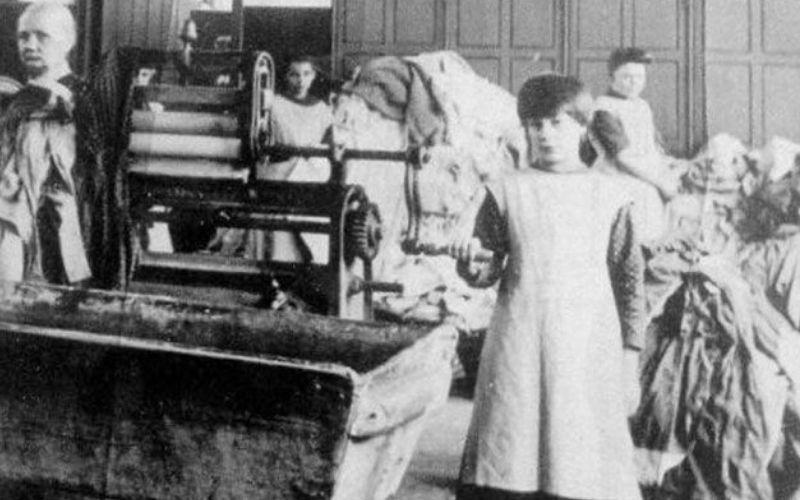
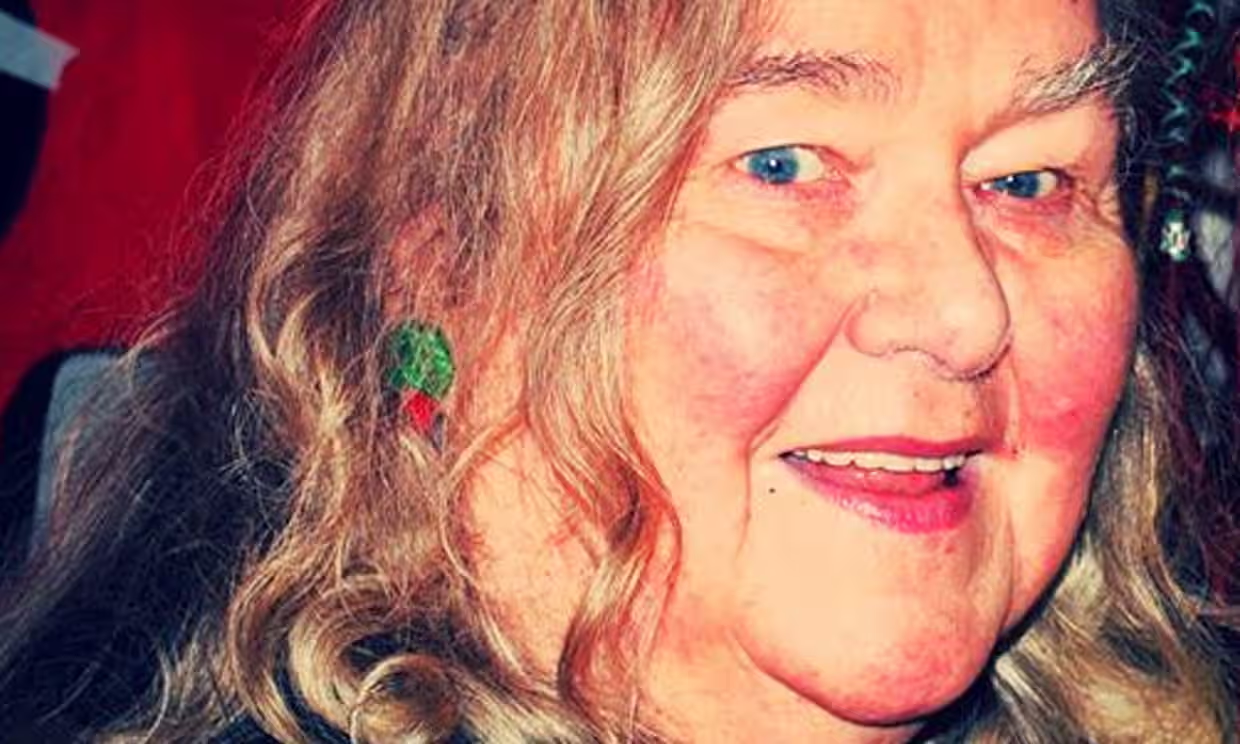
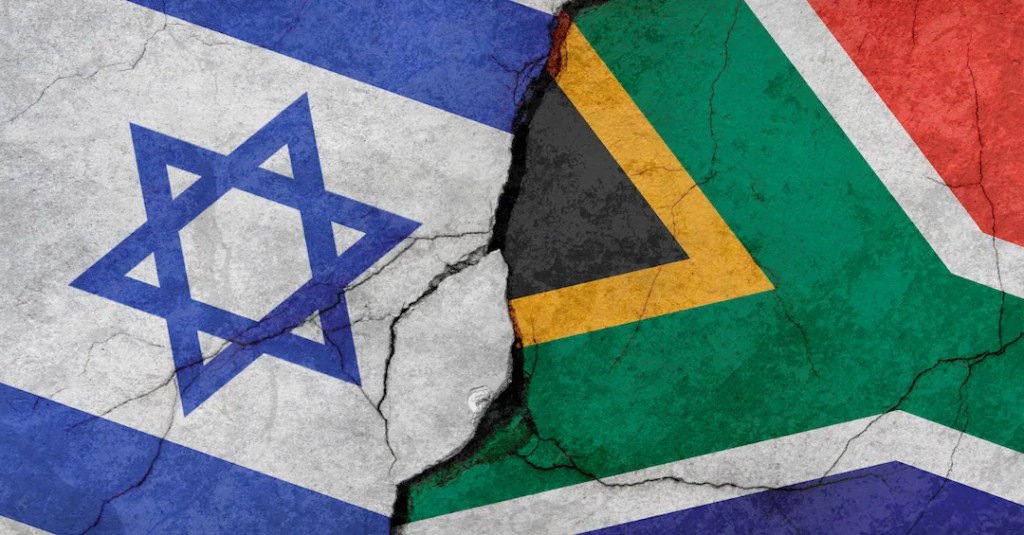









 CHATTING CRITICALLY