Remembering Steve Waterhouse – A youth worker’s youth worker

I can’t believe it’s six years since my dear friend and comrade, Steve Waterhouse died so tragically. By chance, a week or so ago, sifting through old boxes, I came across this photo of Steve and I demonstrating in Chesterfield against the privatisation of the NHS. Taken in the late 1980s we were marching particularly in support of the striking Scarsdale Hospital cleaners. Ironically, the government of the time was not calling on us to save the NHS, its policies being to the contrary.
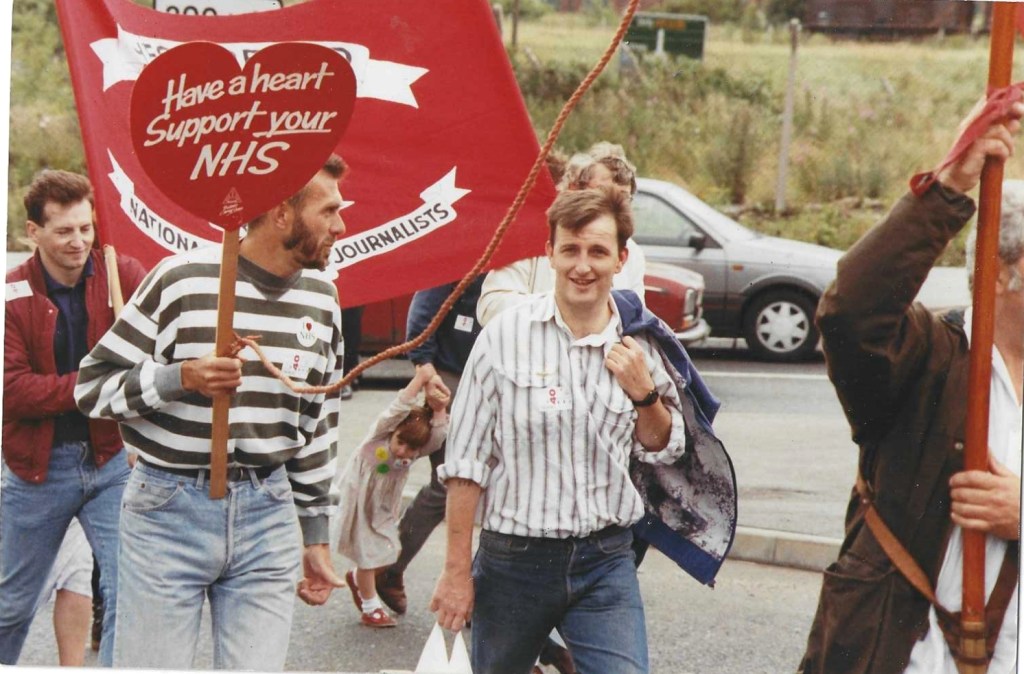
Then I realised that although this blog is dedicated to Steve, along with Malcolm Ball, the obituary I penned at the time for IDYW has never appeared here. Hence I’m taking this opportunity to put the record straight. I think the piece still resonates.

RIP Steve Waterhouse : A youth worker’s youth worker

Steve W

I first met Steve Waterhouse in late 1984, drawn together by both youth work and the Miners’ Strike.  He was a part-time youth worker in Shirebrook, a pit village at the heart of community resistance to Thatcherite violence. I was the newly appointed District Community Education Officer, ostensibly his boss. Steve was a young, fresh-faced, passionate anarchist with a marvellous gift for relating to people, already a significant figure in the local music scene and co-founder in 1983 of a jobless youngsters’ Open Shop. I was a more wrinkled, yet passionate socialist, not keen on management’s right to manage. We hit it off right away. Indeed we got closer on our train journey to the Department of Education and Science, where I had to convince a panel that Steve was a diamond, despite having a trivial conviction for cannabis possession. They were suitably impressed, which thankfully meant that later Steve could pursue a full-time qualification.

We became fellow Bolsover Bucket Bangers, the name our diverse Community Education team adopted in the face of criticism that we took the progressive policies of the Derbyshire County Council too seriously. Steve was not interested in pretence. He was committed to what in those days we called a radical youth work praxis, opposed to exploitation and oppression in all its forms.

Crucially, though, and this is reflected across his whole career, he never sought to convert a young person to his way of seeing the world. He wanted simply, but not so simply, to be in a questioning, always respectful conversation with young people, which was lightened at every turn by his quick-witted sense of humour. That this was so is reflected in the outpouring of grief and love from hundreds of those he touched across thirty years of work with young people. Time and time again we read messages on Facebook that say, “Steve and I hardly ever agreed with one another, but he meant so much to me”.
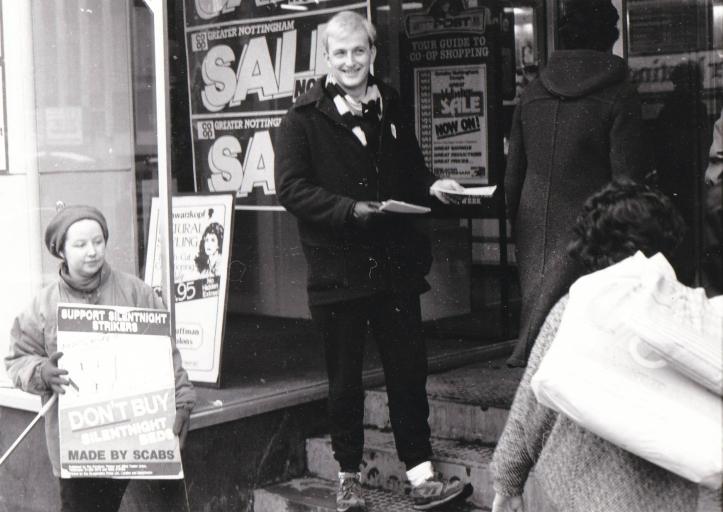
SteveDawn
Steve and Dawn 1987 supporting Silentnight workers

He was deeply involved in the Community and Youth Workers Union and in our Socialist Caucus through the late ’80s, into the ’90s. I remember us arguing the toss about the nature of the capitalist state in the back garden of the Exeter Community Centre. Reluctantly I confessed to him that I thought he was much closer to the truth than my dogmatic assertions allowed. He didn’t hold it against me. As I left Derbyshire under a cloud, pursued by leading figures of the Council, he was my supportive case-worker as Audit sought to find transgressions within my travel claims. His faith in my integrity saw me through.

His move to Liverpool saw him become the key youth worker at what was to become the highly regarded Interchill Project. A comment from one of the original members says a great deal.

A guy walks into the interview room at Interchill and sits down confidently although slightly nervous. His name was Steve Waterhouse. Being Interviewed by a group of teenagers wasn’t what he was expecting. But we wanted to pick the right person ourselves to manage our youth facility. Needless to say, regardless of his dodgy socks 😂 Steve was our man. And the service and inspiration he went on to provide for the young people of Speke & Garston over the years will never be forgotten. It is with great sadness and disbelief to hear of his recent passing. A true peoples person and a father figure and advisor to so many. Steve you will be sadly missed.

Steve canoe
Steve canoeing. Ta to Tracey Ramsey

With Interchill falling foul of cuts, he moved over into the Liverpool Youth Service, where his outstanding endeavours were rewarded with an award for his dedication. As you might expect Steve was embarrassed by the attention.

In the early days of the In Defence of Youth Work campaign, Steve and I were reunited in the struggle to defend a young person-centred, process-led youth work. In retrospect, though it’s clear that the assault on open youth work, on his beliefs and values, was taking its toll on this remarkable bloke. It’s easy to say, but I don’t think he realised how much he had influenced young people’s lives.

Listen to just a few of the moving comments made:

I can’t believe this news. He was an important person to me. He changed how I felt about so much. Inspirational is just a word, but he changed my life and so many people around him. He loved people and wanted the best for them. The world has lost a fantastic human and I will miss him so much. Xx

I remember first meeting him at Interchill when I was 16 and being amazed at the set up. How he inspired young people to take control of their own services and supported them while maintaining excellent relationships. He was always warm, engaging and funny and such an integral part of my early youth work experience.

A few years ago Steve stayed with me on holiday and we had a surreal discussion on the terrace at the back of our house. In the teeth of all his own practice, Steve was arguing that youth work was just a job.  Hardly able to believe my ears I responded that he didn’t really believe this, that the youth work, we believed in, was closer to something we might dub a calling.  Given our atheism, this was not a calling from a deity, but a calling from all those past and present, who have sought in concert control over their own lives. It seemed to me that Steve’s denial that night of his own commitment was an expression of the mental and physical exhaustion that can accompany always giving of yourself, expecting little back in return.

To return to Facebook with all its contradictions this is where young and old have returned their love and gratitude, however belatedly, to a very special bloke. And, I don’t think Steve would think me opportunistic in saying to politicians and management alike, ‘if you want to grasp the significance of youth work, bin your manufactured outcomes and read the reactions of people to Steve’s passing. Take a breath and have the vision to see beyond tomorrow’s soulless data’.

Let me finish by saying that Steve’s way of being with young people was rooted in his anarchism, in his rejection of imposed authority and his belief in the creativity of those written off by the system. If Steve had faith, dented though it might have been, it was in our ability to create a more just and equal world. Together we could never accept that the present state of play is the best that humanity can come up with. I can but shed a tear at realising that we will never chat critically again; that we will never link arms again in the struggle against injustice; that we will never again laugh together at our pretensions. He was a dear friend and comrade or as one message defined him, ‘a youth worker’s youth worker’. Like so many others I loved him and I regret not conveying this enough in recent years.

Our best tribute to Steve’s memory is to continue defending the tradition of improvisatory and empathetic youth work he symbolised – a way of being with young people that is ‘volatile and voluntary, creative and collective – an association and conversation without guarantees’. But a way of being, as many have testified, that brings enormous rewards; that truly has an authentic impact on young people’s lives.

I’ll sign off, Steve, in our time-honoured way.

In love and struggle,

Tony

Keep on Trucking against Authoritarianism

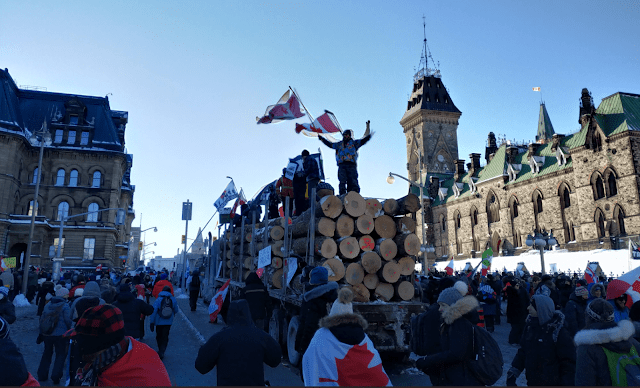
In the last few days, I’ve been trying to finish one last piece [for now?] on the ‘pandemic’ – a list of questions I’ve asked myself over these painful two years. I’ve set these thoughts aside. It is surreal to scribble in the abstract when resistance becomes real. A massive convoy of trucks and heavy goods vehicles has arrived and is arriving across borders and states in Canada’s capital city, Ottawa. The truckers, applauded and joined by thousands of Canadians in the teeth of the elements. are on the one hand protesting against vaccine mandates. On the other, they are heading a wider movement of opposition to the undemocratic imposition of enforced restrictions on society as a whole.

Outside of Canada the silence hanging over this remarkable surge of collective action is shattering. We ought to be shocked yet it is no surprise. Even as the mainstream COVID narrative unravels the media remains in denial – best not to cover this remarkable story at all. Inside Canada, the Prime Minister and former World Economic Forum Young Leader, Trudeau, aided by the press and television, sneers at the truckers, no more than a fringe irritant and smears them as misogynist and racist. In his eyes, they are backward, prejudiced and, heaven help us, disobedient.

As best I can tell at this moment the Left [whatever that quite means today?] is yet again nowhere to be seen. Some time ago, a long time ago, you might have expected the Left to welcome the spontaneous rise of struggle from below, even if it then desired to become its leadership. Today all bets are off. In truth I’m not sure what the Left would see as an authentic expression of the resistance of the ‘demos’. In the truckers’ case, they may be persona non grata as their union bureaucracy condemns them. Perhaps the Left, abandoning the notion of contradiction, paints remarkably the blunt truckers as self-centred individualists and sophisticated Trudeau as the voice of the collective, the greater good.

For what it’s worth I salute the truckers, expelled from Facebook as I write. I salute the thousands of their supporters. From what I can gather their occupation of Ottawa seems overwhelmingly cooperative and communal, even joyous. If I dare quote Lenin in a rare, romantic moment, it is ‘a festival of the oppressed’. I want to believe that if I was in Canada I would move heaven and high snow to be in Ottawa tomorrow, answering the call for a multitude on the streets. The more who are there, the less chance of violent reprisal. I remain anxious as to how tomorrow might play out.

I accept utterly you might be wary of my rose-tinted version of events. Who am I listening to? Well, for one, I’m listening to this Ottawa resident, a data scientist called David Maybury – see his blog, The Reformed Physicist. I’m copying in full his post yesterday in the hope you will read it.

A night with the untouchables

I live in downtown Ottawa, right in the middle of the trucker convoy protest. They are literally camped out below my bedroom window. My new neighbours moved in on Friday and they seem determined to stay. I have read a lot about what my new neighbours are supposedly like, mostly from reporters and columnists who write from distant vantage points somewhere in the media heartland of Canada. Apparently the people who inhabit the patch of asphalt next to my bedroom are white supremacists, racists, hatemongers, pseudo-Trumpian grifters, and even QAnon-style nutters. I have a perfect view down Kent Street – the absolute ground zero of the convoy. In the morning, I see some protesters emerge from their trucks to stretch their legs, but mostly throughout the day they remain in their cabs honking their horns. At night I see small groups huddled in quiet conversations in their new found companionship. There is no honking at night. What I haven’t noticed, not even once, are reporters from any of Canada’s news agencies walking among the trucks to find out who these people are. So last night, I decided to do just that – I introduced myself to my new neighbours.

The Convoy on Kent Street. February 2, 2022.

At 10pm I started my walk along – and in – Kent Street. I felt nervous. Would these people shout at me? My clothes, my demeanour, even the way I walk screamed that I’m an outsider. All the trucks were aglow in the late evening mist, idling to maintain warmth, but all with ominously dark interiors. Standing in the middle of the convoy, I felt completely alone as though these giant monsters weren’t piloted by people but were instead autonomous transformer robots from some science fiction universe that had gone into recharging mode for the night. As I moved along I started to notice smatterings of people grouped together between the cabs sharing cigarettes or enjoying light laughs. I kept quiet and moved on. Nearby, I spotted a heavy duty pickup truck, and seeing the silhouette of a person in the driver’s seat, I waved. A young man, probably in his mid 20s, rolled down the window, said hello and I introduced myself. His girlfriend was reclined against the passenger side door with a pillow to prop her up as she watched a movie on her phone. I could easily tell it’s been an uncomfortable few nights. I asked how they felt and I told them I lived across the street. Immediate surprise washed over the young man’s face. He said, “You must hate us. But no one honks past 6pm!” That’s true. As someone who lives right on top of the convoy, there is no noise at night. I said, “No, I don’t hate anyone, but I wanted to find out about you.” The two were from Sudbury Ontario, having arrived on Friday with the bulk of the truckers. I ask what they hoped to achieve, and what they wanted. The young woman in the passenger seat moved forward, excited to share. They said that they didn’t want a country that forced people to get medical treatments such as vaccines. There was no hint of conspiracy theories in their conversation with me, not a hint of racist overtones or hateful demagoguery. I didn’t ask them if they had taken the vaccine, but they were adamant that they were not anti-vaxers.

The next man I ran into was standing in front of the big trucks at the head of the intersection. Past middle age and slightly rotund, he had a face that suggests a lifetime of working outdoors. I introduced myself and he told me he was from Cochrane, Ontario. He also proudly pointed out that he was the block captain who helped maintain order. I thought, oh no, he might be the one person keeping a lid on things; is it all that precarious? I delicately asked how hard his job was to keep the peace but I quickly learned that’s not really what he did. He organized the garbage collection among the cabs, put together snow removal crews to shovel the sidewalks and clear the snow that accumulates on the road. He even has a salting crew for the sidewalks. He proudly bellowed in an irrepressible laugh “We’re taking care of the roads and sidewalks better than the city.” I waved goodbye and continued to the next block.

My next encounter was with a man dressed in dark blue shop-floor coveralls. A wiry man of upper middle age, he seemed taciturn and stood a bit separated from the small crowd that formed behind his cab for a late night smoke. He hailed from the Annapolis Valley, Nova Scotia. He owned his own rig, but he only drove truck occasionally, his main job being a self-employed heavy duty mechanic. He closed his shop to drive to Ottawa, because he said, “I don’t want my new granddaughter to live in a country that would strip the livelihood from someone for not getting vaccinated.” He introduced me to the group beside us. A younger crowd, I can remember their bearded faces, from Athabasca, Alberta, and Swift Current Saskatchewan. The weather had warmed, and it began to rain slightly, but they too were excited to tell me why they came to Ottawa. They felt that they needed to stand up to a government that doesn’t understand what their lives are like. To be honest, I don’t know what their lives are like either – a group of young men who work outside all day with tools that they don’t even own. Vaccine mandates are a bridge too far for them. But again, not a hint of anti-vax conspiracy theories or deranged ideology.

I made my way back through the trucks, my next stop leading me to a man of East Indian descent in conversation with a young man from Sylvan Lake, Alberta. They told me how they were following the news of O’Toole’s departure from the Conservative leadership and that they didn’t like how in government so much power has pooled into so few hands.

The rain began to get harder; I moved quickly through the intersection to the next block. This time I waved at a driver in one of the big rigs. Through the rain it was hard to see him, but he introduced himself, an older man, he had driven up from New Brunswick to lend his support. Just behind him some young men from Gaspésie, Quebec introduced themselves to me in their best English. At that time people started to notice me – this man from Ottawa who lives across the street – just having honest conversations with the convoy. Many felt a deep sense of abuse by a powerful government and that no one thinks they matter.

Behind the crowd from Gaspésie sat a stretch van, the kind you often see associated with industrial cleaners. I could see the shadow of a man leaning out from the back as he placed a small charcoal BBQ on the sidewalk next to his vehicle. He introduced himself and told me he was from one of the reservations on Manitoulin Island. Here I was in conversation with an Indigenous man who was fiercely proud to be part of the convoy. He showed me his medicine wheel and he pointed to its colours, red, black, white, and yellow. He said there is a message of healing in there for all the human races, that we can come together because we are all human. He said, “If you ever find yourself on Manitoulin Island, come to my reserve, I would love to show you my community.” I realized that I was witnessing something profound; I don’t know how to fully express it.

As the night wore on and the rain turned to snow, those conversations repeated themselves. The man from Newfoundland with his bullmastiff, a young couple from British Columbia, the group from Winnipeg that together form what they call “Manitoba Corner ” all of them with similar stories. At Manitoba Corner a boisterous heavily tattooed man spoke to me from the cab of his dually pickup truck – a man who had a look that would have fit right in on the set of some motorcycle movie – pointed out that there are no symbols of hate in the convoy. He said, “Yes there was some clown with a Nazi flag on the weekend, and we don’t know where he’s from, but I’ll tell you what, if we see anyone with a Nazi flag or a Confederate flag, we’ll kick his fucking teeth in. No one’s a Nazi here.” Manitoba Corner all gave a shout out to that.

As I finally made my way back home, after talking to dozens of truckers into the night, I realized I met someone from every province except PEI. They all have a deep love for this country. They believe in it. They believe in Canadians. These are the people that Canada relies on to build its infrastructure, deliver its goods, and fill the ranks of its military in times of war. The overwhelming concern they have is that the vaccine mandates are creating an untouchable class of Canadians. They didn’t make high-falutin arguments from Plato’s Republic, Locke’s treatises, or Bagehot’s interpretation of Westminster parliamentary systems. Instead, they see their government willing to push a class of people outside the boundaries of society, deny them a livelihood, and deny them full membership in the most welcoming country in the world; and they said enough. Last night I learned my new neighbours are not a monstrous faceless occupying mob. They are our moral conscience reminding us – with every blow of their horns – what we should have never forgotten: We are not a country that makes an untouchable class out of our citizens.

David Maynard

Thanks to Julius Ruechel at https://www.juliusruechel.com/ for the photos.

The Importance of Wearing a Pinny

I’m in the middle of scribbling a couple more things about the bloody pandemic. Then I’m done. It’s weary keeping up with the information, misinformation and disinformation. An inner voice pleads, ‘just put up and shut up’. And then by chance, I trip up over this revealing photo and text, tears come to my ageing eyes, remembering my grandma and my mum. Simple, sentimental nostalgia of no significance. And yet………

Helen Ashton writes:

I don’t think most kids today know what an apron/pinny is. The main use of Grandma’s apron was to protect the dress underneath because she only had a few. It was also because it was easier to wash aprons than dresses and aprons used less material. But along with that, it served as a potholder for removing hot pans from the oven.


It was wonderful for drying children’s tears, and on occasion was even used for cleaning out dirty ears.


From the chicken coop, the apron was used for carrying eggs, fussy chicks, and sometimes half-hatched eggs to be finished in the warming oven.


When visitors came, those aprons were ideal hiding places for shy kids.


And when the weather was cold, she wrapped it around her arms.


Those big old aprons wiped many a perspiring brow, bent over the hot wood or coal stove.


Chips and kindling wood were brought into the kitchen in that apron.


From the garden, it carried all sorts of vegetables. After the peas had been shelled, it carried out the hulls.


In the autumn, the apron was used to bring in apples that had fallen from the trees.


When unexpected visitors called it was surprising how much furniture that old apron could dust in a matter of seconds.


It will be a long time before someone invents something as useful as a good old pinny.


[And today] They would go crazy trying to figure out how many germs were on that pinny.


I don’t think I ever caught anything from a pinny – but love.

PInched from The Wigan Nostalgia Facebook page and thanks again to Helen.

What about Children and Young People? Are they no more than collateral damage?

“We are engaged in a war against the virus”- Boris Johnson

” In this fake war children are set to be vaccine fodder” – A concerned parent

From the very beginning, March 2020, of the utterly undemocratic imposition of COVID-inspired sweeping restrictions on social existence I feared for children and young people. Perhaps this was a knee-jerk response. After all, I have spent the last 50 years conversing with and about them – as a teacher, youth worker, lecturer and, latterly, a commentator-cum-spectator on the sidelines. Indeed in late 2008, I penned an Open Letter, arguing that youth work should side with young people and not the State; that it should not assume it knows what’s best for young people; that it should be in a critical conversation with them about how together we see the world; and that it should aspire to be ‘volatile and voluntary, creative and collective – an association and conversation without guarantees’.In short it ought, first and foremost, to be a democratic practice. On the back of this missive, a campaign, In Defence of Youth Work [IDYW], emerged.

Against this history, given these commitments, I was perplexed from the outset at what has seemed to be the absence of debate and the utter lack of opposition to the demanded closures of children’s and young people’s provision – from playgrounds through schools and youth facilities to universities. I am being diplomatic. I was pissed off and angry. It was plain that such draconian, disproportionate action would be deeply damaging. The belated acknowledgement in the summer of 2021 that the lockdown was creating serious mental health issues for the younger generation, crocodile tears, merely confirmed my angst. Then, a humble breath taken, I recognised it was easy for me to be so moved. If I was still a practising youth worker. teacher or lecturer what would I have done during the last two years?

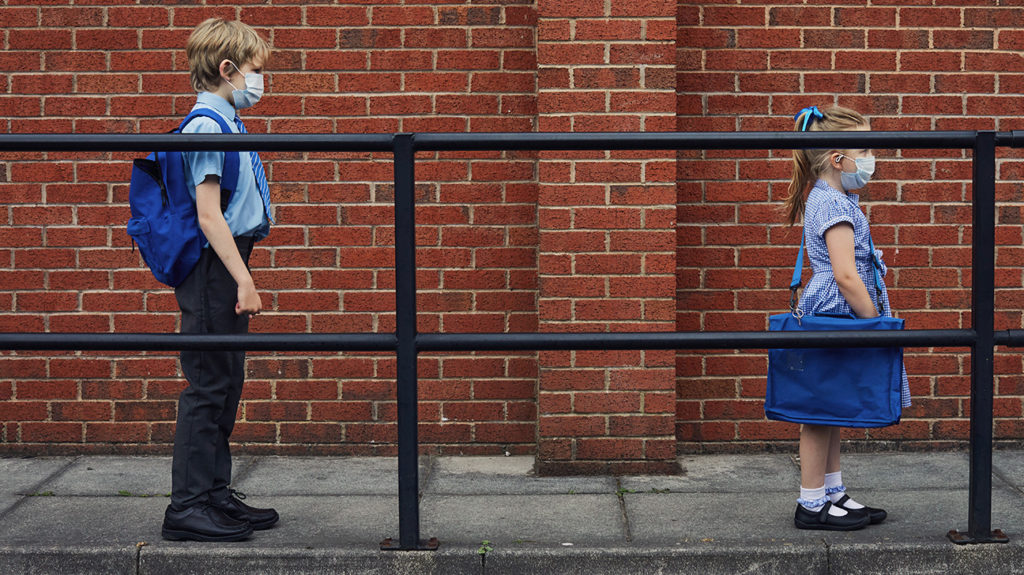
Thanks to medicalnewstoday.com

I find it difficult to imagine that, as a youth worker I would have caved in without protest as the youth centre was boarded up or that on the streets I would insist the young people be masked or else. I find it difficult, as a former primary school teacher, to believe I could cope with imposing upon children, I knew well with all their idiosyncrasies, the general requirement to don face coverings and keep their distance from each other and me. I find it difficult to accept that as a lecturer teaching upon a course committed to vibrant argument I would have meekly capitulated to the assault on critical thought, the depiction of the campus as a theatre of contagion and the arrival of on-line learning. As far back as Spring 2019, a modicum of independent research would have shown that masking was about obedience rather than transmission and that children/young people were in little danger from COVID and little danger to anyone else.

Of course, I’m probably deluding myself, thinking I would have swum against the conformist tide. The calculated campaign of fear disseminated without demur by the mainstream media has known no moral or ethical bounds. Management and trade unions in the public sector, along with the caring professions, armed with the ideology of ‘safetyism’, which in a trice provides both explanation and justification, have all embraced the dominant narrative with at times a nauseating pomposity. If you want to follow the unfolding of this smug self-righteousness delve into the archives of the Guardian.

Hence, where would I have found support in desiring to resist – certainly not in the trade union. little chance in the staff team and, to my chagrin, not through In Defence of Youth Work? In this context, speaking up might well have meant losing my job. However, deep in my decaying bones, I want to believe that there has been guerilla activity, which by its nature is underground. In my pretentiousness, I want to believe that with others I would have sought somehow to bring these guerillas together in some supportive form of solidarity – see the history of the Socialist Caucus and Critically Chatting Collective. You might well say, ‘dream on,Tony, dream on’.

Insofar as there has been debate in the world of youth work IDYW did organise a Zoom seminar on the theme of Resistance in November 2020, which spawned the following pieces.

Resistance, rebellion, revolution!Sue Atkins

Our fears and resistance to working collaborativelyRuth Richardson

Youth workers’ every day marvels… when does persistence become resistance?Janet Batsleer

In particular, Janet’s eloquent, positive portrayal of youth workers amidst the turmoil via the Citizen Enquiry in times of COVID is the counter to my perhaps ignorant negativity.

Certainly in the coming weeks, as the pandemic narrative unravels, it would be revealing to hear the thoughts of UK youth workers, teachers and lecturers about their sense of the impact upon children and young people, upon themselves of the two years lost.

As a stimulus to reflection, I’m reposting this moving and stimulating article by a Canadian teacher, which appeared on Common Sense, one of many alternative news sites that have sprung up during the pandemic. This outlet seeks to situate its politics as rejecting both the hard Left and the hard Right. Classically it seeks to find the middle ground with all the contradictions therein. To my mind, the very categories of Left, Centre and Right are in such a state of meltdown that the vital thing is to be aware of one’s own prejudices and history, to explore expansively, be open to critical dialogue and committed at every turn to the democratic process in the struggle against authoritarianism.

I’m a Public School Teacher. The Kids Aren’t Alright.

By Stacey Lance 

I am proud to be a teacher. I’ve worked in the Canadian public school system for the past 15 years, mostly at the high school level, teaching morals and ethics.

I don’t claim to be a doctor or an expert in virology. There is a lot I don’t know. But I spend my days with our youth and they tell me a lot about their lives. And I want to tell you what I’m hearing and what I’m seeing.

Since the beginning of the pandemic, when our school went fully remote, it was evident to me that the loss of human connection would be detrimental to our students’ development. It also became increasingly clear that the response to the pandemic would have immense consequences for students who were already on the path to long-term disengagement, potentially altering their lives permanently.

The data about learning loss and the mental health crisis is devastating. Overlooked has been the deep shame young people feel: Our students were taught to think of their schools as hubs for infection and themselves as vectors of disease. This has fundamentally altered their understanding of themselves.

When we finally got back into the classroom in September 2020, I was optimistic, even as we would go remote for weeks, sometimes months, whenever case numbers would rise. But things never returned to normal.

When we were physically in school, it felt like there was no longer life in the building. Maybe it was the masks that made it so no one wanted to engage in lessons, or even talk about how they spent their weekend. But it felt cold and soulless. My students weren’t allowed to gather in the halls or chat between classes. They still aren’t. Sporting events, clubs and graduation were all cancelled. These may sound like small things, but these losses were a huge deal to the students. These are rites of passages that can’t be made up.

In my classroom, the learning loss is noticeable. My students can’t concentrate and they aren’t doing the work that I assign to them. They have way less motivation compared to before the pandemic began. Some of my students chose not to come back at all, either because of fear of the virus, or because they are debilitated by social anxiety. And now they have the option to do virtual schooling from home.

One of my favorite projects that I assign each year is to my 10th grade students, who do in-depth research on any culture of their choosing. It culminates in a day of presentations. I encourage them to bring in music, props, food—whatever they need to immerse their classmates in their specific culture. A lot of my students give presentations on their own heritage. A few years back, a student of mine, a Syrian refugee, told her story about how she ended up in Canada. She brought in traditional Syrian foods, delicacies that her dad had stayed up all night cooking. It was one of the best days that I can remember. She was proud to share her story—she had struggled with homesickness—and her classmates got a lesson in empathy. Now, my students simply prepare a slideshow and email it to me individually.

My older students (grades 11 and 12) aren’t even allowed a lunch break, and are expected to come to school, go to class for five and a half hours and then go home. Children in 9th and 10th grades have to face the front of the classroom while they eat lunch during their second period class. My students used to be able to eat in the halls or the cafeteria; now that’s forbidden. Younger children are expected to follow the “mask off, voices off” rule, and are made to wear their masks outside, where they can only play with other kids in their class. Of course, outside of school, kids are going to restaurants with their families and to each other’s houses, making the rules at school feel punitive and nonsensical.

They are anxious and depressed. Previously outgoing students are now terrified at the prospect of being singled out to stand in front of the class and speak. And many of my students seem to have found comfort behind their masks. They feel exposed when their peers can see their whole face.

Around this time of year, we start planning for the prom, which is held in June. Usually, my students would already be chatting constantly about who’s asking who, what they’re planning on wearing, and how excited they are. This year, they’ve barely discussed it at all. When they do, they tell me that they don’t want to get their hopes up, since they’re assuming it will get cancelled like it has for the past couple of years.

It’s the same deal with universities. My students say, “If university is going to be just like this then what’s the point?” I have my own children, a nine-year-old daughter and a seven-year-old son, who have spent almost a third of their lives in lockdown. They’ve become so used to cancellations that they don’t even feel disappointed anymore.

I think all of my students are angry to some degree, but I hear it most from the kids who are athletes. They were told that if they got the vaccine, everything would go back to normal, and they could go back to the rink or the court. Some sports were back for a while but, as of Christmas, because of the recent wave of Covid-19 cases, club and varsity sports are all cancelled once again. A lot of the athletes are missing chances to get seen by coaches and get scholarships.

I try to take time at the beginning of class to ask my kids how they’re doing. Recently, one of my 11th grade students raised his hand and said that he wasn’t doing well, that he doesn’t want to keep living like this, but that he knows that no one is coming to save them. The other kids all nodded in agreement. They feel lied to—and I can’t blame them.

What’s most worrisome to me is that they feel deep worry and shame over the prospect of breaking the rules.

Teenage girls are notoriously empathetic. I see that many of my students, but especially the female ones, feel a heavy burden of responsibility. Right before Christmas, one of my brightest 12th graders confided in me that she was terrified of taking her mask off. She told me that she didn’t want to get anyone sick or kill anybody. She was worried she would be held responsible for someone dying.

What am I supposed to say? That 23 children have died from Covid in Canada during the whole of the pandemic and she is much more likely to kill someone driving a car? That kids in Scandinavia, Sweden, and the Netherlands largely haven’t had to wear masks at school and haven’t seen outbreaks because of it? That masks are not a magic shield against the virus, and that even if she were to pass it along to a classmate, the risk of them getting seriously sick is minuscule?

I want to tell her that she can remove her mask, and socialize with her friends without being worried.

But I am expected to enforce the rules.

At the beginning of the pandemic, adults shamed kids for wanting to play at the park or hang out with their friends. We kept hearing, “They’ll be fine. They’re resilient.” It’s true that humans, by nature, are very resilient. But they also break. And my students are breaking. Some have already broken.

When we look at the Covid-19 pandemic through the lens of history, I believe it will be clear that we betrayed our children. The risks of this pandemic were never to them, but they were forced to carry the burden of it. It’s enough. It’s time for a return to normal life and put an end to the bureaucratic policies that aren’t making society safer, but are sacrificing our children’s mental, emotional, and physical health.

Our children need life on the highest volume. And they need it now.

———————————————————————————————–

When will the Masquerade come to a close?

Thanks to evolve-entertainment.co.uk

Anyone who has followed my scribblings knows that I approach behavioural psychology with extreme caution. This concern predates COVID by decades – see Outcomes, outcomes, outcomes for something written in the last decade. In previous posts, I have voiced my concern at the explicit and conscious stoking of fear fuelled by the SAGE Behavioural Group in the UK. At the heart of its cynical propaganda has been the mask. A month or so ago I ended a section on masks as follows:

In essence, the mask seeks to muzzle us into obedience. It confirms that we are in dire danger. It demands that we police one another into compliance. It is the visible expression of the desire to divide us from one another, to undermine our humanity. It is about social and political control. It serves no other purpose.

The Mitsotakis government in Greece is determined to keep us in our place – at least until the tourist season starts. Thus, as I write, we are under mandatory manners to wear face coverings inside [preferably duplex] and in the great outdoors. There are heavy fines to pay if we are disobedient. Pragmatic contempt is to be seen. No masks in the villages, masks worn or in readiness in the big towns. And, as for out in the olive groves, foothills and mountains we are at one with nature and humanity, looking each other in the eye.

Thanks to etsy.

Nevertheless, I was thinking of rehearsing the arguments once more but I’ve been saved the trouble by a challenging piece, composed by Gary Sidley, a retired NHS consultant clinical psychologist and a founder member of the Smile Free campaign to remove all mask mandates. It poses disturbing questions for the trade unions, the bureaucrats and the members, together with educators on the ground, be they, lecturers, teachers or youth workers.

Let’s face it -Governments use masking to force compliance, not fight viruses

Professor Ehud Qimron: “Ministry of Health, it’s time to admit failure”

I’m in the middle of writing a post pursuing the clatter of contradictions sounding through the COVID consensus. In doing so I came across this brave and resounding rebuttal of both the Israeli and global responses to the perceived pandemic. It was published on the Swiss Policy Research website.

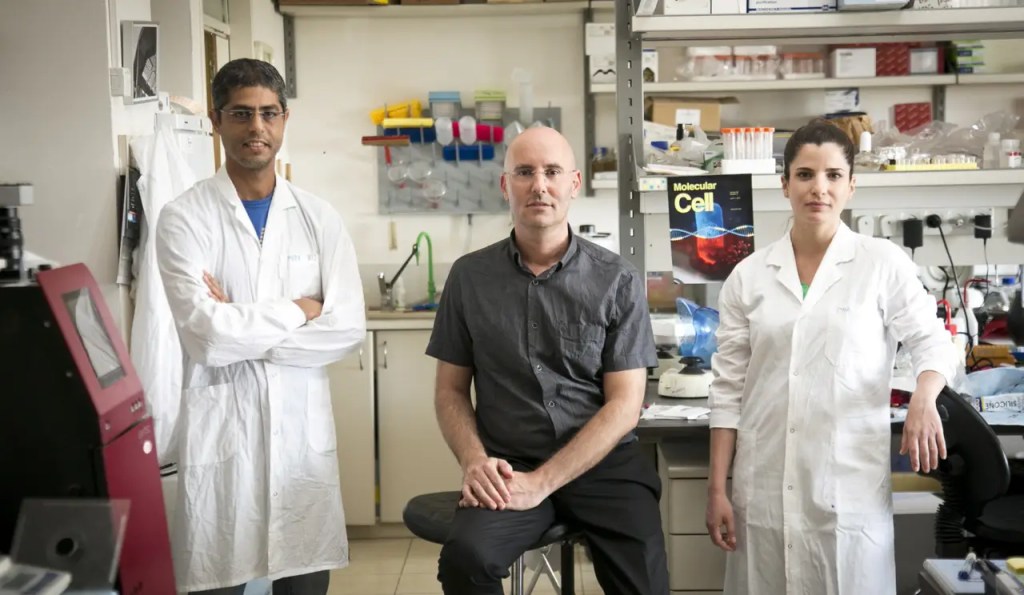
Professor Ehud Qimron, head of the Department of Microbiology and Immunology at Tel Aviv University and one of the leading Israeli immunologists, has written an open letter sharply criticizing the Israeli – and indeed global – management of the coronavirus pandemic.

Professor Ehud Qimron (centre) at Tel Aviv University (Haaretz)

Original letter in HebrewN12 News (January 6, 2022); translated by Google/SPR. See also: Professor Qimron’s prediction from August 2020: “History will judge the hysteria” (INN).

Ministry of Health, it’s time to admit failure

In the end, the truth will always be revealed, and the truth about the coronavirus policy is beginning to be revealed. When the destructive concepts collapse one by one, there is nothing left but to tell the experts who led the management of the pandemic – we told you so.

Two years late, you finally realize that a respiratory virus cannot be defeated and that any such attempt is doomed to fail. You do not admit it, because you have admitted almost no mistake in the last two years, but in retrospect, it is clear that you have failed miserably in almost all of your actions, and even the media is already having a hard time covering your shame.

You refused to admit that the infection comes in waves that fade by themselves, despite years of observations and scientific knowledge. You insisted on attributing every decline of a wave solely to your actions, and so through false propaganda “you overcame the plague.” And again you defeated it, and again and again and again.

You refused to admit that mass testing is ineffective, despite your own contingency plans explicitly stating so (“Pandemic Influenza Health System Preparedness Plan, 2007”, p. 26).

You refused to admit that recovery is more protective than a vaccine, despite previous knowledge and observations showing that non-recovered vaccinated people are more likely to be infected than recovered people. You refused to admit that the vaccinated are contagious despite the observations. Based on this, you hoped to achieve herd immunity by vaccination — and you failed in that as well.

You insisted on ignoring the fact that the disease is dozens of times more dangerous for risk groups and older adults than for young people who are not in risk groups, despite the knowledge that came from China as early as 2020.

You refused to adopt the “Barrington Declaration”, signed by more than 60,000 scientists and medical professionals, or other common-sense programs. You chose to ridicule, slander, distort and discredit them. Instead of the right programs and people, you have chosen professionals who lack relevant training for pandemic management (physicists as chief government advisers, veterinarians, security officers, media personnel, and so on).

You have not set up an effective system for reporting side effects from the vaccines, and reports on side effects have even been deleted from your Facebook page. Doctors avoid linking side effects to the vaccine, lest you persecute them as you did with some of their colleagues. You have ignored many reports of changes in menstrual intensity and menstrual cycle times. You hid data that allows for objective and proper research (for example, you removed the data on passengers at Ben Gurion Airport). Instead, you chose to publish non-objective articles together with senior Pfizer executives on the effectiveness and safety of vaccines.

Irreversible damage to trust

However, from the heights of your hubris, you have also ignored the fact that in the end the truth will be revealed. And it begins to be revealed. The truth is that you have brought the public’s trust in you to an unprecedented low, and you have eroded your status as a source of authority. The truth is that you have burned hundreds of billions of shekels to no avail – for publishing intimidation, for ineffective tests, for destructive lockdowns and for disrupting the routine of life in the last two years.

You have destroyed the education of our children and their future. You made children feel guilty, scared, smoke, drink, get addicted, drop out, and quarrel, as school principals around the country attest. You have harmed livelihoods, the economy, human rights, mental health and physical health.

You slandered colleagues who did not surrender to you, you turned the people against each other, divided society and polarized the discourse. You branded, without any scientific basis, people who chose not to get vaccinated as enemies of the public and as spreaders of disease. You promote, in an unprecedented way, a draconian policy of discrimination, denial of rights and selection of people, including children, for their medical choice. A selection that lacks any epidemiological justification.

When you compare the destructive policies you are pursuing with the sane policies of some other countries — you can clearly see that the destruction you have caused has only added victims beyond the vulnerable to the virus. The economy you ruined, the unemployed you caused, and the children whose education you destroyed — they are the surplus victims as a result of your own actions only.

There is currently no medical emergency, but you have been cultivating such a condition for two years now because of lust for power, budgets and control. The only emergency now is that you still set policies and hold huge budgets for propaganda and psychological engineering instead of directing them to strengthen the health care system.

This emergency must stop!

Professor Udi Qimron, Faculty of Medicine, Tel Aviv University

∗∗∗

Fifty Years On – The ’72 Miners’ Strike Remembered

Thanks to Tribune and Emily Ingram for this important reminder of the strike that gave birth to ‘flying pickets’ and later to the acapella group, ‘The Flying Pickets’, steadfast supporters of the miners in the 1984/85 Great Strike.

The 1972 Miners’ Strike at 50

By Emily Ingram

Fifty years ago on January 9, 1972, miners across Britain walked out on strike in a landmark dispute that popularised the flying picket. We speak to striking workers about their memories on the frontline.

Read in full at https://tribunemag.co.uk/2022/01/1972-miners-strike-num-industrial-action-edward-heath

The Flying Pickets surprise 1983 Christmas Number One sung at all their NUM support gigs

As the New Year dawns – being bullied into COVID compliance

New Year’s Day 2022 – an azure and windless sky beckons, promises and resolutions hang not yet tested in the still air. New Year’s Days I’ve had too many to mention but this one is different. It’s surreal, sinister and disconcerting.

I’m now into my 75th year on this god-forsaken earth. For more than half a century I’ve spouted forth about the evils of capitalism, even advocated revolution but my stance has not cost me dear. A tapped phone here, a night on a police station floor there, a few bruises on the picket line. Nothing to write home about. Indeed, it might well be argued that I’ve made something of a career out of being the useful ‘token ‘radical, not ‘in and against’ rather ‘in and compromised’ by the State. I’m of a post-war generation, whose lives were improved to different degrees by the struggles of our forefathers and mothers. With all its warts, and I railed against its shortcomings, the social-democratic society was a step forward. Neoliberalism has been closing down its gains for over forty years. I’ve sought to criticise this assault, arguing against the insidious influence of behaviourist psychology and worrying about the danger of us sleepwalking into an authoritarian and intolerant society. Again I have not been taken to task by the powerful for this dissension. As far as being troubled goes, it’s been wrought by my own self-doubt and anxiety. As a dear friend whispered gently, ‘being a couch revolutionary isn’t exactly uncomfortable’.

Two years ago I would have shaken my bald pate in disbelief at the predicament I face this New Year’s Day. The Greek government has determined that all the citizens and residents of the country, who are over 60 years of age will be vaccinated with the ‘booster’. Refusing to comply will lead to the following State punishments.

  • Each person resisting will be fined 100 euros each successive month until they give in. Over 25% of Greek pensioners, around 700,00 persons, receive less tha 500 Euros a month and even the average pension amounts to only 869 euros before deductions. In my case it seems that if I resist the 100 Euros will be procured for the government by my accountant.
  • Each person resisting will not possess therefore a valid vaccine passport. This means they will only be allowed access to supermarkets, grocery stores and chemists, to food and medicine. They will be barred from all public indoor spaces – tavernas, kafeneion, the beating heart of Greek life, even, I’m not sure, the Church – and public events. If this is enforced they will be excluded from the majority of what we might call civil society.

I want you to be shocked and angry in the face of such a draconian scenario, imposed by a government without an ethical leg to stand on. I worry that the propaganda machine churning out numbers, numbers, numbers will continue to cloud the issue. Mass testing alongside the emergence of a milder but more infectious variant will inevitably mean an upsurge in infections, leave aside the fact that the USA Centre for Disease Control has just disowned the PCR test, admitting its unreliability. A touch late, methinks.

In essence, the Mitsotakis government’s authoritarianism, whilst running deep in its historical blood, is inseparable from the influence of the corporate and pharmaceutical giants of our era. It is about power and profit. It is about politics. It is not about health. At this point, some readers may sigh. Am I in Covid denial? For now, I will only say that I believe that the COVID threat to society as a whole has been exaggerated enormously; that from a health point of view things could have been managed so very differently.

AgePeak Case Fatality Rate in winter 2020Case Fatality rate in June 2021
<204 in 100,0004 in 100,000
20-2914 in 100,00020 in 100,000
30-398 in 10,000 5 in 10,000 
40-492 in 1000 1 in 1000
50-598 in 10003 in 1000
60-693.3%1.4%
70-7914%3.8%
80 or above33%15%

Table 1: Proportion of people catching covid who die with it by age in England official gov.uk figures

The data presented above for June 2021 does not take into account booster vaccinations, early treatments and Omicron being less dangerous than earlier variants. These figures are calculated based on every ‘covid death’ including those where covid may well have been a bystander infection as often occurs with respiratory viruses. [Taken from ‘The Six Miracles of COVID’ Health Advice Recovery Team]

Thus, walking Glyka this morning, I felt my back was against the stone wall running down our lane, never mind that it was crumbling with the passing years. What to do? If I decline to be boosted I don’t think I am a health hazard. I don’t think I am being irresponsible. The growing evidence, given the vaccine has not lived up to the hype, is that the unvaccinated and the vaccinated are no more dangerous in terms of transmission to each other than each other. The mandatory vaccination of the over 60s here in Greece owes nothing to its democratic tradition, harking back much more to the dark days of the junta. As with all authoritarianism, it is industrial in its practice. The idea that treatment ought to be tailored to the particular history and circumstances of the individual is an anathema; that the principle of bodily autonomy, ‘our body, our choice’, is fundamental regarded as passe; that a healthy older person with no underlying comorbidities with legitimate concerns about the safety of an experimental drug has every right to demur is seen as utterly unacceptable; and as for the once cherished notion of informed consent that’s consigned to the historical bin.

Obviously, given my analysis of the situation, I should refuse the jab. Yet I prevaricate. I’m perplexed and angry. There’s nothing unique about the corner I’m in. Insofar as it’s special it’s to do with relationships, most intimately with my family. Becoming a ‘refusenik’ would curtail all sorts of simple social acts, just having a morning coffee down in the village. It would prevent me from travelling to see my children and grandchildren. Perhaps, if I was made of sterner stuff I would hold out. As things stand, in the absence of visible collective resistance, I suspect, I will shame-facedly comply. I have until the 16th of January to decide. Rather than be true to the active intent of the slogan, ‘educate, agitate, organise’ I’ll retreat passively into being agitated. I will persuade myself that I will live to fight another day. Will that be when the fourth jab is demanded? History will be the judge.

Divide, Conquer; Unite, Heal – Charles Eisenstein argues for the latter.

Across the duration of the ‘pandemic as I have broken out of my own ‘Leftie’ bubble I have discovered a rich range of alternative opinions and analyses. In doing so I don’t think I have abandoned a fundamental commitment to the political struggle for individual, social and political autonomy, the creation of a society, overseen by each of us in concert with one another. However, some of the most stimulating conversations I have entered into have been with liberals and indeed libertarians of a Right-wing hue. Inevitably we have disagreed, often deeply but with a degree of respect. Thankfully voices of left-libertarianism have also soothed my troubled mind but, in truth, not that many. As far as the authoritarian Left from the International Committee of the Fourth International via the Morning Star to the Labour Party is concerned, such a pluralist desire to listen and converse rather than preach in an elevated state of certitude and ‘true’ consciousness is nothing but a sign of dithering weakness and, of course, the curse of ‘false’ consciousness.

Thus, perhaps bloody-mindedly, I shall draw your eyes in the coming weeks to writers from across the political spectrum, who, I think, are worthy of your critical attention.

The first of these is a certain Charles Eisenstein, who I had never heard of a few months ago. Since back in the early 70s and my political awakening I’ve always hated the sloppy and vindictive caricature of those we disagree with as being ‘thick’ and stupid. It remains such a hopeless and arrogant perspective. Charles takes up the question in ‘Divide, Conquer; Unite, Heal’

He comments:

The media and social media are profuse with hateful sentiments about how the unvaccinated deserve to die, should be denied medical care, are immoral, ignorant, narcissistic, sociopathic, and so on.

I am sorry to observe hate on the other side of the vaccine divide too. Sometimes I see in health freedom communities half-hopeful, gloating posts about how the vaccinated will someday wail and gnash their teeth in abject regret when mass vaccine-induced death shows them the error of their ways. Monikers like “sheeple,” “normies,” and “vaxtards” play into the most dangerous controller agenda of all—to divide and conquer by fostering internecine hatred.

If we who oppose vaccine mandates wish to live in a world based on dignity, we should do everything we can to affirm the dignity of all human beings. By dehumanizing those with opposing views, we reinforce the same pattern that dehumanizes ourselves, the dissidents.

Basically, whether deliberately or not, a situation has been engineered to dispose the public toward division. It is an old formula: Enemies are among us! The unclean put us all at risk! The heretics will bring the wrath of God upon us all!

Let us recognize that ancient formula and how closely the dominant Covid narrative conforms to it. Is that conformity just a coincidence? Were past incitements mere propaganda and hysteria-mongering, but this time the heretics really do put us all at risk? At the very least, we should recognize with grave suspicion any incitement to hatred. We the human family have fallen for that trick so many many times before.

Well worth reading in full.

Searching for Understanding in the face of Power and Propaganda Part Five [i]: The Impossible Dream

Searching for Understanding in the face of Power and Propaganda: The Impossible Dream

Ta to greekcitytimes.com

I had a dream last night. Hardly newsworthy but personally troubling. In truth my sleep is often disturbed by nocturnal neurosis. I’m forever anxious in the scenarios summoned up by my unconscious, forever forgetting, forever failing to fulfil tasks or promises, forever letting myself down. Now and again the tales are so real I awake suffused with dread about my comeuppance, thankfully followed by a huge sigh of relief as reality sets in. This feeling of release is almost worth the worrying somnolent journey.

Last night’s dream was a warning. Indeed it was stuffed full of shots across my bow. Friends, comrades and acquaintances, old and new, offered their advice in a variety of styles from a concerned Rogerian whisper to an insistent authoritative instruction. Their recommendations were mouthed in a diversity of settings – a staff meeting, a conference, a trade union demo, the pub or indeed the living room. The message went along the lines of ‘keep your counsel’, ‘best to let all this go’, ‘would be wiser to keep a back seat’ and ‘just shut up about it’. ‘It’ was questioning the COVID narrative.

Unravelling why I was thus reprimanded hardly needed a psychoanalyst. Yesterday I was messing around with a couple of interrelated bits of writing focused on the benefits and deficits of pandemic-led social policy. In particular I was looking at the impact upon children and young people of the closure of schools and youth provision. All the more so as UNISON had underlined in its call for the return of face masks in secondary school classrooms and the reintroduction of “bubbles” the deeply problematic character of the regimes being imposed even when schools are open. As I scribbled, a long-standing trade union activist I was very conscious of treading on thin ice. The more I mused the more critical I became of the stance of both UNISON and the National Education Union [NEU], which seemed to be profoundly at odds with a commitment to pupils and students. I was feeling nervous about how I was going to explain my disagreement.

Then, despite my effort to ignore the news, my Chromebook threw up a notification of the latest SAGE doom-mongering modelling. Reluctantly I visited the Guardian web site to read.

The scale of the threat posed by the Omicron variant was laid bare by government scientists last night as they warned that there are now hundreds of thousands of infections every day. That daily number could reach between 600,000 and 2 million by the end of the month if new restrictions are not brought in immediately. broad

The government’s SPI-M-O group of scientists, which reports to the Scientific Advisory Group for Emergencies (SAGE), also warned that, based on their modelling, hospitalisations could peak between 3,000 and 10,000 a day and deaths at between 600 and 6,000 a day.

I bridled at their stupefying arrogance in claiming that a speculation of ‘between 600 and 6,000 deaths a day’ was somehow scientific. A soothsayer could hardly do worse. I felt anxious and hopeless. The spectre of authoritarianism was returning to haunt both the present and the future.

The advisers suggested reintroducing measures “equivalent to those in place after step 2 or step 1 of the roadmap in England”. Rules at that time included the “rule of six” and just two households meeting; they also barred holidays abroad, while care-home residents were allowed only one regular visitor.

Reviving its role as the Ministry of Fear SAGE marketed a return to a Stage 1 clampdown by suggesting that ‘infections could be limited to between 200,000 and a million a day. Hospitalisations could run at between 1,500 and 5,000 admissions a day and daily deaths would be 200 to 2,000′.

The size and scope of this propaganda stopped me in my tracks. As ever the tame media obeyed the whip, trotting out the cliches – tidal waves and avalanches of cases. Is it any wonder there are a lot? This last week 9,390,590 tests were carried out. Of these 513,574 tested positive, which as we know doesn’t tell us a great deal in terms of the severity of the symptoms. An alternative headline could be ‘almost 9 million people didn’t have COVID’ but that’s hardly the issue. More to the point is that on the back of very limited early data on the OMICRON variant we rush to impose restrictions that have still not been tested for their effectiveness.

Now and again I wake from a dream gasping for breath, believing I am being smothered. I felt something similar, a tightening chest, as I took in the long queues for the all but mandatory booster, reflecting that they were less than likely to be consulted before being jabbed. Wondering too, on what basis have so many embraced apparently the oft confused and inconsistent hegemonic narrative? Matthias Desmet, the Belgian Professor of Psychology at Ghent University advances the notion that those supportive of the dominant version of events are in a state of collective hypnosis. My intuition is to resist such a sweeping generalisation about why people think and act in the ways they do. I am more sympathetic to his view that in an individualistic society bereft of a vision for the future even the imposition from above of a sense of solidarity has furnished a collective purpose, a reason for existence. As of now this an important discussion for another day.

Back to last night I found myself in the wake of the media storm, embarrassed to be thinking, “perhaps I’ll leave posting these thoughts till after Xmas, to when things die down a little.” ‘Why,” I asked myself guiltily? “What on earth are you bothered about?” Weary I retreated to my bed, to be beset therein by the troubling dreams.

This morning, having walked our Glyka and, for her, made the porridge, glistening with honey, I discerned the wood for the trees. The questions asked of me by my ghostly friends were but my own to myself. One in particular leapt out, voiced in the dream by a close comrade of many years. The interlocutor began by pointing out that across fifty years in the youth work world as worker, manager, lecturer and activist I had achieved a decent reputation. Yes, I was seen as something of a radical maverick but a likeable one at that. My friend’s tone altered. Didn’t I realise that challenging the lockdowns, the vaccines will be regarded as siding with the Right, worst of all as abandoning all you have stood for? They warned, if you go any further down this path, you will be cancelled.

Knowing this was in fact what I was thinking myself when I sought sleep last night felt sobering and liberating. Reputations, intact or tattered, are the province of the beholders. Across the last 20 months men and women, high and low, have risked their careers and livelihoods to speak out against tyranny. Proof of the tyrannical nature of society today is the suppression of the ideas and the assassination of the characters of those in opposition to what’s going on. In this context my overnight self-centred anxiety is pathetic. However in its ordinariness it does reveal the obstacles we face in mounting resistance to the creeping toralitarianism, which threatens to be the new norm. There will be so many, who disagree with the present state of affairs but who fear for their jobs and families, scared to speak out.

For what it’s worth, settling my debts, at least for now with my debilitating dream means I will risk getting on the wrong side, being on the wrong side.

More than ever I think we are at a pivotal moment in history.

As I finish this quasi-confessional, Austria has rendered ‘vaccinations’ mandatory with Germany about to follow in its neighbour’s footsteps. The new German Chancellor is quoted as saying, “for my government there are no more red lines as far as doing what needs to be done.” ‘Covid passes’ have been approved in France and the UK. Here in Greece ‘unvaccinated’ pensioners will be fined directly by reducing the amount of their state-pension payments. Whilst in the Victoria State of Australia ‘unvaccinated’ teachers will not be paid during the summer holidays and will be sacked in April if they do not comply with compulsory inoculation. Perhaps I should compile a more extensive account of the heavy-handed measures being taken across the globe. The list goes on….

Democracy faces Dictatorship

Humane, emotional, spiritual and intellectual freedom faces Inhumane, cold, mechanical and behavioural slavery.

For what it’s worth I’ll keep going on about ‘IT’ – in spite of the voices in my dreams.