
Against the horrifying historical backcloth of abuse in Mother and Baby institutions in the Irish Republic and the Six Counties, Phil Scraton reflects on the creation of ‘truth investigations’ as a grounded alternative to the fundamental limitations of State Inquiries.
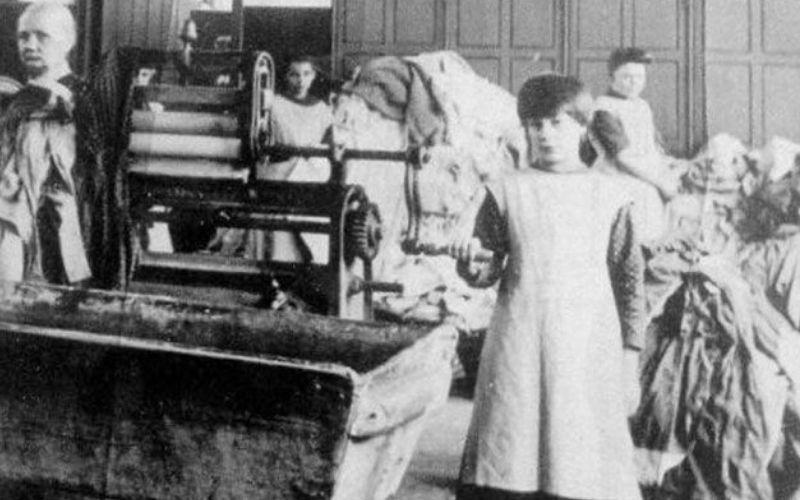
Then they took her …’ Disappearance, Loss and Searching: Mother and Baby Institutions, Magdalene Laundries and Workhouses.
Mothers
‘Trauma is the biggest harm that’s been caused. Imagine yourself giving birth being let feed and wash the baby then people coming, and taking her, then 40/50/60/70 years of questioning yourself. What is she doing now? Who is she? Like wondering if she had a good life. It’s a void that can never be filled. Always being afraid. What if they come take my other kids?’
‘The lack of empathy, the insulting way the nuns treated me and left me with a lifelong complex and inferior feelings of myself. Doctor or social worker didn’t explain the rigid rules and verbal abuse, as well as physical abuse taking place daily in the Magdalene home.’
‘The impact this has had on my life and the difficulties I have had dealing with my emotions on such a delicate part of my life. The lifelong loss of my own mother, my brothers and the endless hours of worry about where I belonged in life.’
Children
‘The trauma of realising late in life as an adoptee that the adoption may not have been freely entered into by your birth mother, adding to the sense of guilt and pain at being given up without the true consent of your own mother.’
‘The impact on me has been lifetime. I’m 50 years of age and I still struggle with it. Psychologically it’s devastating. So many types of harm – physical, mental, psychological, sexual.’
‘The lasting damage done to my mental health overshadowed my life and the lives of my family.’
‘It has to end with us as we do not want to pass this horrible legacy on to the next generation.’
These reflective, moving testimonies are spoken by those most profoundly impacted by institutional policies and practices operating to mask harm perpetrated on young mothers through forced removal of their babies. The pain of loss is mirrored by the pain of not-knowing. As mothers and their children – now adults – navigate daily life often separated by continents, cultures and language, they reflect on hidden histories and unknown possibilities. While dealing with stigma and shame associated with the label of illegitimacy – a ‘non-legitimate’ person – many were encouraged to believe they had been unwanted by their birth mothers.
In 2021 Ireland’s Mother and Baby Homes Commission of Investigation published its final report. It revealed that between 1922 and 1998 in eighteen institutions, 56,000 women and girls, some as young as 12, birthed 57,000 babies. Within the institutions, fifteen per cent of mothers and 9,000 babies died of malnutrition or illness. Without adult consent many were used for vaccination trials and up to 1,000 were trafficked. Commenting on the discovery of a mass grave in Tuam, County Galway, Taoiseach Enda Kenny stated mothers had been ‘treated as some kind of sub- species … took their babies, and gifted them, sold them, trafficked them, starved them, neglected them, denied them to the point of disappearance from our hearts, our sight, our country … from life itself.’ Yet this was not the full story. A further 25,000 babies were born in County Homes, their fate excluded from the Commission’s remit.
In Northern Ireland’s six counties between 1922 and 1990, 14,000 girls and women gave birth in Mother and Baby Institutions, Magdalene Laundries and Industrial Homes. A third were under 19, the youngest aged 12. As in the Irish Republic, many were survivors of persistent sexual abuse, incest and rape within families and by neighbours. A quarter of surviving babies were adopted, most without their mothers’ consent, their destination unknown. Some mothers remained incarcerated in Magdalene Laundries, working without remuneration in harsh conditions.
‘On my hands and knees, I scrubbed the tiled floors. They were already clean. I held my belly with my other hand. She stood over me, chastised me, called me a sinner. The birth was so painful. A wee while after, I was told to dress my baby in clothes that had been sent in. I kissed her, they took her. I lay on my bed howling, the empty cot alongside me.’
The key question remains: who knew? Those who ran the institutions, and profited from trafficking, doctors, health visitors, social workers, clergy, non-government organisations and a wider public were all aware. The rights of mothers and their children were violated systematically through an established administrative process. How was this institutionalised process accepted, legitimated? Writing on the hidden history of aboriginal oppression in Queensland, Australia, Henry Reynolds recalls meeting two young aboriginal girls sitting on a filthy mattress in a police cell floor surrounded by shards of glass. It was 1968. They had a bucket for defecation, the air foul. The young, newly-appointed university lecturer, was shocked by the disproportionate punishment inflicted by teachers. Yet within the white community, it was rationalised. He asked, ‘If this could be done to children, whatever punishments were meted out to adults? Why didn’t I know? Why hadn’t I been told?’
His questions relate directly to how sociological, historical, political and deep philosophical analyses frame what is considered reliable, ‘scientific’ knowledge regarding the legitimacy of state and non-state institutions. Central to critical social analysis is how political-economic power and the philosophical ideas that underwrite them is sustained by what Michel Foucault termed ‘regimes of truth’. Similar to ‘ways of seeing’ art, regimes of truth rely on shared viewing and acceptance that amounts to intellectual collusion. Refuting deeply entrenched mainstream assumptions is the principal objective of all critical analysis, creating dissenting accounts, generating alternative discourses. It is achieved by being there, by bearing witness.
Gathering testimonies alongside those who have endured cruelty in harsh institutional regimes is essential to truth recovery. Inevitably, people’s memories fade or are imprecise. Emerging from personal testimonies, however are consistent themes, institutional practices and named individuals involved in vindictive, hurtful, occasionally brutal acts. They are known within institutions, embedded in their operation and philosophically rationalised in the name of civility. Through these consistent revelations as C Wright Mills observed, the truth and the deceit of regimes become apparent, contextualising personal troubles as public issues. Shared personal experiences provide foundations to social-culltural histories of moment and place. Accumulating shared personal truth from women enduring gendered marginalisation is the substance of the German socialist-feminist Frigga Haug’s pursuit of archiving ‘memory work’. On such solid experiential foundations those who suffered in institutions whose lives have remained blighted by the harsh realities they endured, gain a measure of solace from shared memorialisation. The importance of accumulated testimonies, however, also extends to formal recognition through official inquiries.
Much has been written critiquing the limitations of public inquiries in hearing selective evidence, becoming battlegrounds for vested interests committed to escaping liability while marginalising the experiences of those whose lives should be the sole priority. In our work, we propose ‘truth investigations’ as an alternative form of inquiry through which independent panels with extensive expertise gather oral and written evidence from victims/survivors without cross-examination. The aggregated truth developed through this process then feeds into a full statutory inquiry. This model, derived in my work heading the research for the Hillsborough Independent Panel, now has been adopted in Northern Ireland. Our Independent truth Recovery Panel made 80 recommendations, prioritising access for victims/survivors to all personal records; support in giving in-depth, confidential interviews reflecting their experiences; redress, reparation and compensation; full apology from State and all organisations involved accompanied by a process of memorialisation; and the establishment of a permanent, dedicated truth archive.
An integrated truth investigation prioritises ‘knowing’ and ‘memorialising’ through gathering survivors’ and relatives’ testimonies. Establishing an archive to ensure survivors, relatives, researchers and the public have negotiated access to records, including institutions’ operational practices, lays foundations for investigating human rights violations while providing the means and understanding through which institutions and individuals will be held to account. Such questions of justice take us into the heart of our deepest held concerns, demonstrating that the experiential cannot be separated from the political. Processes of public recognition have the potential to lift the veil of shame and silence imposed on mothers and the children who were disappeared.
Our work, alongside those who have suffered for so long in silence, illustrates the significance of critical research not only in truth recovery, but also as resistance to institutional power; it exists alongside those for whom such truth systematically has been denied. Through the work of collective inquiring minds, bearing witness to private suffering while revealing cruelties of institutional practices, shame can be lifted from women who have suffered in silence. This is the potential of a more aggregated conception of truth at the heart of alternative accounts, providing solid foundations for public recognition of social injustice. Thus State and all other institutions involved are held to account as the institutional abuse of power is exposed, securing social and cultural rights as exposing intolerable practices lay the foundations for a new form of questioning. Clearly there remain issues to be resolved regarding the legal process, together with full disclosure of the institutional denial of international rights and their purposeful integration and silencing within institutional regimes of power. Yet, as Deena Haydon and I concluded elsewhere, a continuing commitment to securing rights and justice requires a ‘fundamental shift in structural relations and the determining contexts of power which marginalize and exclude [victims/survivors] from effective participation in the processes that govern their lives’.
The Opening testimonies are taken from the Report of the Independent Truth Recovery Panel: Mahon, D., O’Rourke, M., and Scraton, P. (2021) Truth, Acknowledgement and Accountability: Mother and Baby Institutions, Magdalene Laundries and Workhouses in Northern Ireland. Belfast: Truth Recovery Design Panel/ NI Executive. A version of the above is published in the journal, The Philosopher, Special Issue on Violence, Autumn 2024.
Phil Scraton is Emeritus Professor, School of Law, Queen’s University, Belfast

 CHATTING CRITICALLY